
- 3 MONTHS AGO · ENERGYWhile a run of American microreactors went critical in Idaho this summer, a one-fifth-scale core built to cool itself with sealed tubes and no water did it in Nevada at 10:39 in the morning, made no usable heat, and ran inside the bunker built to assemble nuclear test devices
- 2 MONTHS AGO · ENERGYA 3-foot reactor core drilled with 79 channels runs at up to 100 million watts under 23 feet of water, and the Belgian lab that owns it pulls radioactive targets out through the lid mid-run, because the medical isotopes inside start decaying the moment they form
- 1 MONTH AGO · ENERGYA 12-foot bundle of 216 fuel rods leaning 30 degrees inside the first American reactor brought back from retirement will be laid flat in a 49,000-pound steel canister and hoisted out of the water by the crane that lifts the reactor head, a move no plant has made before
- 3 WEEKS AGO · ENERGYAn 800-megawatt reactor on the Missouri River was starting back up after a refueling outage, still at just 9 percent power, when operators shut it down by hand at 4:54 in the morning because the only feedwater pump it had running started to shake harder than it should
- TODAY · THIS ARTICLEA 1,250-megawatt reactor on the Connecticut shore had to stop its climb back from refueling at 5:07 a.m. and cool below 350 degrees, because one of the two pumps that pull heat out of its core in an emergency couldn’t be brought back into service inside the 72 hours its license allows
Roughly every year and a half, Millstone Unit 3 in Waterford, Connecticut, goes offline so its crew can swap out some of the fuel and work through the maintenance that can’t happen while the reactor’s running. Then they have to bring it back, and that’s slow, careful work.
This fall’s refueling outage started on October 12, according to the NRC’s daily reactor status report. By this week, the unit was well on its way back. On Tuesday morning, November 24, the reactor was critical and in startup mode, which basically means the chain reaction was going but the plant wasn’t sending any real power to the grid yet.
Then, at 5:07 a.m. Eastern, Millstone 3 started shutting back down.
The reason is a single pump. According to the event notification Dominion Energy filed with the Nuclear Regulatory Commission, the plant couldn’t get its “B” residual heat removal pump back in working order inside the 72-hour limit set by its technical specifications. Once that clock ran out, the rules required a shutdown and a cooldown to what the industry calls Mode 4. Dominion notified the NRC at 5:50 a.m., the NRC’s resident inspector was told, and the agency published the report on November 25.
As NRC event reports go, this one’s pretty undramatic. It’s a non-emergency, four-hour notification, and the event table lists the scram code as “N.” Basically, the reactor didn’t trip. A trip is the sudden automatic shutdown that took a Lake Michigan reactor offline from full power earlier this month. Operators took this one down on purpose.
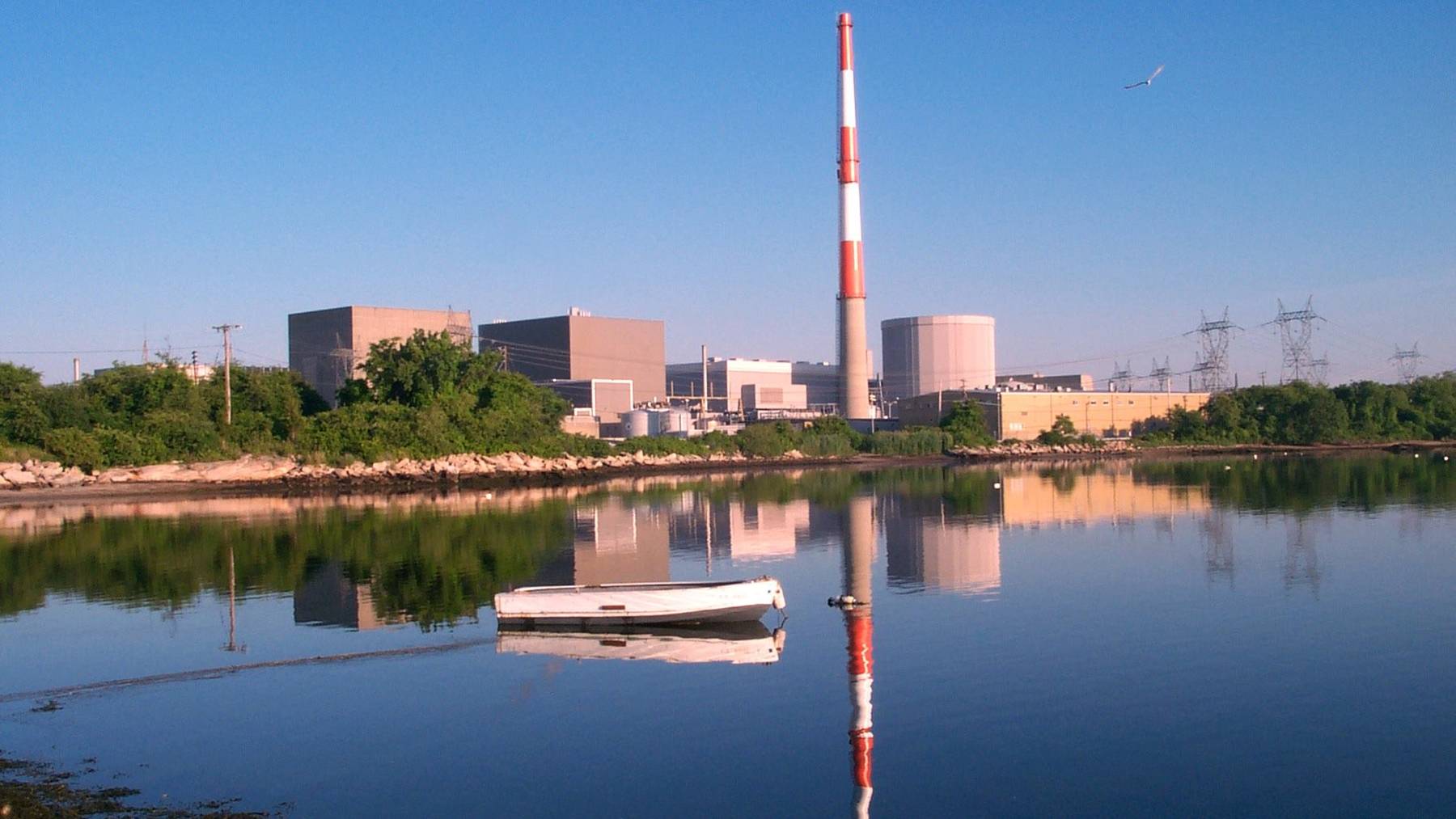
Millstone 3 is a four-loop Westinghouse pressurized water reactor, and it’s one of two operating units at Millstone Power Station. Dominion told the Connecticut Siting Council in February that the unit can put out 1,251 megawatts net, and that it owns 93.47% of it. The NRC licenses its reactor for 3,709 megawatts of thermal power. It’s been operating since 1986, and its renewed license runs through November 2045.
What I find interesting here is that the reactor itself was fine. A pump that only really earns its keep in an emergency, or once the plant has cooled down, was enough to send the whole startup into reverse.
So what is an RHR pump?
Even after the chain reaction stops, a reactor core keeps making heat, because the radioactive byproducts inside the fuel keep decaying. That heat has to go somewhere. The residual heat removal system is what carries it away once the plant has cooled down far enough, and its pumps do the pushing.
Those same pumps have a second job, too. If a pipe breaks and the plant starts losing coolant, they’re the low-pressure end of the emergency core cooling system, pulling water from the refueling water storage tank and pushing it into the reactor’s coolant loops. Millstone 3 has two of them, an “A” and a “B,” and each one anchors its own independent train of emergency cooling equipment.
Which means that while the plant’s making power, you’d normally find them sitting on standby, waiting for a day nobody wants to see.
Why does a reactor with no emergency have to stop?
So if Millstone 3 wasn’t having an emergency, why did a standby pump force it back down?
Because the rule doesn’t wait for the emergency. Every nuclear plant operates under a set of technical specifications, and a big chunk of them are what the NRC calls limiting conditions for operation, or LCOs. An LCO is basically a line that says which safety equipment has to work in which modes, and what you have to do if it doesn’t. Most of them come with a clock attached. It’s the same kind of clock that caught up with a French reactor at Cattenom earlier this month, when one of its units ran on emergency diesels longer than its rules allow.
Millstone 3’s LCO 3.5.2 covers emergency core cooling whenever the coolant is at 350°F or hotter, and it wants both trains working. If one goes down, the plant gets 72 hours to fix it. If that doesn’t happen, the wording quoted in Dominion’s own filings says the unit has to reach hot standby within the next six hours and hot shutdown within six more.
The logic is pretty simple once you think about why there are two trains in the first place. You build two so that one can fail in the middle of an accident and the other still does the job. With the “B” pump out, Millstone 3 was down to one train with nothing behind it, and 72 hours is how long the rules let a plant live like that before it has to get somewhere cooler.
Plants track that with numbered modes, which work a bit like the gears on a car. Mode 1 is power operation, and Mode 2 is startup, where Millstone 3 was on Tuesday morning. Mode 3, hot standby, means the reactor’s subcritical but the coolant’s still at 350°F or more. Mode 4, hot shutdown, starts once the coolant drops below 350°F. Cold shutdown, Mode 5, only comes once it’s under 200°F.
So the target here is Mode 4, where LCO 3.5.2 stops applying, and Millstone 3 doesn’t need to go all the way to cold shutdown to get there. When the NRC posted its report, the unit was listed in hot standby at 0% power.
Is that annoying if you’re Dominion? Almost certainly. A reactor that was already critical and on its way back is now headed the wrong way, and I’d bet this isn’t the Thanksgiving week anyone in Waterford had planned. But I’d argue it’s the system doing exactly what it’s supposed to do. A rule that let a plant keep starting up on one train of emergency cooling because stopping is inconvenient would be a pretty useless rule.
Millstone has asked for more time on these pumps before
Then there’s the history. Millstone 3 and its RHR pumps have been bumping into that 72-hour clock for more than three decades.
On August 16, 1994, Northeast Nuclear Energy Company, which ran the plant back then, asked the NRC to stretch the limit for an RHR pump from 72 hours to 120 hours. Its letter said the pumps’ mechanical seals tended to fail after about five to seven years, and that a seal swap took close to the full 72 hours. The utility wanted to do that work with the plant at power instead of shutting down for it, which it argued was the safer option.
What came out the other end was a one-time allowance. Amendment 103 gave each RHR pump a single 120-hour window for its seal work, and it ran out on April 30, 1995.
Fast-forward three decades, and the same kind of request showed up with the “B” pump’s name on it. Back in May of last year, Dominion found that pump letting water past its mechanical seal much faster than it should while it was running in shutdown cooling. The company measured about 20 gallons an hour at first, and the rate had dropped to under a gallon an hour by June 12. The pump stayed operable under weekly monitoring, but Dominion wanted the seal fixed before this fall’s refueling outage, when the reactor coolant system runs with less water in it and RHR is doing the heavy lifting.
So on January 16, Dominion asked the NRC for a one-time extension from 72 hours to 168 hours for the “B” pump, so it could fix the seal at power. It estimated the repair at 88 hours, 16 more than the normal 72-hour clock allows, and asked for another 80 hours on top of that in case anything went wrong. The NRC approved it on June 12 as Amendment 295, good for one use and valid until September 30.
Here’s where I have to admit what I don’t know. I can’t find any NRC document that says whether Dominion actually used that summer window, and the November event report doesn’t say what’s wrong with the “B” pump this time. It could be the same seal. It could be something else entirely. Dominion’s notification doesn’t say, so I’m not going to guess.
Still, a plant going back to its regulator for extra hours on the same kind of seal job, about 30 years apart, suggests 72 hours is a pretty tight window for these particular pumps.
Millstone 3 is sitting at zero
Dominion hasn’t given a restart date in anything I’ve seen, and the NRC’s status page for November 26 didn’t have any data posted yet when I checked early Thursday morning. If you’re wondering about the other reactor on the site, it doesn’t seem to be affected.
As of the NRC’s November 25 status report, Millstone 3 is at 0%, while Millstone 2, the older unit next door, is running at 100%.
 A 240-megawatt tidal dam in Brittany turns 60 today with 24 reversible turbines spinning under a road that carries 32,000 vehicles a day, and the French utility is rebuilding them one at a time while the plant keeps runningEnergy · 3 hours ago
 A 1,300-megawatt French reactor was cut off from the grid at 6:20 in the morning when a connection box failed on its 400,000-volt line and was shut down by hand, while a second reactor at the plant, down for maintenance, ran on emergency diesels longer than its rules allowEnergy · 15 hours ago
 An 827-ton wind turbine pushed up the inside of a lattice tower by hydraulic jacks until its hub sat 984 feet off the ground, the tallest on Earth, is now sending power into the German grid, and it had already run four straight days at full load before anyone cut the ribbonEnergy · 19 hours ago