
- 4 MONTHS AGO · INDUSTRYThe hero shot is always the 650-foot German machine, and back up the tube out of frame there is a shed full of compressors pushing brine at 26 below into the dirt until the sand turns into a 6.5-foot wall of ice — and it does not get to stop until the concrete is in
- 4 MONTHS AGO · INDUSTRYCalifornia just finished shoving an 8-foot boring machine 347 feet under a lake with nothing to brace against, coming out through the reservoir floor with the water still sitting on top, and the dam above it is now coming down for a rebuild
- 2 MONTHS AGO · INDUSTRYA 471-foot dam in the Colorado foothills grew for four years in rolled-flat layers of concrete while a court decided whether water could ever rise behind it: the concrete wrapped up in June, the permission landed in September, and the reservoir can now nearly triple
- 1 MONTH AGO · INDUSTRYTwo 160,000-pound valves rode a barge through a 35-foot tunnel into the base of the tallest dam in the country, behind a pair that has been there since the dam was built, because when the lake drops below the powerhouse intakes, they’re the last way to let water out
- TODAY · THIS ARTICLEA 301-foot dam on the Rio Grande was holding back 66 feet of water against a wall built for 197 when the leftovers of a Pacific hurricane tripled the lake behind it in a month and lifted the surface 20 feet, and the biggest reservoir in New Mexico is still under 5 percent full
I definitely picture New Mexico as a dry desert, but hurricane season doesn’t usually do it any favors. The state sits a long way from either coast, and by the time a Pacific storm’s leftovers drift that far inland, they’re good for a wet weekend and a few flooded arroyos. But the remnants of Hurricane Polo did something in late September that the Rocky Mountain snowpack couldn’t manage all spring: they put water back in Elephant Butte, the biggest reservoir in the state, and a lot of it in a hurry.
How much is a lot?
On September 18, the lake held 29,241 acre-feet, according to the daily table that the Texas Water Development Board maintains. On October 17, it held 94,986. That’s more than triple in a month, and the surface came up about 20 feet. It’s also still 4.8% full, which means it definitely started out very empty.
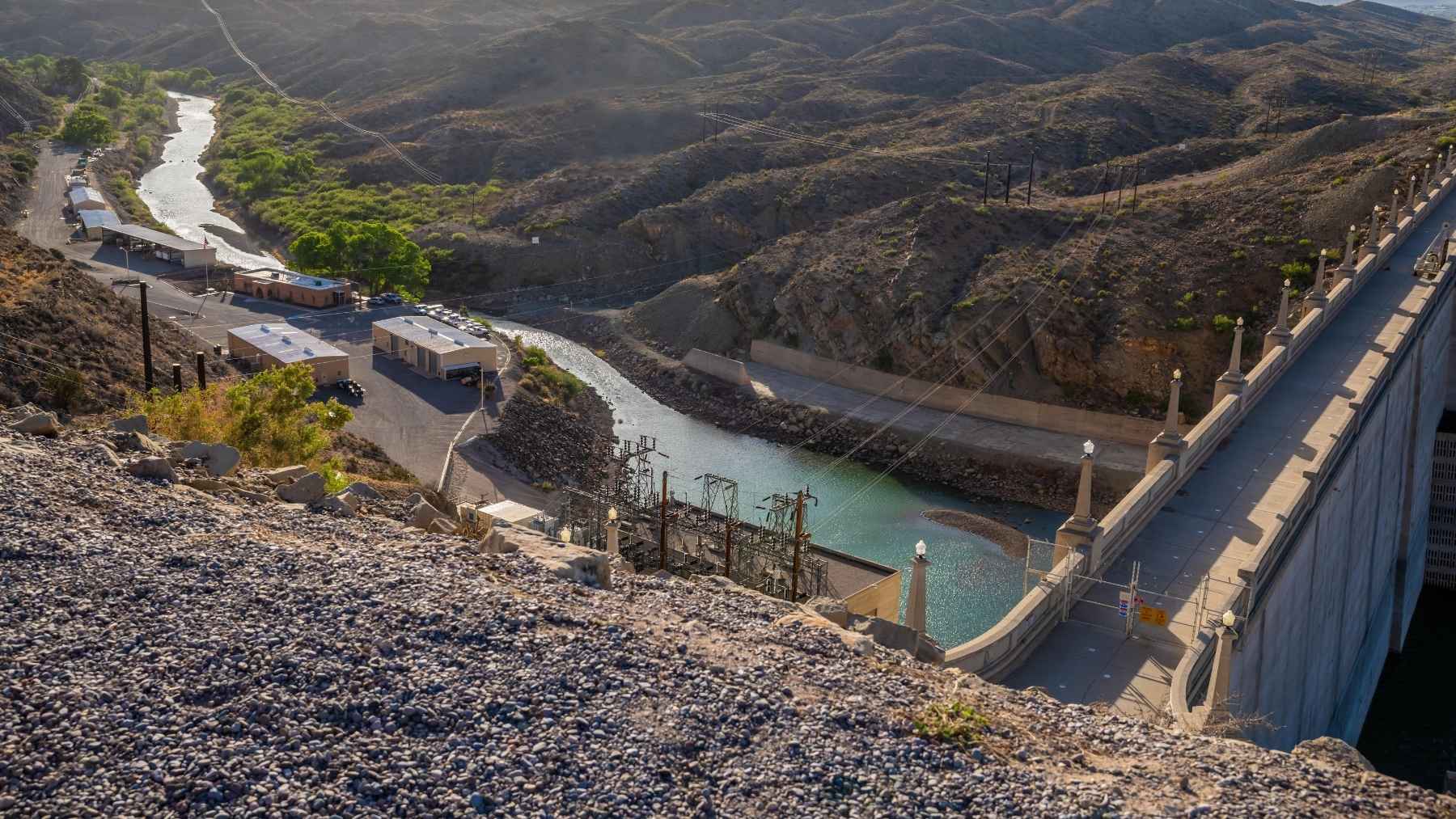
Elephant Butte Dam’s a 301-foot concrete wall across the Rio Grande about 125 miles north of El Paso, finished in 1916, and the Bureau of Reclamation says the reservoir behind it can store a little over 2 million acre-feet. An acre-foot is a foot of water spread over an acre, about 326,000 gallons. That water goes to farms in the Rincon and Mesilla valleys, to a share of El Paso’s drinking supply, and, under a treaty, to Mexico. Hatch green chile grows on it. So do a lot of pecans and alfalfa.
So how low did it get?
NASA’s Earth Observatory put out a Landsat picture of the lake in August, shot on July 27, and the caption carried the number everybody’s quoted since: 1.4% of capacity, the lowest the reservoir’s been since 1971. For scale, you’d have found the lake nearly full in June 1994, and the 2013 drought, which felt like the bottom at the time, only took it down to 2.9 percent.
By August 20, the lake held 27,369 acre-feet, against 74,334 on the same day a year earlier, and it was still parked at 1.4% nearly a month after the satellite pass. In mid-September the surface sat at about 4,276 feet above sea level. Reclamation lists the riverbed elevation at the dam as 4,210 feet, so by my math, there were roughly 66 feet of water against a wall designed to work with 197. The rest of that depth was holding back air.
Two things did this. The Rio Grande basin has been in a drought for years, and 2026 added the earliest snowmelt on record at the river’s headwaters in the southern Rockies, according to the federal drought monitor NASA cites. Snow that melts in March instead of May runs down the river before the farms need it, and a reservoir this low doesn’t have a cushion to catch it. Reclamation kept releasing irrigation water through July 28, state parks officials said, then shut off the releases, and NASA figures the lake bottomed out for the year within a few days of that.
New Mexico State Parks closed the main boat ramp at Elephant Butte Lake State Park on August 3 and operated a long-reach excavator to scoop silt and debris off the Marina del Sur ramp throughout the summer. Falling water also uncovered junk that had been underwater for 50 years, which made local TV and didn’t do the ramps any good.
Then a hurricane showed up
Polo didn’t get anywhere near New Mexico as a hurricane. What arrived in the last week of September was its leftover moisture, wrung out by a low-pressure system coming in from the West Coast, and there’s a small flood-control dam in the Hatch Valley that nearly didn’t make it through the rain that followed.
That dam’s the McLead, a 25-foot earthen structure near Garfield that state records say failed once before, in 1987, and was rebuilt in 1993. On the night of September 29 Doña Ana County sent crews out to pump water downstream and take pressure off it, after what the county described as a pipe failure that kept water from draining through. The county told Garfield, Salem, Rincon, Hatch and Placitas to get out. About 100 people checked into shelters in Radium Springs and Las Cruces, and most of them were back home late that night. A 2023 state inspection had already rated the McLead’s condition as poor, with a spillway too small for a 100-year storm. “We’re very pleased that this wasn’t much worse than it is,” Amanda Bowen, the county’s emergency manager, told the Albuquerque Journal.
I don’t want to oversell this one. The dam held and nobody got hurt. But holding because a county crew spent the night pumping is, in my book, a different thing from holding on its own.
Downstream of the big dam, the Elephant Butte Irrigation District, which runs the canals that feed the farms, turned the storm into a water supply. Its gauges flagged arroyo runoff coming into the river channel, and it diverted what it could into its canals: 6,791 acre-feet through October 7, which it works out to about 2.2 billion gallons, most of it going straight onto fields instead of being pumped out of the aquifer.
None of that water went into the lake, mind you, since it was all caught below the dam. What put the reservoir up 20 feet was the rain that fell above it and ran down the river and the arroyos, and that happened during those same days, which is why the lake’s chart turns almost straight up in the last week of September.
What about the power plant?
There’s one, a three-turbine hydro plant at the base of the dam that federal power-plant data rates at 27.9 megawatts, and it’s been there since 1940. Reclamation’s older project page lists it at 24,300 kilowatts, so I assume the gap comes from upgrades over the years, but either way it’s a small plant. Hoover, which we wrote about yesterday, runs 17 turbines and 1,191 megawatts, so nobody in Las Cruces is about to lose their lights over this.
So does it still run? I feel like that’s the most pressing thing to know here.
Well, as far as I can tell, not since the end of July. The plant generates on the water Reclamation releases for irrigation, which gets caught again at Caballo Dam about 22 miles downstream and parceled out to the farms from there. No releases, no generation. Reclamation also lists what it calls the top of the inactive pool at 4,282.2 feet, which basically means the line below which the agency doesn’t normally draw water at all, and the lake spent mid-July into late September under it. What I can’t give you is a 2026 generation number. Reclamation’s public monthly series for the plant ends in January, so whether it produced a single kilowatt-hour after the July 28 shutoff is a question I couldn’t answer from the published data.
It’s a different problem from the one on the Colorado. At Lake Powell, the worry is that a 1,320-megawatt plant is losing its water. Here the hydro plant’s arguably a sideshow, and the dam exists to hold farm water, which is exactly what ran out.
So where does that leave the lake?
Ahead of last year, strangely enough. On October 18, 2025, that TWDB table shows 77,883 acre-feet; a year later it’s 94,986, so Polo put the reservoir ahead of where it was, drought and all. That’s about the only good news in the whole story, and it’s a pretty thin kind of good, because 94,986 acre-feet is still less than 5 percent of the lake and every one of them is spoken for by somebody downstream.
Hurricanes don’t fill a reservoir like this one. Snow in the Colorado and New Mexico high country does, melting slowly through May and June, and last spring it melted earlier than it ever had. If you’d like to know what Elephant Butte looks like next summer, watch the snow gauges in the southern Rockies in April. The lake itself won’t tell you much before then.
The Texas Water Development Board’s reading for October 17 put Elephant Butte at 94,986 acre-feet and 4,296.02 feet above sea level, 4.8 percent full and 110 feet below the top of the dam’s working pool. The irrigation district says it’ll keep updating its stormwater page as it diverts more, and as of October 7, its irrigated-acreage figures still read TBD.
 An American seabed drone went more than 13,000 feet down in the Pacific, deeper than the Titanic, and picked potato-sized metal nodules off the seafloor one at a time, skipping any with life on them, then floated about a pound back up with no pipe to its shipIndustry · 1 day ago
 A 400,000-square-foot nuclear building left unfinished in South Carolina has been stripped of its ducts, piping, tanks and gloveboxes to be rebuilt as a factory for at least 50 plutonium cores a year, and a structure first due a decade ago now won’t be done for another 12 yearsIndustry · 1 day ago
 A 591-foot bulk carrier that can load about 40,000 tons struck a 97-year-old drawbridge on the Delaware River while its span stood open for ships, and the bridge then stayed stuck in the air, backing up cars on both banks between Philadelphia and New Jersey, with no one hurtIndustry · 1 day ago