
Smallmouth bass are about as American a sport fish as it gets. If you’ve ever stood on a dock in July with a cooler and a spinning rod, you’ve probably caught one. They fight hard, they’re everywhere, and state agencies spent most of the last century stocking them into any water that would hold them, including Lake Powell in the 1980s.
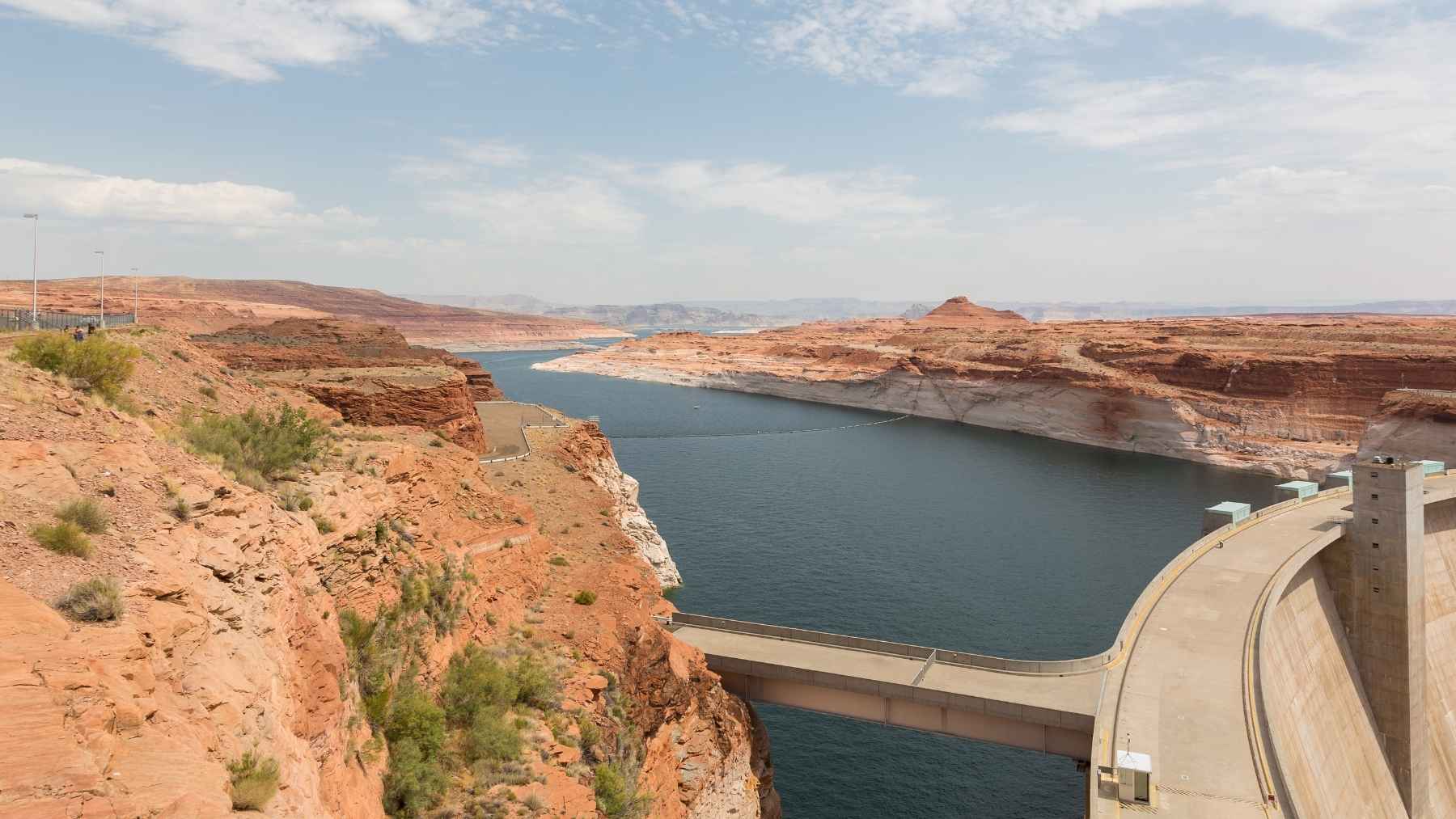
Below Glen Canyon Dam, though, the smallmouth bass is the villain of the story. And this summer, the 710-foot dam that’s supposed to keep it bottled up in the lake decided the fish wasn’t worth the electricity.
On August 6, the Bureau of Reclamation told the groups it works with on the river that it would skip this year’s “cool mix flow,” the cold-water release that had stopped bass from spawning downstream the previous two summers. The email, which The Associated Press obtained, gave the reason in nine words: “significant hydropower generation concerns under already strained system conditions.”
So the turbines kept turning, the river below the dam kept running warm, and a threatened native fish called the humpback chub got a summer without its best defense. Let’s walk through what that actually means.
So what’s a cool mix flow?
You need to picture Lake Powell as a layer cake. In summer the top of the lake is warm, 70-something degrees, and the deep water near the bottom stays cold year-round, because sunlight doesn’t get down there. Glen Canyon Dam has two sets of doors into that cake, at two different heights.
The main doors are eight penstocks, big steel tubes that feed the eight turbines. For most of the dam’s life those intakes sat well below the warm layer and pulled cold water, which is why the river at Lees Ferry has been a famous trout fishery for decades. But Lake Powell is now less than a quarter full, and the warm layer has sunk down to the level of the penstocks. Warm water goes through the turbines and comes out the other side still warm.
Then there are the basement doors: four river outlet works, often called bypass tubes, that sit lower on the dam and still reach the cold water. They don’t have turbines on them. A cool mix flow is basically Reclamation opening those lower tubes and blending cold bottom water into the warm turbine water until the river downstream drops back under 60 degrees, which is the temperature where smallmouth bass stop spawning. If you want the full tour of the dam’s plumbing, we went through all three sets of outlets and their elevations last month.
The catch is that every acre-foot you send through the bypass is an acre-foot that didn’t spin a turbine. On a reservoir this low, that’s power Reclamation apparently wasn’t willing to give up.
The bass ride through the turbines
This surprised me when I first read it. The bass aren’t swimming around the dam. They’re going through it.
Smallmouth bass live in that warm top layer of Lake Powell, and once the top layer reaches the penstock intakes, the fish get sucked into the tubes right along with the water. Some of them survive the trip through the turbines and come out in the Colorado River below the dam. The National Park Service first found juvenile smallmouth bass below Glen Canyon Dam on July 1, 2022, which told biologists the adults weren’t just passing through. They were spawning.
That’s a problem because about 76 miles downstream, past the Little Colorado River confluence and on into the western Grand Canyon, lives the last big population of humpback chub on Earth. It’s an odd-looking fish, roughly 18 inches long with a hump behind its head, and it’s been on the federal threatened list since it was downlisted from endangered in October 2021. A USGS study published in May estimates adult chub in a 124-mile stretch of the western Grand Canyon grew roughly 160-fold over 15 years, to a median of about 70,000 adults. That’s a conservation win that took decades.
Smallmouth bass eat small fish. Young chub are small fish. You can see where this goes.
The cold releases in the last two summers worked. Reclamation told the AP they prevented bass spawning both years, and the National Park Service says the first one kept the river bass-free all the way down to the Little Colorado River. The U.S. Fish and Wildlife Service, in its biological opinion for the dam, called the cool mix the “only conservation measure proven to limit smallmouth bass reproduction,” per Circle of Blue.
How warm did the river actually get?
When Reclamation sent that email, the river below the dam was running about 69 degrees Fahrenheit. Reclamation’s own trigger for considering a cold-water release is an average daily temperature over roughly 60 degrees for three straight days. By August 6 the river had been over that line for more than a month, and it was sitting nine degrees above it.
So this wasn’t a borderline call. The threshold had been blown through for weeks, and the agency decided not to act on it.
What’s the power at stake? Reclamation’s Glen Canyon plant has eight generating units rated at 1,320 megawatts, and in a normal year it puts out about 5 billion kilowatt-hours that the Western Area Power Administration sells into seven states. The AP didn’t put a number on how many megawatt-hours a cool mix would have cost this year, and I couldn’t find one anywhere, so I’m not going to make one up. The utilities that buy that power told the AP a cold release would have forced them to buy replacement electricity that’s more expensive and less likely to be renewable, and the trade group representing about 155 of those customers said it was pleased with the decision.
Matt Rice of the conservation group American Rivers took the opposite view. He told the AP the decision was expected but disappointing, and that he hopes it doesn’t amount to a death sentence for the chub.
The lake kept falling anyway
You’d think a dam that skipped a fish-saving release to protect its power would at least be rewarded with a comfortable lake level. It wasn’t.
Lake Powell hit 3,517.24 feet on September 10, according to NASA Earth Observatory, which published Landsat images of the lake that day. That’s the lowest level since the reservoir first filled in the 1960s, below the previous record of 3,519.92 feet set in April 2023. Minimum power pool, the line where Reclamation shuts the turbines down to keep vapor bubbles from chewing up the steel, is 3,490 feet. So the dam defended its generation and still ended the summer about 27 feet from losing it.
I’d argue that’s the real story here. The cool mix wasn’t skipped because the lake was fine. It was skipped because the lake was so low that even a few weeks of running water around the turbines felt like too much to give up.
What happens to the chub now?
Reclamation’s regional director, Wayne G. Pullan, wrote in the same email that this year’s effort would go into expanded rapid-response removal, more modifications to backwaters where bass like to nest, new tools, and longer-term structural fixes. In plain English, that means boats with electrofishing gear stunning bass below the dam and netting them out, plus talk of eventually building some kind of temperature control onto the dam itself.
Does that work? Sort of, probably, and nowhere near as well as cold water. Electrofishing is labor-intensive and only catches fish you can reach. The cool mix, by contrast, treated the whole river at once.
As far as I can tell, no agency has published a count yet of how many bass managed to spawn below the dam this summer. The Park Service and USGS run surveys through the fall, so that number should show up eventually. Until it does, the honest answer is that nobody knows how bad this summer was for the chub, only that it was warmer and less protected than the two before it.
And the forecast doesn’t give the bypass tubes much of a future. Reclamation’s October 24-Month Study, dated October 15, pencils in zero acre-feet through those outlets every single month through September 2028 under its driest scenario, and it has the lake at 3,497.03 feet on September 30, 2027, seven feet above the line where the turbines stop.