
A man, a plan, a canal: Panama. It’s pretty much the only palindrome anyone can recite on demand, and it’s also about all a lot of us kept from that week of middle school history. Ships go in, the locks lift them up, and they float down the other side.
Nobody in that lesson ever mentions what’s underneath. That’s fair, since until very recently the answer was pretty much just rock.
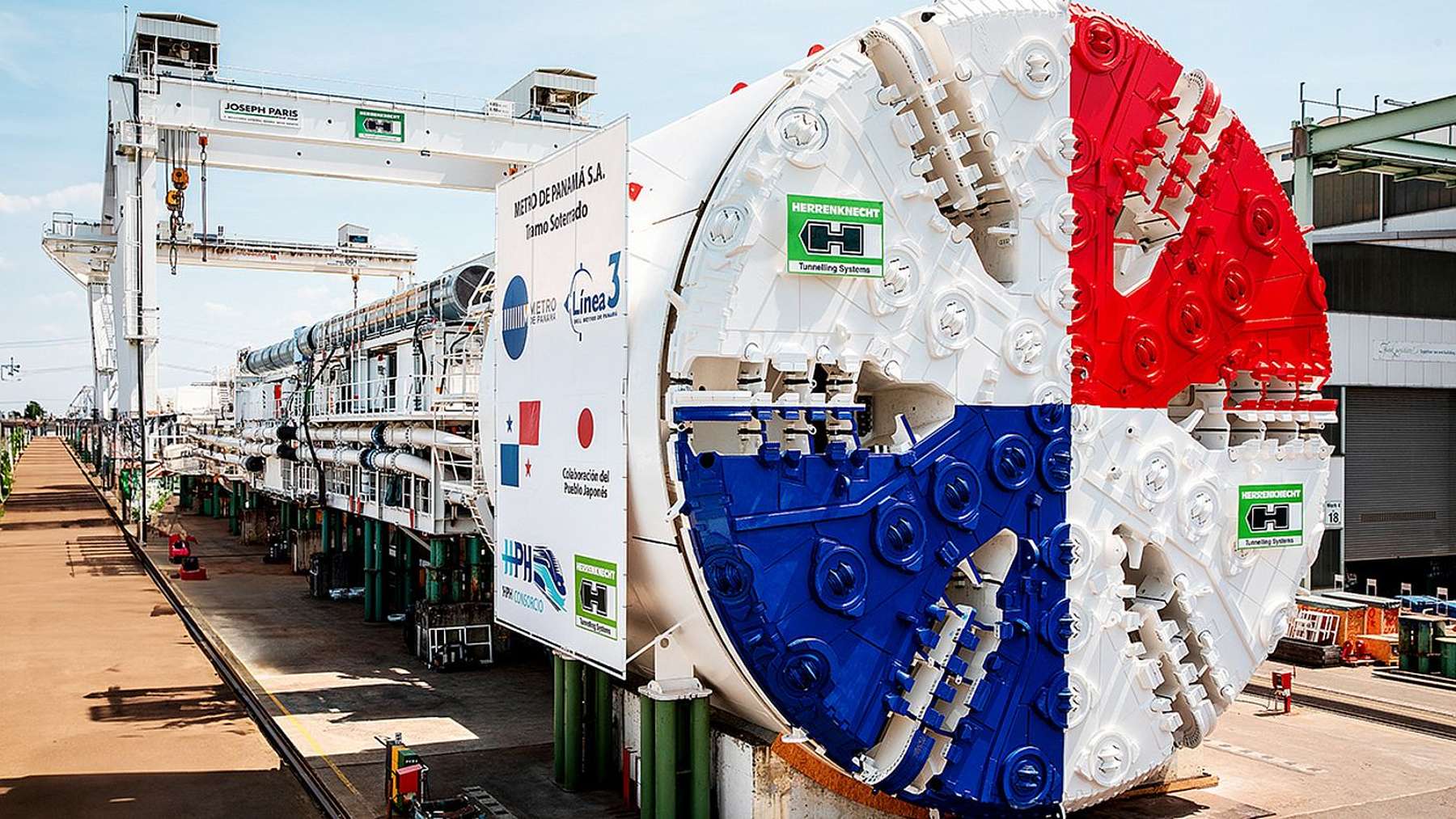
Not anymore. On October 26, a boring machine named Panama (yes, really) reached Albrook, on the Panama City side of the canal, and finished a tunnel about 2.8 miles long for the city’s new Line 3 monorail. She’d started from Farfán, on the west bank, 25 months earlier. Her maker, the German company Herrenknecht, says no boring machine had ever gone under the canal before.
We last checked in on her in August, when she was down to the last stretch. President José Raúl Mulino showed up for the arrival and called it “astonishing, groundbreaking, and a step forward,” according to Ground Engineering. For a tunnel job, “groundbreaking” is a pretty good pun, whether he meant it or not.
So what did she actually finish?
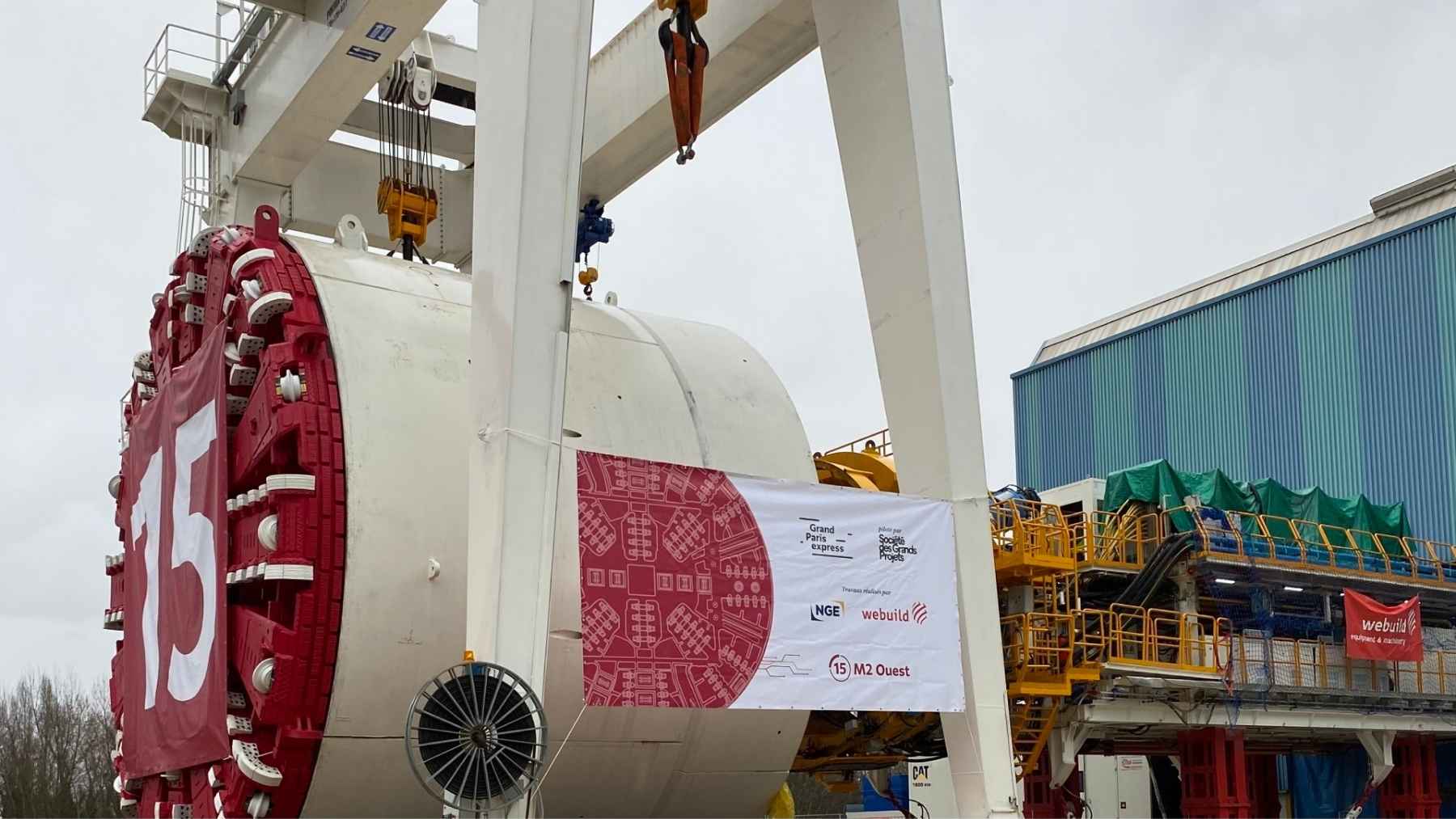
A very big hole, basically. Panama is 44 feet across and 305 feet long, and she dropped as deep as 213 feet below sea level to get under the shipping channel. She’s that wide because trains in both directions have to fit through one tube. For comparison, the 800-ton machine working under Cleveland has a 26-foot wheel, so Panama’s cutting face is nearly three times the size.
I’d love to give you her total weight, but I can’t find it. Herrenknecht’s data sheet lists her diameter, power and torque and leaves the tonnage off, and the Metro’s updates don’t have it either. The closest I’ve got is the biggest of her 99 pieces, which the Metro described as the cutting head, at 519 tons when it went down the launch shaft.
If you’ve never seen one of these work, a boring machine builds the tunnel as it digs. Every 6.6 feet or so, it fits a ring of curved concrete pieces in behind the cutter, then shoves off that ring and keeps going. Panama left 2,295 of those rings behind her, each made of nine pieces, so that’s 20,655 chunks of concrete keeping the ground out. (That data sheet lists the drive at 3 miles, but those rings work out to about 2.85, so I’m sticking with the Metro’s number.)
She’s also what Herrenknecht calls a Mixshield, which basically means she pushes a pressurized clay slurry against the ground in front of her. That slurry holds the rock and groundwater in place while the cutter chews through it. Herrenknecht designed her to push back at about 100 psi, a good bit more than the pressure in your home’s water lines.
Then there was the contract. The canal had to stay open and safe the entire time, and as far as anyone has reported, it did. Ships kept moving overhead while she went by, and Herrenknecht says the crossing went off “without any problematic incidents.” It’s frankly a little funny that the best possible outcome for a job this size is that nobody on the surface noticed.
The dirt count doesn’t add up
Here’s where it gets a little messy. The Panamanian government says she dug out close to 915,000 cubic yards over the whole drive. A representative of the contractor, a Korean consortium called HPH, told La Prensa it was more than 850,000. Those two are close enough.
But back in February, when she’d only gone 1.9 miles and stopped at Balboa for maintenance, Metro de Panamá said she’d already removed more than 1 million cubic yards, or 320 Olympic pools. We repeated that number here in August, so this one’s partly on us.
So can a machine really dig more in 1.9 miles than it does in 2.8?
No. I did the math myself, and a 44-foot circle running the length of those 2,295 rings comes out to about 850,000 cubic yards of solid ground, which lines up nicely with the contractor’s figure. Run the same numbers to Balboa and you get roughly 580,000. Rock also fluffs up once it’s dug out, so the pile’s always bigger than the hole, and that may explain part of the gap. I can’t tell you how the Metro got to its February number, because it hasn’t explained it anywhere I can find. My money’s on the contractor.
The last 1,640 feet took a while
On June 25, the Metro’s engineering director, Carlos Cedeño, told La Prensa she had about 1,640 feet to go, and the Metro expected that to take two months. It took four. That’s roughly 410 feet a month, against 984 feet in her best month last October.
I don’t know why, and I can’t find anyone in Panama who’s said. Metro director César Pinzón did mention soft ground and pressure as challenges at the arrival ceremony, so that’s a reasonable guess, but he didn’t pin it on the last stretch.
Still, the whole drive was pitched at a little over 22 months on the day she started, and she finished in 25. More than 250 workers kept the job going around the clock, according to the government. For a first attempt under that canal, I’d call that pretty respectable.
So where does she go now?
Into pieces, for starters. The Metro has said she’ll be dismantled at Albrook, and what happens after that is less clear. Before she’d even reached the country, Cedeño laid out three options to Panamá América: bury her, sell her, or overhaul her for another job in Panama.
Burying a machine sounds pretty wasteful when it cost $45 million. It does happen, though, because getting one out can cost more than it’s worth. Mulino floated a different idea the day she started, saying she’d open up the David-to-Santiago stretch of a Panama-David railroad if all went well.
As far as I can find, nobody’s announced a decision yet. I’d lean toward the railroad or a sale, since that’s a lot of money to leave in the dirt.
A finished tunnel still isn’t a train
If your commute’s ever made you want to quit your job, you’d get along with people in Panamá Oeste. About 160,000 vehicles cross the Bridge of the Americas and the Centenario Bridge every morning and 174,000 every afternoon, according to Panama’s transit authority, as La Prensa reports. Line 3 is supposed to fix that with about 15.5 miles of monorail and 11 stations.
The Metro says the full ride from Ciudad del Futuro to Albrook should take about 37 minutes, and La Prensa figures some people would save more than 3 hours a day. That’s a pretty big promise. It also isn’t cheap, with La Prensa putting the whole line at $4.5 billion.
None of that happens yet, of course. Crews still have to take the machine apart, put in the beams the trains ride on, fit the electrical and mechanical systems, and test the line section by section. Pinzón said last year that October 2028 meant “substantial” delivery, with the full handover coming before the end of 2029, and “substantial” is a slightly slippery word if you’re the one waiting on a bridge.
Metro de Panamá put Line 3 at 82% complete when the machine reached Albrook on October 26, and it’s planning trial runs for the last months of 2028.