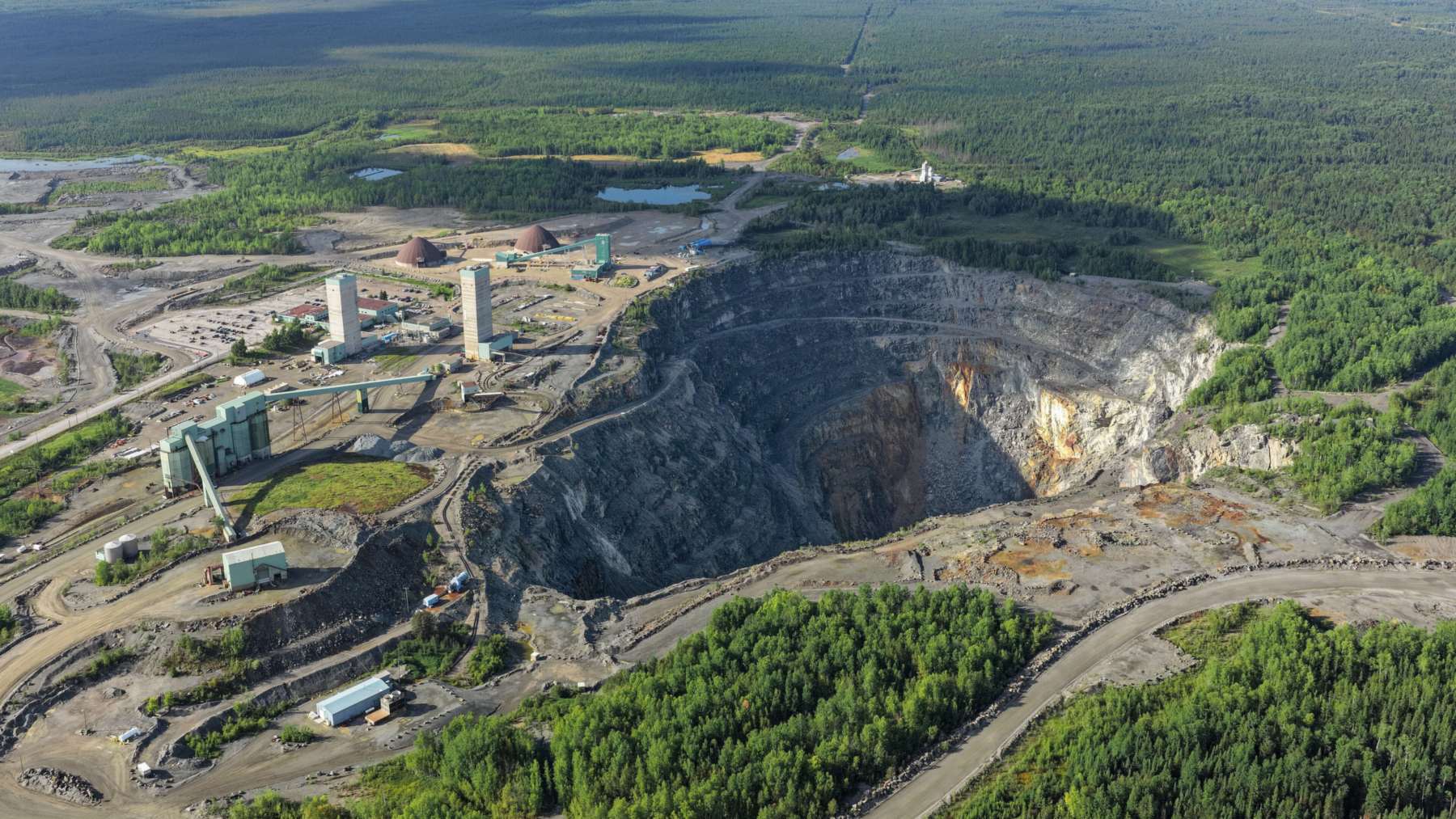

Most mine closures follow a pretty familiar script. The ore gets harder and pricier to reach, the owner picks a date, and the town spends a couple of years bracing for it. Kidd Creek, the copper and zinc mine outside Timmins, Ontario, has been following that script for more than two years, with Glencore circling the end of December as the last day of production.
Then a gold company rewrote it. Discovery Mining (it still went by Discovery Silver when the deal closed on June 1) took over the mine, the processing plant 17 miles down the rail line and a big chunk of land north of Timmins. It paid $10 million in Discovery shares and took on the environmental and cleanup obligations that come with a mine this old. And it says it’s planning to keep Kidd Creek running.
So why would a gold miner want a copper mine that was two months from its own funeral?
Kidd Creek is a seriously deep hole
Before we get to the why, it helps to know what Discovery actually bought. Kidd Creek’s No. 4 shaft bottoms out at 9,889 feet, and Discovery says miners are working the 9,800-foot level right now. Both Discovery and Glencore call it the deepest base-metal mine in the world.
If “base metal” sounds a little vague, that’s because it kind of is. It basically covers everyday industrial metals like copper, zinc, lead and nickel, as opposed to precious metals like gold and silver. They’re the stuff in your house wiring, your galvanized fence posts and pretty much every car on the road.
That qualifier matters. Kidd isn’t the deepest mine on Earth, period. South Africa’s gold mines go a lot further, and Guinness World Records puts Mponeng at roughly 13,100 feet. But gold is worth enough per ounce to justify that kind of digging, and copper and zinc generally aren’t, which is why I’d argue Kidd’s record is the more impressive one.
Getting the rock out is a fairly old-school job. Discovery says Kidd uses sublevel longhole mining. Basically, miners drill long holes into a block of ore from tunnels above and below it, blast it, and pull the broken rock out from the bottom. That ore goes up the shaft and rides a train about 17 miles to the Kidd Met Site, where it gets crushed, ground and turned into concentrate.
Kidd’s depth has turned up some odd stuff, too. A team led by the University of Toronto’s Barbara Sherwood Lollar found water trapped in fractures roughly 9,500 feet down that’s about 2 billion years old. As far as I know, nobody’s found older water anywhere.
Glencore didn’t see a way to go deeper
Kidd Creek has had a pretty remarkable run. It started with a survey plane that picked up an odd reading north of Timmins in the late 1950s. The mine opened as an open pit in 1966 and moved underground in the early 1970s. Discovery says it’s produced more than 772 million pounds of copper, 2.1 billion pounds of zinc and 400 million ounces of silver since then.
Depth is what finally caught up with it. When Glencore set the closure date, its spokesperson told Northern Ontario Business that a study on a deeper expansion found that working much below roughly 9,800 feet would be hard to justify, technically and economically. Kidd was already working at that line. The mine’s general manager was even blunter with the same outlet: “We haven’t in our studies found an economically viable way to go on.”
That’s frankly not a crazy conclusion. Rock gets hotter the deeper you go, you need more air and cooling to keep people safe, and every ton has to travel nearly two miles up a shaft. Copper doesn’t pay for an unlimited amount of that.
Glencore hasn’t given up on deep mining in Ontario, though. Near Sudbury, it’s sunk a battery-powered shaft to about 8,530 feet at Onaping Depth, about three hours down the road from Timmins.
Discovery wants the plant next to its gold mines
Here’s where it gets interesting for a gold company. The Kidd Met Site has four processing circuits, about 90 megawatts of available power, a metallurgical lab, water treatment and rail access, according to Discovery. Two of those circuits run Kidd’s copper and zinc ore, with room for roughly 6,600 tons a day. The other two sit idle. And the whole site is right next door to Discovery’s Hoyle Pond and Pamour gold mines.
Discovery is now weighing a brand-new gold circuit at the Met Site. Its CEO, Tony Makuch, told the Mining Forum Americas on September 28 that the deal takes its tailings capacity from 50 million tons to more than half a billion.
If you’ve never had to think about tailings, here’s the short version. They’re the ground-up rock left over once the metal’s been pulled out, and every mill needs a permitted place to park them. Getting a new one approved can take years, so inheriting a large one is a pretty big deal.
That’s also why the cleanup bill is less scary than you’d think. Discovery agreed to cover Kidd’s environmental and rehabilitation obligations, and to reimburse Glencore up to $75 million for extra work at the Kidd tailings area once it gets permits to put gold tailings there. It also kept the workforce, which Makuch put at more than 550 people. Discovery’s stated goal is to more than double its gold output in Timmins to over 500,000 ounces a year. For that plan, a ready-made mill with power, water and tailings room is arguably worth more than the mine attached to it.
Is Kidd Creek actually staying open?
For now, yes. Discovery expects Kidd to produce roughly 11,000 to 16,500 tons of zinc, 5,500 to 7,700 tons of copper and about 400,000 ounces of silver over the rest of this year. In June, its first month in charge, the Met Site processed about 113,000 tons of ore.
Past December, things get a lot fuzzier. Discovery says it’ll judge whether Kidd has a longer future through technical studies and a drilling program, but I can’t find a published plan for that drilling. Its second-quarter report lists up to 23 drill rigs at work around Timmins, and every one of them is on a gold project. At the September forum, an attendee pointed out that Discovery hadn’t started drilling its Kidd Creek ground yet, and Makuch didn’t dispute it.
He did make the case for the deposit, though. Makuch called it one of the largest underground base-metal deposits of its kind, said more than 170 million tons have come out of it, and added that it’s “still open at depth.”
That last bit is geologist-speak. It means the ore keeps going below the deepest holes anyone has drilled, so nobody knows yet where it stops. According to Makuch, the last serious exploration there happened somewhere between 20 and 35 years ago, which seems like an awfully long time to leave a mine like this alone.
So where does that leave Timmins? Kidd Creek has gone from closing in December to probably not closing in December. Discovery hasn’t said for how long, and it hasn’t said whether it would ever push below the depth Glencore walked away from. Given what Glencore’s own studies found, I wouldn’t expect that decision to come quickly.
We’ll know more soon. Discovery reports its third-quarter results before the market opens on November 10, and that’ll be the first full quarter with Kidd Creek on its books.