
Navies usually buy boats in a pretty predictable order. Someone in uniform writes down what they want, a handful of companies fight over the contract, and the winner goes off and builds the thing. It’s slow, but everybody knows the steps.
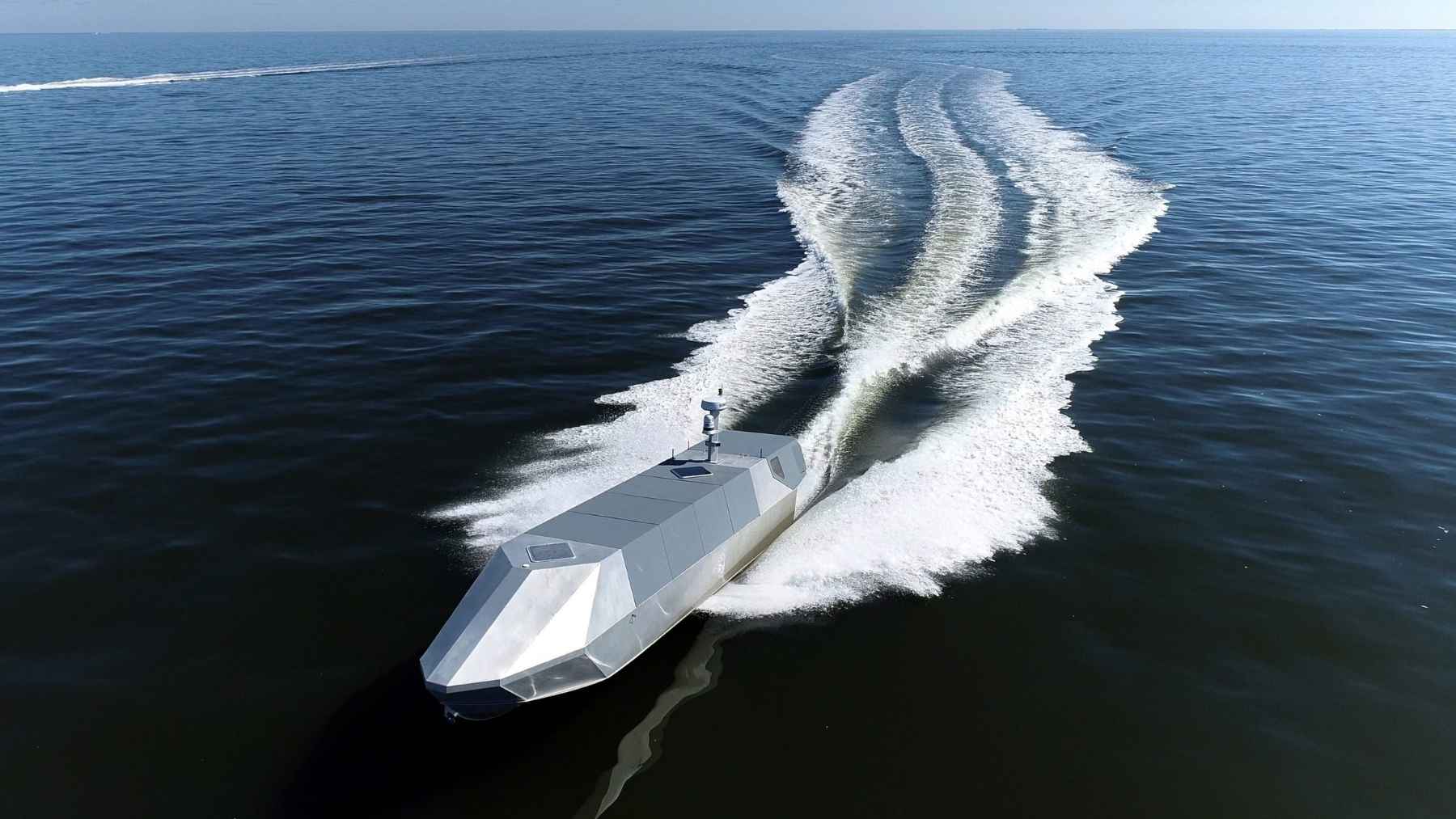
Leidos, the Virginia-based defense contractor, has basically been running that list in reverse in Australia. It paid for its Sea Archer drone boat out of its own pocket, built one, and put it through trials. Now it’s lining up boatyards.
It just doesn’t have a customer yet.
Not having a buyer hasn’t stopped the program from moving, however. The Australian-built Sea Archer has completed its harbor and open-ocean trials, according to The Australian’s Land Forces report on October 6, and the company considers it ready for deployment. Kevin Quarderer, a former US Navy captain who’s now Leidos Australia’s international science and technology director, told the paper that 16 Australian boatbuilders have said they’re ready and willing to start building them.
If the name sounds familiar, it’s because we covered the Sea Archer back in June, when it was still in the middle of its sea trials off Darwin. As far as anyone has reported, there are still only two of them: the Australian boat and a second one built in the US, which The Australian says is on trial over there.
So what’s changed since June?
Honestly, quite a bit.
The trials wrapped up in Darwin
If you’re wondering what the difference is, harbor trials are basically the test drive around the dealership lot. Calm water, help close by, never too far from the dock. Sea trials are where you find out what happens when the ocean gets a vote.
Sea Archer did its harbor round in Tasmania before heading north for the open-water work. Darwin’s harbormaster issued a notice to mariners about round-the-clock drone boat trials run by the company’s Australian arm inside the port from August 28 to September 11. A support boat called Kenbi tagged along at times, and operators on shore controlled the vessel. Frankly, that’s the sensible way to run a robot boat around a working port.
Raelene Lockhorst, deputy director of national security programs at the Australian Strategic Policy Institute, watched it run in Darwin’s East Arm in early September. In a piece published September 15, she held it up as an example of a company betting its own money on a capability before the government has even asked for one.
How rough did it get out there? Quarderer told Naval News back in April that the hull handles normal work up to Sea State 4 and can ride out Sea States 5 and 6 at reduced performance. In plain English, Sea State 4 means waves of roughly 4 to 8 feet, and Sea State 6 is the 13- to 20-foot stuff that ruins a fishing trip.
What I can’t tell you is what the boat actually ran into off Darwin. Neither the company nor The Australian has said, and it’s the first thing I’d want to know if I were buying a few dozen.
So who’s going to build them?
Earlier this year, the company was talking about 14 to 16 Australian yards it had identified that could build Sea Archers “if and when” they were needed. Now Quarderer says 16 boatbuilders have told the company they’re ready to start. That’s a pretty meaningful jump from could to would, at least on paper. Neither report names those yards. The only builder on the record so far is Oceans Rivers Lakes, the small yard in Toronto, New South Wales, that built the Australian hull, and Lockhorst added that the production plan includes two yards in Darwin itself.
Why boatyards and not shipyards? Sea Archer’s hull is welded aluminum, and Australia already has a large industry producing aluminum boats, from little fishing runabouts to fast ferries. You don’t need a Navy shipyard, a dry dock, and a few thousand workers to put one of these together, as you may expect.
You need a decent aluminum shop.
The target is under three months and about $1 million per hull, according to Defense Connect. I’d argue that’s the most important number in the whole program, because a cheap boat only matters if you can build a lot of them.
Quarderer was pretty upfront that the hull count is up to the military, not the boatyards. He told The Australian the real question is how many missions the Australian Defense Force wants to give drone boats, “and then we can start talking about how many hulls they need.” Which is a polite way of saying nobody’s ordered any yet.
It isn’t the only boat this size built around the idea of mass production, either. Last month we wrote about a 36-foot British drone gunboat that an American company is setting up to build on US soil.
Is it an attack boat or not?
Not right now.
Quarderer told The Australian that the boats don’t have a strike capability to date, though he said it’s something the company is working toward. That’s a little different from how the boat’s been pitched. A scale model at a trade show last year was shown with 16 loitering munitions tucked under hatches, and Defense Connect has reported an option for two Kongsberg Naval Strike Missiles instead. As far as I can tell, Leidos and Kongsberg still only have a memorandum of understanding to look into that pairing. And an agreement to look into something is a long way from a missile sitting in the bay.
A loitering munition, if you haven’t run into the term, is basically a small drone with a warhead in its nose. It flies out, circles until it finds something worth hitting, then dives into it.
What Sea Archer does today is watch, listen, and carry stuff. Defense Connect reports that surveillance, electronic warfare, and logistics gear come standard. And because the hull’s closed up, anyone looking at one from another boat can’t tell which of those jobs it’s doing, or whether it’s hiding something worse. Clever? Unerving? That depends on which end of the binoculars you’re on.
Sea Archer can sit out there for 23 days
The company says one standard tank, roughly 790 gallons of diesel, is good for up to 23 days on station. Being on station basically means parking in one patch of ocean and keeping an eye on it. For a country with as much empty coastline as Australia, that’s arguably the most useful thing a cheap drone boat can do.
Figures: Leidos, Naval News, Defence Connect, EX2, The Australian.
Lockhorst made a pretty good case for that kind of job in her ASPI piece. She points out that the Australian Border Force had two or more of its eight Cape-class patrol boats laid up for maintenance earlier this year, right as a wave of foreign fishing boats showed up in Queensland waters. Her argument is that a drone boat could help cover a gap like that without taking a patrol boat’s place.
The Australians’ report runs through a similar list: spotting boats fishing illegally, watching for unauthorized arrivals, rescuing stranded sailors, and running supplies out to offshore deployments. According to the paper, a single controller can run several Sea Archers simultaneously and swap their missions on the fly.
Quarderer also told The Australian on October 6 that the company’s been keeping both the Royal Australian Navy and the Army in the loop, with the Army interested in using Sea Archer to support troops maneuvering along the coast, and that it’s sending updates to interested parties on the boat’s certification.