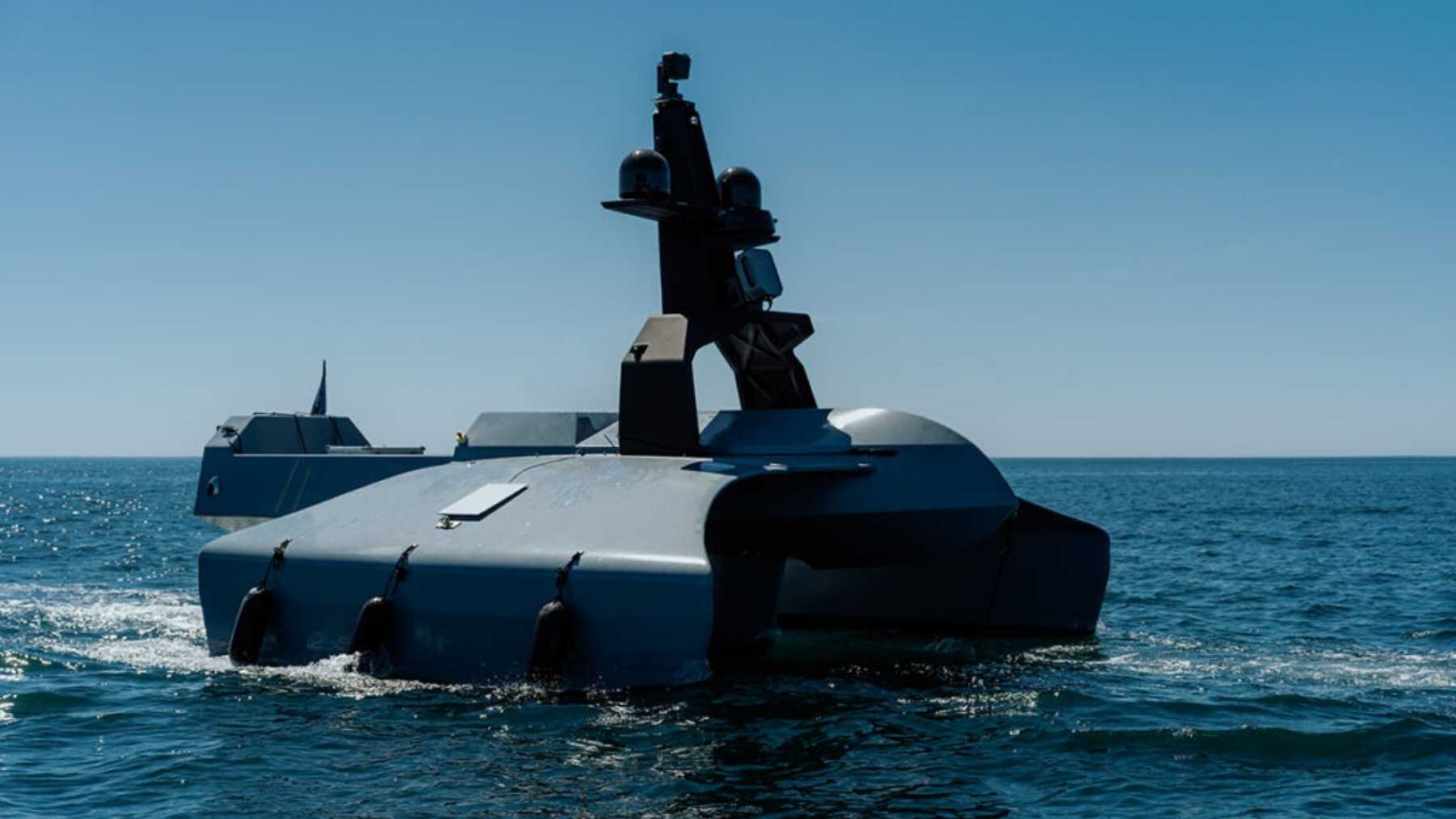

The Corsair has had a pretty eventful year for a boat with no one on board. In June, one of these 24-foot drone boats picked two downed Army Apache pilots out of the water off Oman. In July, three of them hit a ship maintenance facility and a submarine at Iran’s naval base in Bandar Abbas, which U.S. Central Command described as American forces’ first use of sea drones in combat.
Now some Corsairs have picked up a much quieter gig in Panama. They got it by sticking around after a summer exercise.
The Navy brought them down for Panamax, a yearly multinational drill built around protecting the Panama Canal, and Panama’s security chiefs apparently liked what they saw. So the boats stayed. U.S. Southern Command and the American embassy spent the following weeks working it out with Panama’s security ministry, and the Pentagon said on October 9 that the Corsairs now run maritime security patrols alongside Panama’s National Aeronaval Service.
If the name Panamax rings a bell, it’s probably because it’s also the shipping term for the biggest ship that could fit through the canal’s original locks. This one’s the exercise, and SOUTHCOM says this year’s edition, which ran August 3 to 13, was the first in 14 years to play out live in Panama.
If you’ve never heard of the National Aeronaval Service, it’s basically Panama’s coast guard and air patrol rolled into one, and it usually goes by SENAN. Panama hasn’t had an army since 1990, so the job falls to a police-style force that answers to the country’s security ministry.
“The Corsairs are providing additional patrol craft,” Marine Corps Col. Ian Fletcher said in the Pentagon’s write-up. Fletcher runs the Autonomous Warfare Command, which SOUTHCOM set up in April to put drones and other uncrewed systems to work across the region.
So why would Panama want drone boats in the first place?
It’s a lot of water to watch. Panama has about 1,550 miles of coastline split between the Caribbean and the Pacific, according to the CIA World Factbook. Every patrol boat working that coast needs a crew aboard. That adds up fast. Fletcher’s pitch is that the Corsairs let Panama keep an eye on more of it without putting more people on every boat.
So what does a drone boat do on patrol?
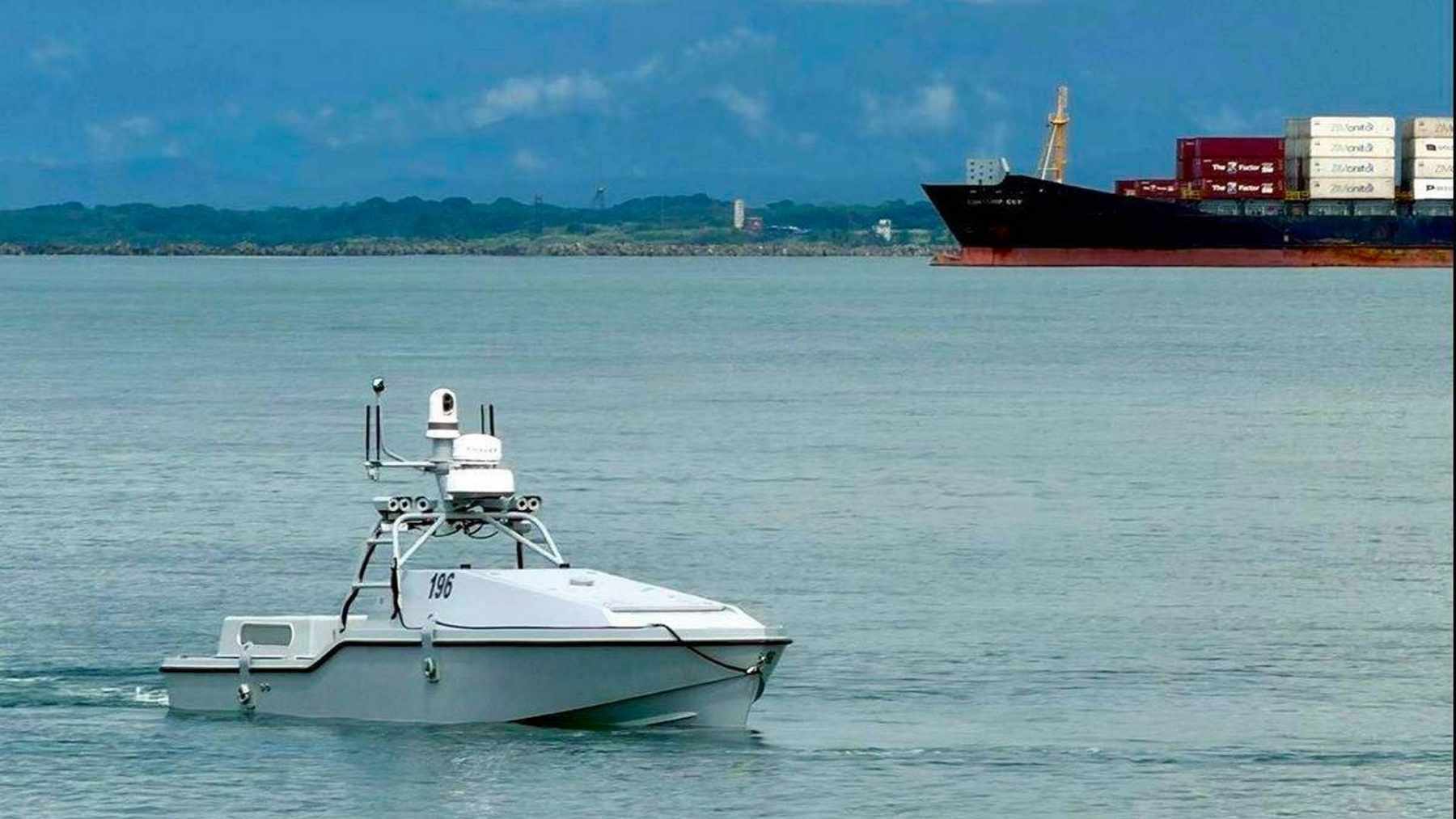
Mostly, it watches. According to Fletcher, the Corsairs carry radar plus electro-optical sensors that cover a lot of what you’d get from the sensors on a crewed patrol boat, over a wider stretch of water. Electro-optical is the military’s word for cameras, more or less.
The drones can also work alongside Panama’s crewed patrol boats and feed the people aboard extra information. Basically, the drone does the staring and the crewed boat does the chasing. That’s how the Pentagon frames it, anyway, with the extra coverage meant to help Panama’s crews pick out which boats are worth a closer look.
Frankly, that’s a pretty sensible way to split the work. Watching a radar screen for hours is the kind of job people get tired of fast, and a boat that doesn’t need sleep is arguably better suited to it.
The Pentagon says the mission’s aimed at drug trafficking, criminal networks in the region and threats tied to designated terrorist organizations. It’s also careful to say the drones are there to back up Panama’s own maritime security forces, and that the calls stay with Panama’s authorities.
I’d love to tell you how many Corsairs are down there and who’s actually running them day to day, but the Pentagon’s write-up doesn’t get into either.
Drone boats have been working this part of the world for a while now. We’ve covered a 33-foot drone sailboat that spotted a smuggling boat in the Caribbean and stayed on it until a Navy ship got there and seized a load of cocaine worth more than $81 million. That sailboat tops out at 5 knots, while a Corsair can do more than 35. So it’s a pretty different tool, at least on paper.
The Corsair’s spec sheet is a short one
The specs haven’t changed since we covered the Apache rescue in June. Saronic, the Austin, Texas, company that builds the Corsair, lists a top speed of more than 35 knots, which works out to a little over 40 mph. It also lists more than 1,000 nautical miles of range, roughly 1,150 regular miles, and up to 1,000 pounds of payload. The boat runs on diesel.
What you won’t find on that list is a weight. I went looking, and as far as I can tell the company’s never published one for the Corsair, so 24 feet is the best sense of size you’re going to get. That’s about the length of a mid-size center-console fishing boat at any Florida boat ramp.
Figures: Saronic, U.S. Southern Command, Pentagon.
So are drone boats headed into the canal?
Not yet, as far as anyone’s said publicly. Fletcher said the Panama mission gives Panama and SOUTHCOM a chance to figure out where more autonomous systems could help protect key waterways, and the canal itself is on that list. They want to work out whether drones can run safely around it.
So at this point, the canal’s something they plan to study, and I’d guess that’ll take a while. The canal is a tight, busy waterway, and big ships have to take on a canal pilot to get through it. Driving a drone boat through there is a whole different job from running one along an open coastline.
The photo the Pentagon ran with its write-up was taken on October 8 and shows a Corsair at work in Panamanian waters. That’s almost two months after Panamax wrapped up, so the boats that skipped the trip home were still on the job last week.