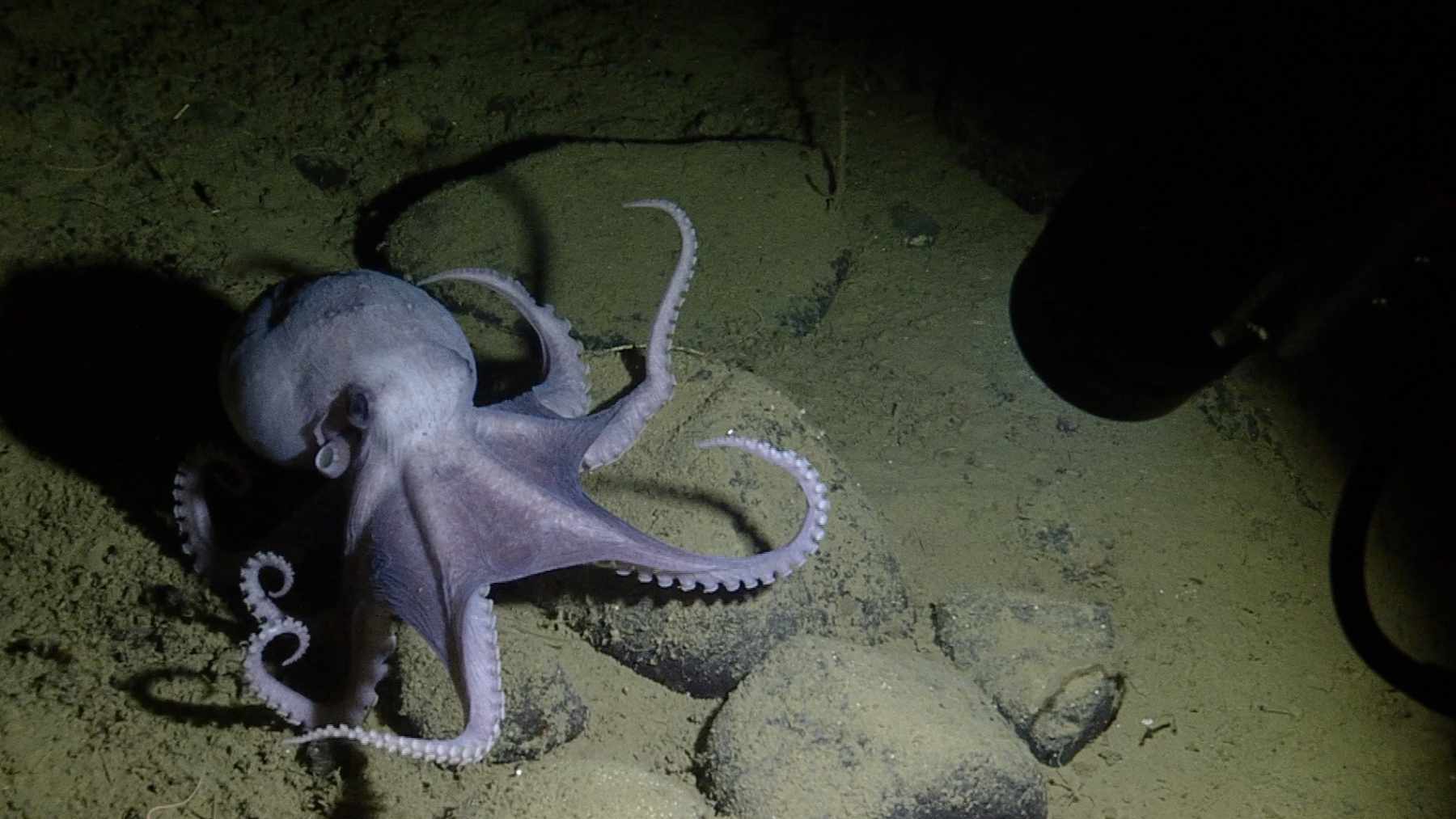

If you caught the news last week about the drone submarine Iran pulled out of the water near the Strait of Hormuz, you’ve already got a decent idea of what a serious military underwater drone looks like. That one was an Anduril Dive-LD, a 19-foot drone sub that’s about 4 feet wide and comes in at around three tons.
Now a German company that’s mostly known for drones that fly has shown off one that’s rated to go just as deep. And it weighs a fraction as much.
The company is Quantum Systems. Ukraine’s defense ministry has ordered hundreds of its Vector reconnaissance drones, and you may remember it from the battery-powered drone it clocked at 434 mph in internal testing. On Monday, September 14, it launched a maritime lineup in Sesimbra, Portugal, where a big NATO-backed naval exercise is already underway. The main event is an underwater drone called Subvex.
Co-founder and co-CEO Florian Seibel described the move as going from the air to land, “and now we are going to sea,” in an announcement that Naval News ran in full. That’s a pretty big leap, frankly. Keeping a drone in the air over a battlefield is hard. Getting one back from almost four miles down is hard in a completely different way.
So what is Subvex?
Basically, it’s a sensor package that swims. I went through Quantum Systems’ spec sheet, and the version it lists is 13.8 feet long and weighs 882 pounds. It runs on a 42-kWh battery, which happens to be the same size as the pack in a Fiat 500e.
The Fiat gets you 149 miles. Subvex gets up to four days of swimming, with a top speed of 8 knots, which is just over 9 mph. That’s pretty slow, but nobody’s sitting inside it getting bored, and going slow is how pretty much anything with a battery squeezes out more range.
For sensors, it carries a side-scan sonar with a range of 3,281 feet (1,000 meters), a forward-looking sonar, a hydrophone array for listening, and an Nvidia Jetson Thor computer that runs AI to spot and classify things on board.
That last one matters more than it sounds like it should. Radio signals don’t travel far through seawater, so underwater drones talk to each other through acoustic modems, and the drone’s own tech sheet describes that link as low-bandwidth. If Subvex had to send raw sonar data home before anyone could figure out what it had found, you’d be waiting a long time.
So how does something this small survive nearly four miles down?
It doesn’t try to keep the ocean out. The tech sheet describes a “pressure-tolerant, flooded frame,” which means seawater is supposed to get inside the hull. Anything that has to stay dry either lives in a sealed housing or is built to take the pressure directly, so there’s no big air-filled tube for 19,685 feet of water to crush.
Here’s how it lines up against the Dive-LD Iran got its hands on.
It’s sized for a torpedo tube
This is the detail I’d pay the most attention to. Subvex is about 21 inches across, which is the standard NATO torpedo tube size and the same diameter as the Mk 48 torpedoes US Navy submarines carry. The tech sheet says the sizing is there for launch and recovery from submarines. So in theory, a crewed submarine could push a Subvex out of a tube, let it poke around for a few days, and bring it back in. That’s arguably the smartest idea in the whole lineup, because pretty much every NATO navy with submarines already has those tubes. Quantum hasn’t said whether it’s tried this with anyone’s submarine yet, though, and I couldn’t find anything showing it has.
The company also says the length changes depending on the mission, with different setups for range, sensors and payload. So 13.8 feet may not be the only size you’ll see. The listed version carries up to 44 pounds of payload.
So why would you want a drone that just sits on the bottom?
Mostly because moving eats battery. Subvex gets its four days while it’s actively swimming, but it also has a variable buoyancy system that lets it hover silently or settle onto the seabed and switch to a passive surveillance mode. The company says it can stay down there listening for weeks.
It’s the same reason an EV parked with the radio on will last a whole lot longer than one doing 70 on the interstate. Sitting on the bottom, the drone doesn’t have to push itself through the water at all.
As for what it’d be listening for, Quantum pitches Subvex for guarding undersea cables and pipelines, patrolling maritime borders and keeping tabs on submarines. Dirk Zademack, the company’s VP for its maritime business, made the case in the announcement that navies have enormous stretches of water to watch and only so many crews and ships to do it with.
The company also markets the whole setup as ITAR-free. ITAR is the set of US export rules that covers military hardware, and if a product has regulated American defense parts in it, Washington gets a say in who it can be sold to. That line is pretty clearly aimed at European navies.
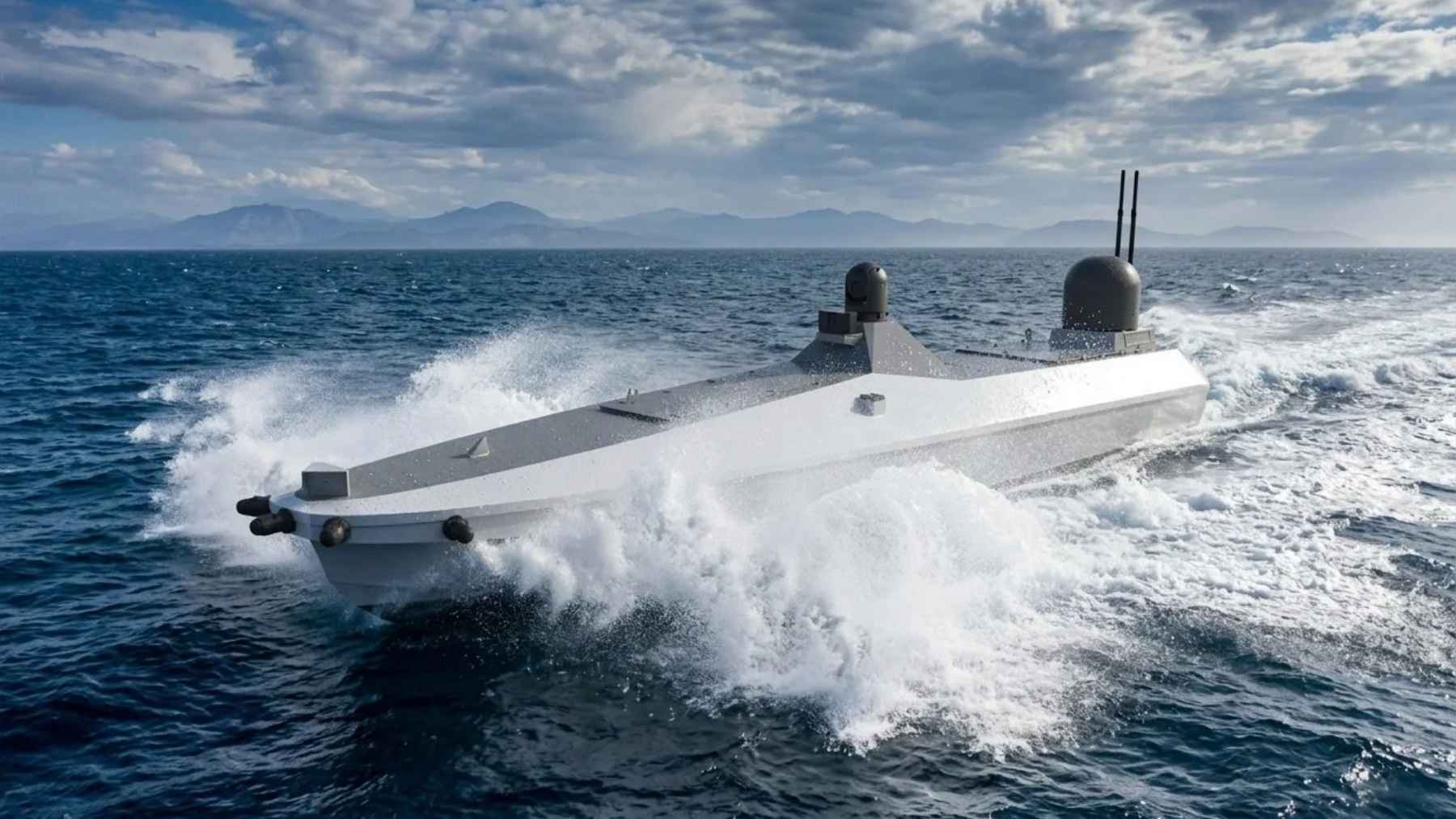
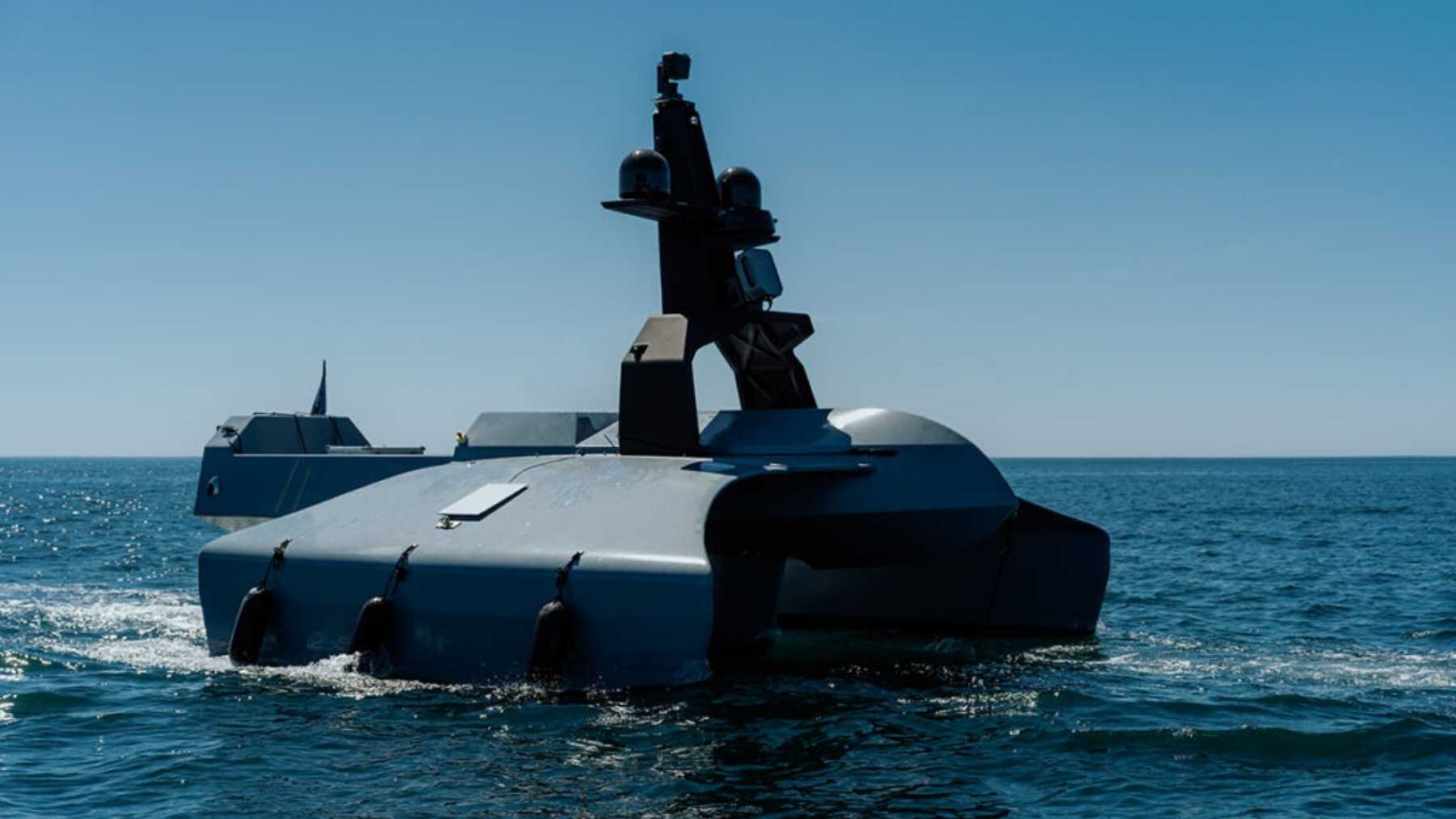
There’s a drone boat too
Subvex is designed to work alongside a surface drone called Seavex, which Quantum describes as a mission hub. Seavex’s tech sheet lists it at 27.9 feet long and 21.3 feet wide, and says it can stay out for up to two months. It’s designed to move as little as possible in rough water, and at those proportions I’d guess it’s some kind of multi-hull, though the company doesn’t say.
Seavex can launch and recover aerial drones, and it carries a long-range surveillance radar plus a separate one for spotting drones. It’s also where Subvex goes to recharge. The underwater drone docks with the boat on its own, tops up its battery and hands over whatever data it’s collected.
There’s a catch, though. The spec sheet rates that charging for sea state 3 at most. Sea state is the scale sailors use to describe how rough the water is, and a 3 means waves of up to about 4 feet. That’s a fairly mild day at sea, so I’d want to see a drone sub find a bobbing boat and plug itself in when it’s choppier than that before I’d get too excited.
So has Subvex actually been that deep?
Not that I can find. Quantum hasn’t published any test results, so treat that 19,685-foot figure as a rating on a spec sheet for now. The company says both drones are now headed into sea trials to test and validate what they can do. It also hasn’t said what a Subvex costs or who’s buying, which is pretty standard for a launch like this.
It did pick a crowded venue for the unveiling. REPMUS, the uncrewed systems exercise the Portuguese Navy runs with NATO and European partners, has pulled in more than 1,500 people from 36 navies this year, plus more than 300 uncrewed systems. It runs off Troia and Sesimbra until September 25.