
Catching drug boats at sea has always been a numbers problem. The Caribbean and the Eastern Pacific add up to millions of square miles of water, and the Navy and Coast Guard own a painfully finite number of hulls and helicopters to watch it with. A smuggling crew only needs to get lucky once.
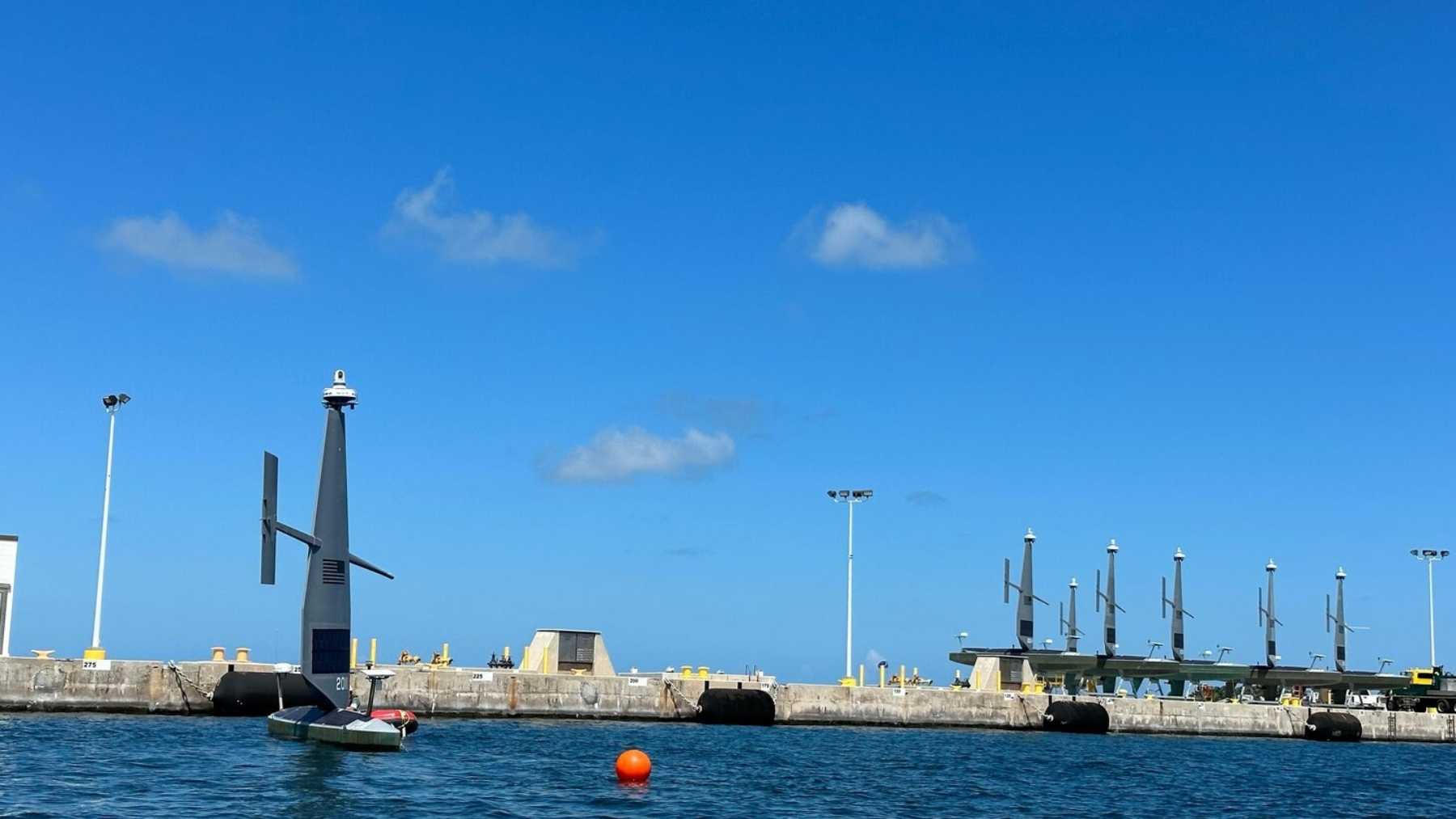
Which is why the machine that found and followed the boat in one of the Navy’s better recent busts deserves a closer look. It wasn’t a warship or a patrol plane. It was a 33-foot (10-meter) drone sailboat called a Saildrone Voyager, no crew aboard, loitering in the Caribbean on a patrol that can run 100 days between service stops.
The Navy and Saildrone told the story on August 4. In October 2025, a Voyager on station picked up a vessel that Joint Interagency Task Force South had designated, confirmed what it was looking at, stayed on it, and fed the track to the fleet. A US Navy ship then moved in and seized more than $81 million worth of cocaine. The Navy liked the arrangement enough to sign a $16.3 million extension that keeps 21 of these drones working the Caribbean and Eastern Pacific.
The stakeout, as the Navy tells it
The sequence is worth laying out, because the interesting part is how boring the drone’s job was. According to the Navy’s account, reported by DroneLife, JIATF-South, the interagency command that runs the counter-trafficking picture in the region, designated a target. The Voyager detected the vessel, identified it, tracked it, and shared what it was seeing with naval forces. A Navy ship handled the interception, and the boarding happened on October 16, 2025.
Notice the division of labor. The drone did the finding and the following, the slow work that eats patrol days on a crewed hull. The humans showed up for the part that actually requires handcuffs.
The Navy hasn’t named the ship that made the interdiction, and nobody has said how long the tail lasted. Saildrone’s pitch is that boats like this scare off some of the traffic and quietly report the rest. The fleet “serves as a powerful deterrent to bad actors,” Saildrone President John Mustin, a retired Navy vice admiral, said in the company’s announcement.
33 feet of sensors, 100 days of patience
The Voyager is easy to misread from a distance, so it pays to go by the spec sheet. Primary propulsion is an electric motor. The hard, roughly 20-foot (6-meter) wing that makes it look like a sailboat is listed as auxiliary, and the company’s whole design bet is renewable power and endurance over speed.
The rest of the kit reads like a stakeout van that went to sea: radar, a pan-tilt-zoom infrared camera, an AIS transceiver to read other ships’ transponders, a Starlink connection to move the data, and up to 3.5 kW of payload power on a 33-foot (10-meter) hull with a 6.6-foot (2-meter) draft. Top speed is 5 knots, roughly the pace of a decent jogger. It doesn’t chase anyone. It doesn’t have to.
The number that matters is 100 days between service stops. Saildrone says a Voyager has been operating continuously in support of the Navy’s 4th Fleet since 2023, and calls it the only unmanned surface vessel able to claim that. Somewhere in that claim is the entire sales pitch: crewed ships rotate home and refuel. This thing just stays.
Drug work isn’t even the whole résumé. Saildrone lists surface and subsurface surveillance, near-shore mapping, and seafloor characterization on the same hull, which goes some way toward explaining why NOAA and the Coast Guard keep turning up on its customer list next to the Navy.
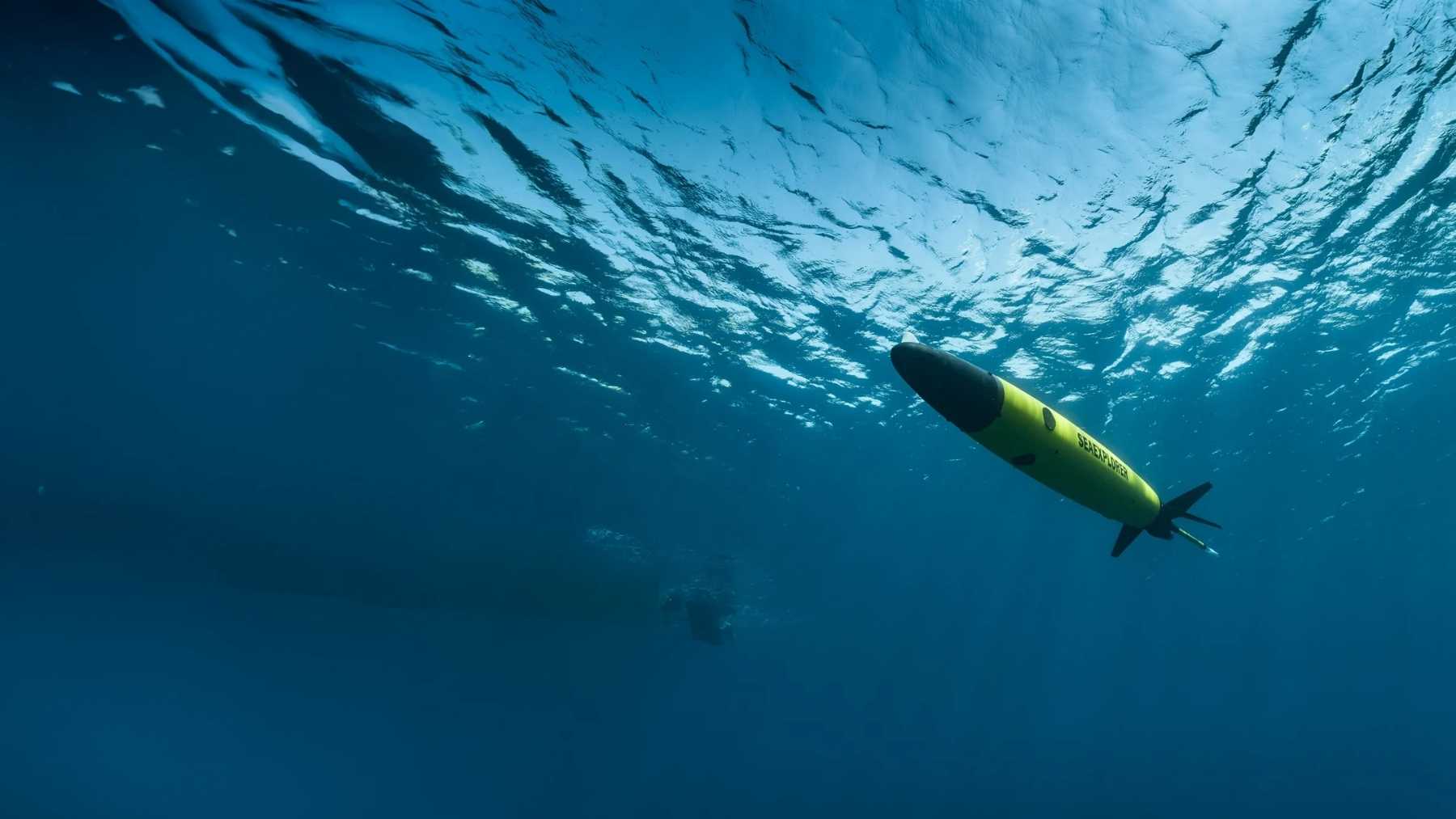
If the recipe sounds familiar, it’s the same company whose smaller, wind-only Explorers get sailed into Atlantic hurricanes for NOAA, and whose orange 33-footers went onto Lake Erie for the Coast Guard this spring. Different customers, same product underneath, which is persistence.
The math the Navy keeps paying for
Saildrone doubled its Voyager presence in the region to 20 boats in February 2025 under Operation Southern Spear, per its own release at the time. A company spokesperson told USNI News there are 21 on the mission now, and that the new task order was awarded on June 30 before being announced on August 4. The extension keeps the fleet on station into 2027, according to Breaking Defense.
The mission has now outlived an election, too. The boats went to work in the region in 2023 under the Biden administration and carried straight through into the Trump administration, per USNI News, picking up an upgraded sensor suite when the fleet doubled for Southern Spear. Saildrone said at the time that the radar and camera fit could sweep thousands of square miles a day.
The patrol grounds Saildrone talks about are the kind smugglers care about: waters near Panama and the Galápagos Islands, plus the southern maritime approaches to the US. The 4th Fleet’s beat covers the Caribbean and the stretches of the Atlantic and Pacific around Central and South America, which is a lot of blue for not many gray hulls.
Saildrone’s published numbers for the 4th Fleet mission put coverage at 12,500 square nautical miles, 116,000 unique contacts detected, and a cost of $4.25 per square nautical mile per day. You can argue about what any single one of those figures proves. Arguing with the price of having a destroyer do the same babysitting is harder.
All of this sits inside a theater where the same command has also been running lethal strikes on suspected smuggling vessels, a campaign USNI News counts at 66 strikes and at least 221 people killed as of August 4; the October seizure came from the older playbook of track, board, and seize.
What $16.3 million buys, and what it doesn’t
What it buys is time on station through 2027 for a fleet that has already shown it can turn a designation into a boarding. What it doesn’t buy, at least publicly, is growth. Breaking Defense reported it wasn’t immediately clear whether the 21-boat count changes under the new order.
Zoom out and the October bust reads less like a one-off and more like the season this whole category of machine is having. In June we watched a $240,000 American drone boat shadow a Chinese destroyer and film it. The Coast Guard is fielding its own Saildrone fleet on the Great Lakes. Cheap, patient hulls with nobody aboard keep ending up wherever somebody needs eyes on water for weeks at a stretch.
Smugglers have always played the odds that the ocean is bigger than the number of eyes watching it. That is still true, and it will stay true at 21 drones or 41. The thing that changed in October is the price of an eye. A crewed warship on patrol is one of the most expensive ways ever devised to stare at water. A Voyager does it for $4.25 per square nautical mile per day, and the one that found the load didn’t even get a medal.