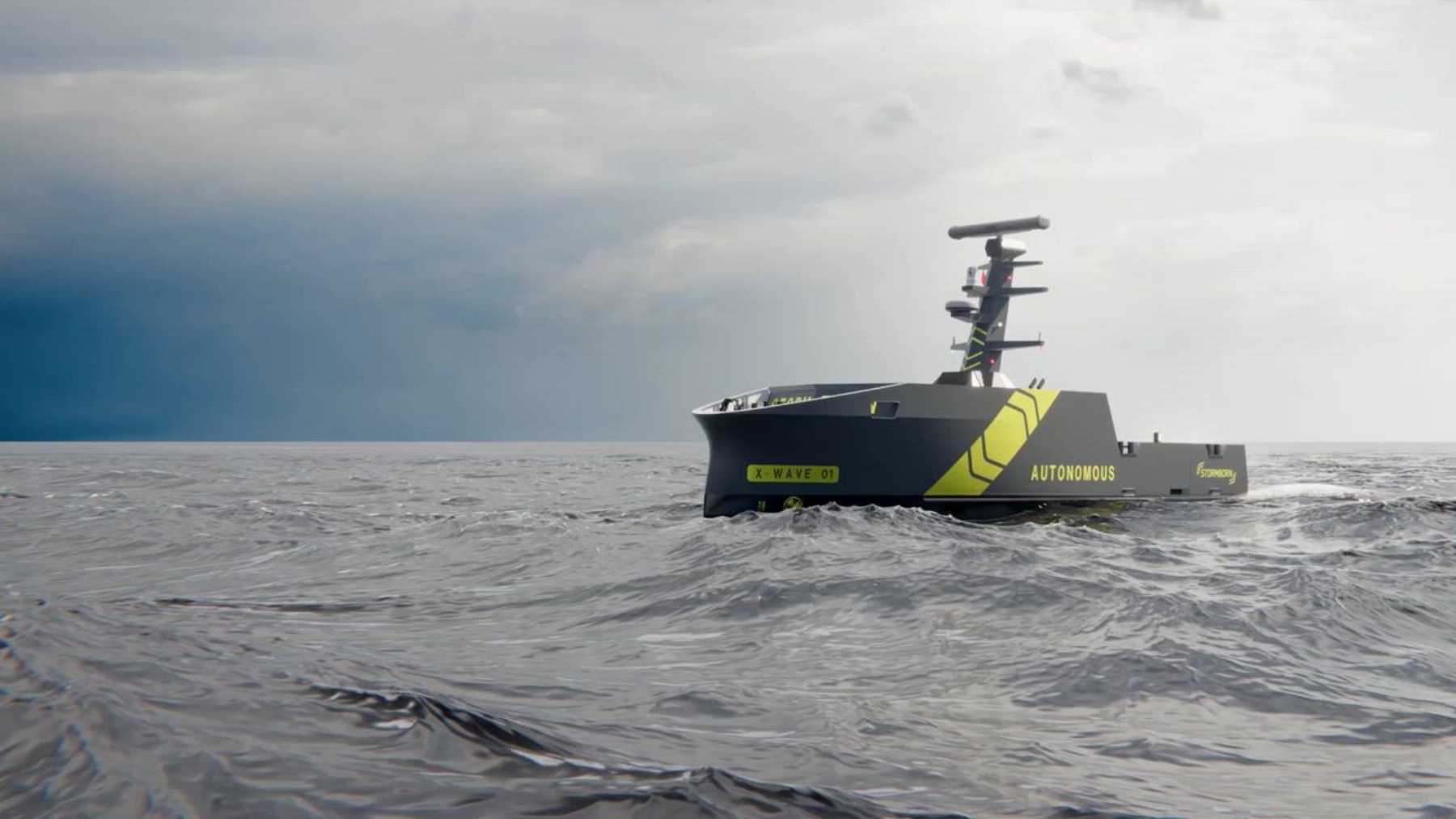

You have probably read the story by now. A U.S. Army AH-64 Apache went into the water near the Strait of Hormuz on the night of June 8, and both pilots came home alive because a boat with nobody aboard went and got them. The story ran everywhere within a day. The President posted about it, CENTCOM launched retaliatory strikes, and cable news did what cable news does. But across nearly all of that coverage, the boat itself got one sentence. Usually the same sentence.
So this piece is about the machine. What it is, what the Navy is paying for them, how a vessel with no crew finds a person floating in open water at night, how a soaked aviator gets aboard a hull with no deck hands to pull him up, and who builds the thing. Because the rescue was a one-day story. The boat is not.
Two hours in the water off Oman
Here is the rescue itself, in one paragraph, with everything attributed. According to U.S. Central Command, the Apache went down at 7:33 p.m. EDT on Monday, June 8, in the waters off Oman, near the strait. A Navy unmanned surface vessel operated by Task Force 59, the 5th Fleet’s drone unit, located the two crew members and picked them up, and CENTCOM says the soldiers were recovered in roughly two hours and were in stable condition. The boat then carried them to a second location on the water where, per Navy Capt. Tim Hawkins, a CENTCOM spokesman, they were “hoisted up to a helicopter for further transport.” The wider recovery was led by U.S. Naval Forces Central Command and the Army’s 82nd Airborne Division, with Air Force and Navy units in support.
What knocked the gunship out of the sky is a separate and murkier question. President Trump posted on Truth Social that Iran shot the Apache down and that the United States “must, of necessity, respond to this attack,” and CENTCOM began what it called self-defense strikes on Iranian targets Tuesday evening. CENTCOM’s formal line, as of this writing, is that the cause remains under investigation, and Iran has not claimed the shootdown. This piece is not going to adjudicate any of that. The machine is the story here.
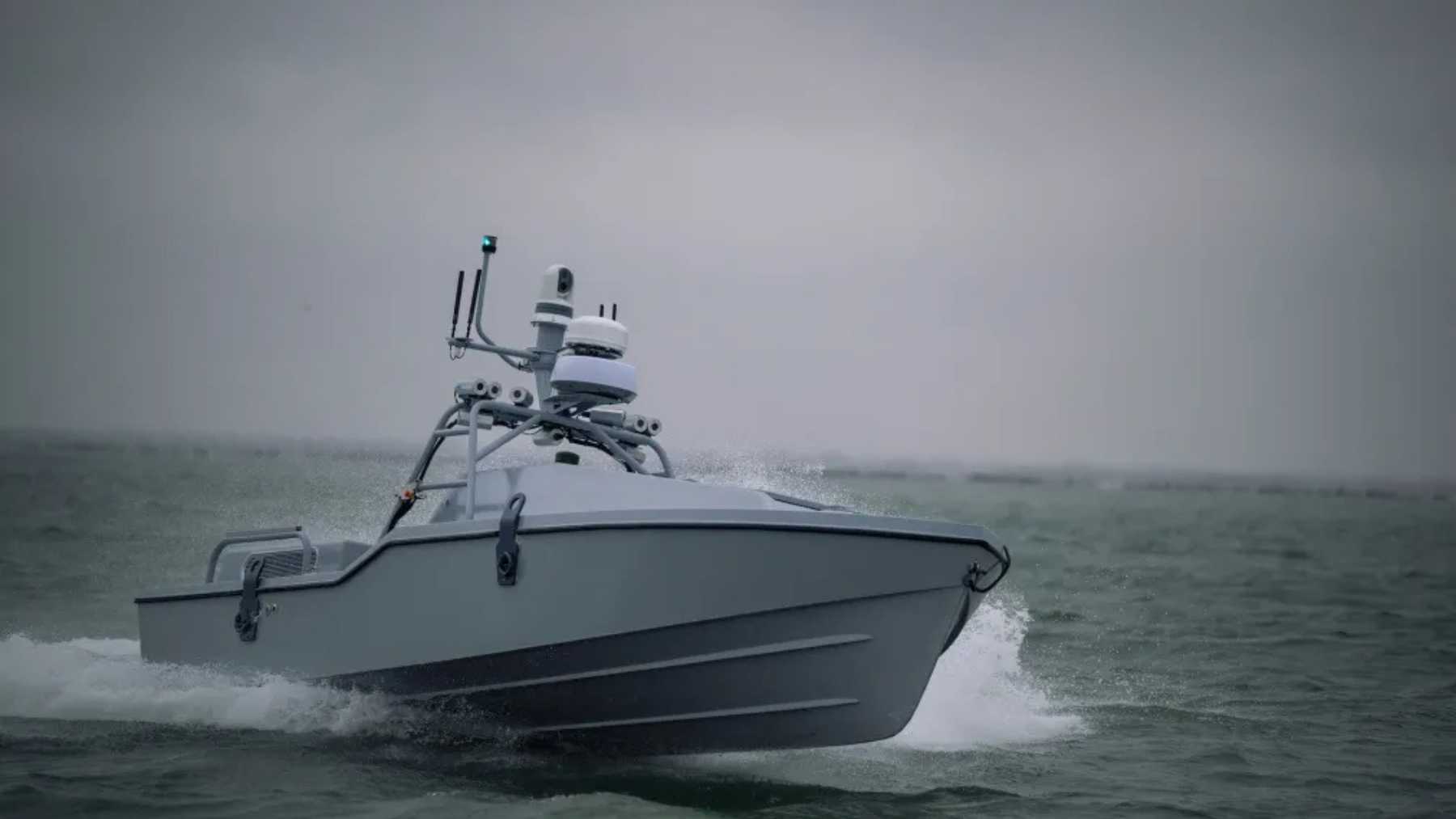
The Corsair is a 24-foot diesel speedboat that drives itself
A day after the rescue, the Navy named the boat. Hawkins confirmed to DefenseScoop and other outlets that the vessel was a Corsair, an autonomous surface vessel built by Saronic Technologies of Austin, Texas. Saronic’s own spec sheet keeps the pitch to four numbers: 24 feet (7.3 meters) long, a top speed above 35 knots (around 40 mph), more than 1,000 nautical miles of range, and up to 1,000 pounds of payload capacity, all on diesel power. That is a boat short enough to trailer behind a heavy-duty pickup, with enough fuel on board to cross open ocean. And whatever Saronic designed that payload margin to carry, it comfortably covers two adults in soaked flight gear.
The standard fit, per the company and defense trade reporting, pairs radar and cameras with satellite communications and onboard computers running Saronic’s autonomy software, on a modular deck the Navy can reconfigure between missions. The Corsair was unveiled in October 2024. By December 2025 the Navy had signed a $392 million production contract for it, a turnaround Navy Secretary John Phelan summed up on X as “prototype to production in under 12 months.” Hawkins has said Task Force 59 began fielding Corsairs in the region in late March. Which means the boat that just performed the first known uncrewed personnel recovery in U.S. military history had been on the job for roughly ten weeks.
So how do you get a soaked pilot onto a boat with nobody on it?
Start with the finding part, because open-water search is the genuinely hard problem. A human head above the waterline is a tiny target in sea clutter, and the crash happened at night. CENTCOM has confirmed the what, but not the how. Hawkins said the Corsair got the job because of its proximity and its capability, and that it located the soldiers. The command has not published which sensor made the find, or whether aircraft overhead cued the boat into a tight search box first. Given that the broader effort involved Air Force and Navy units, some combination is the safe bet. But the sensor-by-sensor sequence is not public yet, and anyone telling you otherwise is guessing.
The boarding question is just as interesting and just as unpublished. There were no deck hands on that hull, by definition. What CENTCOM has described is the sequence: the drone reached the men, got them aboard, and ferried them to a transfer point where a crewed helicopter did the hoist. Look at what the Navy did not ask the boat to do. It did not run the casualties to a beach or a pier. It used the Corsair as the first responder, the thing that gets to you fast and gets you out of the water, and saved the medevac for a crewed aircraft operating on its own terms. That division of labor, robot does the dangerous pickup and humans handle the careful handoff, is the actual doctrine on display here. It worked on the first live attempt.
The company behind it didn’t exist four years ago
Saronic Technologies was founded in 2022 in Austin by four people. The public face is CEO Dino Mavrookas, a former Navy SEAL with 11 years of service and eight combat tours who went through private equity before deciding to build warships without sailors. The technology side belongs to co-founder and chief technology officer Vibhav Altekar, whose name spent this week in headlines across Indian media after outlets there discovered that the engineer behind the boat’s brains is one of their own. Doug Lambert, the COO, and Rob Lehman, the CCO, round out the founding team.
The money is moving at wartime speed. In late March, Saronic closed a $1.75 billion Series D led by Kleiner Perkins that valued the company at $9.25 billion, up from $4 billion about a year earlier. The company says it can build 400 to 500 Corsairs a year at its Austin facility and is working to push that toward 2,000, and the product line now runs from a 6-foot scout boat to a 180-foot autonomous ship taking shape at a Louisiana shipyard. None of this was a reaction to June 8. The contracts and the cash were already signed before anyone knew a drone boat would end up in the search-and-rescue business.
Surveillance was the job description. Rescue wasn’t.
Task Force 59, the unit that ran the boat, was stood up in 2021 in Bahrain as the Navy’s first serious attempt at folding uncrewed vessels and AI into a live operational theater. The mission was always framed as eyes on the water: persistent surveillance over a strait that carried about a fifth of the world’s seaborne oil before this war choked it off. TWZ, which has tracked the program as closely as anyone, reported that no drone boat had ever carried out a personnel recovery in a military search and rescue operation before this one, and framed the mission as a preview of how these fleets will be used.
The contrast with the traditional model is stark, and this war has already supplied the data. When an F-15E crew was shot down inside Iran earlier in this conflict, the recovery reportedly cost the U.S. several additional aircraft, part of an attrition bill that a mid-May report to Congress put at 42 American aircraft lost or damaged, according to DroneXL. That is the old loop: to retrieve downed crews, you fly more crews into the same threat envelope that just claimed the first one. On June 8 the loop broke. The asset that entered the danger zone had nobody on it, and the crewed helicopter only showed up for the hoist, at a second location on the water.
If this feels like a pattern, it is one we have been tracking for months. Britain pushed a 12-meter minehunting drone boat into this same strait with nobody aboard, betting it can clear Iranian mines without risking a single sailor. Below the surface, a Canadian hydrogen submarine drone has shown it can sit on the seabed for 16 days, watching a cable with no support ship overhead. And Australia just delivered the U.S. Navy a drone submarine that travels inside a standard shipping container. Surface, seabed, allied navies: the same doctrine is being installed everywhere at once, and a 21-mile-wide strait ringed by missiles is where it is being stress-tested live.
Three things are still missing from the public record. The cause of the crash, which CENTCOM says is under investigation while the President has already named a culprit. The sensor story, meaning what exactly found two heads in dark open water. And the boarding mechanics, the unglamorous detail of how an exhausted aviator physically gets onto an uncrewed hull, which no official has described. Those answers will surface, probably in fragments.
What is already on the record is the receipt. The Navy did not order a demonstration. It ordered this boat by the hundreds, months before any of them had pulled a human out of the sea, and the first one to try it succeeded inside two hours, ten weeks into its deployment. June 8 was not the audition. The audition happened in a procurement office last December, and the boat already had the job.