
If you pay an electric bill, you already know the kilowatt-hour. It’s the thing your utility counts up every month, and it’s pretty much the only unit of electricity most of us ever have to think about. Power plants get described in megawatts, though, and that’s where things get a bit slippery.
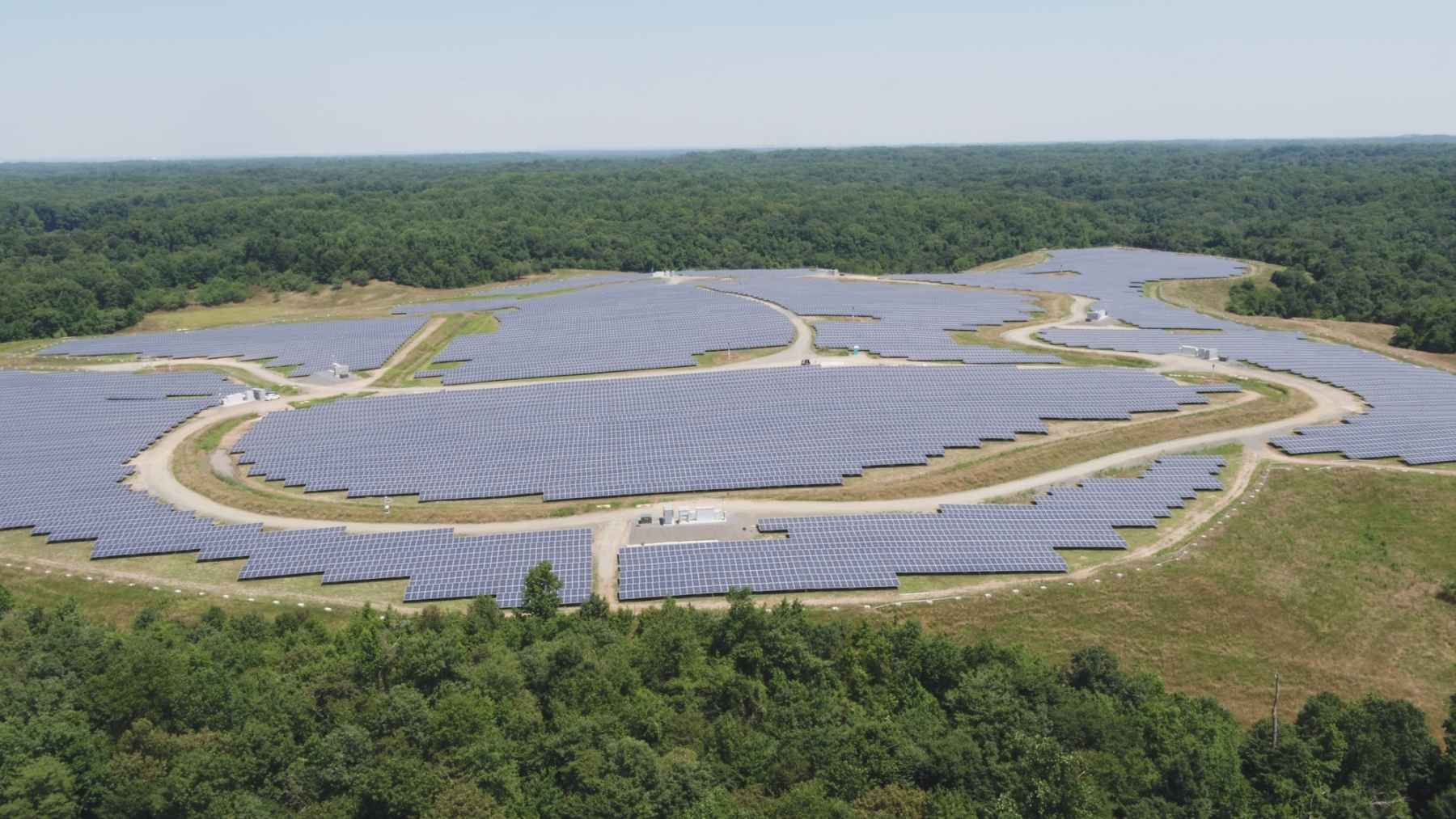
Annapolis, Maryland, has a solar park sitting on top of its old city landfill. Depending on which line of the city’s paperwork you read, it’s an 18-megawatt plant, a 12-megawatt plant or a 4-megawatt deal. The city’s own project page even says Annapolis buys its 4 megawatts “per day,” which is a little like saying your car makes 300 horsepower per week.
All three numbers hold up. They just measure different things, and once you untangle them, the landfill turns out to be a pretty clever bit of engineering.
For decades, city garbage trucks hauled the town’s trash up to the top of that hill, just off Route 450, according to Maryland’s Department of Natural Resources. Once it filled up, the landfill got capped and was left alone for a long time. Now the City of Annapolis says the park covers about 57 acres and holds 52,416 solar panels, each rated at about 345 watts. I ran that math and got just over 18 megawatts, which is where the city’s headline figure comes from.
The city’s pages don’t all agree on the details, though. The FAQ at the bottom of that same page rounds the panel count up to about 55,000, and the city’s page for a planned meadow on the site talks about nearly 80 acres of panels. I’d trust the 52,416 figure, since it’s also the number the panel maker put out. As for the acreage, I can’t tell you for sure which one’s right. It’s possible the bigger number takes in the open ground around the arrays, but the city doesn’t break it down.
So is it 18 megawatts or 12?
It’s both. Solar panels make direct current, or DC, the same kind of electricity that comes out of a battery. The grid runs on alternating current, or AC, so everything the panels produce has to go through inverters first. In Annapolis, the panels add up to 18 megawatts DC, and the inverters can hand the grid 12 megawatts AC at most.
So why build more panel capacity than the inverters can pass along?
Because panels almost never hit their rating. That 345-watt figure comes from a lab test, with bright sun on a panel held at 77 degrees Fahrenheit. Out on a Maryland hilltop you get haze, dirt, summer heat and a sun that sits low in the sky for a big chunk of the day. So developers oversize the panel side on purpose, and the city lists the ratio here as 1.5 to 1. On a perfect summer noon, the extra power gets clipped off. The rest of the time, the extra panels keep the inverters closer to full, and frankly that’s a pretty sensible trade if you’d rather waste a little sunshine at noon than leave expensive inverters loafing around all morning.
Then there’s the megawatt-hour. A megawatt is how hard the plant can push at any given moment, like the horsepower number on a spec sheet. A megawatt-hour is how much it actually delivers over time, which is closer to the miles on your odometer. So “4 megawatts per day” doesn’t quite work as a unit. What the city means is that it buys a 4-megawatt slice of what reaches the grid.
Every rack rests on concrete
A capped landfill is basically a hill of old garbage sealed under a liner and a layer of soil. Poke holes in that liner and water can get into the trash, and keeping water out of the trash is the whole reason the cap exists. That’s a problem for solar, because the usual way to build a solar farm is to drive steel posts straight into the ground.
Annapolis didn’t go that route. According to the DNR, the panels are mounted on concrete slabs, which keep them from damaging the geomembrane, a tough synthetic sheet laid over the buried waste. The city’s meadow plans make the stakes pretty clear too, since they say the membrane can’t be disturbed. Nothing up there tracks the sun, either. Federal Energy Information Administration data, as compiled by GridInfo, lists every panel as fixed in place, tilted 12 degrees and aimed due south. We’ve seen the same no-digging rule shape Houston’s planned landfill solar farm and the much smaller array New Haven switched on this summer.
Who’s buying all that power?
Not you, unless you count your taxes. Residents can’t buy electricity from the park directly. Anne Arundel County takes half the output, and the Anne Arundel County Board of Education takes 17%. The city gets the other third, and that’s the 4-megawatt share from earlier.
The city paid 7.75 cents per kilowatt-hour for its slice in the first year of the deal, with a small bump every year after that. It says the park now covers about 40% of what its own facilities consume. The city still owns the land, Novis Renewables leases it and runs the plant, and Annapolis puts its take at about $150,000 a year. That’s a pretty good return on a hill you couldn’t put a house on.
When it opened, the park got billed as the biggest solar plant on a capped landfill anywhere in the country. The city’s page now calls it the former holder of that title. I’d take that as a sign other cities have been busy copying the idea.
Next up is a meadow under the panels
The city wants to turn the leftover open ground up there into pollinator habitat. According to its project page for the meadow, the design is finished and the work is waiting on an environmental review. I haven’t found a newer update, so I can’t tell you when the first seeds go in. The candidate plant list includes milkweed for monarch butterflies, coneflowers and black-eyed Susans.
It’s a trickier landscaping job than it sounds like it would be. Whatever gets planted can’t disturb the membrane under the soil, and the city says the short panel stands will shape which plants make the cut, because of both height and root depth. So basically, the flowers have to stay short and keep their roots to themselves.
The panels, meanwhile, keep plugging away. The same EIA data has Annapolis Solar Park at 22.9 gigawatt-hours for the 12 months through December 2025, a little short of the roughly 24 gigawatt-hours its developer projected when the park opened. That’s about 22% of what the plant would make running flat out around the clock, a bit better than the 20% the city uses in its own estimate.