
Tidal power has a coverage problem, and it is not the machines. A turbine gets lowered into some furious channel, the drone footage makes the rounds for a day, and then the story goes dark before anyone learns whether the thing ever earned its keep.
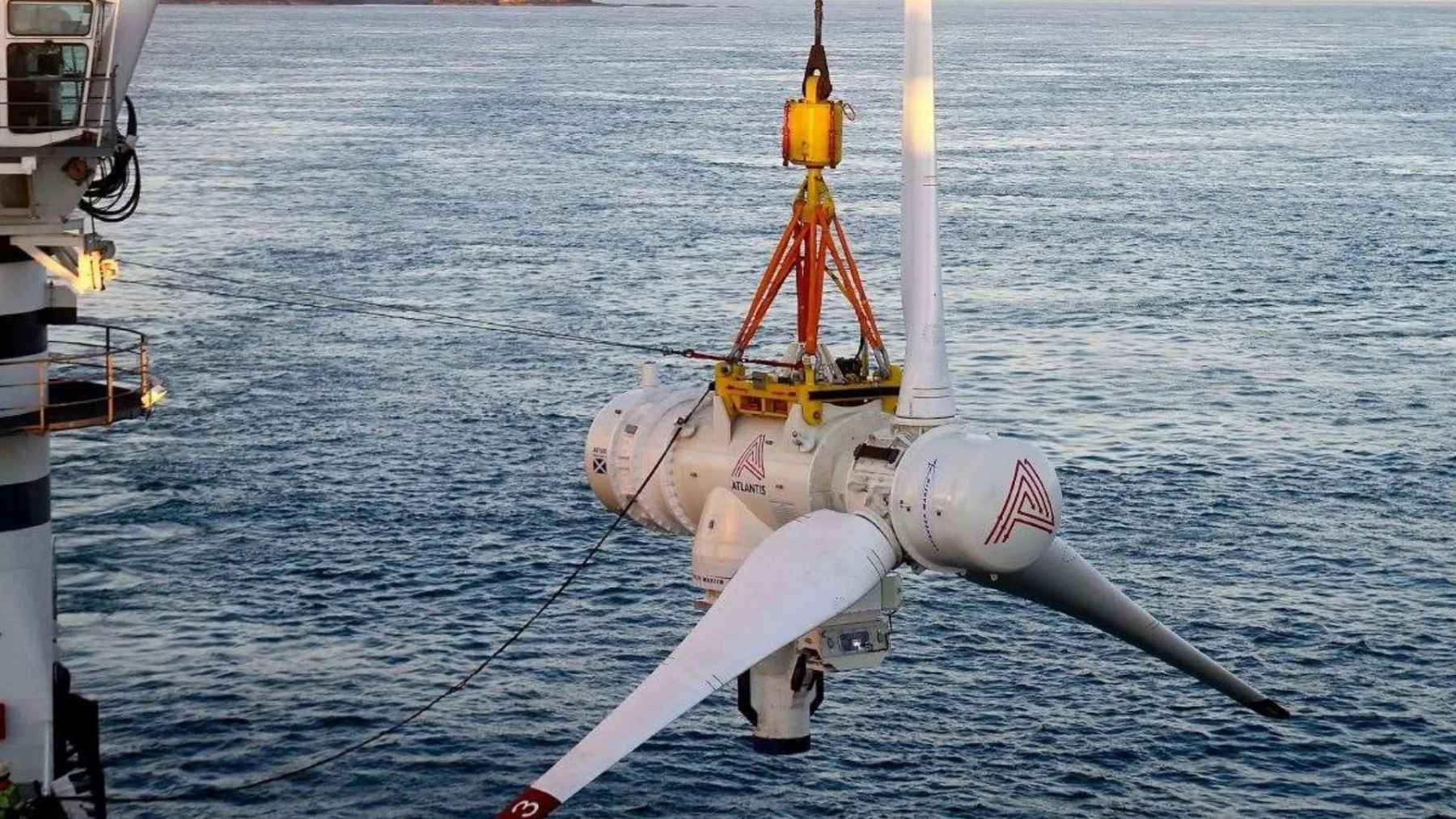
So here is a follow-up worth having. Since June 2025, a 1.1-megawatt turbine called the AR1100 has been sitting on the floor of Japan’s Naru Strait with a national certification to its name, quietly exporting electricity to the grid. No victory lap, no second press tour. Just kilowatt-hours.
For a sense of what that means, look at what counted as American tidal news the very week this piece went up. On Monday, Offshore Energy reported that an Alaska startup called Sitkana will test a prototype turbine at a site in the Cape Cod Canal, a facility that is still being upgraded so it can one day host grid-connected testing. One country is getting ready to test. The other has been on the grid for over a year.
Japan ran the 500-kilowatt homework first
The AR1100 did not appear out of nowhere. Back in 2021, Proteus Marine Renewables, a Bristol-based outfit born in a 2022 management buyout of SIMEC Atlantis Energy’s tidal division, ran a 500-kilowatt pilot called the AR500 in the same strait. The smaller machine posted 97% availability, which in marine energy is the kind of number that gets contracts signed.
It did. In November 2022, Proteus signed an equipment supply and works contract with Kyuden Mirai Energy, the Japanese firm acting as the project’s representative company, under a demonstration program backed by Japan’s Ministry of the Environment. The plan was not a new turbine. It was an upgrade of the proven one: same modular architecture, new pitch and yaw systems, roughly double the rating.
Assembly began in August 2024, and the finished machine went into the water in February 2025, in the strait that threads the Goto Islands off Nagasaki Prefecture. Philip Archer, Managing Director of Proteus Operations Japan, framed the goal at the time as commissioning “Japan’s first ever MW-scale grid connected tidal system.”
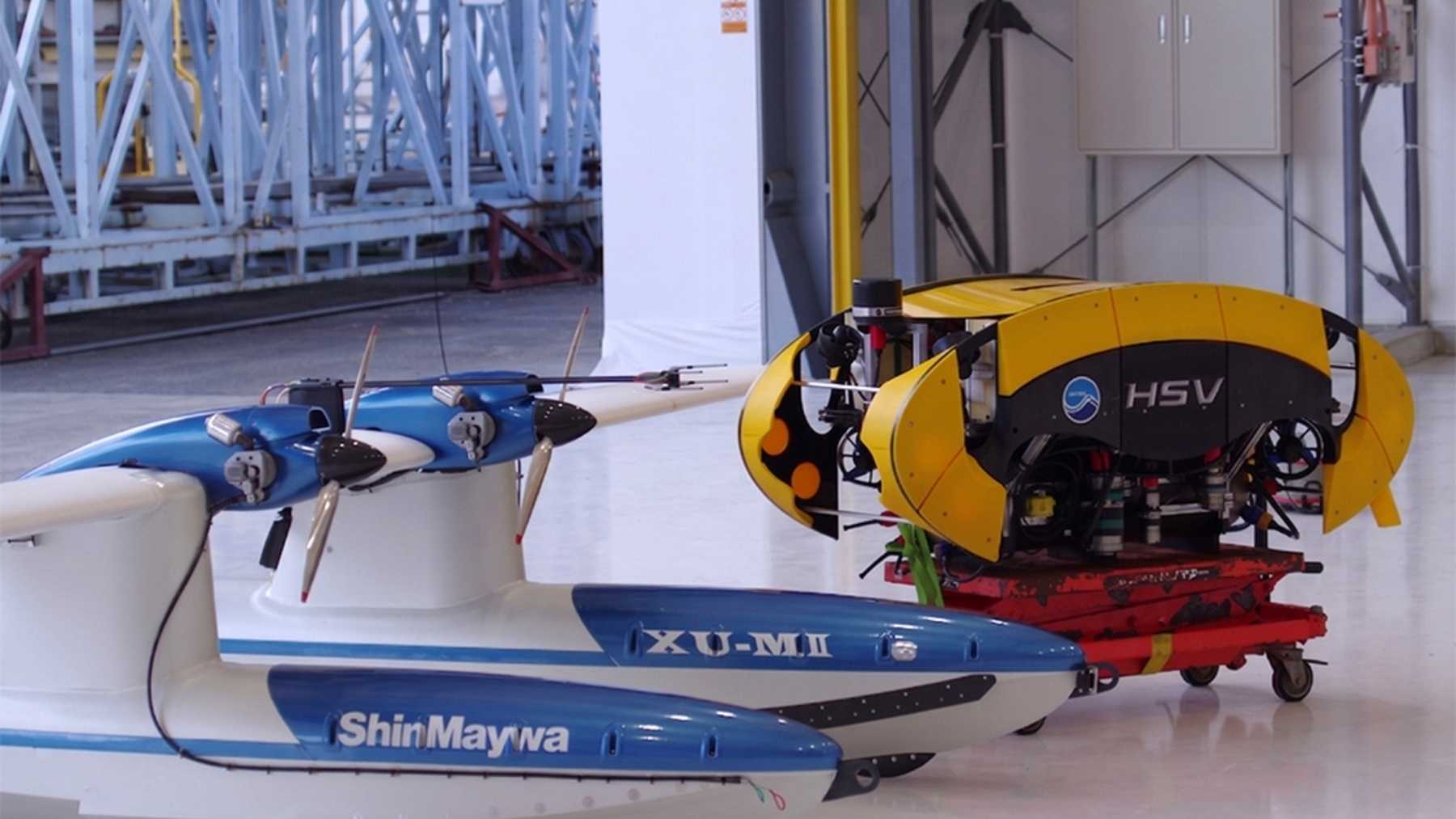
It also slots into a wider Japanese habit of poking at the ocean from every direction, including a 330-ton machine shaped like an airplane that flies underwater, parked in one of the planet’s strongest currents. The difference is that most of those projects are still experiments. This one has a meter running.
Certification meant proving it could fail safely
The part that separates this machine from the demo circuit came in June 2025, when Japan’s Ministry of Economy, Trade and Industry signed off on it. METI is the national authority that decides what gets to feed the Japanese grid, and its blessing is not a formality.
According to Proteus’s certification announcement, approval followed performance demonstrations of the unglamorous stuff: safe shutdown procedures, grid compliance, emergency response. In short, the regulator wanted proof the turbine could stop behaving as reliably as it starts.
Drew Blaxland, the company’s CEO, said the certification demonstrates that “tidal power is now a viable, scalable solution for clean electricity generation.” His company, by its own count, has generated more than 20 GWh across 25-plus deployments in six countries, so this was less a startup’s first exam than a veteran adding a very hard jurisdiction to the resume.
If you are keeping score on the bureaucracy, two different ministries touched this project. The Environment Ministry funded the demonstration program through Kyuden Mirai Energy. METI issued the certificate that lets the electricity flow commercially. Different stamps, different jobs, both required.
The hardware itself is refreshingly legible. Three composite blades spin on a horizontal axis, and each blade’s angle is trimmed independently by electromechanical pitch drives housed in the hub, so the rotor can shed load when the current gets pushy.
Four times a day the tide reverses, and a hydraulically actuated locking yaw system swings the entire nacelle around to face the new flow. That is a component signing up for a slow pirouette four times a day, every day, in seawater, with no mechanic on call.
The whole assembly sits on a gravity foundation, staying put by being too heavy to argue with, the same holding logic Proteus uses on its turbines in Scotland’s Pentland Firth. A subsea cable carries the output to a shore station, where it is converted for grid distribution.
America’s best tidal site is still filling out forms
None of this would sting from an American chair if the US were short on tides. It is not. Cook Inlet in Alaska holds an estimated 80 terawatt-hours per year of extractable tidal energy, according to the American Tidal Energy Project, more than 15 times what the Railbelt grid, the 700-mile spine from Fairbanks to Homer, consumes today.
The flagship effort there is ORPC’s East Foreland project, which filed a draft pilot license application with federal regulators in 2025. The proposal covers 1.98 megawatts across two devices, with up to $29 million in Department of Energy follow-on funding riding on the project advancing.
And one of the two technologies selected for that site is the Proteus AR Series. So the turbine family America hopes to install one day is the same one Japan already certified and runs. The hardware is not the holdup. The process is, and if you want to see how strange American water-power licensing can get, spend two minutes with the 35-kilowatt turbine in Alaska that gets regulated like Hoover Dam.
Which brings us back to this week’s prototype. Sitkana’s concept, small modular units that gang together into arrays, is genuinely interesting for remote coastal villages. But the Bourne test site is only now being upgraded, with Massachusetts clean-energy money, toward hosting grid-connected trials. The distance between preparing a site for connected tests and holding a national certificate since June 2025 is the entire story.
The 3-megawatt sequel already has a date
Proteus treats the AR1100 as the opening act of its Series 2 line. The next entry is the AR3000, a 3-megawatt machine slated for deployment in 2028 and pointed first at French waters, where a pilot farm at the Raz Blanchard is waiting on its own final paperwork.
In Japan, Proteus and Kyuden Mirai Energy said after certification that they were assessing further deployment opportunities in the country. That was June 2025 talk, and no second Japanese machine had been announced as of publication, so file it under intentions rather than orders.
One more thing worth respecting: Proteus has not published an annual generation estimate or a homes-powered figure for the site. Nobody is inflating the math here, which in the renewables press is practically a collector’s item.
Step back and the point is small and sharp. Tidal power’s entire sales pitch is predictability, the one renewable you can schedule years in advance, and predictability is proven with operating history, not launch events.
Which is why the most valuable thing the AR1100 produces is not the 1.1 megawatts. It is the paper trail: a national regulator’s stamp, a working grid connection, and month after month of nothing going wrong. In this business, boring is the trophy, and right now it lives in the Naru Strait.