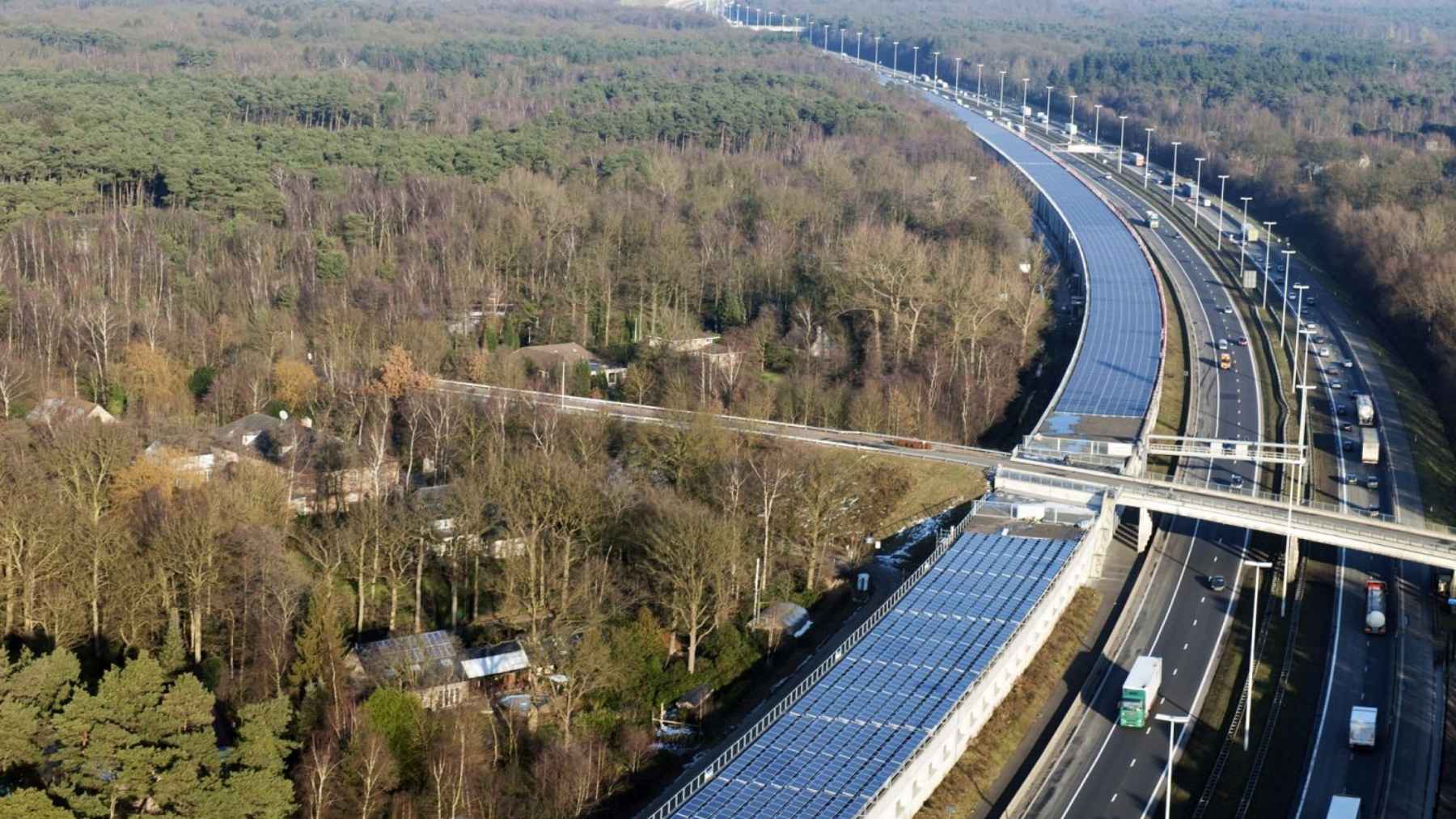

Putting solar panels on a tunnel sounds like a joke with an obvious punchline, since tunnels aren’t exactly famous for their sunlight. But just north of Antwerp, Belgium’s high-speed line toward the Dutch border runs through a tunnel that’s been making solar power since 2011. The trick is that it was never underground in the first place.
The “tunnel” is a concrete box built over the tracks, more than 2 miles of it, covering the HSL 4 high-speed line where it passes through the towns of Brasschaat and Schoten. From the outside, it’s less a tunnel and more the world’s longest carport.
Infrabel, the company that runs Belgium’s rail infrastructure, put the box up in the 2000s as part of the HSL 4 build. What that created, whether anyone planned it or not, was 12.4 acres of flat concrete roof sitting in open sunlight with a railroad’s power system directly below it.
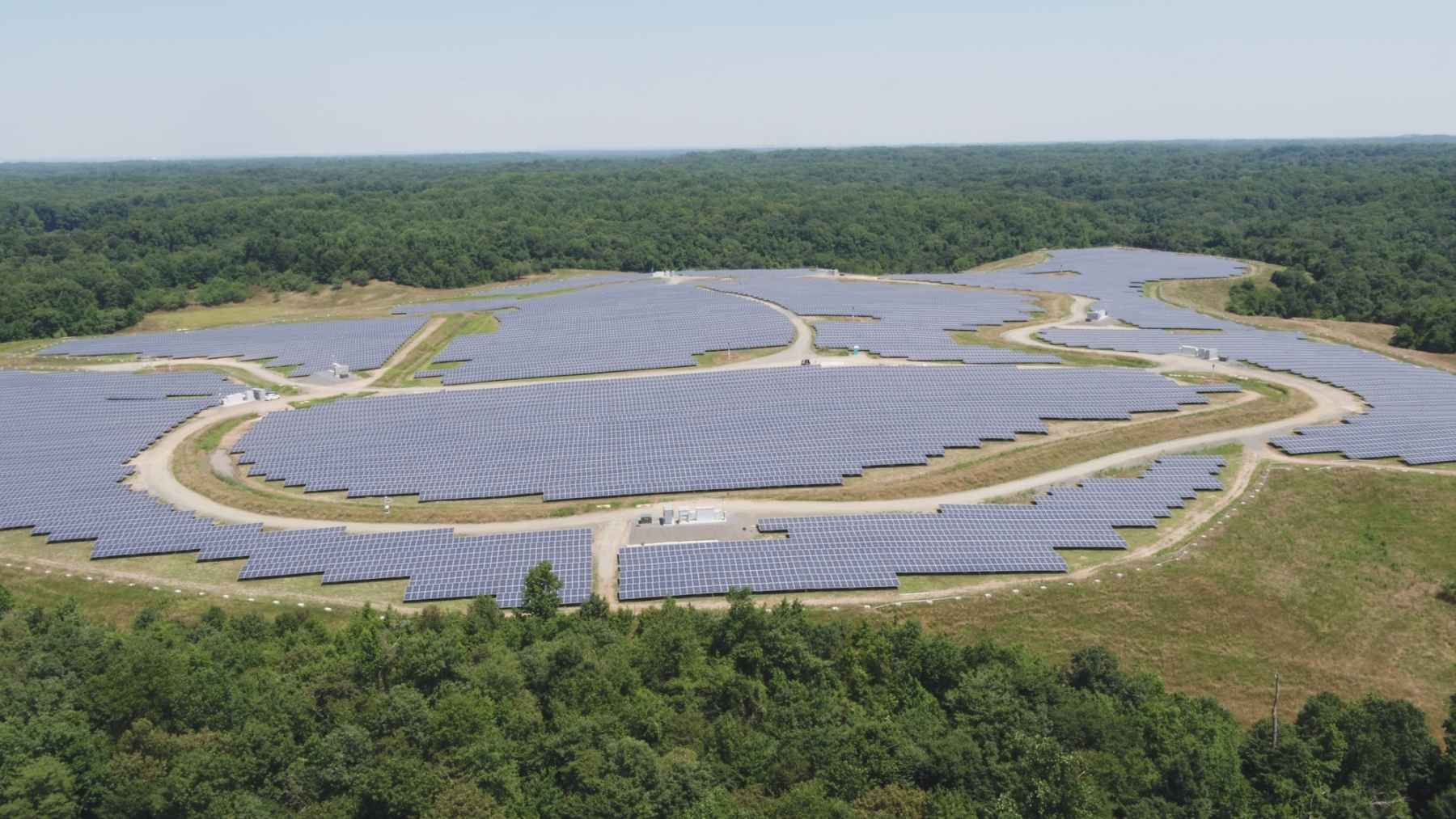
In 2011, Infrabel and the solar developer Enfinity finished covering that roof with 16,000 solar panels rated at 245 watts each. They blanket roughly 538,000 square feet (50,000 square meters) of concrete, which means a working high-speed railroad now runs under a solar farm. AFP put the price at 15.6 million euros, about $20 million in reports from the time, with the two towns and a pair of local financing companies chipping in alongside the rail operator.
How do you put 16,000 panels on a roof you can’t drill into?
Very carefully, and with plenty of ballast. The panels sit on weighted tile structures that hold everything down by sheer mass, so the crews never had to punch a fastener through the concrete, according to New Atlas, which covered the build at the time.
That detail matters more than it sounds like it should. Every hole in a roof is a future leak, as you’ll know if you’ve ever paid a roofer. And there’s a live high-speed railroad under this particular roof. You don’t get to shut down the Antwerp-Amsterdam line for a week because a mounting bolt started letting rainwater drip onto the overhead power lines. So the ballast tiles basically removed the scariest failure mode from the whole project before it started.
The work itself went fast. Panels started going down in the summer of 2010, and the array was done after roughly 12 weeks, initially wired only into the railroad’s own systems while the connection for the trains got sorted out.
The first solar train left Antwerp in June 2011
On June 6, 2011, the first train drawing power from the tunnel pulled out of Antwerp toward the Dutch border, running its first several miles partly on electricity generated a few feet above the passengers’ heads. The project was billed at the time as the first use of rail infrastructure in Europe to generate green energy.
“By using electricity generated on-site, we eliminate energy losses and transport costs,” Enfinity’s Steven De Tollenaere said at the launch, per AFP.
The output goes wherever the railroad needs it. Infrabel lists the tunnel at 3,300 megawatt-hours a year, feeding signaling, lighting and station heating along the line, plus the trains themselves. At the launch, the partners said that came to about 4,000 trains a year running entirely on solar power, the equivalent of one full day of Belgian rail traffic. That train count comes from the 2011 opening, so it’s a launch estimate more than a current count. The production number behind it, though, is the one Infrabel still publishes.
Fifteen years later, it’s still on Infrabel’s books
Solar pilots from the early 2010s have a rough survival rate, and the flashy ones tended to die first. France’s much-hyped solar road didn’t even make it three years before the demolition crews showed up. If you’d been betting in 2011 on which experiment would still be alive in 2026, a tunnel roof in Flanders wasn’t the obvious pick. Yet Infrabel’s sustainability page still describes the installation in the present tense today, same panel count, same annual output.
Is it really still making 3,300 megawatt-hours? Probably not exactly, frankly. Solar panels typically lose a fraction of a percent of output every year, so after 15 summers the real number’s almost certainly drifted below the brochure figure, and as far as I can tell Infrabel hasn’t published a year-by-year production history for the site. What the operator does keep publishing is the installation itself, still listed as a working part of its renewable energy push.
The tunnel has also aged into being the sensible one, which I doubt anyone predicted in 2011. Engineers have since bolted solar onto the rails of a live Swiss train line, stood 37,000 vertical modules along a Frankfurt runway, and roofed a Bavarian highway with a canopy that cost more than ten times per kilowatt what the same panels cost lying in a field. Against that crowd, the Belgian version looks arguably like the smartest of the bunch. The structure already existed, and someone else had already paid for it. All the solar project had to buy was panels and tiles.
Whether anyone copies it depends on how many spare above-ground tunnels the world has lying around, which I’d guess isn’t many. But the one Belgium has keeps doing its job. Infrabel’s own sustainability page still carries the Antwerp solar tunnel at 16,000 panels and 3,300 megawatt-hours a year, feeding the high-speed line that runs underneath it.