
- 1 MONTH AGO · MILITARYA 56-foot British drone boat built to carry 8,818 pounds in a 20-foot shipping-container slot spent September off Portugal catching what sonobuoys radio back, a job a patrol aircraft burns flight hours circling to do, and the Royal Navy has already bought a second receiver
- 1 MONTH AGO · MILITARYAn 18,750-ton submarine, the biggest America ever built, came home for the last time after firing in the strikes on Iran, and the week she tied up the Navy signed for nine attack submarines that haul 40 cruise missiles apiece, four of them to match the 154 she carried alone
- 4 WEEKS AGO · MILITARYA 5,000-ton British ice patrol ship that once pushed to within 650 miles of the North Pole came home at the end of a tow line after two years in and out of a shipyard, and the ship she replaced sat tied up for seven years before a tug took her away for scrap
- 2 WEEKS AGO · MILITARYA 17,500-ton British missile submarine sat in an English shipyard for 89 months getting a new reactor core to replace one meant to last her whole life, longer than the 83 months it took to build her, while her three sisters got through theirs in about 42
- TODAY · THIS ARTICLEA 17,500-ton British nuclear missile submarine just came home to its Scottish base after an estimated 217 days hidden underwater, about 12 days longer than any Royal Navy patrol before it, and the Ministry of Defense will not confirm how long the boat was at sea
Normally, the navy that owns a ship is the best place to find out how long it’s been gone. With Britain’s nuclear missile submarines, it’s pretty much the last place you’d look.
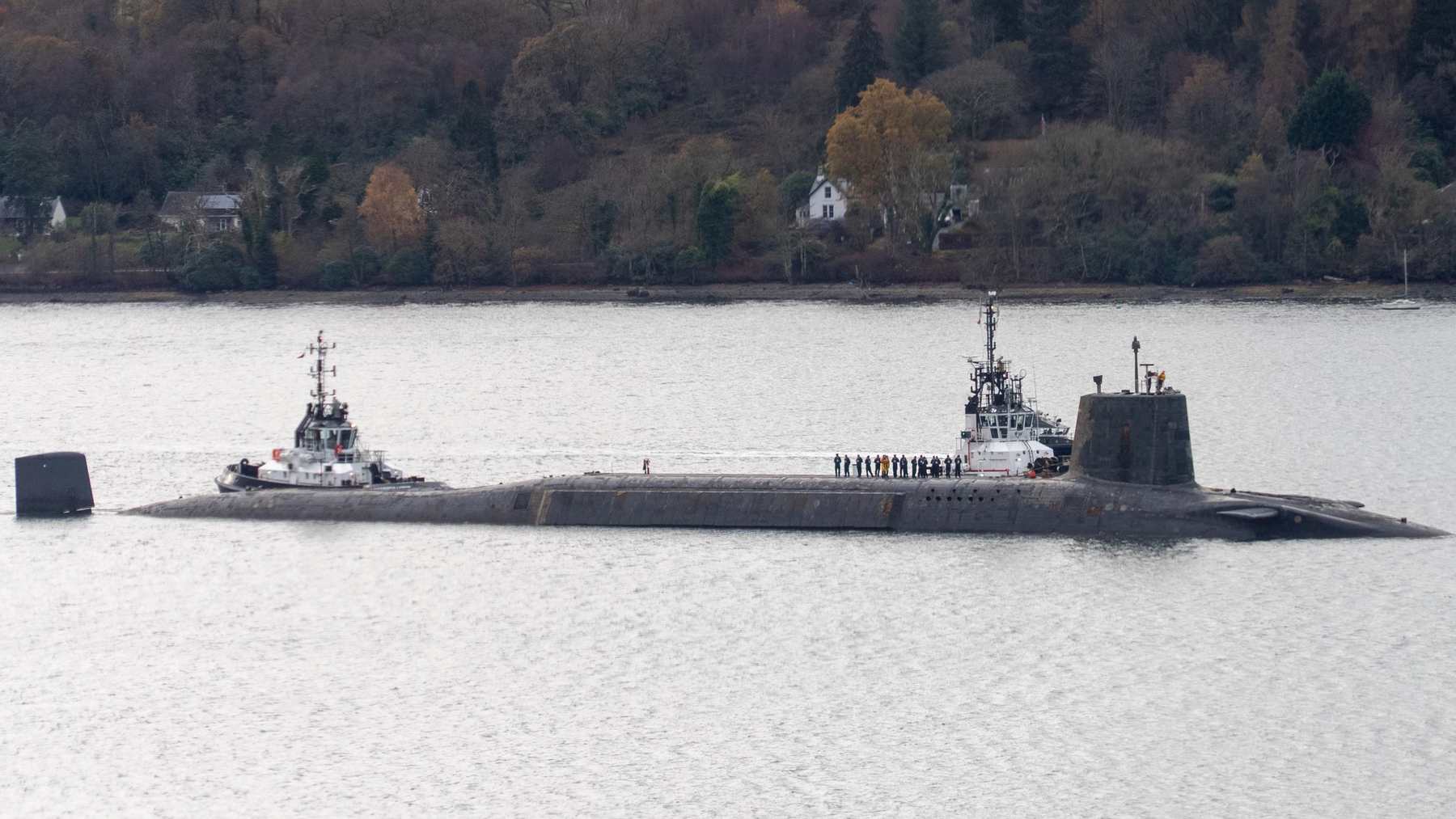
So when one of them came up the Clyde toward Faslane, its home base in Scotland, on Sunday morning, the news didn’t come from the Royal Navy. It came from Michael Deveney, a local photographer who posted shots of HMS Vengeance heading upriver and wrote that she was finally home after seven months away. UK Defence Journal ran his pictures later that day.
Vengeance is one of the four Vanguard-class submarines that carry Britain’s Trident nuclear missiles. She displaces about 17,500 tons submerged and runs about 492 feet long, and the Royal Navy describes the class as the largest submarines ever built in the UK.
So how long was she actually out there?
Nobody official will say, but the estimate’s pretty solid. Open-source trackers saw a Vanguard-class boat leave Faslane on April 12, and the defense commentators UK Defence Journal relies on figure that was Vengeance. If that’s right, a November 15 return puts the patrol at about 217 days.
That would beat the previous unofficial record by about 12 days. That one was about 205 days, set by a boat that got home in April. Our earlier coverage couldn’t pin down which boat it was, since the ministry doesn’t name the submarine on patrol. UK Defence Journal now identifies it as HMS Vanguard, which also held the mark before that, at 204 days.
One detail lines up nicely. Vengeance apparently left on April 12, and the 205-day boat got home on April 18. That’s how this is supposed to work: the next boat heads out before the last one comes in, so there’s never a day with an empty patrol slot.
So why is it always an estimate?
Basically, because the Ministry of Defense doesn’t confirm how long deterrent patrols last, or even which boat is on one. So the counting gets done from the shore, by people who log when a boat leaves and when one comes back, and then do the subtraction.
The ministry’s been pretty upfront about why. In a written answer last year, quoted by UK Defence Journal, it said, “We do not disclose details of the operation,” and added that the information could be used to undermine the mission and the people carrying it out. Which is fair enough. A missile submarine is supposed to be the one thing nobody can find. You can’t really hide something if you publish its schedule.
That means I can’t tell you it was exactly 217 days, and neither can anyone else outside the Navy. Deveney’s seven months is a photographer’s round number, not a log entry. What we do know is that April 12 to November 15 is 217 days on a calendar, and that’s where the figure comes from.
Why do the patrols keep getting longer?
If you’re not familiar with how this works, the idea is pretty simple. As long as one armed boat is hiding somewhere at sea, nobody can knock out Britain’s nuclear weapons with a single surprise attack. Britain has kept at least one missile submarine on patrol at all times since 1969, under what the Navy calls Operation Relentless.
Four boats can share that job with some breathing room. Put one in the shipyard for a long overhaul, though, and the other three have to cover its turns, so each patrol stretches out. It’s a bit like a four-person night shift where one guy’s been out sick for years.
Britain’s been running short like that for a while. Vanguard’s own overhaul ran 89 months, which we went through in detail last month, and UK Defence Journal reported in April that the overrun pushed back HMS Victorious’s maintenance too. As of October, Victorious was still sitting in the Devonport yard.
There’s some arguably good news in there, though. In October, three of the four Vanguard-class boats were at sea at the same time, according to UK Defence Journal, with one believed to be on patrol and two on sea trials ahead of taking over. Two boats getting ready to take the watch is, on paper at least, more cushion than the fleet has had in a while.
Will that shorten the next patrol? We’ll find out the same way we found out about this one. From the riverbank.
Vengeance didn’t come home looking showroom fresh
UK Defence Journal describes her hull as heavily weathered, with crew standing out on the casing, which is the flat deck that runs along the top of the boat. That’s what seven months in salt water does to the outside of a submarine, and it doesn’t tell you anything about what’s going on inside. Frankly, I’d look a bit weathered too after seven months in a tube with no windows.
For a sense of how many people ride out these patrols, the Royal Navy said the boat that came home in April had 140 submariners aboard. That’s a lot of missed birthdays.
When do the old boats get relief?
Not soon. The four Vanguards are due to be replaced by the new Dreadnought class starting in the early 2030s, according to UK Defence Journal. Until then, as you’d expect, it’s the same four hulls covering every day of the year, and it’s probably safe to assume long patrols aren’t going away. I wouldn’t be shocked if 217 days turned out to be a fairly short-lived record, honestly.
As things stand, Vengeance’s count sits where the shore-watchers left it: out of Faslane on April 12, back up the Clyde on November 15, and about 217 days in between.
Credit: BBC
 A torpedo-shaped American underwater drone carrying a synthetic-aperture sonar just beat three rival bidders to hunt sea mines for the Royal Navy, which picked 24 of them in sets of three, each set with its own machine that lowers them into the water and hauls them back aboardMilitary · 6 days ago
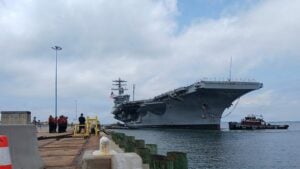 A 100,000-ton nuclear carrier left her Pacific home port for the last time, rounded South America and tied up in Virginia to be retired, and she is still in commission and landing jets months later because her replacement is late, with her reactors to be emptied once she retires in MarchMilitary · 2 days ago
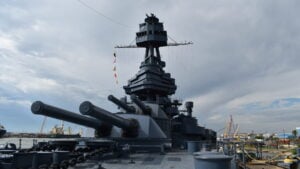 A 27,000-ton battleship that once had 45 pumps taking thousands of tons of water out of her hull is having a 32,000-square-foot wood deck finished at a Texas yard she has occupied since 2022, and she’ll move about a mile to a pier where officials hope to open her by the end of 2027Military · 3 days ago