
Every big American campus keeps a power plant somewhere behind the parking decks, burning something to make steam for the radiators. The University of Illinois Urbana-Champaign has Abbott, a cogeneration plant that started sending steam to campus in 1941 and still runs three coal-fired boilers alongside three gas boilers and two gas turbines. That steam heats about 150 buildings. The university has now asked the federal government for permission to put a nuclear reactor into the same system, and the number on the application is bigger than anything running on an American campus today.
The Nuclear Regulatory Commission project page lists the power level at 45 megawatts thermal. The University of Missouri says its reactor, at 10 megawatts, is the highest-power university research reactor in the United States, a rating it has held since 1974. Illinois is asking for four and a half times that.
Forty-five megawatts is a lot of reactor for a campus
Abilene Christian University holds the only other advanced reactor construction permit at an American university, issued on September 16, 2024 for a molten salt research reactor rated at 1 megawatt thermal. Illinois wants 45 in Champaign County.
Illinois has done this before, at a much smaller size. A TRIGA Mark II ran in the middle of campus for 38 years, from 1960 to 1998, and its fuel stayed on site until 2004. The site is greenfield now.
The application went to the NRC on March 31, 2026. Staff started the acceptance review the next day, issued the docketing letter on May 18, and sent the university a review schedule on June 16. A kickoff meeting followed on June 23. The Federal Register notice opened the window for anyone who wanted a contested hearing, and closed it on July 27, 2026.
The heat leaves the core in helium and lands in salt
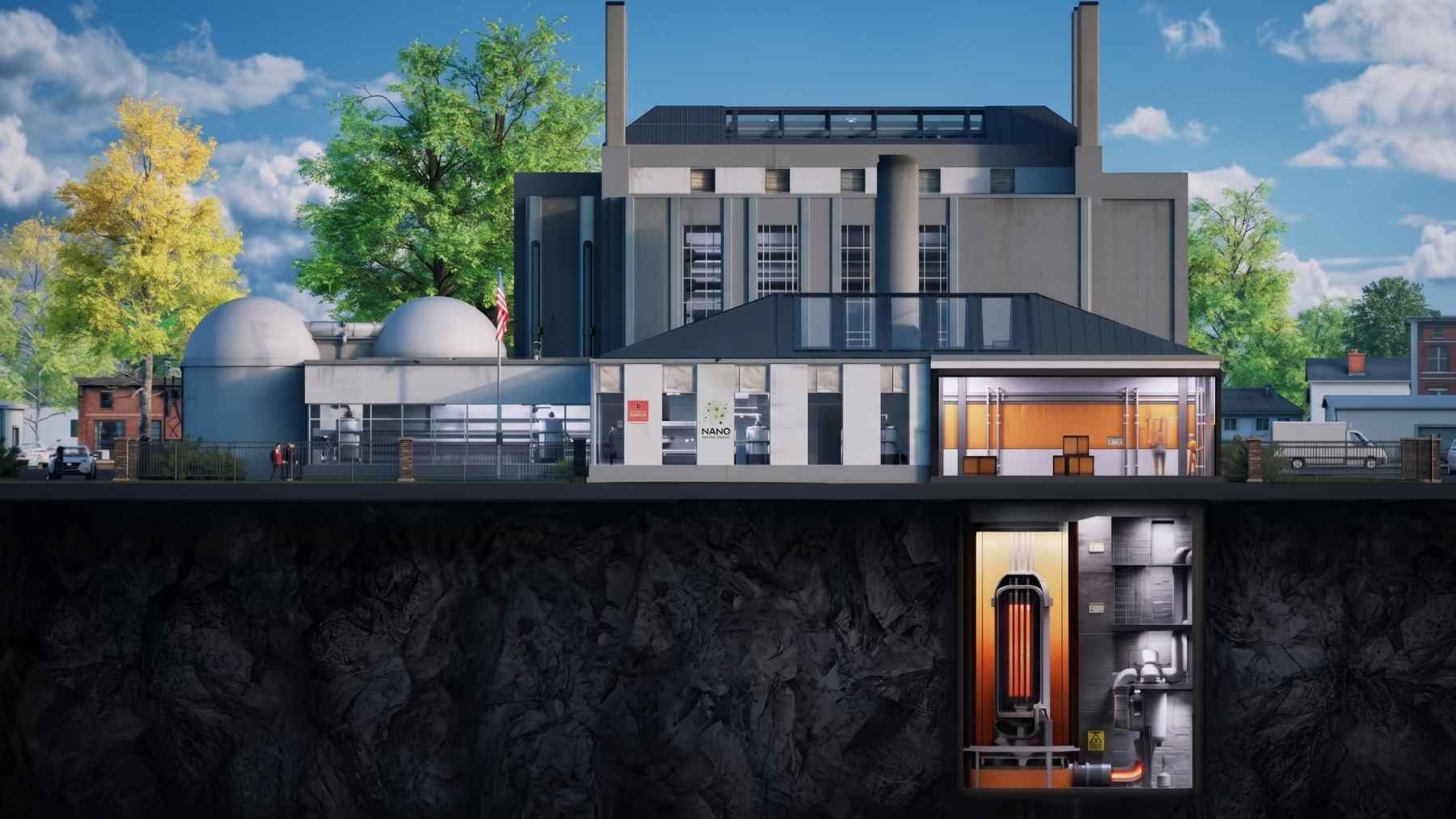
Nothing about the reactor itself is exotic by the standards of the last 50 years, which is the point of picking it. Helium runs through a graphite-moderated core and carries the heat out. The fuel is uranium oxycarbide sealed inside tristructural isotropic coatings, and those coated particles are packed into a ceramic matrix that gets pressed into annular cylindrical pellets. The NRC does not classify this plant as having a containment building in the usual sense. It calls the fuel pellet itself the containment, counting the kernel, the coating layers and the pellet’s outer dense surface layer.
Heat coming off the helium goes into a molten salt thermal storage system, which then feeds whatever is bolted onto the other end. Steam, in this case, for the campus.
One consequence of the design showed up in the paperwork two years ago. Regulators normally require a research reactor to have emergency electrical power. In a safety evaluation issued on July 25, 2024, NRC staff accepted dropping that criterion here, because the reactor is designed to shut down safely without coolant, without electricity and without an operator. The engineers also went digging through the accident record of Fort St. Vrain, the high-temperature gas reactor that ran in northern Colorado from 1979 to 1989, to build the list of events the new machine has to survive. The Army is going down a parallel road with a nitrogen-cooled unit at Fort Campbell, in a program where it will not own or license a single reactor on its own posts.
Abbott still has three coal boilers in it
The plan is to partly repower Abbott, which Facilities & Services says supplies 70 to 75 percent of the Urbana campus energy demand and produces enough electricity to run 25,000 average American homes. The campus climate plan has carried an objective to stop burning coal at Abbott for years. Coal and gas both still get burned there when the winter heat load peaks.
So the reactor is not being sold to the campus as a science toy. It is being sold as a boiler.
The university will never own the fuel, and cannot sell the power
Fuel comes through the Department of Energy’s University Fuel Services Program, which means DOE keeps title to the uranium and leases it out. At the end of the reactor’s design life the spent fuel goes back to DOE. That is a better arrangement than most operators get, given that American utilities are sitting on 95,000 tons of spent fuel with nowhere to send it.
Illinois is applying under a class 104(c) license, the category for non-commercial research reactors. Federal law puts hard limits on that category. A facility gets treated as commercial if it recovers more than 75 percent of its annual costs from selling what it makes, or if more than half its annual operating cost goes toward production for sale. The university states plainly in its own filings that no sales of energy are planned.
Steam for the dorms, then. No invoices.
The design came out of a bankruptcy auction for $8.5 million
Ultra Safe Nuclear Corporation developed this reactor and then went into Chapter 11. A Delaware bankruptcy court approved the sale of its micro modular reactor business on December 18, 2024, and NANO Nuclear Energy closed the purchase on January 10, 2025 for $8.5 million in cash, against the roughly $120 million and nearly a decade of prior development that NANO founder Jay Yu credited to the previous owner at a campus event in October 2025.
The buyer has money now. NANO reported approximately $580 million in cash, cash equivalents and short-term investments as of June 30, 2026, and 85 employees and contractors, up from 31 a year earlier. It spent $18.7 million on operating activities over the nine months ending that day.
It also has an idea of who else wants these. The same August 12 quarterly update reported a completed feasibility study for 1 gigawatt of KRONOS units at BaRupOn’s 701-acre manufacturing and AI data center campus in Liberty, Texas. Nobody is putting a research license on that one.
A construction permit is not permission to run anything
Part 50 licensing runs in two steps, and Illinois is on the first. A construction permit lets the university build. Operating the thing requires a separate application, a final safety analysis report, technical specifications, security and emergency plans, and a fuel that has actually been qualified.
The fuel is not qualified yet. NRC staff approved the methodology for qualifying it on April 1, 2025, and said explicitly that approving the method does not qualify the fuel. Long-duration irradiation tests are planned at the High Flux Reactor in Petten, in the Netherlands, with short-duration failure tests at MIT’s research reactor, followed by high-temperature furnace testing of the irradiated samples.
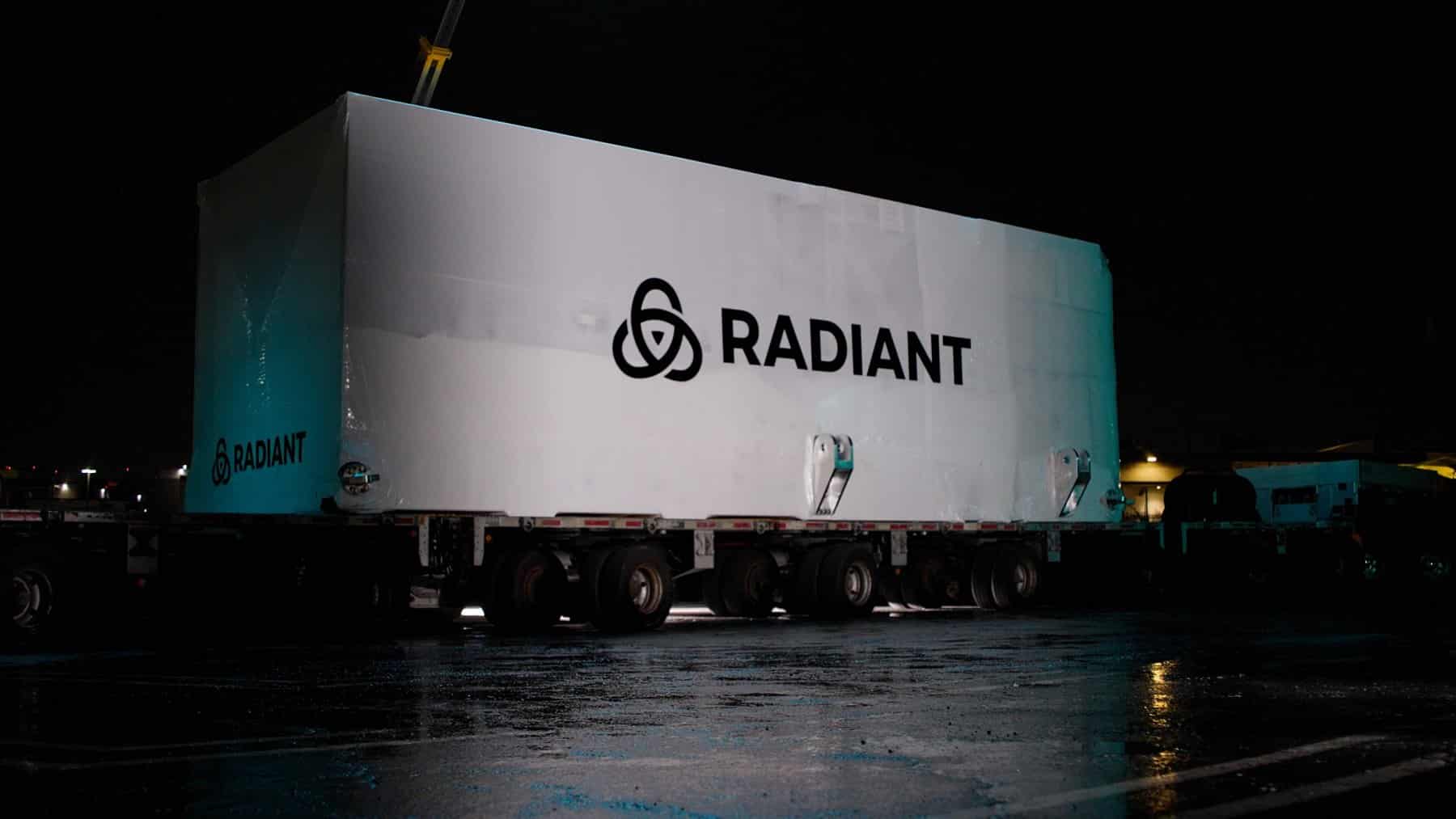
Meanwhile nobody has a KRONOS running anywhere. That is not unusual in this sector right now, where a 1-megawatt unit trucked out of a Los Angeles suburb still has not gone critical after crossing 1,000 miles of interstate.
NANO expects to start construction in the second half of 2027, which lines up with the review calendar rather than driving it. The NRC updated its Illinois project page on August 27, 2026, and the two dates it still carries are February 2027 for the draft safety evaluation and September 2027 for the final one.