
Nuclear power has a reputation for paperwork, and there’s a reason for it.
Before a new reactor in this country gets switched on, somebody has to spell out exactly what could go wrong with it, what’s in place to stop each of those things, and who’s trained to deal with them if they happen anyway. Feel bad for whoever has that job.
On October 7, Last Energy announced that the Department of Energy had approved that document for the pilot reactor the company’s building on Texas A&M’s RELLIS campus in Bryan, Texas. It’s called a Documented Safety Analysis, or DSA, and the announcement describes it as “the final and most comprehensive safety analysis in the DOE authorization process.”
DOE has one step left. Next up is what the department calls a readiness review, and once that’s done, it can issue the authorization that lets the reactor start up and go critical.
I’ll admit a safety document isn’t the most exciting thing I’ve ever written about. The reactor’s arguably a lot more interesting, though, mostly because of the steel box it’s sealed in.
So what’s in a Documented Safety Analysis?
Basically, it’s the rulebook for running the place safely. DOE’s nuclear safety rules say a DSA has to describe the facility, identify every hazard it could face, natural or man-made, and work through normal operation, abnormal conditions, and accidents. It then has to lay out the controls that keep workers, the public, and the surrounding environment safe, as well as the programs for training, maintenance, fire protection, and emergency planning.
DOE approved a preliminary version, the PDSA, back in May. The October approval covers the finished one.
The readiness review is a different animal. It’s basically DOE checking that the hardware, the procedures and the crew match what’s on paper before anything starts up, kind of like the final walkthrough before you close on a house. Except this house has a reactor core in it. I couldn’t find a timeline for that review anywhere.
The pilot uses the commercial reactor’s full-size core
Last Energy calls the reactor the PWR-5. Not the catchiest name, but there’s a very scientific and number-y reason. It’s a pressurized water reactor, the same basic type as most of the big reactors already running in the US, and it’s rated at 5 megawatts of electricity, against 20 for its commercial sibling, the PWR-20.
For comparison, the Unity reactor we covered after it went critical in Idaho and the Kaleidos that rode a flatbed out of the Los Angeles area this summer are both 1-megawatt machines.
So why give a 5-megawatt pilot a full-size 20-megawatt core?
Because it’s pretty much the same reactor. The PWR-5 shares the PWR-20’s physical geometry and full-scale core, according to Last Energy, and the difference is in the fuel. The pilot’s uranium is enriched less, enough for 5 megawatts instead of 20.
If enrichment isn’t something you think about much, it’s the share of uranium-235 in the fuel, the kind of uranium that splits easily and gives off heat. Lowering that share for the pilot sets the core up for a quarter of the power.
Frankly, that’s a pretty sensible way to run a pilot. You get to test the real hardware rather than a shrunken model, and the company’s argument is that a full-size core in Bryan demonstrates how the commercial version will perform. Last Energy hasn’t said exactly how far it reduced enrichment, though. Its commercial design runs on standard low-enriched uranium, kept under 5%.
So the pilot’s fuel sits somewhere below that, and that’s as precise as I can get.
The reactor’s sealed inside 1,000 tons of steel
Most nuclear plants you’ve seen in photos have a containment building, often that big concrete dome. Its job is to prevent radioactive material from leaking in an accident.
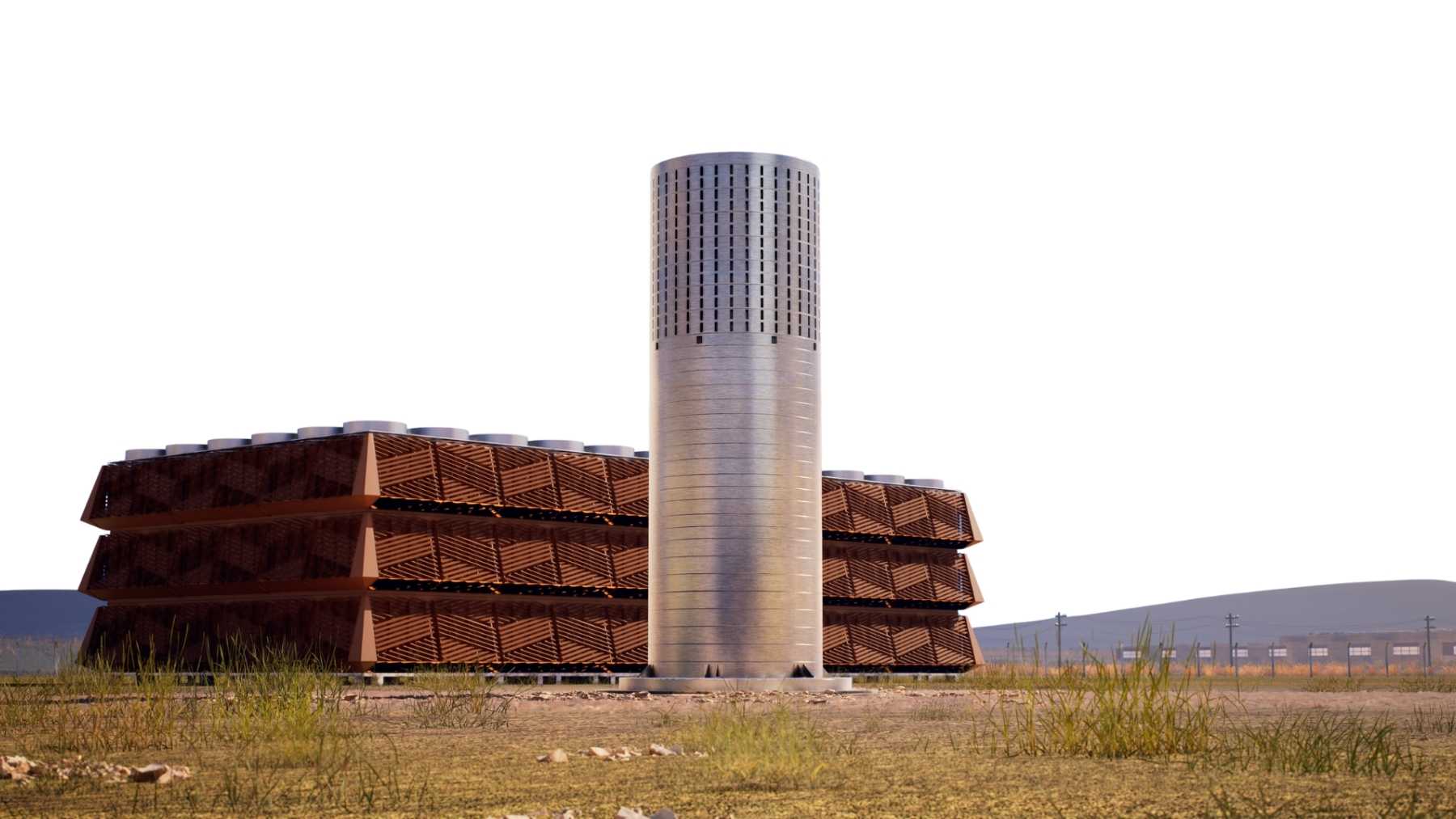
Last Energy went a different way. Its containment is a steel vault that weighs 1,000 tons and gets sealed airtight, with the reactor and its primary systems inside, which basically means everything the core’s cooling water touches. According to the company’s spec page, it has a double seal and maintenance-free parts, because the whole idea is that nobody goes in there.
The commercial PWR-20 isn’t designed to be refueled either. Last Energy’s FAQ says each one’s fueled for about six years, and then a replacement unit gets installed next to the old one.
I’ll admit a reactor nobody’s supposed to walk into sounds a little strange at first. But if nothing in there needs a wrench, you can probably skip designing the inside around somebody holding one, and I’d say that’s the cleverest idea in the whole design.
It doesn’t take up much ground, either. The reactor module would fit in a single parking space, according to the spec page, which puts it at 114 square feet. That figure’s for the PWR-20, but Last Energy has described the pilot as physically identical to it.
What I couldn’t find anywhere is how tall or how wide that vault is. As far as I can tell, they haven’t been made public.
The commercial plant is designed to be made in a factory, hauled on regular roads and assembled on site, according to the October announcement. The vault alone weighs as much as 25 semis loaded right up to the 80,000-pound federal limit on interstates, so I’d assume it makes the trip in pieces.
Figures: Last Energy.
So when does it go critical?
The October 7 announcement doesn’t put a date on it. And the deadline a lot of these reactor startups were racing this summer has already come and gone.
A presidential executive order set a goal for DOE to achieve at least three new test reactors to criticality by July 4, 2026, the country’s 250th birthday, and DOE says four made it. Last Energy wasn’t one of them, even though the company aimed to go critical by mid-2026 when it announced the RELLIS project, according to Nuclear Engineering International.
Honestly, a few months late barely counts as late in nuclear. Construction at RELLIS only started in January, and Texas A&M says the whole project is privately financed. In early July, a company spokesperson told the American Nuclear Society’s Nuclear News that the building was complete and that critical reactor components had been installed.
For what it’s worth, DOE approved the DSA for Aalo Atomics’ reactor in April, according to Nuclear News, and that reactor went critical on the Fourth of July. I wouldn’t treat that as a schedule for Texas, though, since every one of these projects is different. (They have one thing in common, though: there’s always a long wait, and often a delay…)
The fuel’s the other open question. Last Energy said in May that its fuel had been manufactured, and that the DSA was what it needed to get DOE’s authorization to receive it on site. Whether that uranium’s in Bryan yet, I can’t tell you. The October announcement doesn’t mention a delivery.
And if “going critical” sounds alarming, it really isn’t. It just means the chain reaction keeps itself going, with each round of splitting uranium atoms setting off the next. A reactor’s built to do exactly that, and the plan for the PWR-5 starts with a low-power run before it moves on to making electricity.
Adam Lenarz, Last Energy’s vice president of development, told a crowd at a community open house at RELLIS in September that the company intended to get DOE’s final authorization within a couple of months, KBTX reported. With the DSA approved on October 7, the readiness review is the only DOE step left before startup authorization for the PWR-5.