
Retaining rings might be the most boring parts in mechanical engineering. They’re basically springy steel clips that snap into a groove and keep a bearing from wandering out of its hole. If you’ve ever had a transmission apart, you probably know them as snap rings, and odds are you didn’t give them a second thought.
NIST has had to give a few of them a lot of thought. At the annual meeting of the National Organization of Test, Research and Training Reactors in Austin, Texas, last month, the agency’s reactor team walked through a run of broken rings inside the refueling plug of its research reactor in Gaithersburg, Maryland. They’d been cracking while carrying a fraction of the load they were rated for.
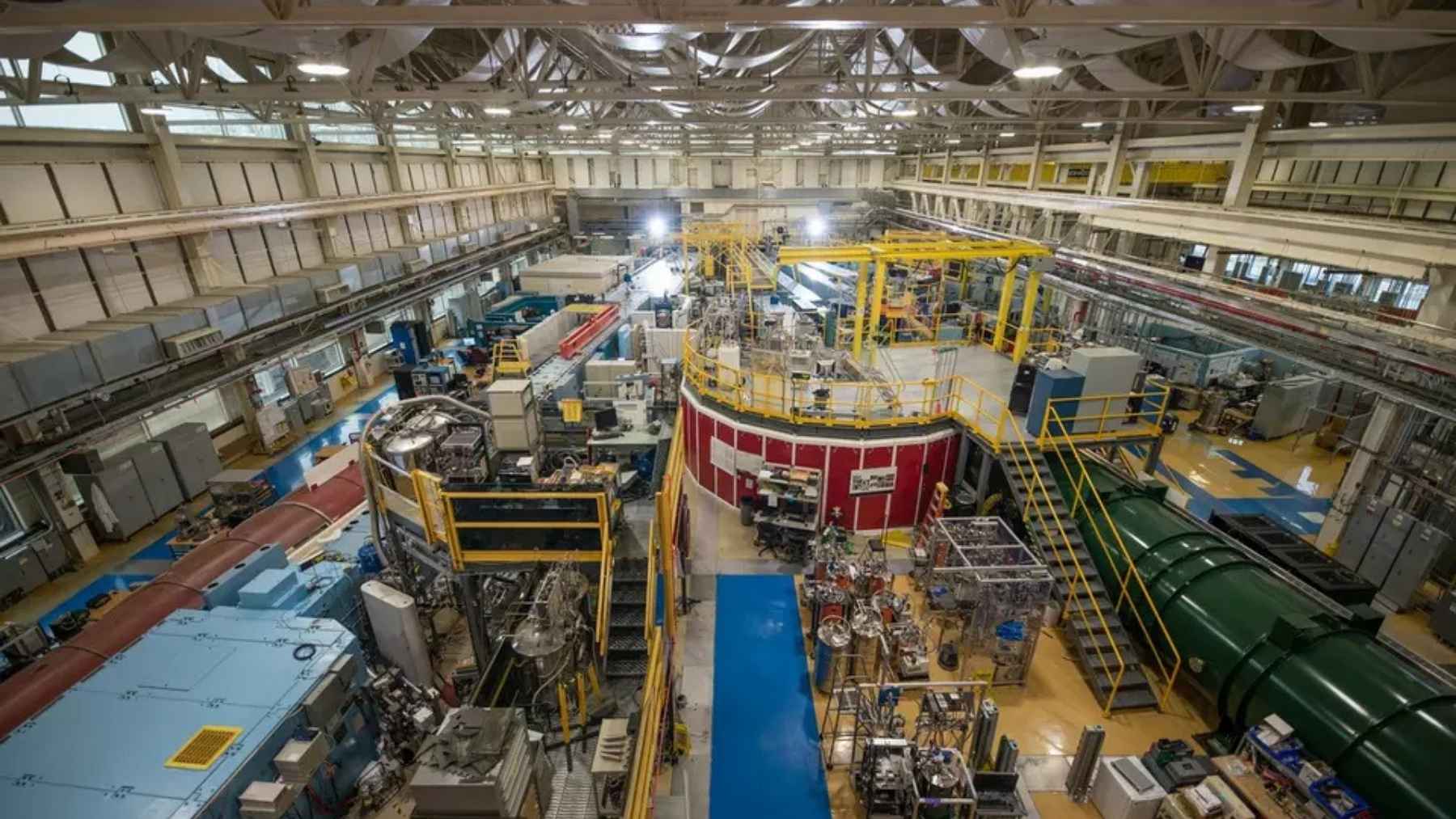
The reactor’s back doing science, too. It’s the 20-megawatt machine that supplies neutrons to the NIST Center for Neutron Research, and slides from Thomas Newton, the center’s deputy director and chief of reactor operations and engineering, show a brief climb to 20 megawatts in May and a return to full-power science work in August. On September 13, it finished its first complete fuel cycle since an accident took it offline in February 2021.
So what’s a refueling plug?
Basically, it’s the reactor’s hands. The plug sits over the core and carries the fuel-handling gear, a set of transfer arms and the pick-up tools that grab fuel elements and move them around. The core takes 30 of those elements, it’s cooled with heavy water (water made with a heavier form of hydrogen), and the reactor runs in 38-day cycles between refuelings.
Newton puts the plug at 15 tons, while a NIST paper from 1995 called the same part “the 10-ton plug,” so either it’s put on some weight or somebody rounded differently. I’m going with the newer number, since it comes from the man who runs reactor operations. The plug itself was built in 1963.
Three rings broke at two spots
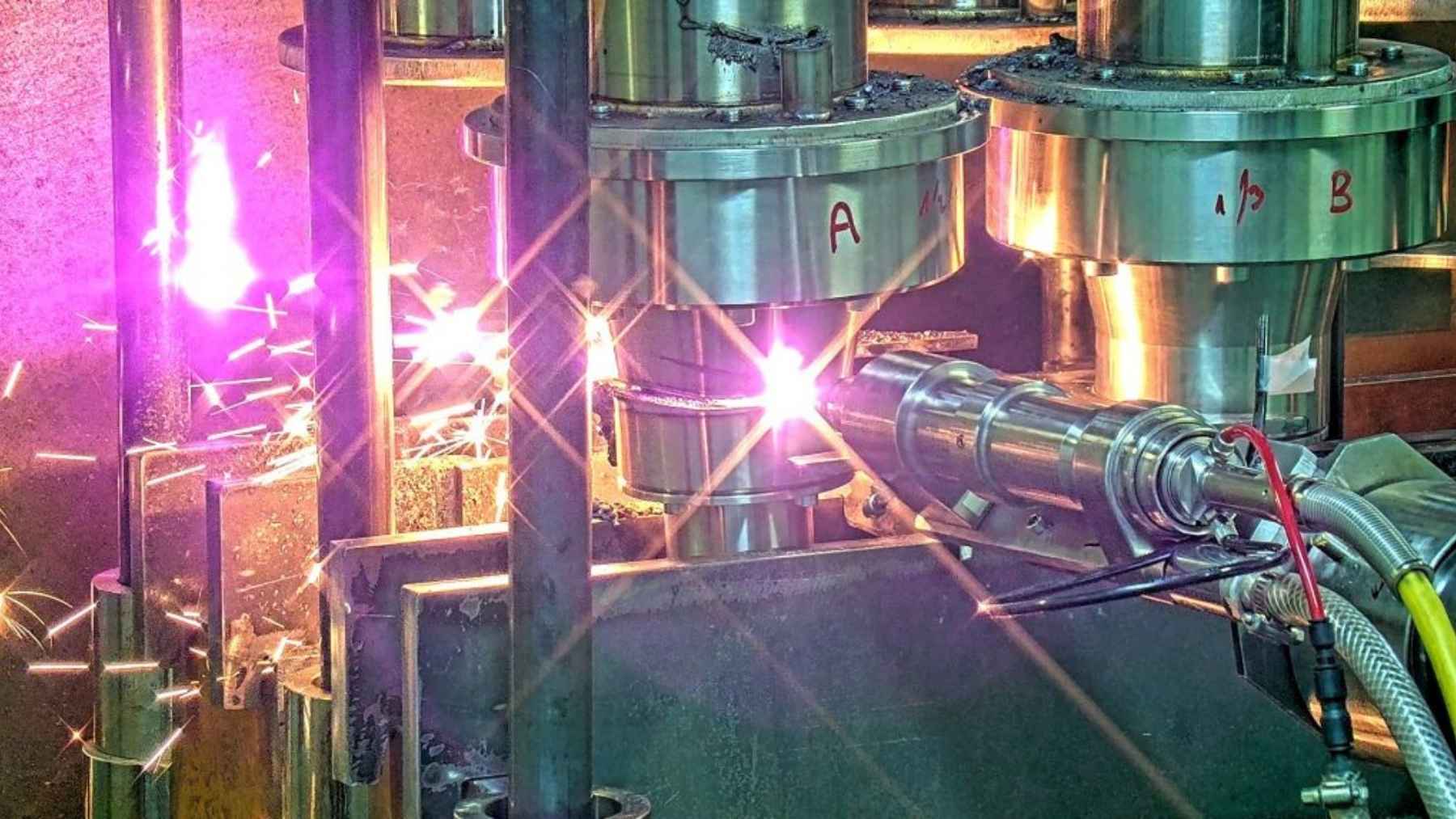
The slides credited to David Hix and Sahar Rubin trace the trouble to two bearing positions on the plug’s small transfer arms, labeled B5 and L5. At each one, a ring holds a transfer-arm bearing inside a bore in the plug. The B5 ring cracked, got replaced and cracked again, and the L5 ring turned up broken too. The slides don’t say how big the rings are.
None of that should’ve happened, at least on paper. According to the presentation’s abstract, the rings “carried minimal static load relative to rated capacity.” Which means they were doing a small fraction of the work they were built for.
So why would a ring that’s barely working keep breaking?
I went through the slides, and the answer has more to do with chemistry than weight. An internal retaining ring gets squeezed to fit its groove, then spends its whole life pushing outward against it. So the steel’s under tension even when the bearing behind it isn’t doing a thing. When NIST loaded rings mechanically, they bent in spots but didn’t break. Then the team squeezed rings roughly the way they’d sit in the plug and put them in a heated 10% salt solution, and two of the three cracked.
That’s stress corrosion cracking, and it’s a pretty sneaky way for metal to fail. Steel that’s under constant tension and sitting in the wrong chemistry, often something with chlorides in it, can grow cracks that the tension or the chemistry alone wouldn’t. The abstract calls it the most likely culprit.
The salt bath was a lab test, by the way. NIST did find white and gray deposits that had collected around the bearings and the ring grooves, and it suspects they held chlorides. Its slides also point to moisture and to galvanic corrosion between aluminum and Graphitar, a carbon-graphite bearing material. Put two materials like that together with a bit of moisture and you’ve basically built a weak battery, with the aluminum doing the corroding.
Then there’s the steel. The rings were nominally 15-7 PH Mo, a heat-treated stainless steel with molybdenum in it, but NIST’s slides say they turned out to be 17-7 PH, which has none. Molybdenum is what helps stainless steel hold up against this kind of localized corrosion.
One slide quotes a line reserving “the right to substitute PH 17-7 SS for PH 15-7 Mo on larger rings,” but it doesn’t say whose line that is, and I came up empty trying to find out. The abstract lists the alloy as one of four factors, alongside the constant tension, the suspected chloride deposits and the galvanic corrosion.
Figures: NIST slides and abstracts from the TRTR 2026 meeting.
Frankly, I like that NIST ran a salt bath and a load test to figure this out instead of just ordering beefier rings and hoping for the best.
So what holds the bearings in now?
Screws, mostly. NIST converted the bearing assembly to a bolted design built around Nitronic 60, a stainless steel that’s popular for parts that rub against each other because it resists galling. Galling is basically what happens when two metal surfaces grab and tear at each other.
The screws thread into locking Helicoils. A Helicoil is a coiled wire insert that gives a screw fresh threads to bite into, and the locking kind grips the screw so vibration can’t back it out. One position, labeled G8, needed its own fix, so NIST swapped the groove-and-ring setup there for a custom holder mounted on the outside, drilled, tapped and screwed into place.
The slides say NIST validated a prototype and tested the hardware again once it was in, and Newton’s abstract lists the plug’s refurbishment among the jobs finished before the reactor’s May restart. Honestly, screws sound pretty low-tech for a nuclear reactor. I’d still take a part you can torque down and check over a clip that’s quietly cracking in a groove you can’t see.
Nuclear work runs on simpler hardware than you’d think. We’ve seen cuts on used fuel rods in Idaho marked with a Sharpie wrapped in tape, and a Florida reactor where nothing but a magnet holds the control rods up.
Did the rings cause the fuel accident?
No, and NIST handles them as two separate problems. The accident started with a refueling on January 4, 2021, when one fuel element wasn’t latched in properly and the latch checks were done wrong, according to Newton’s slides. Routine starts and stops of the primary cooling pumps then pushed that element out of the coolant flow, and when operators brought the reactor up toward full power on February 3, the element overheated and melted. NIST got permission from the Nuclear Regulatory Commission to restart in March 2023, but full-power science work didn’t return until this August.
The latch lives in what NIST calls the fuel element head, and that’s been redesigned too. Each head has spring-loaded catches, called dogs, that lock into a groove in the upper grid plate, which holds the elements in place. On the old design, the spring could relax and let a shaft turn back far enough to pull those dogs out. The new version, FEH V2, adds a stop that resists that back-rotation, and it stayed latched through NIST’s bump and push testing, while the old head lost its grip.
NIST calls FEH V2 “a low-risk, implementation-ready improvement.” The slides don’t say whether it’s in the core yet, though, so I’d hold off on assuming it is.
As for the reactor itself, it’s in a planned maintenance outage right now. NIST’s reactor schedule, updated October 8, has it coming back up to 20 megawatts on October 19 for a run that’s due to wrap up November 17.