- 6 MONTHS AGO · ENERGYSay Goodbye to $1,153-per-Tonne Green Ammonia: India Just Locked In Half the Price for 670,000 Tonnes a Year. The First Cargo Ships Burning It Set Sail This Year
- 6 MONTHS AGO · ENERGYChina built the world’s largest solar farm on a high-altitude Tibetan plateau desert that was 98% sand. Three years later it grew so much grass they had to bring in 20,000 sheep to eat it
- 5 MONTHS AGO · ENERGYBritain just raised the last turbine on the first phase of the world’s biggest wind farm, 95 machines each as tall as Rockefeller Center, 80 miles out in the North Sea, while five nearly-finished U.S. projects sit frozen
- 5 MONTHS AGO · ENERGYAbu Dhabi just started building a solar farm bigger than 90 square kilometers that could run a full gigawatt straight through the night, and they’re wiring it to the largest battery ever built to prove the sun doesn’t have to stop at dark
- TODAY · THIS ARTICLETo split seawater into hydrogen, Saudi Arabia is wiring up a solar farm the size of Manhattan and 257 wind turbines in the middle of the desert, the biggest green hydrogen plant ever built, due to make 600 tons a day
Green hydrogen has spent the better part of a decade as the clean fuel everybody promises and almost nobody actually makes at scale. Governments across Europe, the US and Asia have written rules that assume the stuff will be flowing by 2030, while the projects meant to produce it keep slipping their timelines or getting quietly cancelled before they pour any concrete.
So it is worth paying attention when one of them is more than 90 percent built.
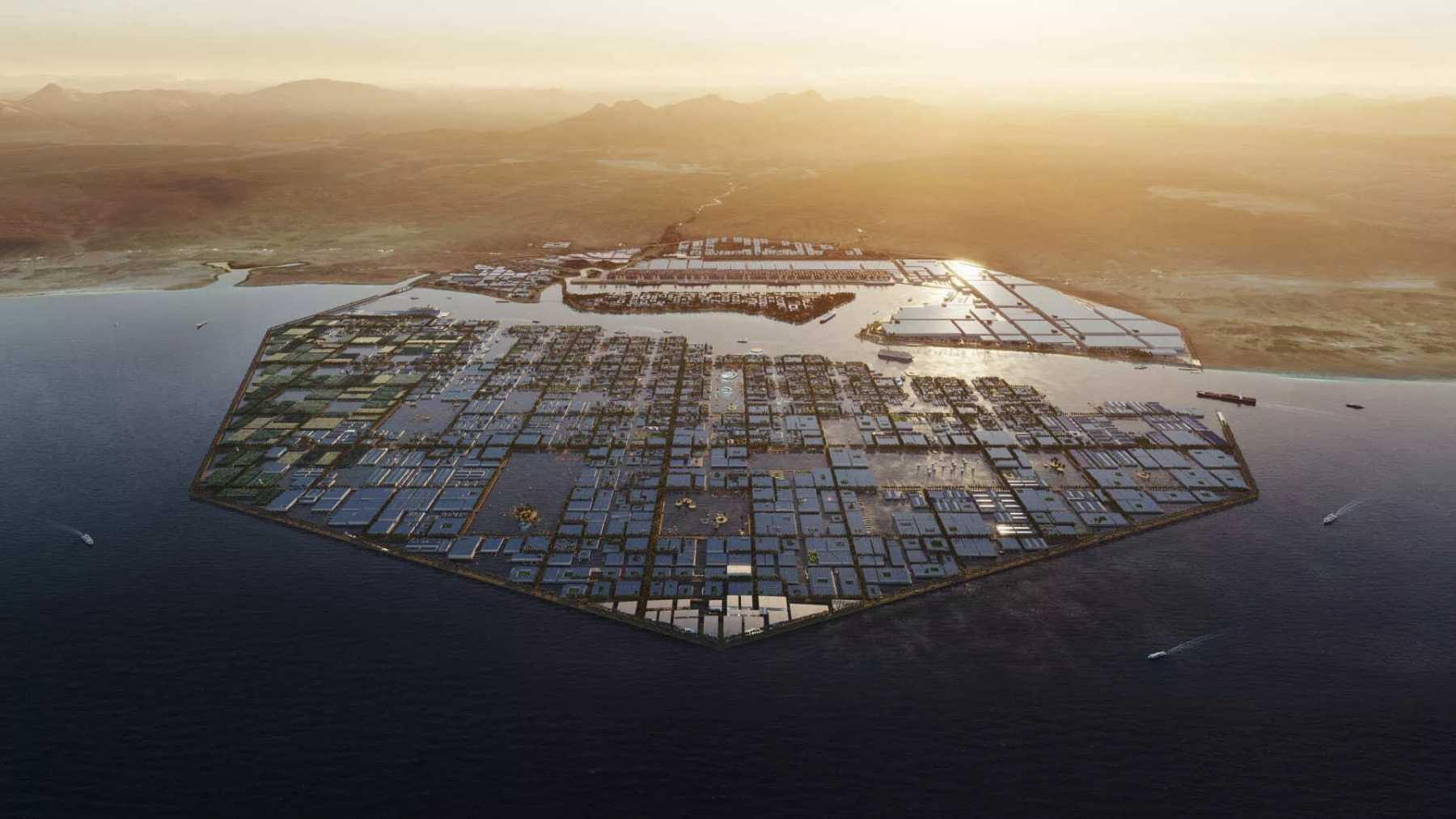
Out on the Red Sea coast of Saudi Arabia, at an industrial site called Oxagon, the NEOM Green Hydrogen Company has put up what its owners describe as the world’s largest green-hydrogen-based ammonia plant running entirely on renewable energy. It is an equal joint venture between Saudi power developer ACWA Power, American industrial-gas company Air Products, and NEOM itself, the Public Investment Fund’s futuristic megacity project.
The price tag is $8.4 billion. The job is to take sunlight, wind and seawater and turn them into 600 tons of green hydrogen a day, then ship most of it out as ammonia. According to Air Products, the plant is now more than 90 percent complete, with commercial production expected in 2027.
A Solar Farm the Size of Manhattan Is Just the Power Supply
Before any hydrogen gets made, NEOM has to generate a frankly absurd amount of clean electricity in the middle of the desert, and most of the project is dedicated to exactly that. The renewable side runs to roughly 4 gigawatts: a wind farm of 257 turbines good for about 1.6 GW, and a solar array that Air Products describes, with no apparent exaggeration, as a solar farm the size of Manhattan, producing another 2.2 GW.
A dedicated transmission grid was built to carry all of it across the site to the part of the plant that does the actual chemistry.
That part is the electrolyzer, and it is the real machine here. Germany’s thyssenkrupp nucera won the contract to supply a plant of more than 2 gigawatts, assembled out of its standard 20-megawatt alkaline modules, each one packing around 300 individual cells. Run renewable electricity through those cells with water in the mix and you split the water into hydrogen and oxygen, with nothing dirty left behind.
The water itself is desalinated seawater. NEOM sits on a coast and has no fresh water to spare, so the same renewable power that feeds the electrolyzers also runs the reverse-osmosis plant that makes the feedstock in the first place.
None of the individual pieces are exotic. Alkaline electrolysis has been around for decades, ammonia synthesis is more than a century old, and seawater desalination is routine across the Gulf. What NEOM is attempting is to bolt all of it together at a size nobody has tried before, and to run it as a commercial export business rather than a science project.
The partners reckon that, once it is operating, the plant will keep roughly 5 million tons of carbon dioxide out of the air every year compared with making the same hydrogen from natural gas, which is how the overwhelming majority of the world’s hydrogen still gets made today.
Why It Makes Ammonia Instead of Shipping the Hydrogen Straight
Here is the inconvenient thing about hydrogen: it is a miserable molecule to move. It is the lightest element there is, so to ship any meaningful quantity you either compress it to brutal pressures or chill it to around minus 253 degrees Celsius, and both options burn serious energy and money. The economics of hydrogen have always tripped over transport more than production, which is why the industry keeps hunting for a workaround.
NEOM’s answer is to not ship hydrogen at all. The plant combines its hydrogen with nitrogen pulled straight out of the air to make ammonia, about 1.2 million tons of it a year, which is far denser, far more stable, and something the world already moves around by the tanker-load. The ammonia leaves through a purpose-built jetty next to global shipping lanes, and at the far end it can be converted, or “cracked,” back into hydrogen for whoever needs it.
That cracking step costs energy of its own, so the round trip is never free, but it beats trying to sail a tanker full of liquefied hydrogen across the planet. Air Products has locked up every ton of the output under a 30-year exclusive off-take deal, and is in advanced talks with Norwegian fertilizer giant Yara to handle distribution of whatever ammonia is not turned back into hydrogen in Europe.
Cheap Saudi Power Is the Whole Bet
A project like this only makes sense if the electricity behind it is dirt cheap, because the cost of green hydrogen is mostly the cost of the power you feed the electrolyzer. This is where Saudi Arabia has an edge that is hard to argue with. The same desert that makes the place inhospitable also delivers world-class sun and steady wind, and the two tend to complement each other across the day, one picking up roughly where the other tails off.
Air Products’ chief executive, Eduardo Menezes, has pointed to Saudi power costing under two cents per kilowatt-hour as among the lowest rates anywhere, and has said the joint venture is not expected to run at a loss as it ramps up.
That is also why the financing came together at the scale it did. The $8.4 billion total was anchored by $6.1 billion in non-recourse project financing from 23 banks and institutions back in 2023, with the engineering and construction contracts alone running to $6.7 billion. The Gulf’s pitch to investors is fairly blunt: abundant cheap renewables, plenty of empty land, and the export muscle of a region that has spent a century shipping energy to everyone else. The molecule is changing. The business model, not so much.
It Is Not Running Yet, and Lining Up Buyers Is the Hard Part
For all the steel in the ground, the plant is not making anything yet. The 4 GW of solar and wind generation is due to wrap up around the middle of 2026, and only then do the electrolyzers get commissioned, with first product expected in 2027 rather than this year. The “end of 2026” target that floated around when the deal closed in 2023 has quietly become a 2027 one, which is roughly par for the course on first-of-a-kind energy megaprojects.
The bigger question was never whether the Saudis could build it. It was whether anyone would buy the output at a price that works, and that part has been bumpy. Air Products’ planned £2 billion import terminal at Immingham in the UK, meant to receive NEOM’s ammonia and crack it back into hydrogen for British industry, got paused over uncertainty about government incentives.
Demand for green hydrogen is still mostly written into law rather than into purchase orders, and laws can be rewritten. Saudi Arabia is at least building both ends of the chain at once: the same Vision 2030 push that funded NEOM also just put the country’s first self-driving hydrogen freight truck on the road hauling for Procter & Gamble. Whether the rest of the world turns up with the trucks, ships and factories to burn all this hydrogen is the one part no electrolyzer can solve.
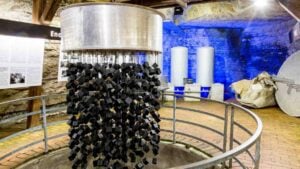 A reactor built from 664 two-inch uranium cubes hung on wires in heavy water under a German castle was Heisenberg’s last shot at a chain reaction, and two of the surviving cubes now show it needed about twice the uranium and heavy water it held, more of both than Nazi Germany hadEnergy · 2 weeks ago
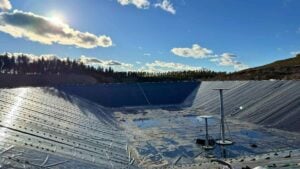 A 66-foot-deep gravel pit in Finland just started taking in about 100 million gallons of tap water, and once a nine-acre lid goes on top, it’s meant to hold enough summer heat at up to 194°F to cover as much as nearly a quarter of the town’s yearly heat demandEnergy · 2 weeks ago
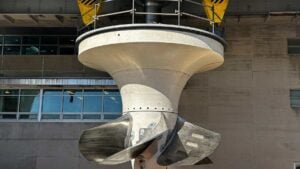 A 375,000-pound turbine now spins inside a Tennessee dam in place of one that ran for more than 80 years, and a federal watchdog just found that 196 of the 240 welds on the ring guiding water out of it failed on a job where some welders weren’t qualifiedEnergy · 2 weeks ago