
Sea mines are about the cheapest way ever invented to shut down a body of water. Iran has spent most of 2026 proving the point in the Strait of Hormuz, the pinch point between Iran and Oman that normally carries roughly a fifth of the world’s oil, and which has been anything but normal since late February.
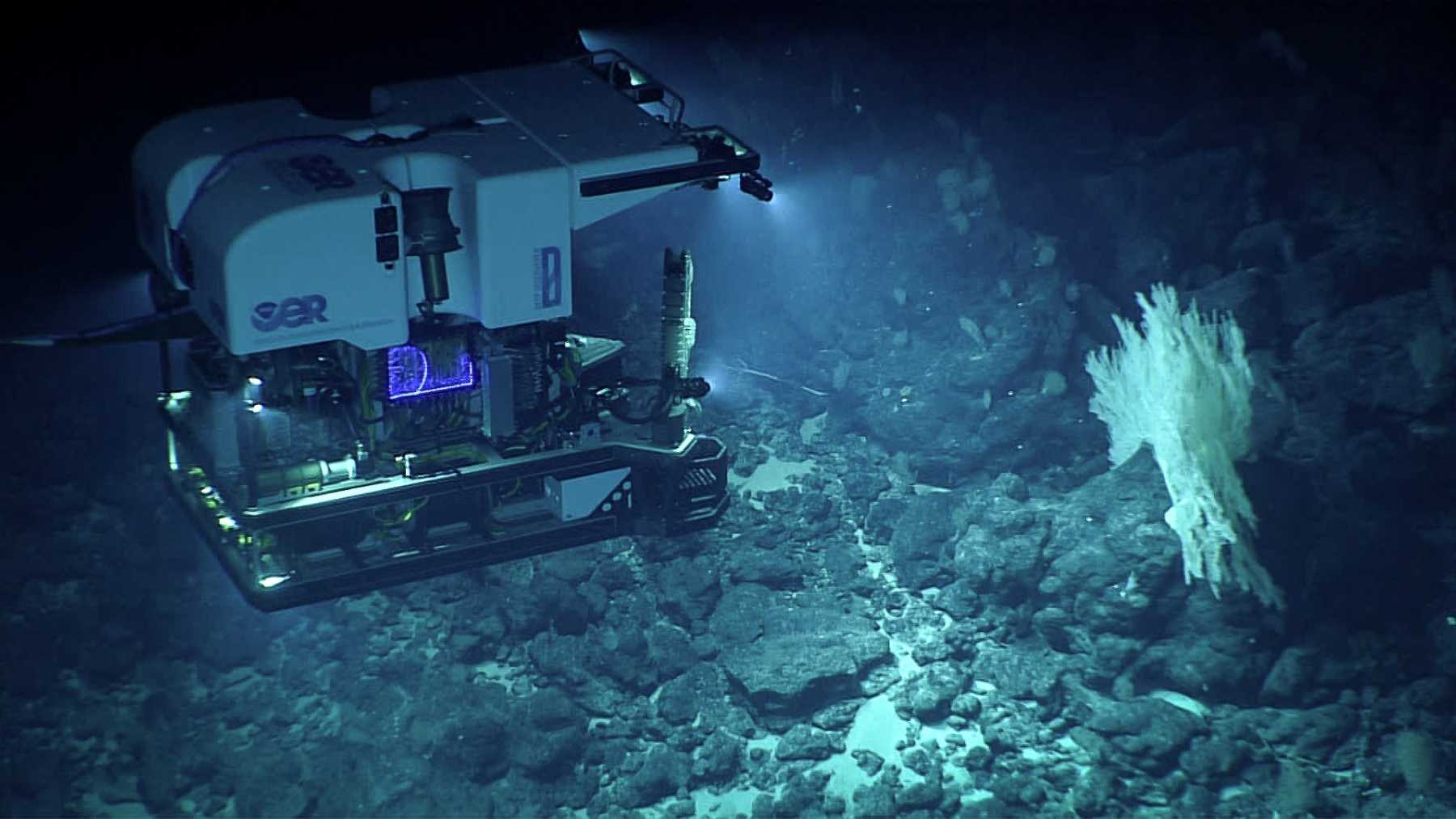
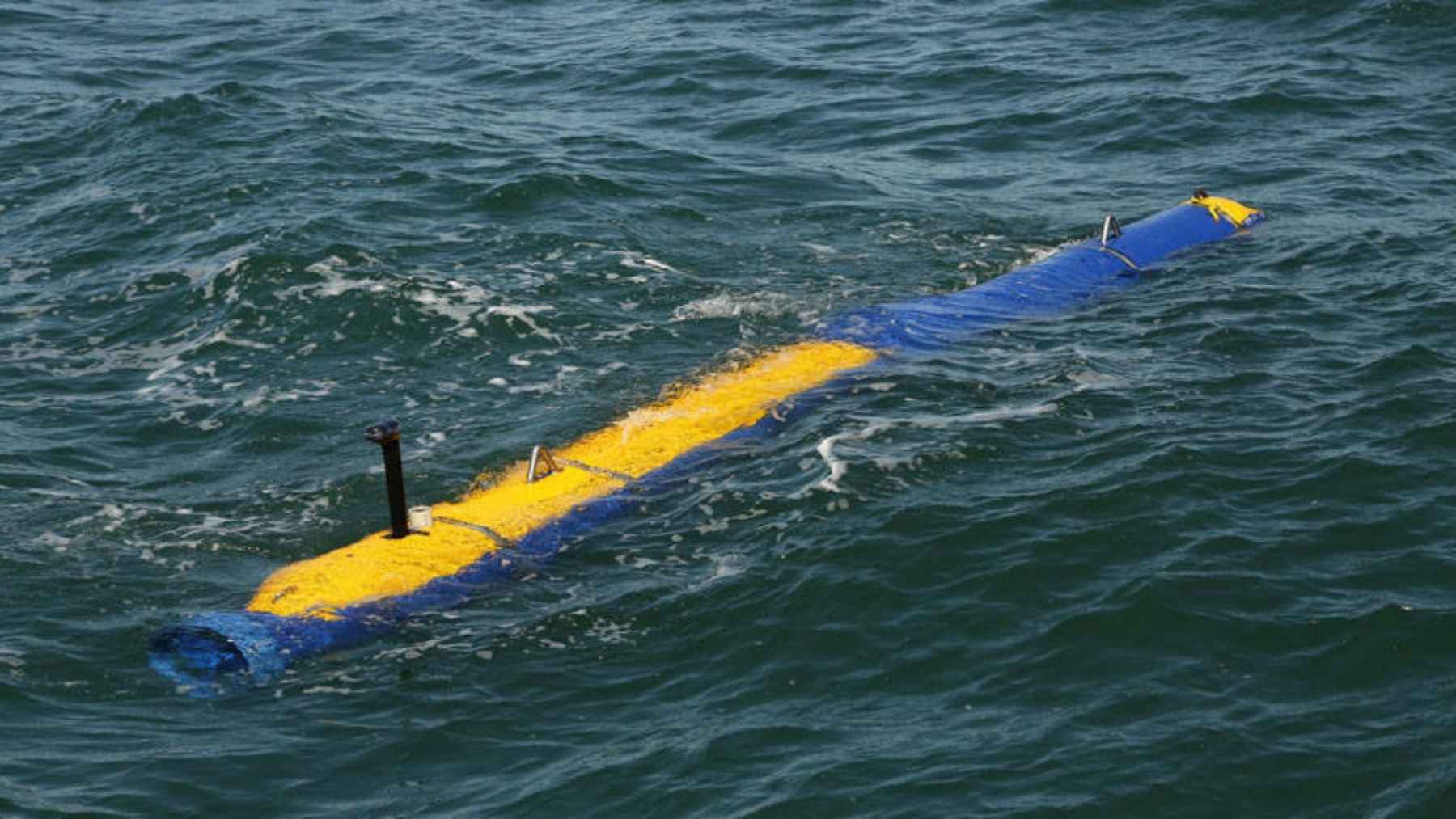
The machine the US Navy relies on to actually find those mines is not a warship, though. It’s a 22-foot (6.7 m) underwater drone named after a fish, it weighs a ton in the most literal American sense of the word, and its entire job description is swimming into the minefield so that nobody else has to.
It’s called Knifefish, it was built by General Dynamics Mission Systems in Massachusetts, and the company’s own product page sums up the sales pitch in six words: “keeping sailors out of the minefield.” The host ship parks outside the boundaries of the danger zone. The drone goes in alone, spends up to 16 hours hunting, and comes back with a map of everything it found. That includes the mines you can’t see at all, because they’re buried in the mud.
The hull under it went looking for MH370
Knifefish didn’t start life as a weapon system. Its design is based on the Bluefin-21, a 21-inch-diameter civilian survey vehicle from Bluefin Robotics of Quincy, Massachusetts. If that name rings a bell, it’s because a Bluefin-21 spent weeks in 2014 scanning the floor of the Indian Ocean in the search for Malaysia Airlines Flight 370.
The Navy had picked General Dynamics to develop a mine-hunting version back in September 2011, and a scale model was shown off in April 2012. The plan at the time, as Time reported, was for robots like this one to take over from the Navy’s team of 80 trained mine-hunting dolphins starting in 2017. The dolphins were reassigned to port security and object retrieval rather than let go, in case you were worried about them.
The robot’s own path was rockier. By early 2016 the program had burned through roughly $91 million, a Pentagon inspector general review flagged it as high risk, and Time put the potential extra bill at $751.5 million. So, standard Pentagon procurement. Still, the vehicle passed the Navy’s formal sea acceptance testing in June 2018, and in August 2019 it got Milestone C approval, which is the government’s way of saying the thing finally works well enough to build for real.
Buried mines are the whole point
Plenty of sonars can spot a mine sitting proud on the seabed. Knifefish exists for the uglier cases. Its low-frequency broadband synthetic aperture sonar is designed to detect, classify and identify mines in three flavors: floating in the water column, sitting on the bottom, and buried under it, including in high-clutter environments where the seafloor is littered with rocks, wrecks and junk that ordinary sonar mistakes for threats.
Everything it hears gets converted into digital data, checked against an onboard database of mines and mine-like objects, and stored on high-density onboard storage. A two-way Iridium satellite link lets operators talk to the vehicle, and the full haul of sonar data gets offloaded to the ship afterward for analysis, according to Naval Technology’s project file.
One Knifefish “system,” in Navy accounting, is actually two of these vehicles plus an operator console, a support container, a maintenance cradle and a spare battery set. Buy one, get a small robot dive team.
It comes home nose-first
All the propulsion and steering hardware lives in the tail cone. The nose section is what gets it home. When a mission ends, Knifefish angles that nose up and glides itself to the surface, where the crew can grab it and haul it back aboard. No diver in the water, no crane fishing around blind. On a vehicle whose whole reason for existing is that the water it works in might explode, that detail is doing a lot of quiet work.
When the Navy cleared Knifefish for low-rate production in 2019 with a $44.6 million contract for the first five systems, the plan on record was to eventually buy 30 systems, which means 60 vehicles: 24 systems for the littoral combat ships and six for other vessels. The same reporting cited a tally worth reading twice: of the 19 US Navy warships seriously damaged or sunk since World War II, 15 were victims of mines.
The first production unit was delivered in March 2021. That June, General Dynamics landed a $72.8 million deal to pull the five original Block 0 systems, ten vehicles, back into the shop and upgrade them to Block I standard, which buys better performance in deeper water, messier target environments and more precise localization. Since August 2021, the whole line runs out of a dedicated UUV plant in Taunton, Massachusetts.
Then Iran actually mined the strait
For most of Knifefish’s life, the minefield was hypothetical. That ended this year. After the US and Israel launched strikes on Iran in late February, Tehran choked off the Strait of Hormuz, and its forces laid mines in the waterway. Secretary of State Marco Rubio told the Senate Foreign Relations Committee on June 2 that Iran had mined “large segments” of the strait, in international waters.
By April 11, US Central Command had announced that underwater drones would help clear the Iranian mines, and DefenseScoop pointed straight at Knifefish as the system built for exactly this job. The Wall Street Journal put it more bluntly a week later: the Navy was sending in the robots. Nobody pretended it would be quick. The Pentagon told Congress that fully clearing the strait could take six months, The Washington Post reported in April.
Part of the problem is that nobody agrees how many mines are down there. Maritime security firm Dryad Global estimated after US strikes that Iran still held up to 1,000 naval mines in inventory, and US officials have said Tehran lost track of some of the ones it laid. Which means you can’t clear the field off a chart. You have to sweep it with sonar, mile by mile, and buried or drifting mines are precisely the kind a 2012-vintage sonar truck was designed to catch.
As of this week, the job still isn’t finished, at least not politically. President Trump said Wednesday that the Navy had swept the strait of mines, while Iran says it won’t fully reopen the waterway until its conditions are met, and CNN reported that traffic through Hormuz remains effectively stalled, with experts calling the picture far more complicated than either side’s statements. In early August, Bloomberg reported that Iran was even weighing whether to let European navies handle part of the mine removal as a face-saving piece of a broader deal.
Knifefish is also no longer the new kid. The same production logic that built it now runs much hotter elsewhere in New England, from a 20-foot drone sized to torpedo dimensions for the Taiwan Strait, planned at 2,000 units a year, to a three-ton drone submarine that survives the deep by flooding itself and prints its own shell in under two days.
Still, when a live minefield appeared under one of the busiest oil routes on Earth, the machine that got the call was a 14-year-old program that Congress once cut funding from and inspectors once rated high risk. Nobody argues about the dolphins anymore. The argument now is over who finishes clearing the strait, and while the diplomats have it, a 2,000-pound robot keeps gliding its nose up out of the water, handing over its map, and going back in.
 @krystalcane DRIVER2 months ago