
I spent a good chunk of this week reading French nuclear inspection letters, which is about as glamorous as it sounds. Most of them are lists of requests with deadlines attached. But a couple of them, on an old reactor built inside a hill near the Belgian border, are basically a case study in what happens when a floor doesn’t match its drawings.
The reactor is Chooz A. It was France’s first pressurized water power reactor, the same basic type you’ll find at most American nuclear plants, and according to the trade magazine Nuclear Engineering International, its design was based on the Yankee Rowe plant in western Massachusetts.
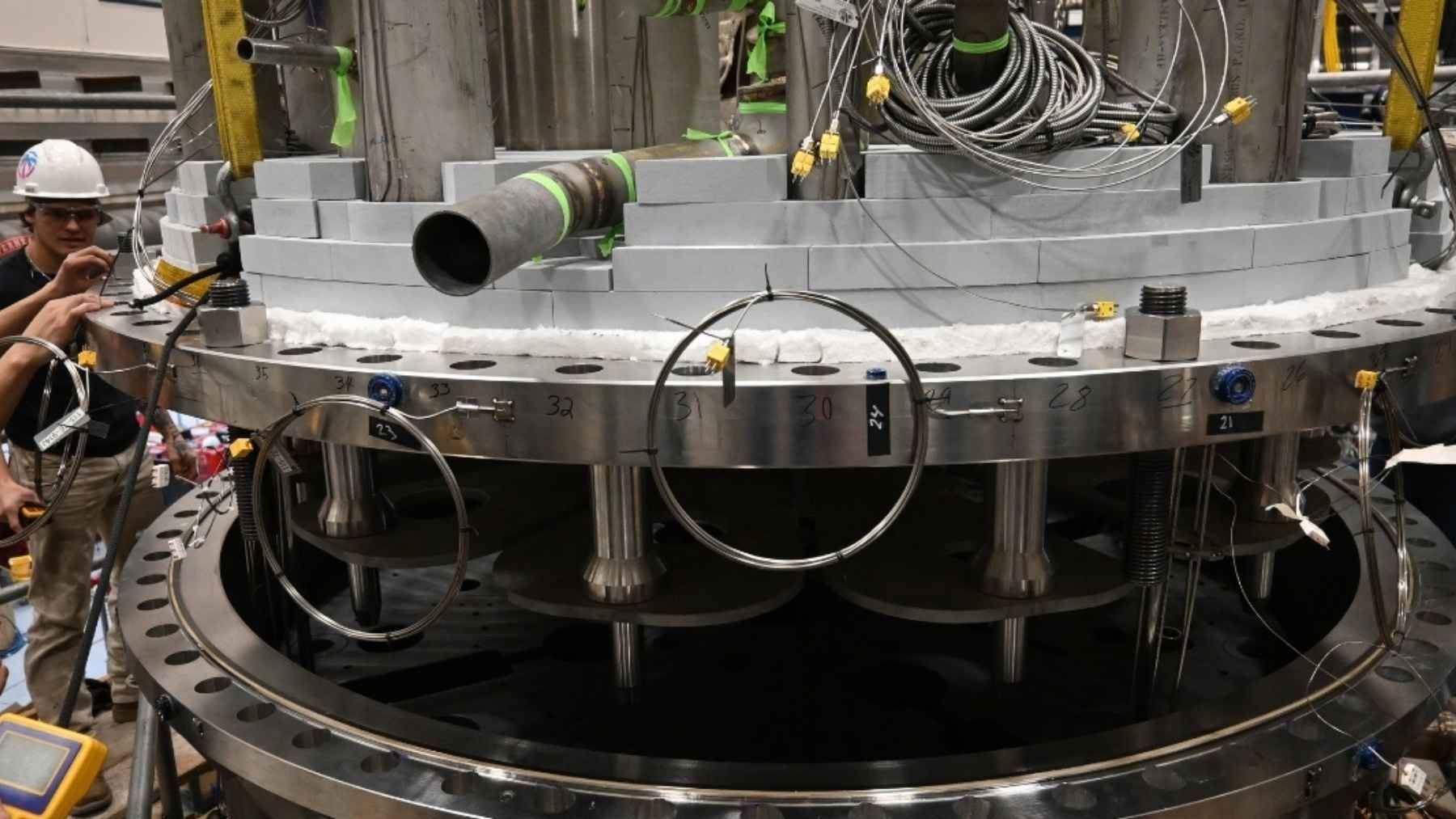
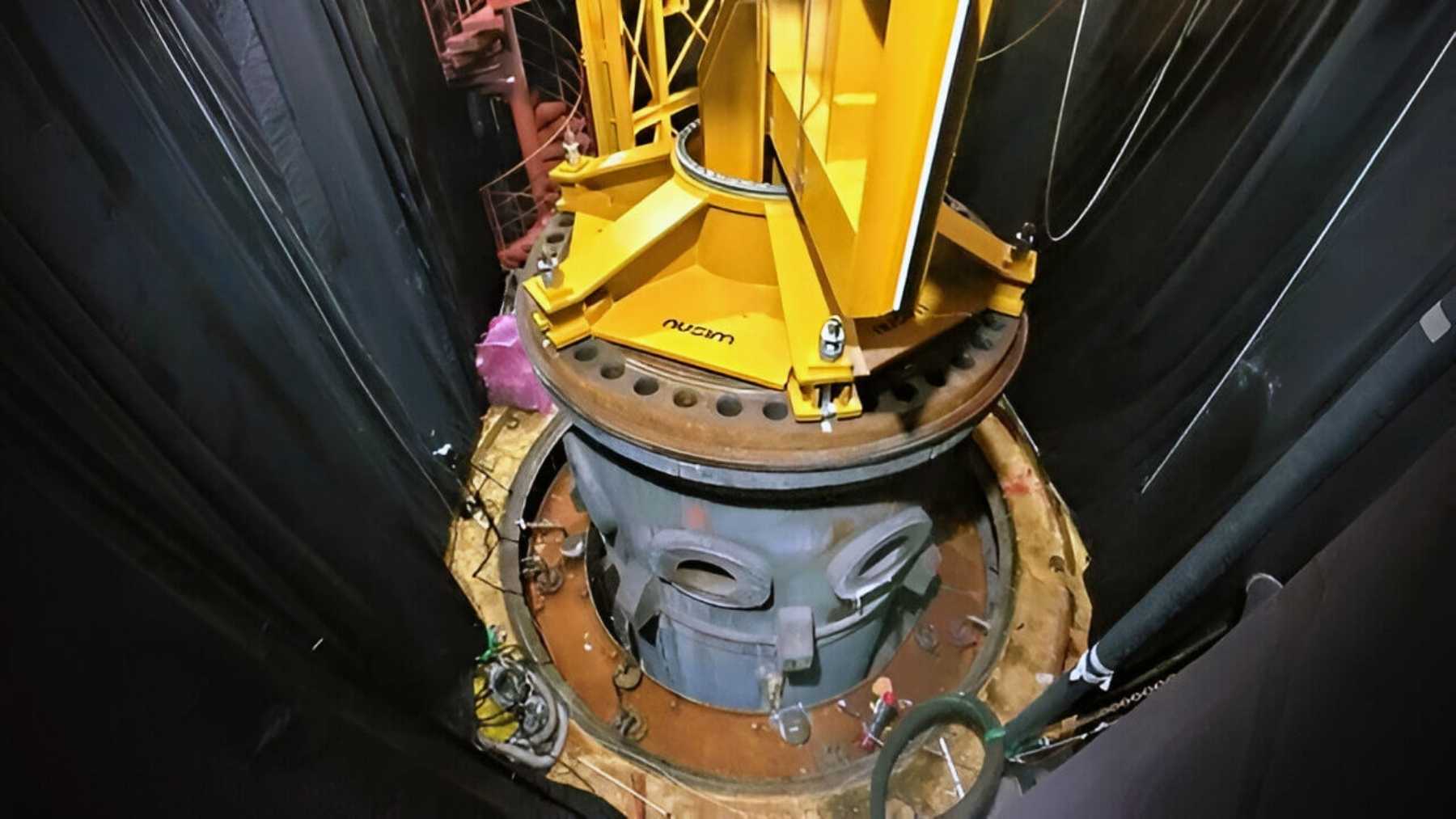
In March 2025, EDF, the state-owned utility that runs all of France’s nuclear plants, lifted the reactor vessel out of the concrete pit it’d been sitting in for 61 years. A reactor vessel is basically a giant, thick-walled steel pot that holds the fuel and the water running through it. It’s usually one of the last big pieces to leave a plant that’s being taken apart.
EDF was pretty pleased with itself, saying the methods it used were a first for the whole EDF group. Then France’s nuclear safety regulator, the ASNR, posted its inspection letters about the job, and the trouble they describe was under the vessel, in the floor of its pit.
So what happened down there?
How do you lift a reactor vessel out of a hill?
Carefully, and after a lot of prep. EDF puts the vessel at about 209 tons, and it’s roughly 31 feet tall and 16 feet wide. Before it could budge, EDF had to cut it loose from its main coolant pipes and refurbish the overhead crane that runs along the top of the reactor cavern.
That crane did the big lift, raising the vessel more than 32 feet and setting it down on a stand built for it inside the reactor pool. EDF says the lift itself took one morning, and the contractor that built the tool gripping the vessel says it came out with only an inch or two of clearance.
We’ve covered a German reactor vessel that rode a self-propelled platform to a storage building of its own and an Oak Ridge reactor that came out of its pool. The Chooz A vessel had to come straight up out of a concrete pit, in a cavern carved into a hill.
EDF also had a hydraulic jack under the vessel, pushing up from the pit floor to help with the lift. Before the job, the company’s civil engineering group ran a calculation to make sure that floor could take the jack’s load.
Engineers run that check all the time. They call the failure they’re guarding against punching shear: put a lot of weight on a small spot and it tries to push straight down through a slab. It’s why a high heel can dent a hardwood floor that wouldn’t notice your sneakers.
The usual fix is to spread the load out. EDF’s calculation counted on a steel plate about 39 by 20 inches sitting between the jack and the floor, but it didn’t say how thick that plate had to be. The jack ended up on a thin steel sheet, and the ASNR says the sheet got badly bent. Frankly, that’s the kind of gap that only looks obvious afterward.
What was under the jack?
Once the vessel was out, EDF went looking at the damage. What it found under the floor’s thin top layer of concrete, right where the jack had pushed, led it to believe the floor had been altered at some point. The top layer of steel rebar had apparently been cut, and about 12 inches of concrete had been swapped for loose fill.
EDF had even drilled a core sample near that spot back in 2022. That’s more homework than I’ve ever done before hanging a TV. When inspectors came out after the event, though, EDF’s people couldn’t confirm the change existed or say how big it was.
By this spring, EDF was treating it as real. In a March 27 commitment that the ASNR quoted back to it in a June 1 inspection letter, EDF said the backfilled cavity in the middle of the pit floor would be added to the cavern’s civil engineering drawings. The letter also quotes EDF’s own in-depth report on the event, which says the latest drawings EDF used for the calculation didn’t match what was actually there, and that this led to a wrong analysis and a wrong calculation.
If you’ve ever renovated an old house, you know the feeling. You open up a wall and find wiring that never made it onto any plan. I’d argue that’s the most relatable moment in this whole file, except EDF’s surprise turned up under a 209-ton reactor vessel.
The ASNR’s May 12 inspection went after the paperwork, too. Inspectors asked to see the site’s records of work done on its concrete structures since they were built, and Chooz A’s staff told them they didn’t know of such a file and that the information they needed came from EDF headquarters. The ASNR has asked EDF to put one together on site. It also wrote that the parts of the plant it visited showed no alarming signs, while listing improvements it wants made.
Figures: EDF, ASNR.
The damage the ASNR describes is in the pit floor, and the vessel itself ended up on its stand as planned. Below that floor there’s a steel liner about an eighth of an inch thick, sitting on roughly a foot of concrete poured straight onto the rock. It’s the layer that’s officially required to keep the bottom of the cavern watertight.
EDF says the liner came through intact, and part of its evidence is that the cavern sits about 49 feet below the water table and groundwater hasn’t leaked in. The ASNR said that alone doesn’t prove it, and asked EDF to show the liner wasn’t damaged.
There’s also the timeline. The ASNR dates the damage to March 10, 2025, and EDF reported it as a significant safety event, France’s term for a reportable incident, about five and a half months later. In its letter on the September 2025 inspection, the regulator called that a long delay and pointed out that its own guidance tolerates two working days after an event is detected. I’d say five and a half months is a pretty loose reading of that.
Why does a dead reactor need a waterproof floor?
Because the next big step happens underwater. EDF plans to cut the vessel apart with the reactor pool flooded, and water’s a cheap, very effective radiation shield for the people working above it. With the vessel out, though, any water that slipped past the seal around the pit would run down into it and on to a sump. That’s basically a collection basin at the low point.
And that’s already happened once. The first time EDF tested that seal, water got past it and drained through the pit to the sump, according to the ASNR. Inspectors also noted that EDF wasn’t planning to coat or even test the pit floor, and they asked it to justify that.
EDF’s answer came in that March 27 commitment. It said the liner’s job wasn’t in question, but that it’d add a barrier between the pool and the pit floor anyway, and that it was leaning toward a waterproof resin. EDF called that barrier a prerequisite for putting water back in the pool. It also said one of the next jobs, cutting up a neutron shield in the pit, uses a platform that rests on the pit’s outer edge, so the hollow spot in the middle doesn’t change that plan.
So when does the vessel actually get cut up?
Honestly, I can’t give you a date. I couldn’t find anything public saying whether the barrier’s gone in or the pool’s been refilled. The ASNR’s status page for the site, last updated June 10, has the vessel’s cutting scheduled for 2026. The regulator also put all dismantling work at Chooz A under reinforced oversight at the end of last year, after a rise in reportable events, and asked EDF to tighten radiation protection for its workers.
EDF’s own page for the plant says the vessel should be fully taken apart in 2026, and the most recent ASNR letter on that floor, dated June 1, has the waterproof barrier going in before any water goes back in the pool.