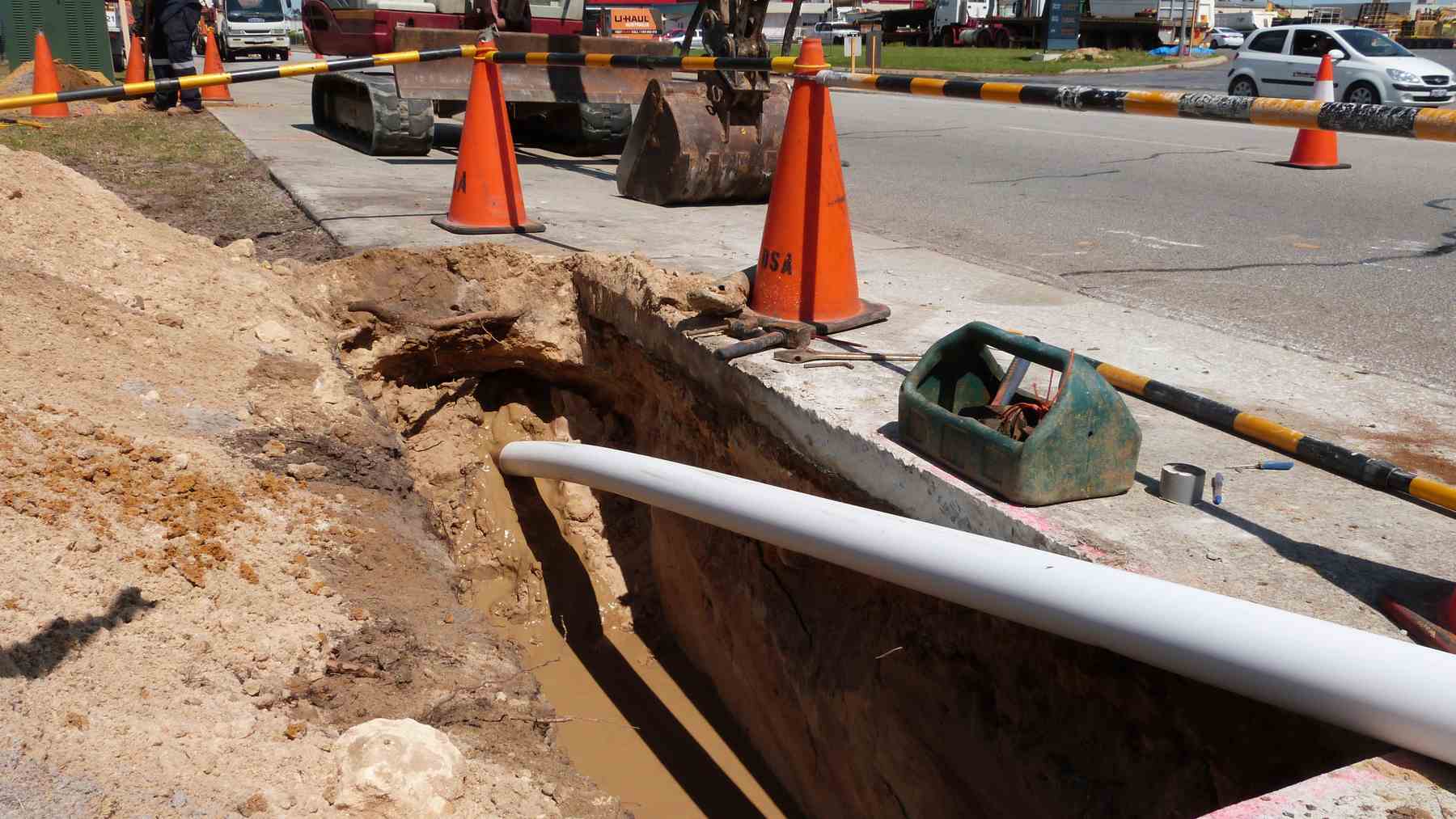

You’ve probably tried to push an empty cooler underwater at some point, and you know how that ends. The thing fights you the whole way down and the second you let go it’s back on the surface. Now make the cooler 48 inches across, 2,500 feet long, and put it in a hole full of mud instead of a lake, because that’s pretty much the problem a drilling crew had this summer outside Tampa.
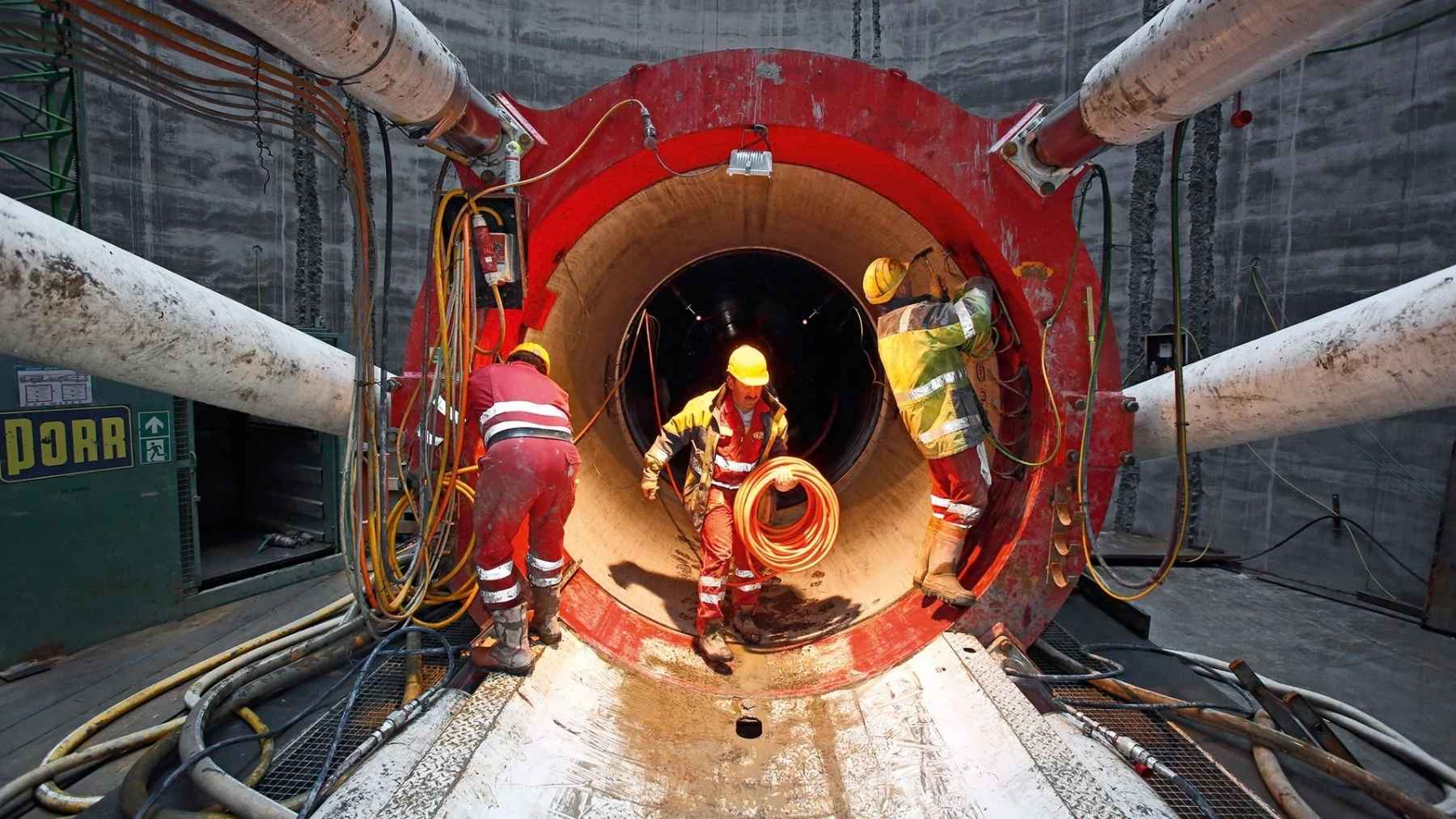
The fix was about as low-tech as it gets. They filled the pipe with water. Roughly 147,000 gallons of it, according to Tampa Bay Water, the utility that owns the line, so the pipe would stop trying to float while a rig dragged it under Little Fishhawk Creek.
The pull itself happened in July. What’s new is that the contractor who did the drilling, Huxted Trenchless, had its field operations manager, Benny Burton, walk Global Trenchless through the geometry of the job on October 13, and it turns out the water was only half the trick. The other half was bending the hole one way at a time.
So why would a water pipe float in the first place?
Two reasons, and both of them are basic physics you already know.
The pipe is high-density polyethylene, which is the same family of plastic as a milk jug, and it’s a little lighter than water. On its own it would float in a pond. The hole it’s being pulled through isn’t a dry tunnel either. In horizontal directional drilling the bore stays full of a slurry made from bentonite clay and water, which holds the hole open and carries the cuttings out, and that slurry is heavier than plain water. So you’ve got a lighter-than-water tube, full of air, sitting in something denser than water. It wants to go up, hard.
Which matters, because a pipe pinned against the roof of the bore drags. The rig has to overcome all that friction on top of the normal pull, and a pull that goes wrong on a 48-inch line isn’t something you fix on a Monday morning.
So you make the pipe heavier than the mud, and the cheapest heavy thing on a water pipeline job is water. I ran the numbers on that 147,000 gallons and it comes out to roughly 1.2 million pounds, give or take, which is about 600 tons of ballast sitting inside a plastic tube. By my math that’s also close to the entire inside volume of a 2,500-foot run of this pipe, so from the looks of things they filled it more or less to the top.
It’s frankly an elegant solution for a problem most people wouldn’t guess a pipe has.
First they had to turn 2,500 feet of pipe into one piece
You can’t pull a chain of bolted sections through a curved hole in the ground. HDD only works if the pipe arrives as a single continuous string, and the project’s own description of the method says the whole length has to be laid out along the ground and fused together before anyone touches the rig.
Fusing plastic pipe isn’t welding in the way you’d picture it. A hydraulic machine clamps two sections, shaves the ends flat, presses them against a heated plate until the plastic softens, pulls the plate out and shoves the ends together. Then it holds them there while they cool into one wall. Tampa Bay Water’s video of the job puts the plate at 425 degrees, which sits right in the middle of the 400-to-450-degree range the standard butt-fusion procedure calls for, so nothing exotic was going on there. The joints get inspected before the string goes anywhere.
The pipe is a thick-wall grade, DR 11 in industry shorthand, which is what you want when the thing is about to get dragged half a mile through the ground. The pipeline’s main line is 5 feet across, by the way. The creek crossings dropped to 48 inches, and Tampa Bay Water hasn’t spelled out why in its public updates, though a smaller, heavier-walled pipe is the kind of thing you’d expect at a crossing that has to survive being pulled.
The hole isn’t straight, and that’s what Burton explained
HDD starts with a small pilot hole from an entry pit to an exit pit, then the crew reams it out bigger in several passes before pulling the pipe back through. If you’ve read about the rig in south London that bored under a live rail line, that was a 20-inch hole done in five passes. This one had to end up big enough to swallow a 48-inch pipe.
And it had to curve. Tampa Bay Water says the bore followed the bend of Fishhawk Boulevard inside the road’s right of way, so the pipe was bending sideways to track the road at the same time it was arcing down under the creek and back up.
That’s where Burton comes in. According to the Global Trenchless interview, the drill plan set a minimum vertical radius of 1,650 feet and a horizontal radius of 1,400 feet across the two Fishhawk crossings, and the crew finished the vertical curve before starting the horizontal one rather than putting both bends in the same stretch of hole.
Why does that matter? Bend a pipe one way and the outside of the curve stretches while the inside squashes. Bend it two ways at the same spot and you’re stacking that stress in two directions on the same few feet of wall, with the pull force on top. Separating the curves means the pipe only has to flex one way at a time. It’s arguably the least glamorous decision on the whole job, and it probably mattered more than anything else they did out there.
What Huxted hasn’t said is how deep the bore ran under the creek or how much pull force the rig needed. I’d like to know both, and I can’t find either in anything the company or the utility has published.
Where one creek fits in a 26-mile job
Little Fishhawk is one of two creeks the pipeline ducks under this way. Its bigger sibling, Fishhawk Creek, got a 2,100-foot crossing with the same pipe, and the supplier says it shipped a bit over 4,500 feet of the 48-inch stuff for the pair. They’re two separate holes, not one tunnel, so don’t add them up.
Both are part of the South Hillsborough Pipeline, a 26-mile line that will carry up to 65 million gallons of drinking water a day from Tampa Bay Water’s surface water plant in Brandon down to Lithia and a new county treatment plant near Balm. About 24 of those miles are plain open trench. The other two are split across 17 trenchless crossings, some by HDD and some by microtunneling, which is the method Huxted used to cut three intake tunnels out through the bottom of a Georgia reservoir earlier this year. The utility’s board approved $129.2 million for those 17 crossings, and the whole construction budget stands at $478.4 million.
General contractor Garney Construction broke ground on the line late last year with Huxted handling the trenchless work. If you want a sense of scale against the very top of this trade, Huxted is the same outfit that pulled a 5,700-foot, 42-inch pipe under the James River in Virginia, which Trenchless Technology reported as a world record for a pipe that size. Fishhawk is less than half that length. It’s still a 600-ton water balloon being dragged through a curved hole under a creek, which I’d argue is plenty.
Tampa Bay Water’s most recent progress report, posted July 25, had four of the 17 tunnel sites finished and five more under way, with about 5% of the pipe in the ground and 20% of the construction budget spent. The utility says the full 26 miles should be in service in 2028.