
American nuclear power has a sameness problem. Almost every reactor on the grid splits uranium and uses the heat to boil water into steam, a basic layout that dates to the 1950s and has not fundamentally moved since. New plants are rare in the United States, and genuinely new designs are rarer still.
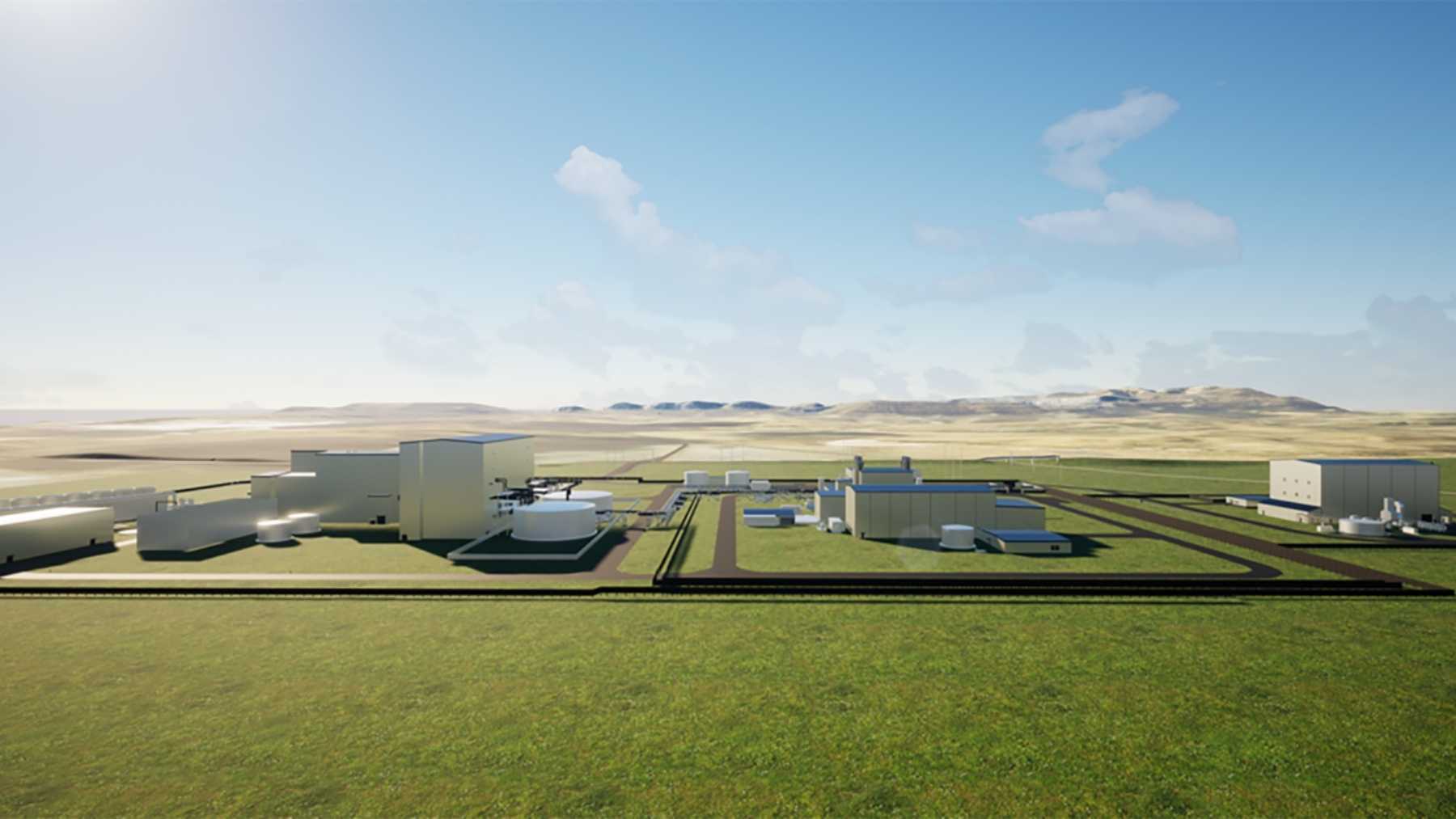
So the machine taking shape on a windswept lot outside Kemmerer, Wyoming, is worth a look: a commercial reactor cooled by liquid sodium instead of water, bolted to a tank of molten salt that works like a giant battery for the grid. In March, federal regulators approved building it. In late April, crews actually started.
The company behind it is TerraPower, the nuclear outfit co-founded by Bill Gates in 2008. The plant is called Kemmerer Unit 1, and the design is called Natrium, which is just the Latin word for sodium. On March 4, the U.S. Nuclear Regulatory Commission voted unanimously to hand TerraPower a construction permit.
According to the Department of Energy, it was the first construction permit the NRC has ever issued for a commercial non-light-water power reactor, and per the NRC, the first approval to build a new commercial reactor of any kind in nearly a decade. Most of the U.S. fleet runs on ordinary water, so clearing a sodium reactor means signing off on something the agency has never approved for construction before.
Sodium instead of water changes the rules
The reason every reactor you have heard of uses water is that water is cheap, abundant, and easy to understand. The problem is that to keep liquid water from flashing to steam inside the core, you have to run the whole system at crushing pressure, which is where a lot of the cost and a lot of the failure modes come from. Sodium flips that.
Liquid sodium stays liquid across a huge temperature range without needing high pressure, so a sodium-cooled reactor can run hot and close to atmospheric pressure. No high-pressure water means no high-pressure steam explosion to engineer against, and the heat can keep moving on natural circulation if the pumps quit.
There is a catch, and it is a big one. Sodium reacts violently with both air and water. Expose it to either and it burns or explodes, which is exactly the kind of sentence that makes people nervous about a power plant. Engineers handle this by sealing the radioactive sodium inside its own loop and keeping it away from anything it can react with, an approach that has been tested in research reactors for decades but never run at commercial scale in the U.S. It is a real trade you are making: you lose the steam-explosion risk of a water reactor and you take on a sodium-fire risk instead.
The fuel is its own wrinkle. Natrium runs on HALEU (high-assay low-enriched uranium), enriched to somewhere between 5 and 20 percent, richer than the roughly 5 percent fuel in today’s reactors but well short of weapons grade. The first core needs about 15 to 20 metric tons of it. Supply is the sore spot.
For years the only company selling commercial quantities of HALEU was Russia’s state-owned Tenex, and when TerraPower cut ties after the 2022 invasion of Ukraine, it cost the project a roughly two-year delay and pushed first power from 2028 to 2030. The U.S. is now spending separately to stand up a domestic HALEU supply chain, though that is still very much a work in progress.
The molten-salt tank is the real party trick
The sodium gets the headlines, but the storage tank is arguably the cleverer part. Most reactors are built to run flat out, all the time, because nuclear hates being throttled up and down. Natrium gets around that by separating the reactor from the grid. The reactor itself runs steadily at 345 megawatts and just makes heat. When the grid does not need all of it, that extra heat gets dumped into a tank of molten salt, the same molten-salt idea solar-thermal plants have used for years.
It is not a battery in the phone sense, since it stores heat rather than electricity, but the effect is the same: you bank energy now and spend it later.
When demand spikes (a heat wave, an evening crunch, a data center ramping up), the plant pulls heat back out of the salt to make extra steam and shoves the turbine up to 500 megawatts for a few hours. According to filings from utility partner PacifiCorp, the system can ramp at about 8 percent per minute across a range of roughly 100 to 500 megawatts, which is gas-peaker-level flexibility out of a nuclear plant.
Run flat, 345 megawatts covers something like 250,000 homes; at the 500-megawatt peak, TerraPower puts it closer to 400,000. That flexibility is the whole pitch, and it is why this design keeps coming up in the same breath as wind, solar, and the enormous, twitchy electricity appetite of AI.
It is going up on the bones of a coal town
Kemmerer is a small town in southwest Wyoming that has run on coal for more than a century. Right next door sits the Naughton plant, a 448-megawatt coal-fired station that is being shut down and converted to natural gas. TerraPower picked the site on purpose, and the pitch to the locals was blunt: the coal jobs are going away, and a reactor next door could absorb some of those workers.
It is the clearest example yet of the “coal-to-nuclear” idea that has been kicking around the energy world: take a site that already has the transmission lines, the cooling water, the workforce, and a community used to living next to a power plant, and drop a reactor on it instead of a smokestack.
Whether that math works out is a fair question, but the logic is why the project keeps getting pointed to as a template. If you can swap a dying coal plant for a reactor without building everything from scratch, you skip a chunk of the cost and most of the local fights.
The whole thing is pegged at roughly $4 billion, with the DOE covering about half through its Advanced Reactor Demonstration Program and Bill Gates reportedly chipping in around $1 billion. Once it is running, Rocky Mountain Power, PacifiCorp’s Wyoming utility, is set to own and operate it as a normal commercial generating asset.
Approval took years, then it came fast
Getting here was not quick. TerraPower filed its construction permit application in March 2024, the NRC docketed it that May, and the agency originally penciled in a 27-month review that would have wrapped around August 2026. Instead it finished the safety review in December 2025, about eight months early and, the DOE says, 11 percent under budget. Non-nuclear site work had already started back in June 2024, and once the permit landed, crews began actual reactor construction on April 23.
That speed is exactly what worries some people. The Trump administration leaned hard on the NRC to move faster, including a May 2025 executive order setting an 18-month clock on reactor decisions, and not everyone thinks a first-of-its-kind sodium reactor should be the test case for a compressed timeline. Edwin Lyman, director of nuclear power safety at the Union of Concerned Scientists, argued in reporting by E&E News that the risk of sodium fires and other inherent instabilities got short shrift under deadline pressure.
“The only way the staff could finish its review on such a short timeline is by sweeping serious unresolved safety issues under the rug or deferring consideration of them until TerraPower applies for an operating license, at which point it may be too late to correct any problems,” Lyman said in a statement. TerraPower’s position is the opposite: that the review was thorough, that the design’s passive safety features are a step up from the current fleet, and that finishing early reflects a clean application rather than a rushed one. And the permit only lets the company build the plant. Running it takes a separate operating license the NRC has not issued yet.
Meta wants eight more of them
The Wyoming plant is a demonstration project, the proof-of-concept the rest of the bet rides on. But the commercial interest is already lining up, and it is coming from an industry you might not pair with reactors: Big Tech. In January, TerraPower and Meta announced an agreement to develop up to eight Natrium plants in the U.S., enough for about 2.8 gigawatts of steady power plus another 1.2 gigawatts of that built-in storage, for up to 4 gigawatts total.
Meta would fund two units first, with the earliest online as soon as 2032 and rights to energy from up to six more by 2035. No sites have been named, so those are separate from Kemmerer, but it is the largest nuclear commitment Meta has made.
The driver is the obvious one. AI data centers eat electricity at a rate the grid was not built for, and the hyperscalers have all gone shopping for clean, around-the-clock power that solar and wind cannot supply on their own. Microsoft, Amazon, and Google have struck their own nuclear deals, much of it riding on advanced reactor designs that do not commercially exist in the U.S. yet.
That gap is the same one on display when Britain lowered a 500-ton conventional reactor into place while the American advanced-reactor plans were still mostly on paper. Natrium is one of the designs furthest along on actually closing it, though “furthest along” still means the first one will not make power until 2030.
It is not the only flavor of advanced reactor trying to prove itself, either. Over in Italy, a company called Newcleo is testing a full-scale reactor cooled by molten lead instead of sodium, running it with electric heaters before any fuel goes in. Different metal, same basic ambition: ditch water, run hotter, and try to make next-generation nuclear cheap enough to matter.
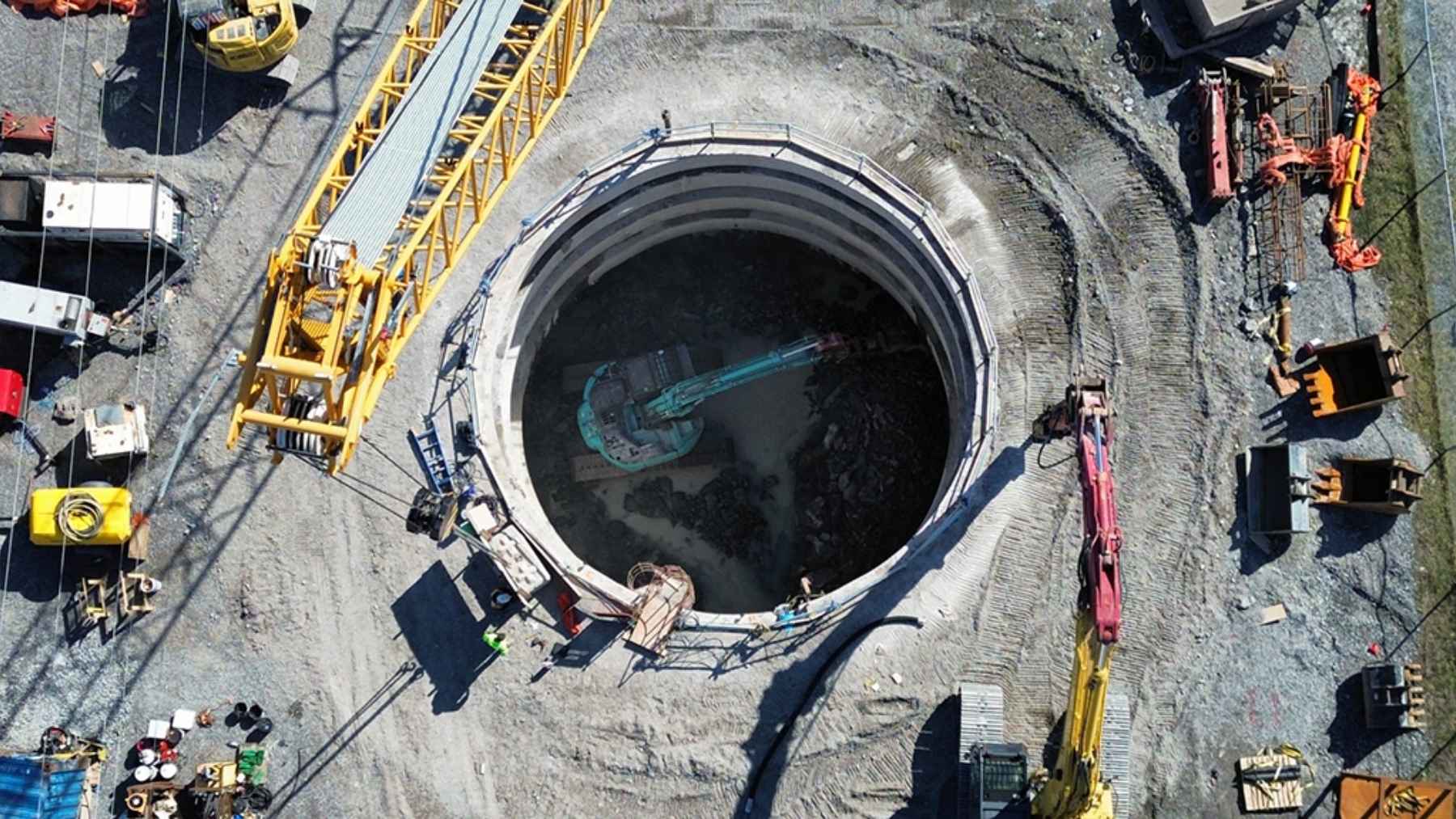
Right now, what exists at Kemmerer is a hole in the Wyoming ground, a federal permit, and roughly $4 billion riding on a design that has been sound on paper for decades but has never powered a single American home. The sodium-fire questions and the storage-tank promises do not get settled in a hearing room.
They get settled when the thing is full of molten metal and feeding the grid, and that is a 2030 problem. Until then it is exactly what TerraPower calls it: a demonstration. The first of its kind to actually break ground in this country, which counts for something, but a demonstration all the same.
















The solution ? Use tri nitrogen flouride, instead. In the same reactor. All you are changing is the working fluid. Everything else is the same. Now your reactor will work. Thank you.