
Every EV motor, wind turbine and guided missile on the planet runs on a fistful of rare earth elements, and the uncomfortable truth is that China decides who gets them and at what price. Japan learned that the hard way back in 2010, when Beijing throttled exports during a fishing-boat spat and sent Toyota’s magnet supply into a panic. Fifteen years of recycling pushes, Australian joint ventures and substitute-material R&D later, Tokyo still imports roughly 60% of its rare earths from China, and that figure has been creeping back up.
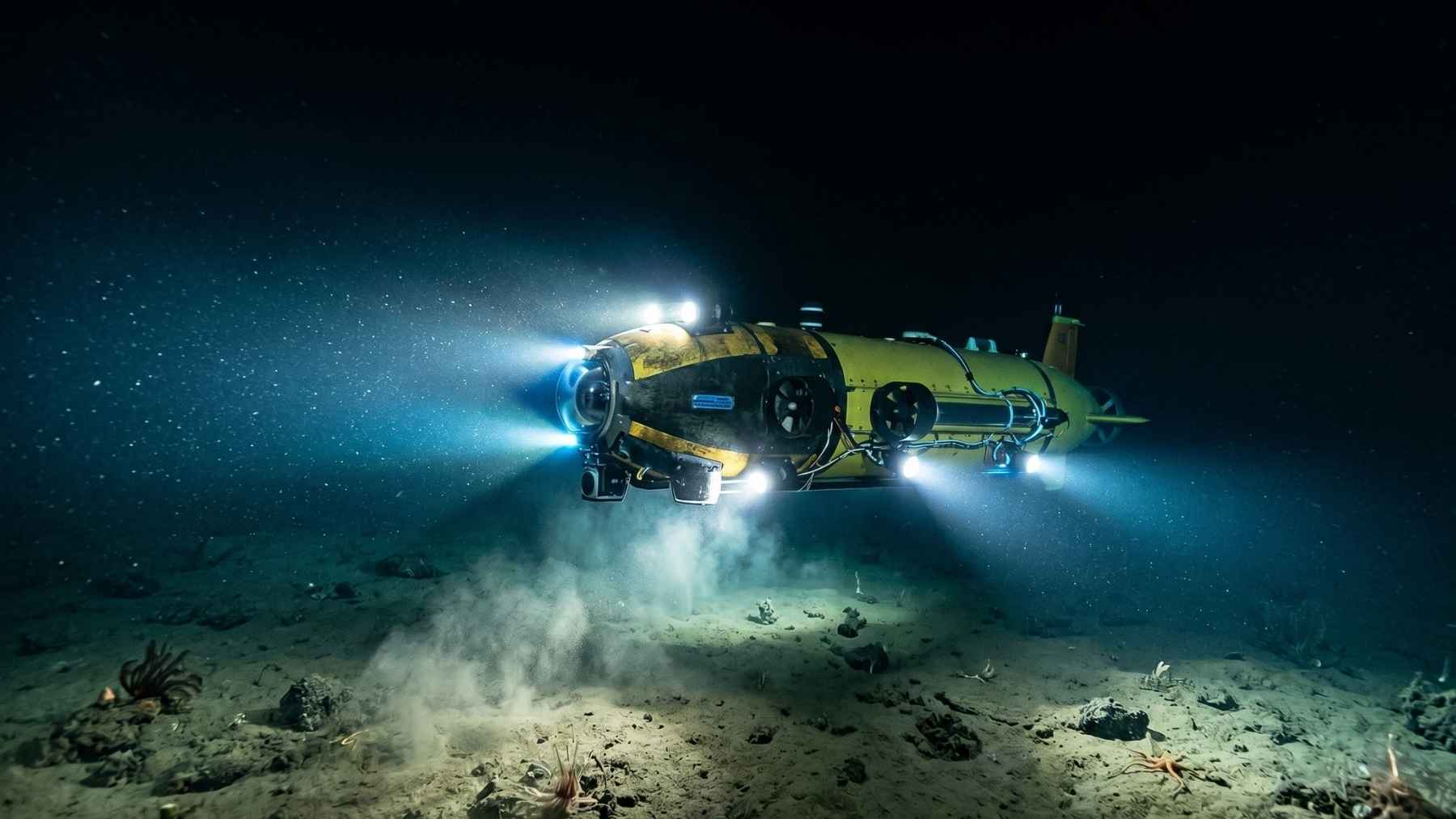
So Japan is doing something the rest of the auto-industrial world has mostly talked about and quietly shelved: sending robots six kilometers down into the Pacific to vacuum the seabed. Nikkei Asia reported on June 3 that the national marine research agency JAMSTEC wants a more efficient autonomous underwater vehicle ready by fiscal 2028, built specifically to hunt rare-earth deposits on the ocean floor. It’s the first serious national-scale bet that deep-sea drones can do what land-based mining has spent two decades failing to do, which is hand China’s rare-earth monopoly its first real competitor.
What the drone is actually for
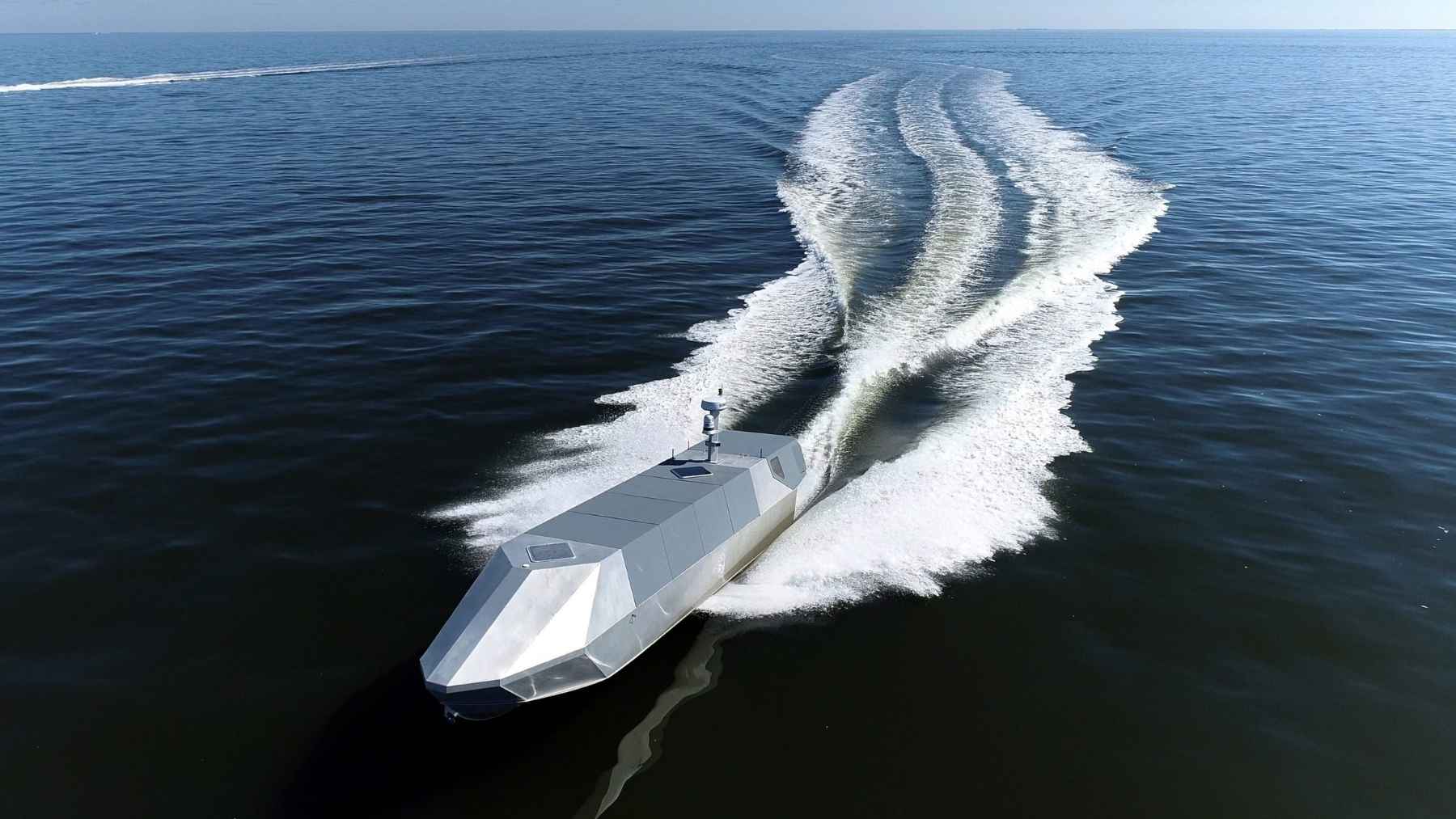
The agency behind this is JAMSTEC, the Japan Agency for Marine-Earth Science and Technology, and the new AUV isn’t a mining machine. It’s a scout. Finding rare-earth mud at 6,000 meters is roughly as easy as spotting a specific dinner plate in the dark from a helicopter, and right now Japan does it with crewed vessels dragging pipes and sensors at glacial speed. An autonomous vehicle that can map promising zones on its own dramatically shortens the loop between “we think there’s something down there” and “send the excavator.” JAMSTEC’s own deep-sea program has flagged exactly this, the need to run several AUVs at once to survey wide areas of seabed efficiently.
The hunt is centered on Minamitorishima, a remote Tokyo island about 1,900 kilometers southeast of the capital. It’s tiny, uninhabited and surrounded by some of the deepest water in Japan’s exclusive economic zone. It also sits on top of what a 2018 study in Scientific Reports, led by University of Tokyo and JAMSTEC researchers, estimated at around 16 million metric tons of rare earth elements, including roughly 730 years of dysprosium demand and 780 years of yttrium. The team called it enough to supply the world on a “semi-infinite” basis. Numbers that, if even half-true at extraction scale, would rewrite the supply chain for every electric motor on Earth.
The pipe test already happened
The drone announcement isn’t theoretical noise. It’s the next step in a program that just cleared its first real-world hurdle. From January 11 to February 14 this year, JAMSTEC ran a month-long trial off Minamitorishima using the deep-sea vessel Chikyu, connecting a full deep-sea mining system built to raise 350 metric tons of mud a day from roughly 6,000 meters down.
It worked, sort of. The recovery operation kicked off around January 30, and the first batch of rare-earth-bearing mud landed onboard on February 1, pulled from about 6,000 meters below the surface. The mud can’t be processed at sea, so the plan is to ship it back to Minamitorishima, spin out the seawater with equipment that works like a washing machine’s spin cycle to cut the volume by roughly 80%, then move the concentrate to mainland Japan for separation. Not glamorous. Effective, if it scales.
60% is the number that scares Tokyo
Here’s the uncomfortable backdrop. In 2010, before Beijing’s first export squeeze, Japan leaned on China for nearly 90% of its rare-earth imports, and prices jumped roughly tenfold in a year after the curbs. Japan answered with a major supplemental budget, aggressive recycling programs and a stake in Australia’s Lynas, and over the next decade pushed that dependency down toward 60%.
The trouble is the number isn’t going down anymore. Bloomberg reported in February that China supplied around 76% of Japan’s rare-earth imports by volume in January 2026, up 3.4 percentage points year-over-year, even as total volumes fell. Translation: every time Japan tries to buy less from China, it ends up buying a higher proportion from China anyway, because nobody else can supply the heavy stuff at scale. Recycling helps. Lynas helps. None of it cracks the dependency, especially on the heavy rare earths like dysprosium that go into motor magnets.
The political backdrop got spicier in late 2025. Japan’s automakers run almost entirely on Chinese rare earths for EV and hybrid motor magnets, and Beijing has been tightening export controls on dual-use goods, including the rare earths in drones, chips and pretty much every electric drivetrain Toyota, Honda and Nissan put on the road. There’s a security angle too. The project’s director said a Chinese naval fleet entered waters near Minamitorishima in June 2025 while a Japanese research vessel was surveying inside Japan’s EEZ: “We feel a strong sense of crisis that such intimidating actions were taken.”
The drone is the bottleneck
Which brings us back to why a smarter AUV is the piece Tokyo actually needs. The pipe-and-Chikyu method works for one test site at a time, but rare-earth mud sits as a thin layer across the ocean floor and can’t be dug deeply like a coal seam. Commercial extraction means constantly moving to new patches of seabed, which means knowing in advance where the high-grade pockets are. Right now that mapping work is the slowest, most expensive part of the whole program.
A hybrid autonomous vehicle that can stay down longer, cover more ground and pick its own targets compresses years of survey work into months. JAMSTEC’s target is to have that platform ready by fiscal 2028, which lines up with the rest of the national timeline: a full-scale test excavation in February 2027 aiming to lift up to 350 tons a day, followed by a profitability and feasibility report due by March 2028. The drone shows up exactly when Japan has to decide whether this whole thing is a science project or a real supply chain.
The catch nobody’s quite ready to talk about
Deep-sea mining has spent the last few years collecting genuinely brutal scientific criticism. Environmental groups and marine biologists warn that disturbing 6,000-meter sediment layers can do irreversible harm to ocean ecosystems we barely understand. JAMSTEC has built sediment containment into the current pipe system specifically to keep mud from drifting, and is monitoring impact on the seabed and onboard the vessel. Whether that’s enough scrutiny at commercial scale is genuinely an open question.
The cost picture isn’t cheap either. Japan has reportedly spent around 40 billion yen, roughly $256 million, since 2018 on the deep-sea project, and that’s before the commercial pumps, ships and processing infrastructure a real mining operation would need. None of which has stopped Tokyo, because the alternative, staying 60% to 76% dependent on a country that has now restricted dual-use exports more than once, is a lot more expensive than $256 million.
Your next EV won’t notice. The supply chain will.
If you’re buying an electric car in the next five years, none of the magnets in its motor will come from the floor of the Pacific. Even the most optimistic forecasts don’t put commercial extraction on the table until late this decade, and ocean-sourced material would cover only a small slice of global neodymium demand even by the early 2030s. That’s not nothing, since neodymium is the headline element in EV traction motors, but it’s not a revolution either.
What it does is give Japan, and by extension the western auto industry that buys magnets from Japanese suppliers, a non-Chinese floor under the supply chain. The drone isn’t a silver bullet. It’s the difference between “China sneezes and Toyota stops the line” and “China sneezes and Toyota gets nervous but keeps building.” It’s also part of a wider scramble for non-Chinese rare earths, from the rush to dig them out of Greenland to the same unmanned-systems push sending autonomous robots into contested water. For a country whose entire automotive sector runs on imported magnets, that’s a margin worth $256 million and a robot submarine to find out.