
If you have spent any time around the AI boom, you already know the part that never makes the keynote: all that computing has to be fed electricity, and the grid cannot keep up. Getting a large new load approved to plug into the public grid can take years, and the companies racing to train the next model do not have years to spare. So the developers behind a massive data center in southern New Mexico made a different call. Rather than wait in the interconnection line, they are building their own power plant on site, big enough to run a small city, and skipping the public grid entirely. The catch is what that power plant burns, and the people living next to it have noticed.
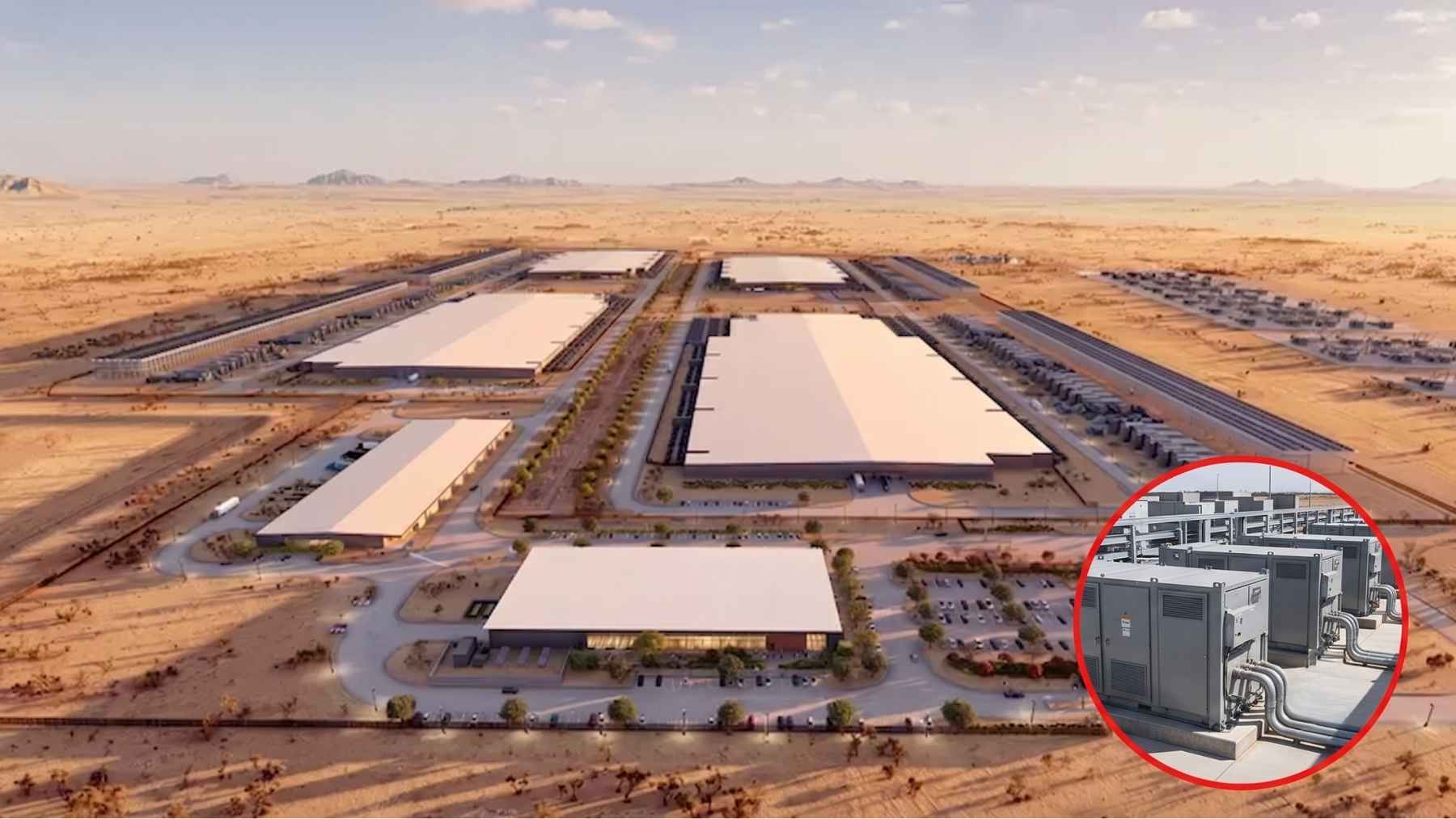
The project is called Project Jupiter, and it is not small. It sits near the border town of Santa Teresa, just west of El Paso, in Doña Ana County. Developed by BorderPlex Digital Assets and built for Oracle, which will use it to host AI infrastructure for OpenAI, the campus is designed from the start to run on a self-contained power system separate from the grid that supplies everyone else. Oracle has said it will cover all of the energy costs itself, so residents’ power bills do not move. In Oracle’s own filings to state regulators, these are “behind-the-meter, natural gas-powered microgrids” that feed the campus independently of the local grid. That last phrase is the one worth slowing down on.
AI Keeps Building Its Own Power Plants Because the Grid Can’t Keep Up
Project Jupiter is one version of something happening all over the country. Data centers have gotten so large, so fast, that the slowest part of building one is no longer the building. It is getting enough electricity to the site. Bloom Energy, the company supplying Jupiter’s fuel cells, said as much in a recent filing with the SEC: building transmission, clearing permits, and getting through the interconnection queue all take years, which has turned what it calls “time to power” into the real limit on growth. The fix it sells, and the fix a lot of developers are now reaching for, is to generate electricity right where it gets used and skip the grid bottleneck altogether.
That instinct is turning up in some strange places. China recently sank a data center off Shanghai that runs on offshore wind and seawater, specifically so it would not have to wait on the grid, while US projects in states like Texas, Ohio, and Louisiana are doing the same structural thing with gas turbines. The same race produced a truck-mounted nuclear reactor pitched straight at the data centers eating the grid. Different fuels, same decision: stop waiting for the wire and build your own.
The Project Kept Getting Bigger
When Doña Ana County commissioners signed off on an industrial revenue bond to finance Jupiter last year, a $165 billion bond that ranks among the largest ever attached to a data center in the US, they were told the on-site power would start at 700 to 900 megawatts and top out around one gigawatt. By the end of the year, the air permit applications told a different story: the microgrids could generate as much as 2.8 gigawatts. Critics like to point out that is more generating capacity than the entire grid run by Public Service Company of New Mexico, the state’s largest utility.
The fuel-cell deal Oracle and BorderPlex announced in late April locks in up to 2.45 gigawatts of capacity from California-based Bloom Energy and consolidates everything into a single microgrid campus across four data-center buildings. It is one piece of the broader Stargate buildout, the OpenAI-anchored infrastructure push, and Bloom’s chief commercial officer, Aman Joshi, sold the win as proof his company has become the platform for “powering AI data centers responsibly.” Whether “responsibly” survives contact with the fuel source is the whole argument.
Fuel Cells Without Combustion, But the Fuel Is Still Gas
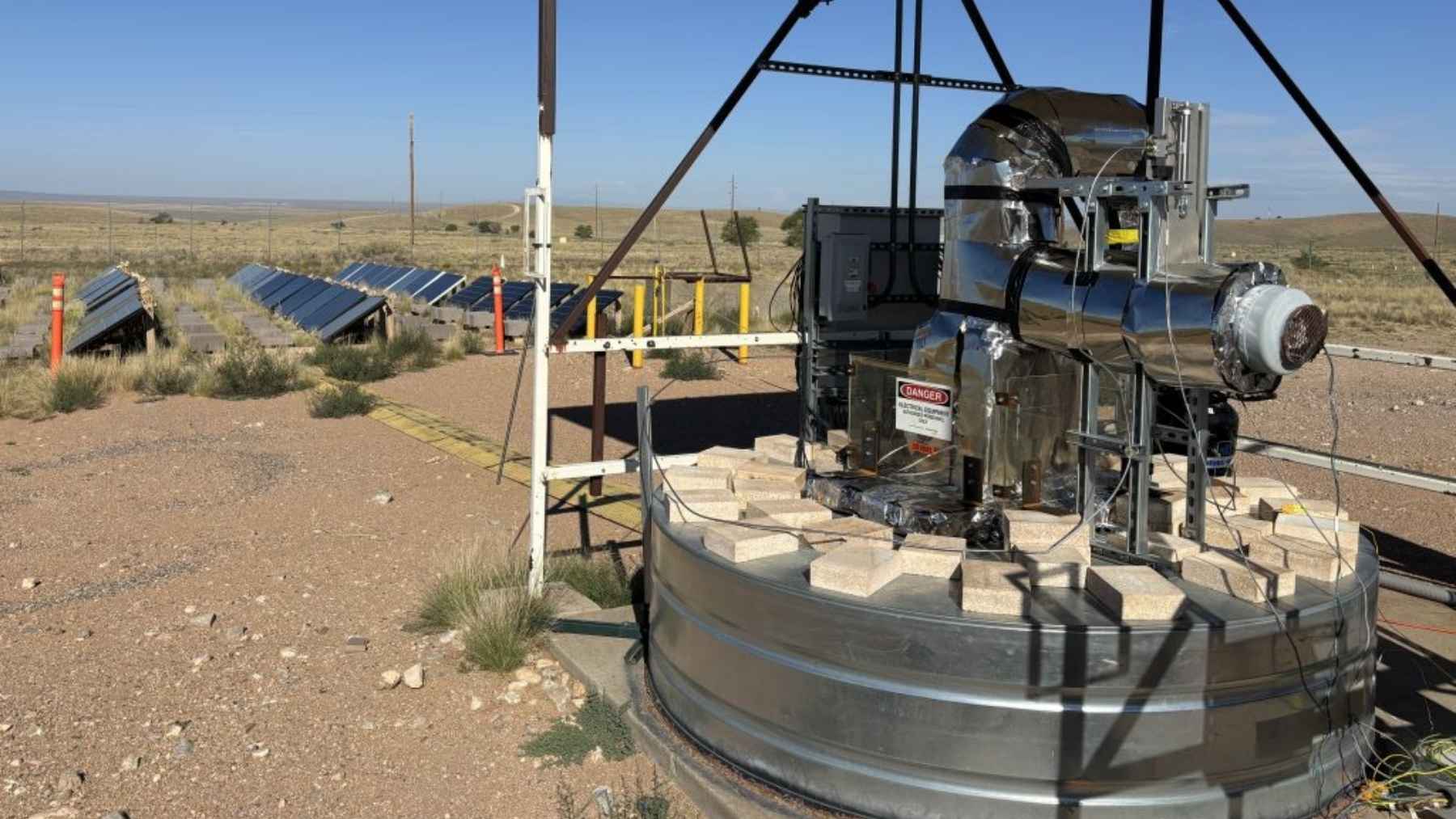
Here is where the words “fuel cell” do a lot of quiet work. A fuel cell makes electricity through a chemical reaction instead of by burning something, which is genuinely different from a gas turbine or a diesel generator. Bloom’s solid-oxide cells run hot and turn fuel into power efficiently, and because nothing combusts, they throw off less local air pollution and use less water than a turbine doing the same job. All of that is true.
What “fuel cell” does not automatically mean is clean. These cells run on natural gas, methane, not on hydrogen. A fuel cell can run on hydrogen, and when it does and the hydrogen is made cleanly, the only thing coming out the back is water. That is the version the US military has been testing with machines that pull hydrogen straight out of the air. Jupiter’s cells are not that. They are fed methane delivered as natural gas, which means the chemistry still starts with a fossil fuel and still ends with carbon dioxide going up into the sky. Oracle’s filings describe the microgrids, accurately, as natural gas-powered. The fuel cell changes how the gas becomes electricity. It does not change that the fuel is gas.
Ten Million Tons, in a State With No Water to Spare
By the developers’ own filings, the fuel-cell plan would emit about 10.1 million tons of greenhouse gases a year. That is lower than the roughly 14 million tons the original gas-turbine-and-diesel plan would have thrown off, and the developers also claim the switch cuts nitrogen-oxide pollution by about 92 percent. Lower is lower. It is also still enormous. Colin Cox, a senior attorney at the Center for Biological Diversity, told Oil & Gas Watch that 10 million tons a year is more than the combined output of Albuquerque, Las Cruces, and Santa Fe, the three largest cities in New Mexico, and that a figure like that “makes a joke out of climate goals.”
Then there is the water, which in this corner of New Mexico is the more loaded subject. Most of the state is in serious drought, and the local water utility is already in legal trouble over mismanagement, including failed arsenic tests. State engineers calculated the original power systems would have needed close to a million gallons of water a day; the developers preferred to point at the much smaller figure for cooling the data center, around 20,000 gallons a day. Oracle now says the fuel-cell campus will draw only non-potable well water from an existing rights holder, run a closed-loop cooling system that recycles water instead of evaporating it, and leave the community’s drinking water alone. Critics are not satisfied, partly because the full picture has dribbled out in pieces. Kacey Hovden of the New Mexico Environmental Law Center argues the project just trades one set of environmental problems for another and will still demand water the region does not have.
The Microgrid Loophole
New Mexico has a law, the Energy Transition Act, that pushes utilities toward more and more renewable power. It does not cover Project Jupiter. State lawmakers recently carved out an exemption for independent power systems labeled “microgrids,” and those microgrids do not have to meet the renewable mandates that bind a normal utility. Cox’s point is that Jupiter’s two microgrids are anything but micro, since together they would out-generate the state’s biggest utility, and yet they slip through a gap written for something far smaller.
The project has not had a clean run through the system either. The state land office rejected a route for the 17-mile, $60 million pipeline that would have carried gas to the site. After more than 7,000 public comments, regulators scheduled a public hearing and pushed their decision on the air permits back by several months, into the summer. Environmental groups, including the New Mexico Environmental Law Center, are challenging the project in court. As of early June, the new fuel-cell permit has been marked complete and moved into a 30-day public comment window of its own, which means the same fight is about to run a second lap.
A Better Kind of Data Center, According to the Ads
Oracle has been running ads, in English and Spanish, calling Jupiter “a better kind of data center” that uses cleaner fuel-cell technology. Cleaner than what it first proposed, sure. The original plan was gas turbines and diesel generators, so almost anything looks better parked next to that. But “cleaner than the worst version of ourselves” is a strange thing to print on a billboard, and the residents of Santa Teresa can read permit applications as well as anyone. The fuel cells are real, the emissions cut is real, and the fuel is still natural gas piped into one of the driest, most pollution-burdened corners of the state. That is the template AI is building toward right now: when the grid says wait, do not wait. Build your own power plant, call it clean, and sort out the neighbors later.