
Breaking news: Tesla CEO Elon Musk has announced another shortcoming of the already severely delayed and underperforming Cybercab fleet, and he has worded it in such a way that his followers are actually thinking this is good.
On X, where all the Tesla lovers dwell, Musk announced that the Tesla Cybertruck hours have been moved from 10 PM to 11 PM, a whole hour later. This sounds like a positive, well, if you want pedal-less Level 2+ vehicles on the streets. But it’s actually because the Tesla Cybercab and other robotaxis in Tesla’s fleet cannot properly see at night.
“The main thing we’re trying to solve is making sure that we don’t run over pets when they’re hard to see at night,” Musk said, bringing up grey kittens blending in with grey tarmac in the dark.
Robotaxi operating hours moved from 10pm to 11pm.
The main thing we’re trying to solve is making sure that we don’t run over pets when they’re hard to see at night. Literally trying to avoid grey kittens on grey tarmac in the dark.
— Elon Musk (@elonmusk) October 3, 2026
He said it cutesie and all, but this is yet more proof that Tesla’s Full Self-Driving system is nowhere near ready for autonomous driving.
Tesla’s robotaxis can’t see at night
Musk has consistently been a huge opponent of Lidar sensors. I’ll agree they are ugly and chunky, but a blend of Lidar sensors and cameras is what made Waymo’s ever-growing fleet able to traverse cities so seamlessly.
“Lidar is a fool’s errand,” Musk told attendees at Tesla’s Autonomy Day in 2019. “Anyone relying on lidar is doomed. Doomed! [They are] expensive sensors that are unnecessary… It’s ridiculous, you’ll see.”
Since 2019, Waymo has expanded to around 4,000 robotaxis across the United States. Fleets run 24/7 in cities like San Francisco, Los Angeles, and Austin. Waymo has a 68% lower overall crash rate than humans, even navigating complex cities like Las Vegas.
Waymo isn’t perfect or anything. Some even claim it’s covered in poop. But it’s well beyond Tesla’s robotaxi operation.
Earlier this year, Tesla’s tiny and limited robotaxi fleet in Austin, Texas, was nowhere near Waymo’s capabilities, despite Musk’s ongoing taunting. The robotaxis were reportedly way “dumber” than Waymo and required multiple people sitting inside the car or at least following it. That’s because Tesla’s robotaxis rely on FSD, which is just a Level 2+ driving system that requires human supervision.
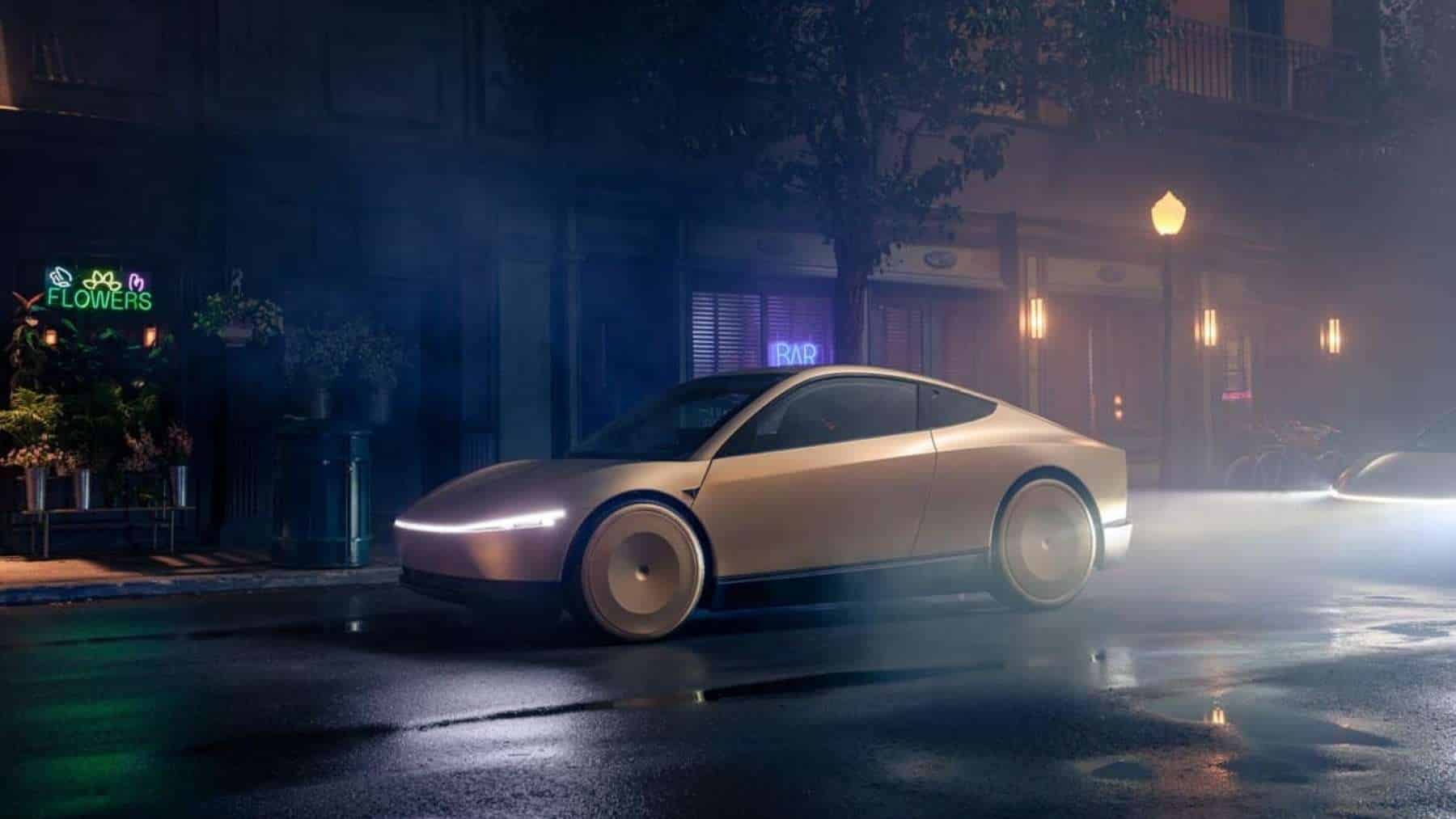
After multiple delays, Musk’s long-promised Cybercabs started rolling out in the last few months. The ugly gold vehicles don’t have any pedals or steering wheels, which is honestly quite scary for a vehicle that relies on FSD and only cameras.
They are nowhere near ready, and even Musk has admitted they can’t see in the dark. FSD has been investigated numerous times for shortcomings in its camera, which have led to many dangerous situations. The National Highway Traffic Safety Administration (NHTSA) is investigating more than 3 million Tesla vehicles for crashes involving full self-driving that occurred in poor visibility. In one fatal crash, Tesla’s FSD was accused of “not detecting common roadway conditions that impaired camera visibility.”
It seems one of those “roadway conditions” is nighttime.