
For the better part of seventy years, switching on a brand-new experimental reactor in the United States meant doing it inside a national laboratory. Fenced federal ground, government badges, a lineage that runs straight back to the Manhattan Project.
That changed last month in a small Utah town. On June 18 a California startup called Valar Atomics brought a reactor to criticality near Orangeville, out in Emery County, and the Department of Energy confirmed it the same afternoon.
It’s the first reactor the DOE has authorized to go critical outside a national laboratory, and the second to pull it off under a federal program sprinting toward a July 4 deadline.
The reactor is tiny. The precedent isn’t.
A startup reactor went critical in the middle of coal country
The machine is called Ward 250, and it sits at the Utah San Rafael Energy Lab, a state-run facility just outside Orangeville. Emery County is coal country, the kind of place flanked by gigawatt-scale coal plants and working mines.
That location is the point, not a coincidence. The site was set up as a proving ground for nuclear right where the coal economy already lives, and it lines up with Utah Governor Spencer Cox’s “Operation Gigawatt,” a state plan to double power production inside a decade.
What happened there on June 18 was a “zero-power fueled criticality demonstration,” in the DOE’s words. Strip the jargon and it comes down to this: the reactor’s chain reaction became self-sustaining for the first time, the physics milestone every reactor has to clear before it can make real power.
Zero-power means exactly what it says. The reaction holds itself up, but the reactor isn’t pumping out heat yet. Criticality is the on switch for the nuclear part, not for the grid.
It’s the size of a minivan and the fuel is built not to melt
Ward 250 looks nothing like the big domed plants most people picture. It’s a high-temperature gas reactor, a microreactor barely larger than a minivan, cooled by helium instead of water and built around a graphite core.
The fuel is the clever part. Instead of conventional fuel rods, it uses TRISO fuel: tiny kernels of high-assay low-enriched uranium, each one wrapped in layers of carbon and ceramic. That coating is rated to hold together past 1,600 degrees Celsius, which is the entire safety argument. The fuel is engineered so it doesn’t melt down even when things go wrong.
As a test unit, Ward 250 is rated at 100 kilowatts of thermal power. By June 22, Valar said its slow power climb had reached 10 kilowatts. That’s roughly what a few electric clothes dryers draw, so nobody’s lighting up a city off it.
The commercial design is the actual goal. Valar wants to scale the reactor to 5 megawatts of electricity, enough to power around 5,000 homes from one unit, and eventually cluster thousands of them into what the company calls “gigasites” aimed at industrial heat and AI data centers.
The “outside a national lab” part is the whole story
Set the hardware aside and the milestone is really about paperwork. For decades, a new test reactor in America got built and run inside a national lab, under the federal government’s direct roof.
Compare it to the 85-kilowatt MARVEL reactor going up inside Idaho National Laboratory, a taxpayer-funded machine built for industry to study. Ward 250 hit the same kind of milestone, except on a privately built site that the state owns and a startup runs.
That’s possible because of a new approval route. In May 2025, President Trump signed an executive order directing the DOE to get at least three advanced test reactors critical by July 4, 2026, using the department’s own authorization process instead of the years-long Nuclear Regulatory Commission route most reactors go through.
It wasn’t a rubber stamp. The criticality test had to clear a federal review led out of the DOE’s Idaho Operations Office, with a joint test group signing off on each step of the startup before the reactor was allowed to go critical.
The first reactor across that line was Antares Nuclear’s Mark-0, which went critical on June 4 at Idaho National Laboratory. Valar’s Ward 250 came second, and was the first to do it away from a national lab. As of late June, the program still needed a third to hit the July 4 target.
Getting the reactor to Utah meant putting it on an Air Force cargo plane
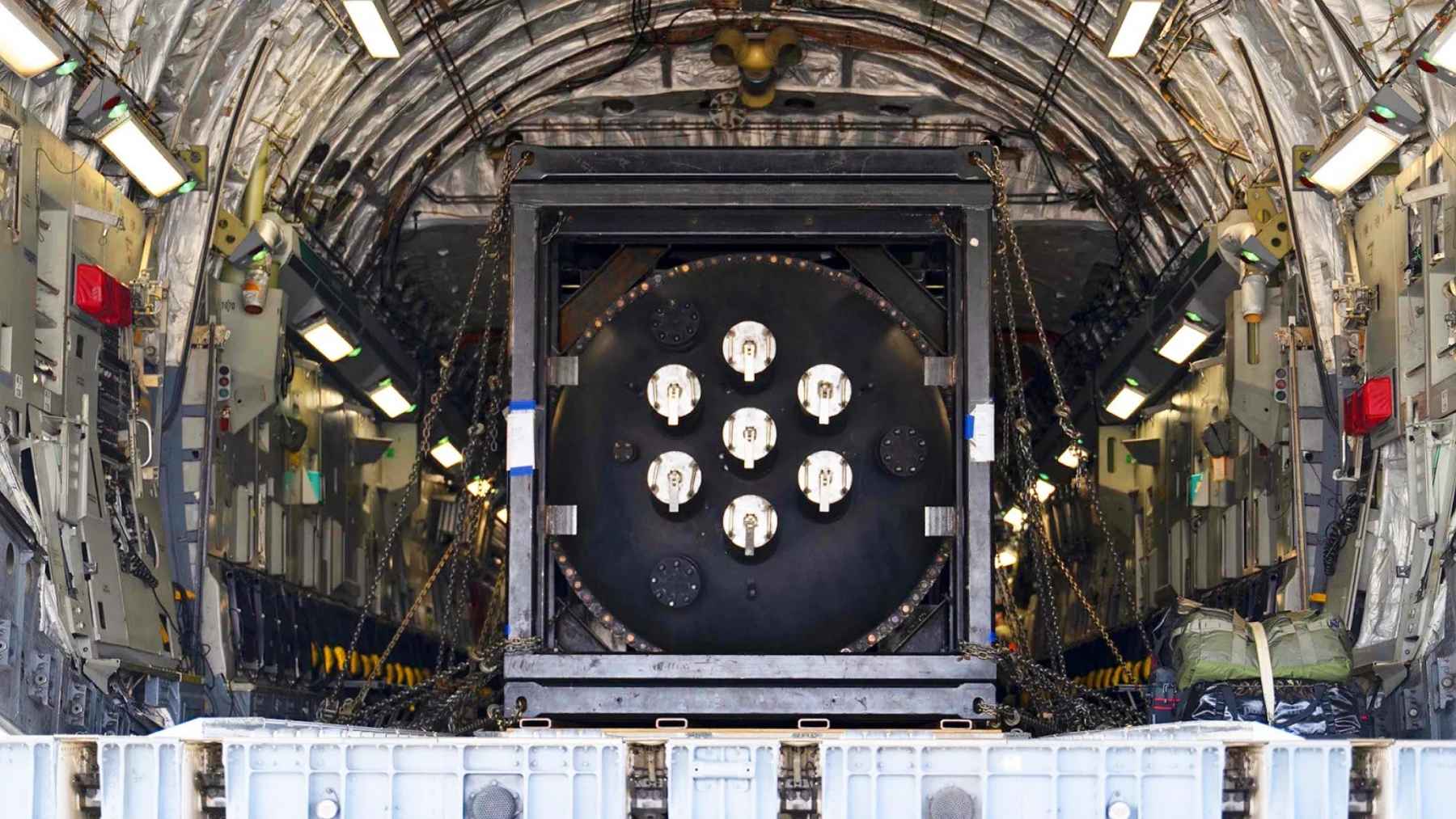
The logistics were a spectacle in their own right. Back in February, the reactor flew from California to Utah aboard a US Air Force C-17 Globemaster III, a mission the military named Operation Windlord and billed as the first time it had airlifted a reactor.
Energy Secretary Chris Wright tied the whole run together, calling it “another historic moment for America’s nuclear renaissance” and pointing to the military airlift and the criticality test as one fast-moving push.
From 10 kilowatts to a town’s worth of power
Ward 250 isn’t Valar’s first time taking a core critical. Late last year the company ran a separate experiment called Project NOVA with Los Alamos National Laboratory, a graphite-and-HALEU core built to mirror the Ward 250 design and feed real neutron data back into it. That one was a lab job under the National Nuclear Security Administration. Utah was the step out the door.
Now comes the slow part: power ascension. The reactor climbs in stages while engineers track how the fuel and the core behave, which is why it sat at 10 kilowatts in late June rather than its full 100. Valar says more experiments are coming in the weeks ahead, and founder and CEO Isaiah Taylor has been blunt about the endgame, saying “this reactor was built to make power.”
Valar also isn’t running alone. It’s one outfit in a crowded field of US reactor startups, from a company that wants to drop a full reactor a mile underground in a borehole to the sodium-cooled plant Bill Gates is building in Wyoming. The DOE’s own deadline still has firms like Aalo, Radiant and Deployable Energy lining up for a criticality milestone of their own.
None of this means a startup reactor is about to power your house. Ward 250 is a 100-kilowatt test unit creeping up from 10, and the commercial 5-megawatt version still has to be built and proven.
What changed on June 18 wasn’t the wattage, it was the address. For the first time the federal government signed off on a reactor going critical somewhere other than its own laboratories, and it happened in an Emery County coal town instead of behind a federal fence. The reactor might end up a fleet or a footnote. The pathway it walked through is the part that sticks.