
You check the crash-test stars before you buy. You worry about the other driver, the blind spot, the ice on the on-ramp.
The thing about that car most likely to shorten your life isn’t the crash. It’s the air coming out of the back of it.
Traffic pollution is the quiet one. No sirens, no insurance claim, no viral dashcam clip. Just fine particles and ozone working on your lungs and your heart, year after year, and most of us never think about it.
Nearly half the country is breathing unhealthy air
The numbers aren’t subtle. The American Lung Association’s 2025 “State of the Air” report found that 156 million people — about 46% of the U.S., nearly half — live in places with failing grades for ozone or particle pollution. That’s 25 million more than the year before.
The 2026 edition sharpened the point to the people who matter most: nearly half of American kids now live where the air is unhealthy to breathe.
Transportation is a big reason why. Tailpipes throw off the fine particulate matter and the ozone-forming gases the report grades, and both are tied to childhood asthma attacks, heart attacks, strokes, low birth weight and early death. The Lung Association says the pollution is “causing kids to have asthma attacks” right now, not in some distant scenario.
It doesn’t land evenly, either. The same report found people of color are more than twice as likely as white Americans to live somewhere that flunks all three pollution measures.
The flip side is just as concrete. The Lung Association’s “Zeroing in on Healthy Air” analysis estimates that a full shift to zero-emission vehicles — 100% of new passenger cars by 2035, trucks by 2040 — paired with a cleaner grid would avoid up to 110,000 premature deaths and more than $1.2 trillion in health costs by 2050.
The country is steering the other way
Then comes the catch. Federal policy is moving in the opposite direction, fast.
The $7,500 federal EV tax credit for new cars, and $4,000 for used ones, expired at the end of September 2025 under the One Big Beautiful Bill Act. EV sales slid once it lapsed.
Then in February 2026, the EPA rescinded the 2009 “endangerment finding” and repealed every greenhouse-gas standard for cars and trucks built on it. The agency called it the single largest deregulatory action in U.S. history and framed it as consumer choice and lower prices, arguing that zeroing out all U.S. vehicle emissions would barely move global temperatures anyway.
Not everyone is buying the logic. The American Lung Association, Earthjustice and a coalition of health and conservation groups have moved to sue over the rollback, and a bloc of states has called it unlawful. So the rule is on the books, but it’s headed for court.
And EVs were never the cheap pick to begin with. Even the most affordable mainstream electric SUV, the Chevrolet Equinox EV, starts around $35,000 before the incentives that just disappeared.
How to actually cut your own exposure
You can’t fix the grid from the driver’s seat. You can cut what you personally breathe, though, and most of it is cheap.
Start with your cabin air filter. If it’s dirty, replace it. If you’re buying one anyway, get a high-efficiency filter with activated carbon, which traps more of the fine stuff and some of the smell. Vacuum the cabin now and then while you’re at it.
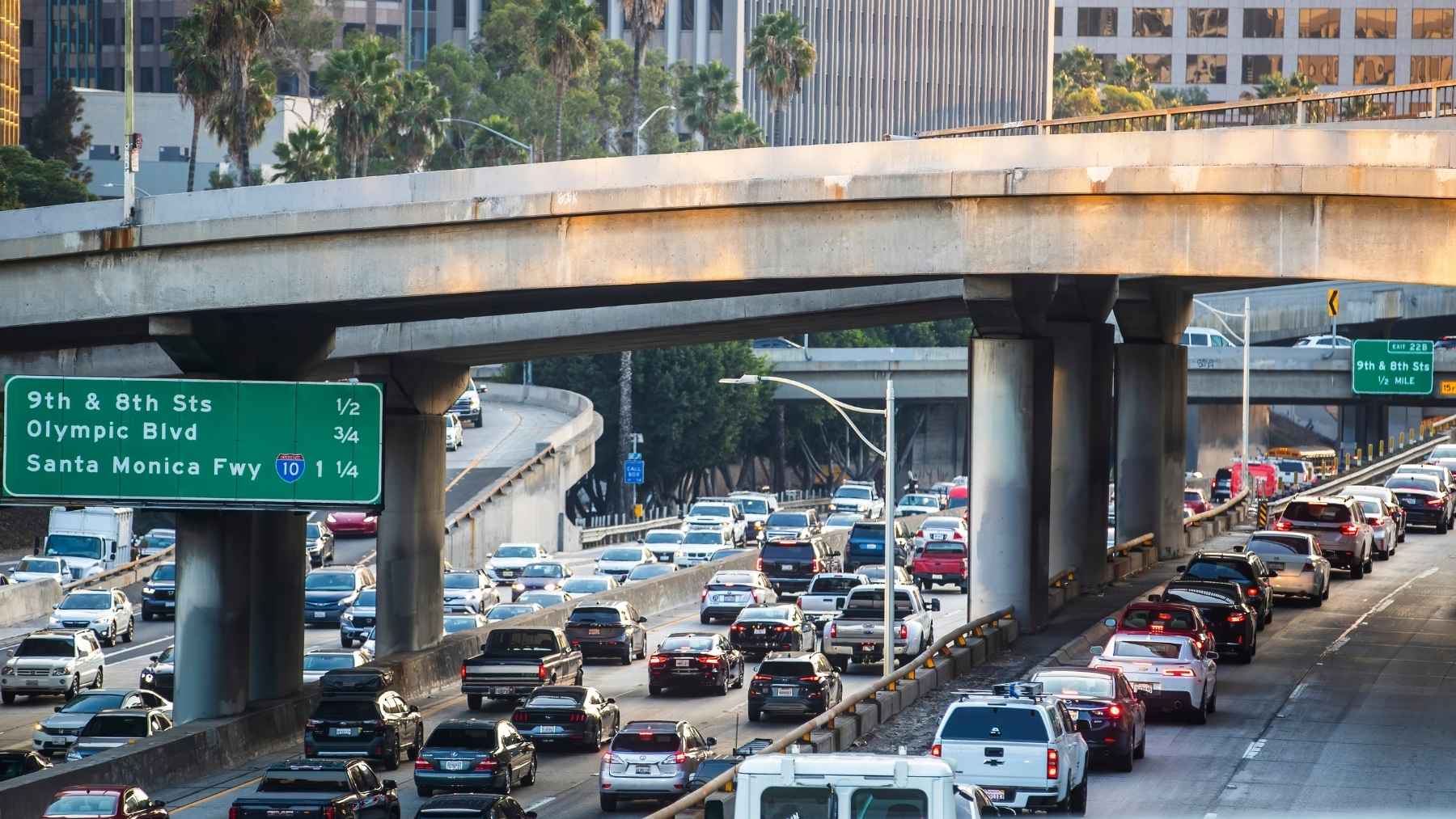
The biggest single move is what you do in traffic. Stuck in a jam behind a wall of exhaust, roll the windows up and switch the climate control to recirculate so you’re not pulling the worst air straight inside. Flip it back to fresh air once you’re moving again, so carbon dioxide doesn’t build up in the cabin.
If you’re sensitive, or you commute through heavy traffic every day, an anti-pollution mask isn’t a weird thing to keep in the car. A route with less stop-and-go helps too. A few extra minutes on a clearer road beats idling in a tunnel of tailpipes.
The rest is the obvious stuff that isn’t always possible: drive less, carpool, take transit where it exists.
None of that changes the bigger math. The cabin filter and the recirculate button protect you. They don’t touch the 156 million people breathing it everywhere else.
So the rest of us are left cleaning up one car’s worth of air at a time, while the fix that actually scales sits in a courtroom. Whether that counts as a solution or just a coping mechanism is the part nobody really wants to answer.