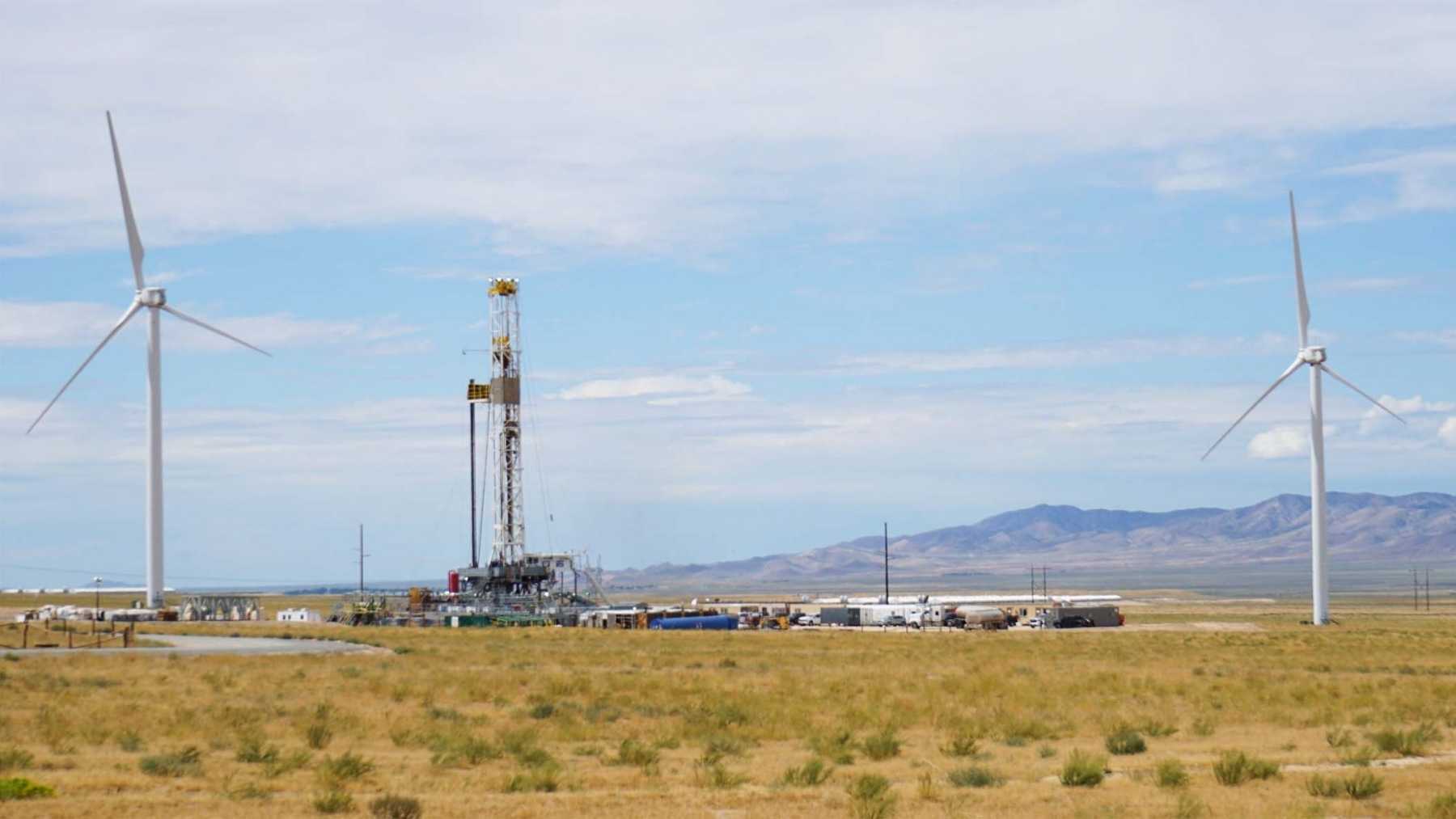

Fracking spent the last fifteen years as the most argued-over word in American energy. It cracked open the shale boom, turned the United States into the world’s biggest oil producer, and kept a generation of environmental lawyers in steady work trying to stop it. So there is something genuinely strange about watching the same horizontal drills and the same high-pressure fracking, run mostly by the same oilfield crews, get pointed at a stretch of southwest Utah where there is no oil at all.
What they are chasing two miles down is heat. The project is called Cape Station, it sits in Beaver County about 12 miles northeast of Milford, and Fervo Energy is building it into the largest next-generation geothermal plant on Earth: 500 megawatts of around-the-clock, carbon-free power, with the first electrons due on the grid by the end of this year.
The pitch is not subtle. Wind drops, solar clocks out at sunset, and the grid is so backed up that data centers have started building their own gas plants rather than wait in line. Geothermal just runs. Fervo’s bet is that the cheapest way to make a lot of it, fast, is to hand the drilling to the people who already know how to do it.
The oil patch is doing the drilling
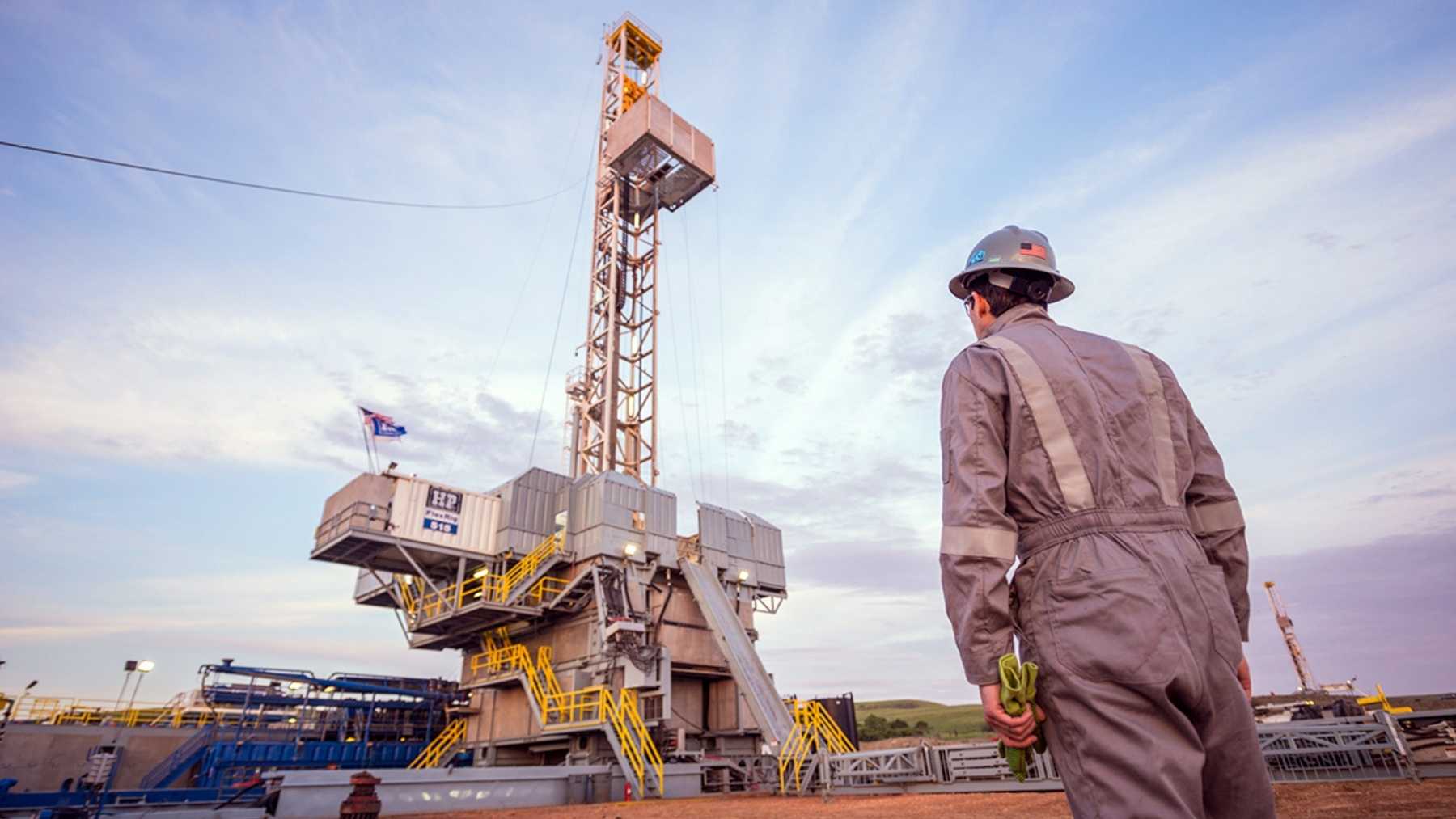
Fervo says fossil-fuel workers have accounted for over 90% of the on-site labor hours at Cape Station to date, a figure the company put front and center alongside its record-breaking production results. That is not a talking point bolted on after the fact. CEO and co-founder Tim Latimer started the company after working as a drilling engineer in oil and gas, and the entire premise of enhanced geothermal is that the hardest part, getting a well thousands of feet into hot, hard rock on time and on budget, is a problem the petroleum industry already spent a century solving.
So rather than invent a new workforce, Fervo hired the existing one. It contracts local oilfield-services firms, and in 2024 it helped launch what its backers call the first geothermal apprenticeship program, run with Southern Utah University, mixing classroom coursework with hands-on time at the site.
Across the full build, Fervo puts the project at roughly 6,600 construction jobs and 160 permanent positions, generating more than $437 million in wages. For a rural county in southwest Utah, that is the kind of math that tends to quiet the usual objections to a big industrial project showing up in the desert.
The trick is fracking rock that holds no oil
Old-school geothermal needed a specific piece of luck: a natural underground reservoir where hot water or steam was already circulating, close enough to the surface to tap. Iceland has it. Northern California’s Geysers field has it. Most of the country does not, which is why conventional geothermal stayed a rounding error on the US grid for decades.
Enhanced geothermal, or EGS, throws out the luck requirement. Fervo drills down into hot dry rock that has no reservoir at all, turns the bit horizontal, and then fracks the rock the way a shale crew would, opening a web of cracks. Water goes down one well, the rock heats it past boiling, and it comes up a second well as steam to spin a turbine. The cooled water gets pumped back down to start over, in a closed loop, so the system recycles its water instead of dumping it. The footprint is small for the output. Fervo puts each megawatt at about 1.5 acres, well under what a comparable solar farm needs for the same nameplate.
The rock at Cape Station runs hot. Fervo has drilled reservoirs above 428 degrees Fahrenheit, the kind of temperature that used to make engineers nervous and now mostly makes the economics work. The point of all this is that it decouples geothermal from geography. You no longer need to sit on top of a volcano. You need hot rock at depth, which a great deal of the American West happens to have.
One well now does the work of three
The proof that this is not a science project showed up in the well tests. In a standard 30-day flow test, a single Cape Station well hit a maximum flow rate of 107 kg/s, enough for more than 10 megawatts of generation. That is triple what Fervo’s earlier Project Red pilot in Nevada managed per well. The company called it the most productive enhanced geothermal system in history, and trade outlet Utility Dive reported the result cleared a performance bar the National Renewable Energy Laboratory had not expected the industry to reach until 2035.
The drilling got faster the same way the shale patch got faster, through sheer repetition. Fervo cut its drilling time by roughly 70% from the first wells, with its quickest Cape Station well finished in 21 days, and the cost of a well fell from $9.4 million to $4.8 million as the crews ran the play again and again. More megawatts per well is also why the project quietly grew. In 2025 Fervo upsized Cape Station from 400 to 500 megawatts without drilling a single extra well, just by widening the well casing, spacing wells more precisely with fiber-optic sensors, and stacking development in benches to pull more power out of the same holes.
Every megawatt is already sold
A power plant that does not exist yet has a way of staying theoretical. Cape Station does not have that problem, because all 500 megawatts are already under contract. Southern California Edison is the anchor buyer, with two agreements totaling 320 megawatts. Shell Energy took 31 megawatts in the deal that pushed the project to 500, and a group of California community choice aggregators picked up the rest. Phase I is set to start feeding the grid late this year and reach about 100 megawatts by early 2027, with the remaining 400 due by 2028. Fervo also has permitting headroom to expand the site all the way to 2 gigawatts if the demand holds.
It probably will. The buyers lining up for firm, 24/7 power are no longer just utilities. They are the hyperscalers building data centers faster than the grid can feed them, the same crunch that has Oracle building its own gas plant in the New Mexico desert for OpenAI and China sinking a data center off Shanghai to run on offshore wind and seawater. Google is already a Fervo customer. Its earlier Nevada pilot powers Google data centers, and Google has agreed to take 115 megawatts from Fervo’s next Nevada project, Corsac Station. When a power source runs around the clock and does not care whether the wind blows, an AI company doing the math on electricity costs starts paying attention.
Wall Street bought the story; the revenue line is another matter
On May 13, Fervo started trading on the Nasdaq under the ticker FRVO, and the market did not play it cool. The IPO priced at $27 a share, above a marketed range that had already been raised twice, and the company sold 70 million shares to bring in about $1.89 billion. Fortune called it the biggest clean-energy IPO on record. The stock jumped about a third on its first day, pushing Fervo’s market value past $10 billion. The backer list reads like a roll call of the energy transition: Bill Gates’s Breakthrough Energy and Google were already in, and the $462 million Series E that Fervo raised in December 2025 added Mitsui and others on top of returning investors like CalSTRS, Devon Energy, and Mitsubishi Heavy Industries.
The valuation has some catching up to do with the income statement. For the twelve months through December 31, 2025, Fervo reported a net loss of $70.5 million on $138,000 in revenue. That is not a typo. Cape Station has not sold a single electron yet, so the entire case rests on Phase I actually switching on this year and the wells performing in commercial operation the way they performed in testing. Investors get their first real look at the post-IPO numbers on June 22, when Fervo reports its first quarter as a public company.
None of that changes the basic trick playing out in the Utah desert, which is the part worth caring about. Fervo took the one tool the oil industry spent decades perfecting, aimed it at heat instead of hydrocarbons, and handed the drilling to the crews who would otherwise be fracking for crude. If the bet works, the same skill set that flooded the country with shale oil ends up putting firm clean power on the grid faster than anyone can build a gas plant. If it does not, it will be the most expensive $138,000 in revenue Wall Street has paid up for in quite a while.