
Tunnel boring machines are built around one idea that has held for decades: make the machine a rigid steel cylinder, aim it carefully, and push. Stiffness is what keeps a cutting face honest when it is chewing rock at full diameter. The catch is that Sydney drew its new harbour crossing with bends in it.
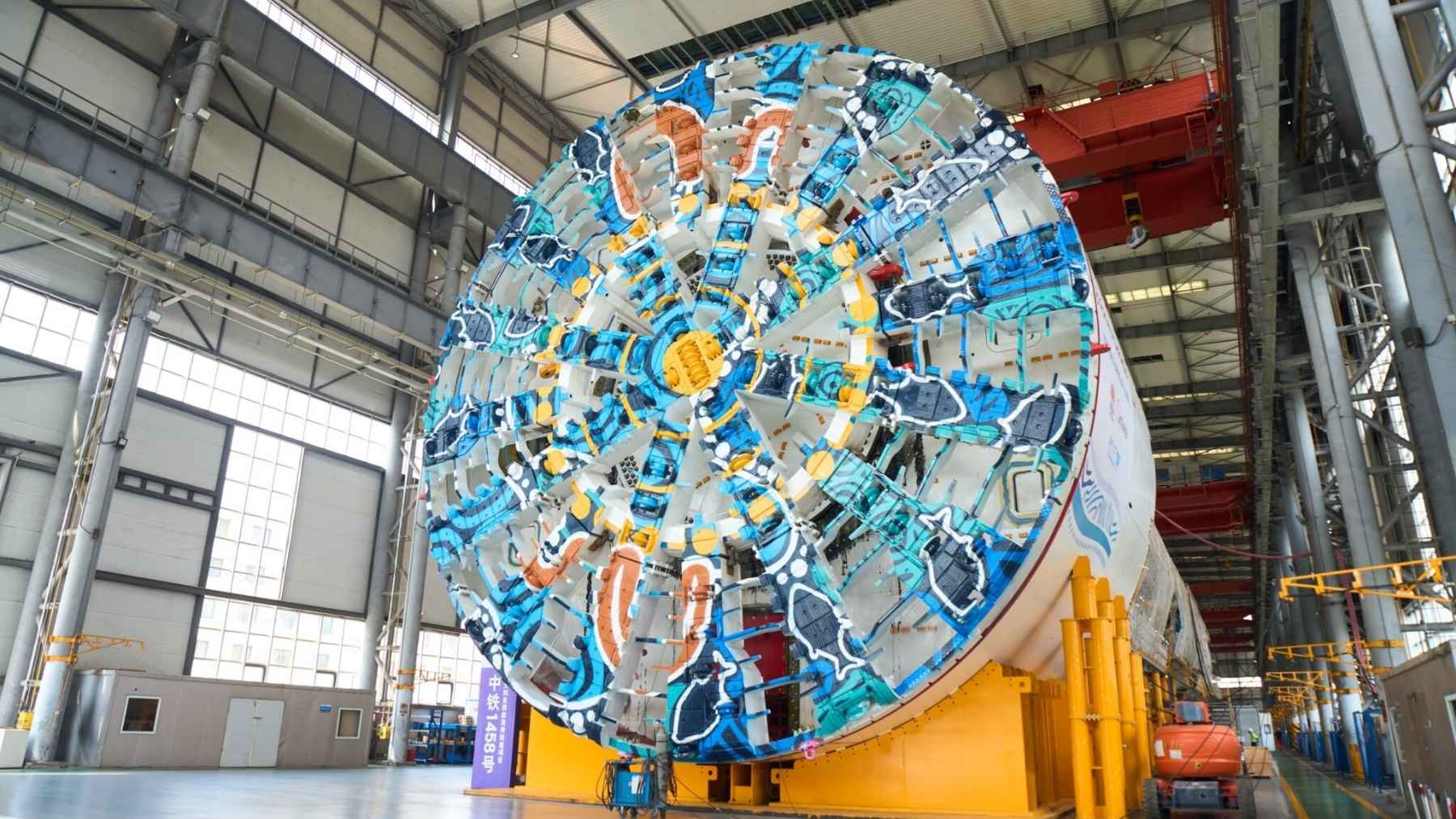
So CREG, the Chinese manufacturer behind the two largest borers in the Southern Hemisphere, did something slightly heretical. It built the hull in articulated sections around a precision coupling, “allowing the massive structure to bend at the waist,” as the South China Morning Post described it. A 4,350-ton machine that flexes in the middle to get around corners.
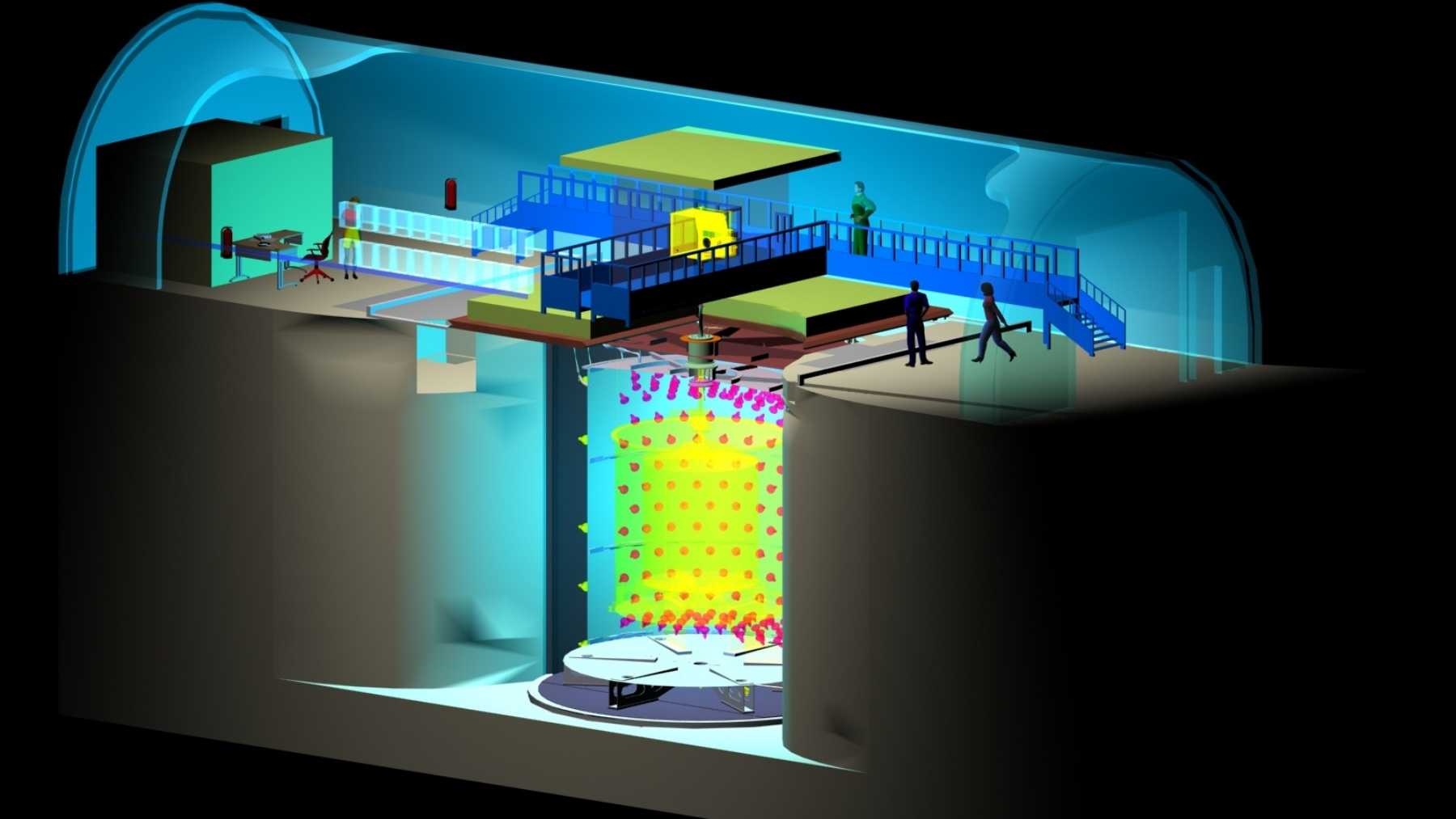
Both of those machines are now in the ground. The second, named Barangaroo, launched on August 11 from a chamber 44.7 meters (147 feet) below Birchgrove Oval, a suburban cricket ground on Sydney’s inner west, according to the NSW Government. Her twin, Patyegarang, has been grinding toward the harbour since mid-June. The last 1.5 kilometers (0.9 miles) of the Western Harbour Tunnel now belong to the pair of them.
Both sisters are digging at the same time now
Barangaroo’s start is less a green flag than a slow-motion shove. During the launch phase she assembles the first three tunnel rings behind herself, each made of ten concrete segments weighing 15 tonnes apiece, then pushes off them through the launch chamber wall and begins the drive proper toward Waverton.
From there the routine matches the one her sister has been running for two months. Contractor Acciona put the exact start of Patyegarang’s drive at late on Friday, June 12, once final testing was done. The machines run around the clock with about 40 people aboard each at any one time.
The stretch they are cutting is the reason this project needed record machines at all. It sits up to 50 meters (164 feet) below sea level, directly under Sydney Harbour, and both borers work behind a pressurized slurry face that holds the wet ground up while the cutterhead does its job. Nothing else in the fleet could touch this section.
As they go, the twins will line the tubes with around 13,000 precast concrete segments and 1,300 culverts weighing 20 tonnes each, trucked in from the project’s casting plant at Emu Plains in Western Sydney. NSW Roads Minister Jenny Aitchison marked the launch by noting that “it’s taken extraordinary feats of engineering to get to this point.” Fair. Most of those feats happened before either machine turned a wheel.
Big borers don’t like corners
The waist joint exists because the route demands it. The alignment under the harbour is S-shaped, with a minimum turning radius of 960 meters (3,150 feet), through ground that shifts between sandstone, silt and silty clay and tests as high as 80 MPa in places, according to CREC, the machines’ parent group.
That radius sounds gentle until you remember what is doing the turning. A conventional borer this size is one continuous rigid body, and steering it through a curve is closer to steering a grain silo than a vehicle. Rigidity is a feature everywhere except the bends.
CREG’s fix lets the hull hinge a few degrees at its midsection, so the machine tracks true through the curves instead of fighting them. It is, in effect, a skyscraper that can slouch. And it makes Patyegarang and Barangaroo a different breed from the rigid giants China runs at home, like the 5,000-ton machine boring under the Yangtze with an even wider head.
She changes her own teeth
The other piece of automation on board gets less poetry and saves more hours. Disc cutters wear down constantly in rock like this, and the traditional fix is stopping the machine and sending a crew in to swap them by hand.
Patyegarang carries a cutter-changing robot instead, and her twin was built to the same design at the same Zhengzhou plant. CREC says the system replaces tools with nobody in the loop and runs 5 to 8 times faster than manual changes. There is also a robotic inspection rig for the cutterhead itself, real-time wear monitoring on every disc, and sensors watching the grout injection rate as the lining goes in, so the crew can see a tool going before it fails.
On a drive the state expected to take the machines around a year, hours not lost to tool changes turn into meters gained at the face. That is the whole trade.
The math from here to 2028
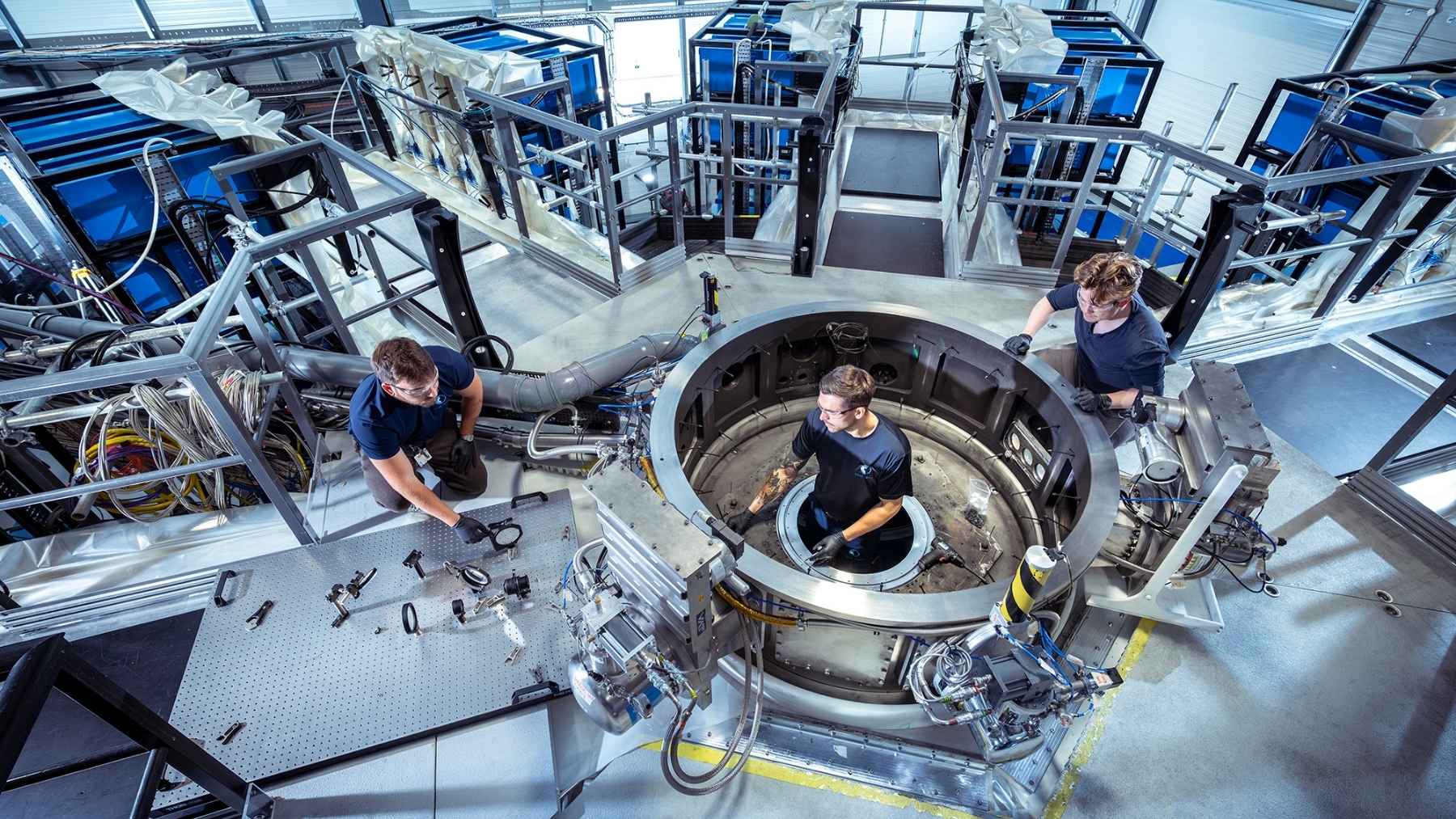
Getting to this point took some numbers of its own. The Tunnelling Journal puts the rock removed just to carve the twin launch chambers at more than 450,000 tonnes, before either borer cut a meter of actual tunnel. The assembly job inside those chambers, done entirely underground, was its own story earlier this summer.
From here, both machines grind toward the receival chambers at Waverton, where their work ends and the fit-out crews take over. The Western Harbour Tunnel remains on track to open in 2028, in public hands, and the state projects it will pull 35 percent of traffic off the Western Distributor, 20 percent out of the existing harbour tunnel and 17 percent off the Harbour Bridge.
Australia has a strangely deep bench in this sport right now. A 3,500-ton German machine named Mary is working under Adelaide’s suburbs, Brisbane is on its third assembly of a pair of Sydney Metro veterans, and Sydney itself recently finished cutting a 1,100-ton borer into 16 pieces to get it out from under the financial district.
None of it shows at street level. Birchgrove Oval is still up there, doing quiet suburban oval things, 147 feet above two of the biggest machines ever buried. The scoreboard will not mention either of them.