
When people worry out loud about America leaning on China for raw materials, they tend to reach for the same short list: rare earths, lithium, the stuff inside chips and EV batteries. Those are the metals with name recognition. But there is another one sitting inside almost every round the US military fires, and hardly anyone outside the commodities trade can even pronounce it. It is called antimony, and an Australian company is about to restart a mine that first opened in 1857 to pull it back out of the ground.
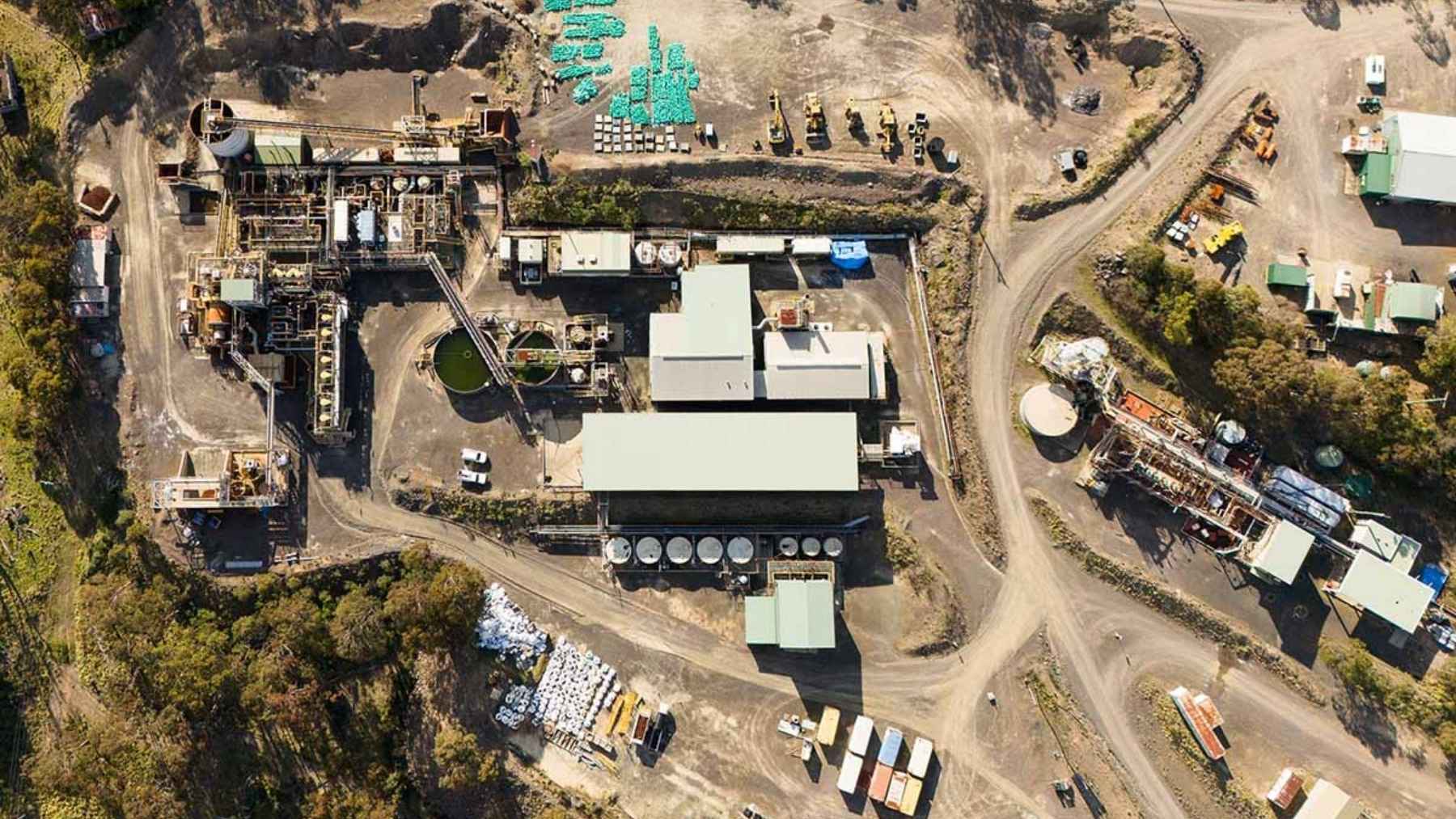
The company is Larvotto Resources, and the mine is Hillgrove, 23 km east of Armidale in northern New South Wales. Larvotto says first production is now on track for commissioning in August 2026, which would make it Australia’s largest antimony producer and, by the company’s own description, the only meaningful new source of the metal coming online outside China for years. That timing is not an accident. China spent the back half of 2024 turning antimony into a geopolitical lever, and the truce currently keeping it flowing to the US has an expiration date.
Antimony is in almost every bullet the US fires
Most people, if they have heard of antimony at all, know it as the thing that keeps couches and curtains from catching fire. That is fair enough. Its single biggest use is as a flame retardant, and it also turns up in lead-acid batteries and, increasingly, in solar panels, where it works as a hardener for the glass. None of that is why the Pentagon cares.
The US Department of the Interior lists antimony as a critical mineral because it is essential to armor-piercing ammunition, infrared sensors and precision optics. Larvotto managing director Ron Heeks laid out the ammunition math to MINING.COM: just about every bullet, and anything carrying military-grade lead, holds somewhere between 2.5% and 6.5% antimony. Spread that across an entire defense supply chain and you get why, in his words, the US military “is getting desperate.”
The supply side is the uncomfortable part. China accounts for roughly 48% of global antimony mine production, according to US Geological Survey figures, and dominates the refining step by a far wider margin, which is the part of the chain that actually turns ore into usable metal. The US International Trade Commission files antimony in the same strategic bucket as rare earths, cobalt and uranium, and China supplies about 63% of what the US imports. Russia and Tajikistan make up most of the remaining global supply, which leaves the West with very little daylight.
China stopped selling to the US, then started again, for now
Here is the part that makes the timing matter. In August 2024, China’s Commerce Ministry announced export controls on antimony and related products, effective September 15, requiring licenses to ship antimony ore, metal and oxide. Then on December 3, 2024, Beijing went further and banned outright the export of antimony and several other dual-use materials to the United States, specifically for military users and uses. Shipments to the US cratered.
That ban is not in force right now. On November 9, 2025, China’s Ministry of Commerce said it would suspend the prohibition on antimony, gallium, germanium and superhard materials bound for the US, with general export licenses available, but only until November 27, 2026, as part of a broader thaw in trade tensions, per reporting from Fastmarkets. So the metal is moving again. The catch is that the whole arrangement is temporary and set to lapse in late November, roughly three months after Larvotto expects its first concentrate to leave Hillgrove.
This is the backdrop that turned a refurbished gold-and-antimony mine into something Western governments started watching closely. Australia folded antimony into its critical-minerals strategy and a A$1.2 billion strategic reserve earlier this year, the sort of allied supply problem Washington has been trying to solve with partners like Australia. The US itself has limited near-term options at home. US Antimony owns the only antimony smelters in North America, and its main domestic mine hope, Perpetua Resources’ Stibnite project in Idaho, has been years from production and tied up in permitting, according to CSIS.
Larvotto bought the mine cheap, then turned down half a billion dollars
Larvotto picked up Hillgrove out of administration in December 2023, buying the project from the receivers of a previous ASX-listed owner. By its own accounting it paid less than $6 per gold-equivalent ounce for a resource then pegged at about 1.4 million ounces, a price the company called a steep discount to comparable deals at the time. Antimony was trading around $10,000 a tonne back then. It has surged dramatically since, as the Chinese controls bit and the resource grew to roughly 1.7 million gold-equivalent ounces.
Two years later, the numbers look very different. In October 2025, US Antimony Corp (NYSE-American: UAMY), which had quietly bought 10% of Larvotto on market to become its largest shareholder, made a non-binding, all-stock offer for the rest, pitched at six of its own shares for every 100 Larvotto shares. At announcement that valued Larvotto at about A$722.9 million, or roughly $470 million, per MINING.COM. Because the bid was paid in US Antimony stock and that stock slid after the announcement, the implied value dropped to about A$573 million within days. Larvotto’s board rejected it unanimously, saying the offer “materially undervalues” the company. US Antimony still holds its 10% stake.
The mine itself has a long memory. Hillgrove has been worked for antimony and gold since 1857, with significant modern production running from 1969 until the operation was placed on care and maintenance around 2014, when antimony prices sagged. Heeks likes to point out that the deposit fed metal through World War I, World War II, Korea and Vietnam. Antimony demand has always tracked, at least in part, with how much ammunition the world is making.
There is a second defense metal hiding in the same rock
The defense angle does not stop at antimony. In November 2025, Larvotto reported that metallurgical testwork on Hillgrove ore returned 90% tungsten recovery, with the process concentrating the tungsten to about 16 times its feed grade, results the company said point to a simple, cheap circuit that could produce a saleable tungsten concentrate. Tungsten is the other half of the equation here, because it is the material the military uses for what it calls penetrators: dense, armor-piercing projectiles. Like antimony, its production and refining are heavily concentrated in China.
For now this is potential rather than product. As of June 2026, Larvotto was still running metallurgical work to confirm whether tungsten can be pulled out economically as a by-product, and no tungsten offtake has been signed. But if it pencils out, Hillgrove would be supplying two separate critical metals the Pentagon needs and China dominates, out of a single orebody in New South Wales. That is a rare thing, and it is a big part of why this particular mine restart reads as more than another gold project chasing a high price.
Why August is the date to watch
Larvotto has spent recent months locking down where the metal goes. The antimony concentrate is already committed under a seven-year offtake to British trading house Wogen Resources, signed in late 2024. In early June 2026, the company added a binding offtake with Glencore for Hillgrove’s gold concentrate over the first seven years, which Larvotto framed as completing its marketing setup ahead of start-up. Heeks has been blunt that he will not always know the final destination of the antimony once it leaves site. The traders sell to the best non-China smelter, and most of the world’s smelting capacity outside China sits in places like India.
None of that loosens China’s grip on refining, which is the piece the West cannot quickly replicate. A concentrate dug up in New South Wales still has to be processed somewhere, and there are not many somewheres outside China. What Hillgrove changes is the supply at the front of the chain: a Western mine producing about 5,400 tonnes of antimony a year, roughly 7% of global output, plus up to 102,000 ounces of gold-equivalent annually under the project’s 2025 feasibility study.
The dates are what make this worth a closer look. The suspension currently letting Chinese antimony reach the US expires on November 27, 2026. Larvotto’s first concentrate is due off the line in August. Whether that lines up by design or by luck, the pattern is hard to miss. The West let mines like Hillgrove flood and sit idle for the better part of two decades while one country built all the refineries, and now it is paying junior miners in rural New South Wales to bail an 1857 antimony mine back into service before the clock runs out.