
The big concrete dome is the part of a nuclear plant almost anyone can draw from memory. It is there for a reason. A pressurized water reactor runs hot water at enormous pressure, so you need a heavy steel vessel to hold that pressure and a containment building to catch a worst-case accident. Deep Fission, a Berkeley startup that began trading on Nasdaq this month, thinks it can get rid of both.
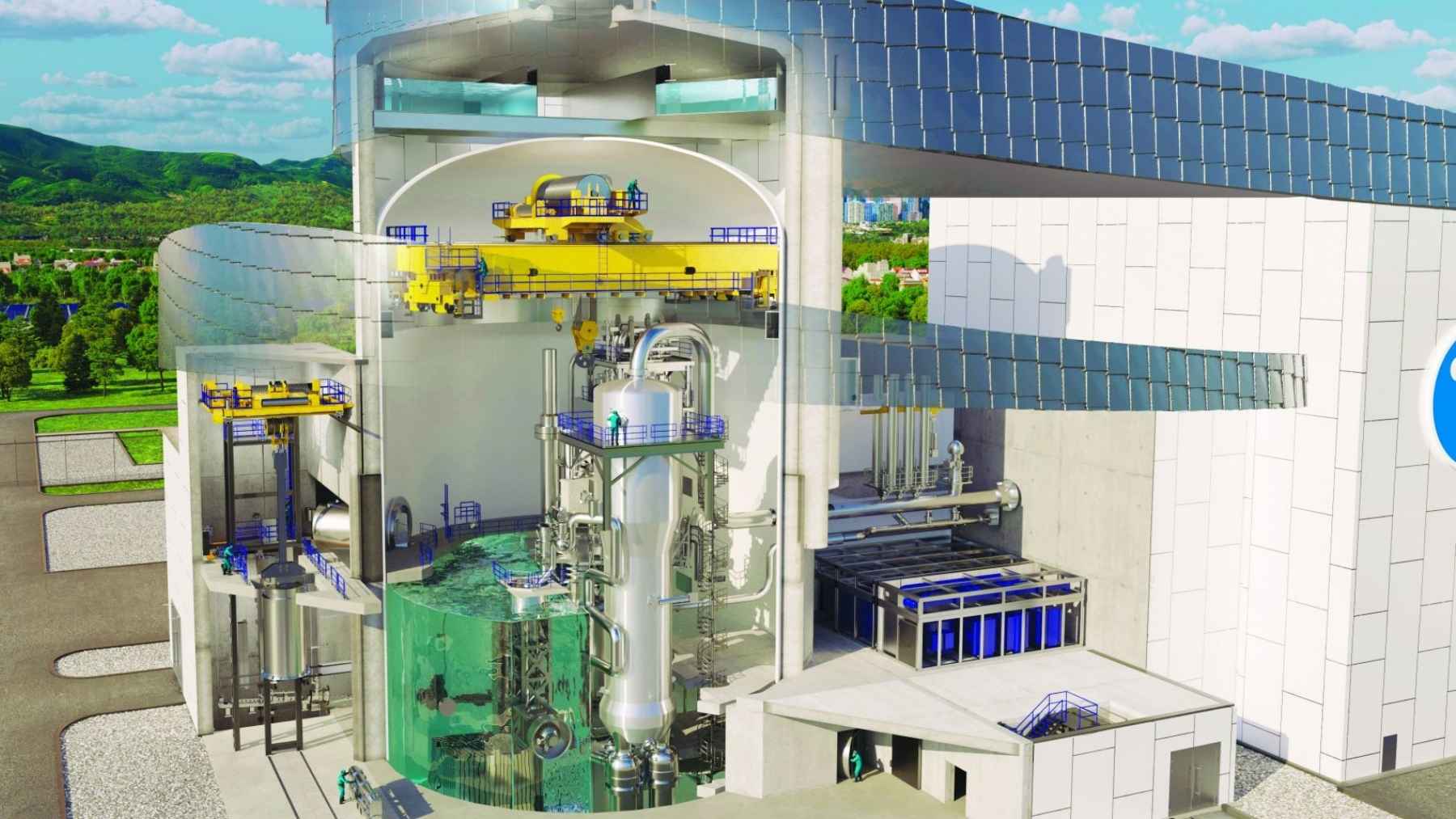
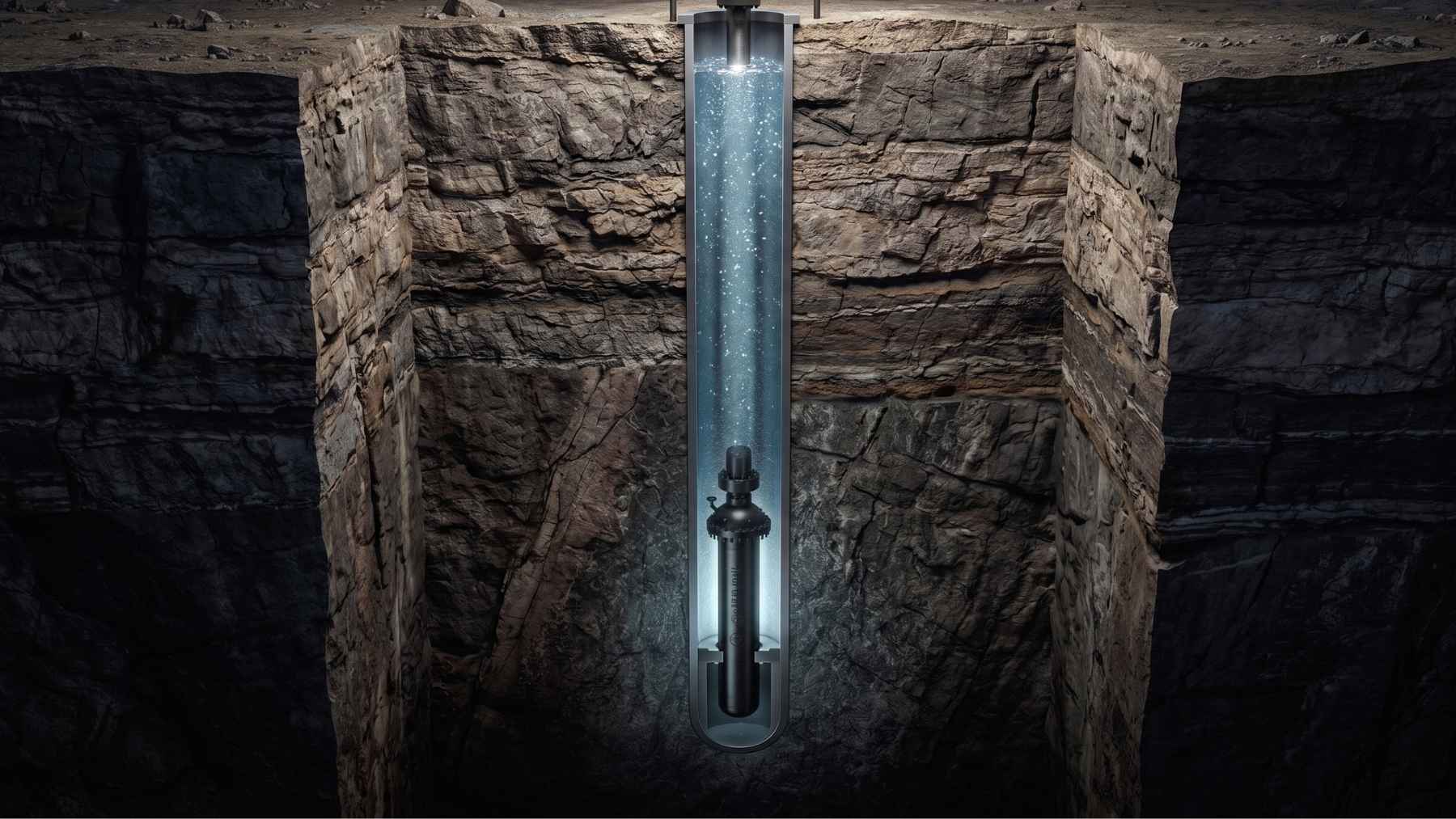
Not by shrinking the reactor, the way most of the industry is trying to, but by burying it. The plan is to lower a full pressurized water reactor about a mile underground, down a borehole roughly 30 inches across, and let rock and a tall column of water do the jobs the dome and the steel vessel normally handle on the surface.
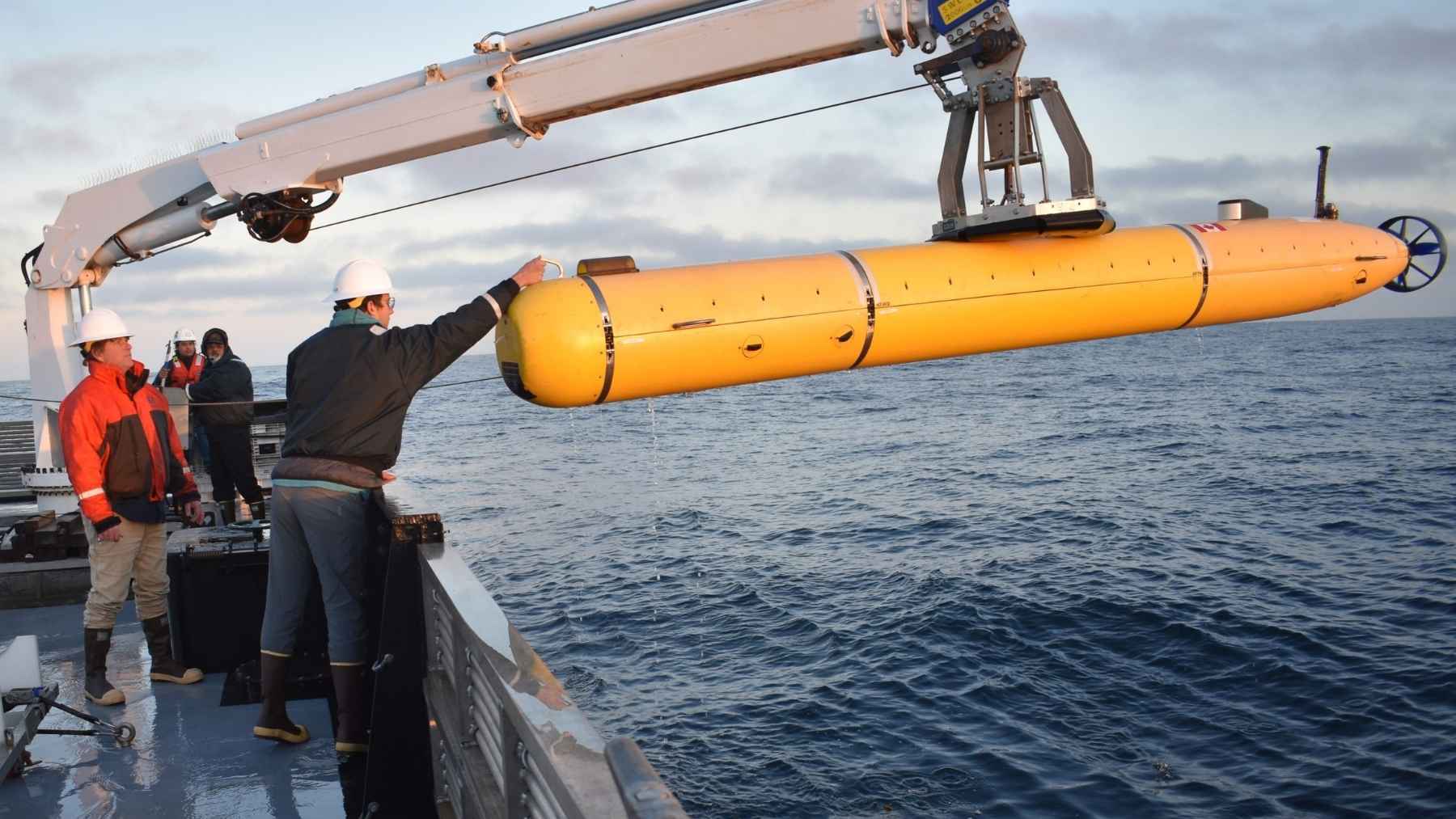
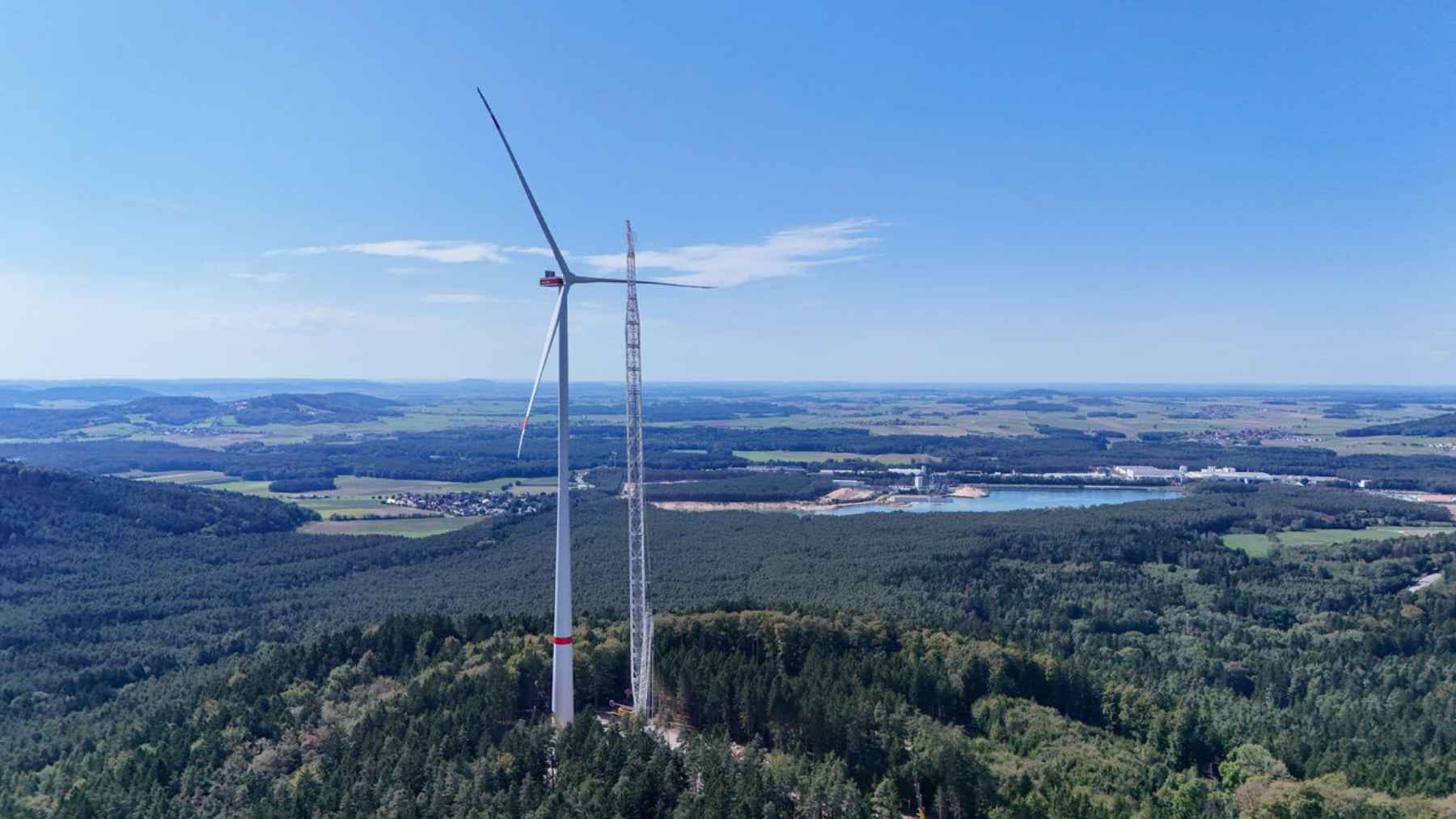
That is the opposite move from the one getting most of the attention right now. The small modular reactor pitch, building a smaller reactor in a factory, shipping it, and skipping the decade-long custom construction project, is finally turning into hardware. Canada just lowered a 953-tonne slab of steel and concrete into a 35-meter shaft to start the Western world’s first grid-scale version, and even that “small” reactor fills two soccer fields. Deep Fission is betting the cheaper path is not a smaller box on the surface at all. It is a hole.
A mile of water does the pressure vessel’s job
Start with the pressure, because that is the clever part. A typical pressurized water reactor keeps its primary water at around 155 atmospheres so it stays liquid while carrying heat out of the core. On the surface you get that pressure from a thick forged vessel. Deep Fission gets it from gravity.
At roughly a mile down, the weight of the water sitting in the borehole above the reactor produces about 160 atmospheres of pressure on its own, close to what the reactor wants, according to the Nuclear Regulatory Commission’s pre-application filing on the design. The surrounding bedrock, billions of tons of it, handles the shielding and structural confinement that a containment building provides up top.
The reactor itself, which the company calls Gravity, is rated at 45 thermal megawatts and produces up to 15 megawatts of electricity once the steam reaches the surface and turns a turbine. The borehole is narrow by power-plant standards, about 30 inches in diameter, and that is the whole point: a hole that size can be drilled with the kind of equipment the oil and gas industry already owns.
Using deep geology to do work that normally takes steel and concrete is showing up in more than one place lately. Britain recently drilled miles down into Cornish granite and tapped rock radioactive enough to heat water on its own. Deep Fission’s twist is to put a real, engineered reactor down the hole rather than living off whatever heat nature left in the rock.
The idea came out of burying nuclear waste, not making power
Deep Fission was founded in 2023 by a father-and-daughter team, Liz and Rich Muller. Rich Muller is a Professor Emeritus of Physics at the University of California, Berkeley, with a MacArthur “Genius” grant, a long list of patents, and a couple of popular books on energy and physics to his name. Liz Muller runs the company as CEO.
Before Deep Fission, the two co-founded Deep Isolation, a company working on sealing nuclear waste in deep boreholes, and the reactor idea grew straight out of that work. By Liz Muller’s account, it started as a safety question for the waste business: what would happen if someone dropped fresh fuel down one of those boreholes by mistake instead of spent fuel.
The answer turned out to be less alarming than expected. A mile down you already have strong containment, and you already have roughly the 160 atmospheres of pressure a PWR is built around. “Gravity is one of the most reliable forces in nature,” Muller said when the company named the reactor, and the name carries the whole design philosophy: lean on depth, water, and rock instead of engineered steel and concrete.
Off-the-shelf parts and oil-field drilling are the entire cost case
The reason any of this matters is money. Conventional nuclear is reliable and carbon-free and also famous for arriving years late and billions over budget. Deep Fission’s argument is that by stitching together three things that already exist, standard PWR components from the nuclear sector, deep-borehole drilling from oil and gas, and heat-transfer methods from geothermal, it can skip most of the custom megastructure and cut construction costs by something like 70 to 80 percent against a traditional plant, by the company’s own estimate.
It is targeting a levelized cost of electricity of $50 to $70 per megawatt-hour, and says a single reactor could go from groundbreaking to operation in roughly six months once the design is proven. The fuel is ordinary low-enriched uranium, the same material running most of the world’s reactors, under a supply deal with Urenco USA.
For the surface side, the turbine, the generator, and the non-nuclear plumbing, the company has brought in Day & Zimmermann, a nuclear engineering and construction firm that has been in the business for decades. The scaling story is modular in the most literal sense: if one borehole makes 15 megawatts, the company says 100 of them on a single site would add up to about 1.5 gigawatts, on a fraction of the land a surface plant needs.
Where the reactor in Kansas actually stands today
For all the ambition, the physical project is early. The site is the Great Plains Industrial Park in Parsons, Kansas, and the first real construction milestone was drilling, which began in March. So far the company has finished one data-acquisition borehole, about eight inches across and roughly 6,000 feet deep, drilled to gather the geological, thermal, and hydrological data the final design and safety case will rest on.
That is a long way from a working reactor. By Deep Fission’s own account, the next milestones are to show it can drill a full commercial-scale borehole and then deploy a prototype reactor, with a plan to apply for a commercial license from the Nuclear Regulatory Commission in the first half of 2027. The money has moved faster than the drilling.
The company raised $80 million in private financing in February, then went public on Nasdaq on June 18 under the ticker FISN, pricing its shares at $16, the bottom of the range and a cut from its original plan, and raising about $40 million more. On June 24 it announced letters of intent with data centers and industrial partners covering up to 18.5 gigawatts of potential demand, though it is careful to note those agreements are non-binding and commit no one to buying a single megawatt-hour.
The July 4 deadline is politics, not physics
Deep Fission is one of ten companies in the Department of Energy’s Reactor Pilot Program, created by a May 2025 executive order to fast-track test reactors through DOE authorization instead of the usual NRC licensing route. The program set a deliberately symbolic goal: get at least three reactors to criticality, the point where a reactor sustains its own fission reaction, by July 4, 2026, the country’s 250th Independence Day.
Back when it named the Gravity reactor in late 2025, Deep Fission said it was targeting criticality by July 2026. That is not happening on this project. With a single data well in the ground and a prototype still ahead, the mile-deep reactor is nowhere near switching on by Independence Day, and the company’s own current milestones say as much. The deadline was always more banner than benchmark.
Energy Secretary Chris Wright has said publicly that only one or two of the program’s reactors might actually make it, and so far the first and only one to reach criticality under the program is Antares Nuclear, which hit the mark on June 4 with a 500-kilowatt heat-pipe test reactor, a completely different machine from a 15-megawatt PWR at the bottom of a borehole. Critics, including the Union of Concerned Scientists, have also questioned the whole idea of letting these reactors skip NRC review, which is the trade-off that makes the aggressive schedule possible in the first place.
The physics underneath all this is genuinely elegant. A pressurized water reactor wants high pressure and tight containment, and a mile-deep borehole hands you both without pouring a dome or forging a giant vessel, which is roughly how the Mullers backed into the idea in the first place. The catch is that an elegant slide and a reactor running at the bottom of a hole are very different objects. Right now Deep Fission has the slide, a 6,000-foot data well in Kansas, $40 million in fresh public money, and a stack of letters that obligate no one. The dome-free reactor is real as an engineering argument. As a power plant, it is still a very deep hole and a very good pitch.
 @zuhaibahmedwani ROOKIE3 months ago