
Government contract notices are the phone books of the defense world. Nobody reads them for fun, and the people who write them seem determined to keep it that way.
But a contract notice the UK published on June 25 is worth the eye strain. It confirms the Royal Navy just committed roughly $9 million (£6.68 million), signed June 24, to two years of hard sea trials for a 39-foot submarine that goes to sea with nobody on board.
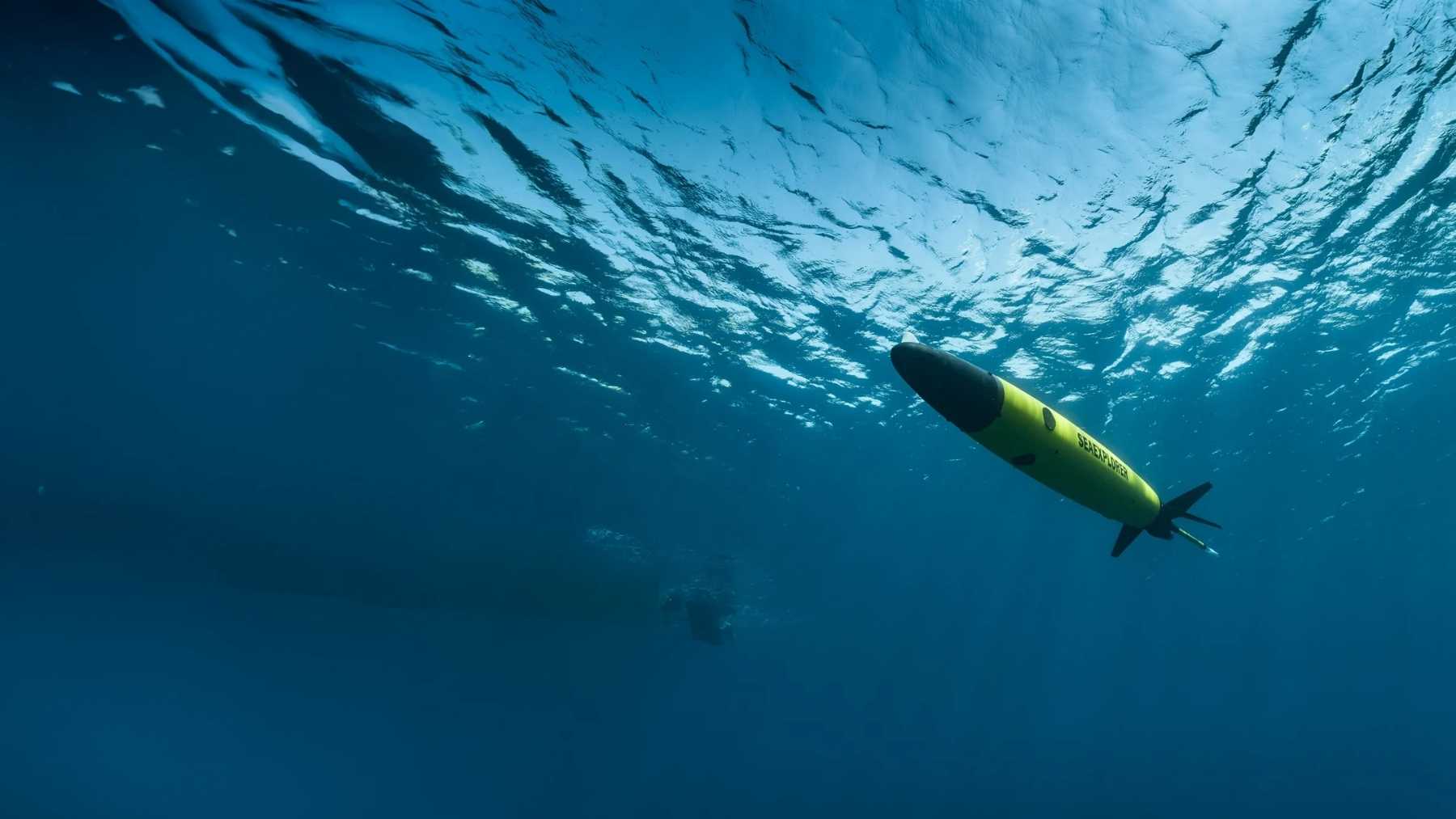
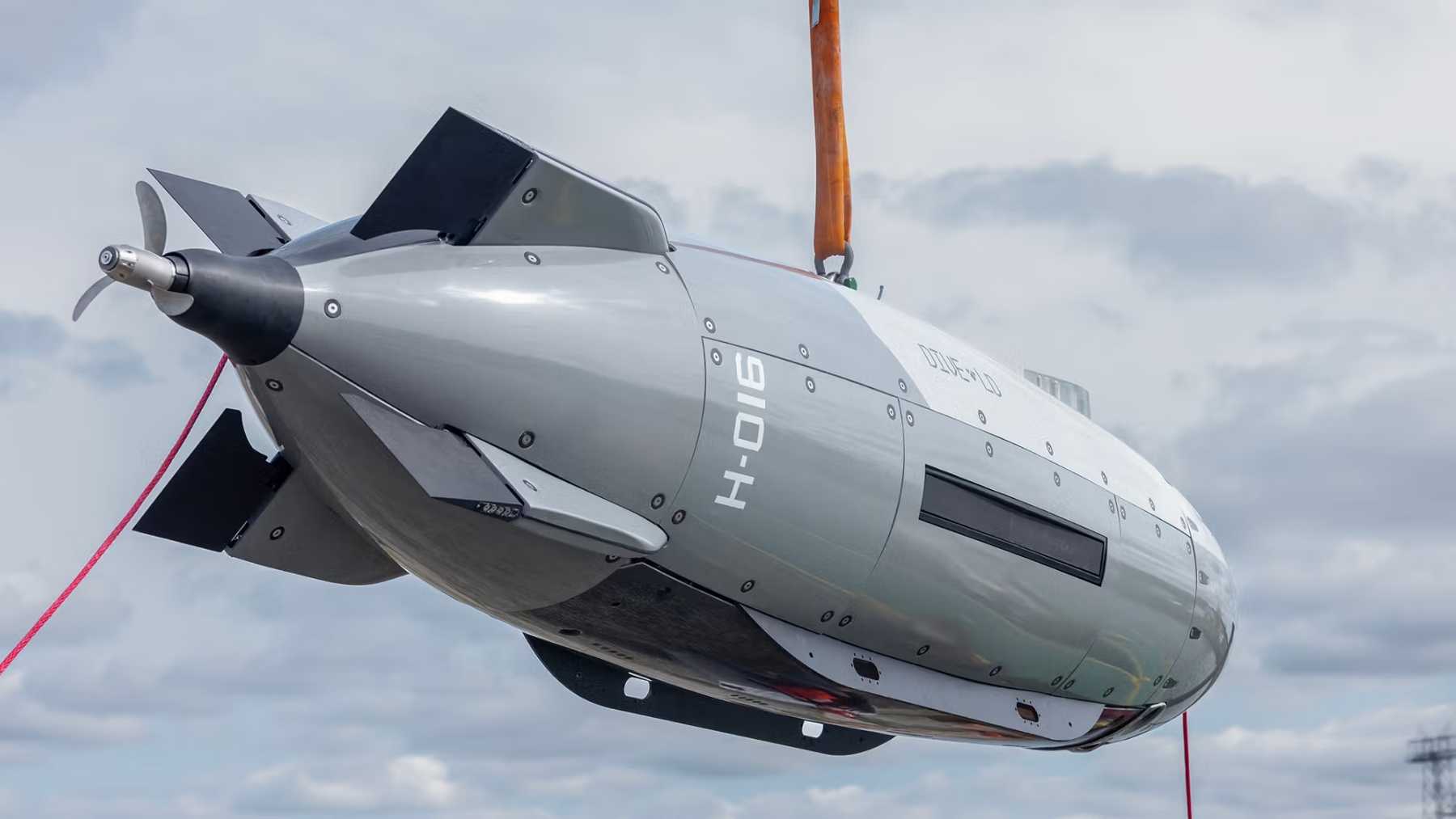
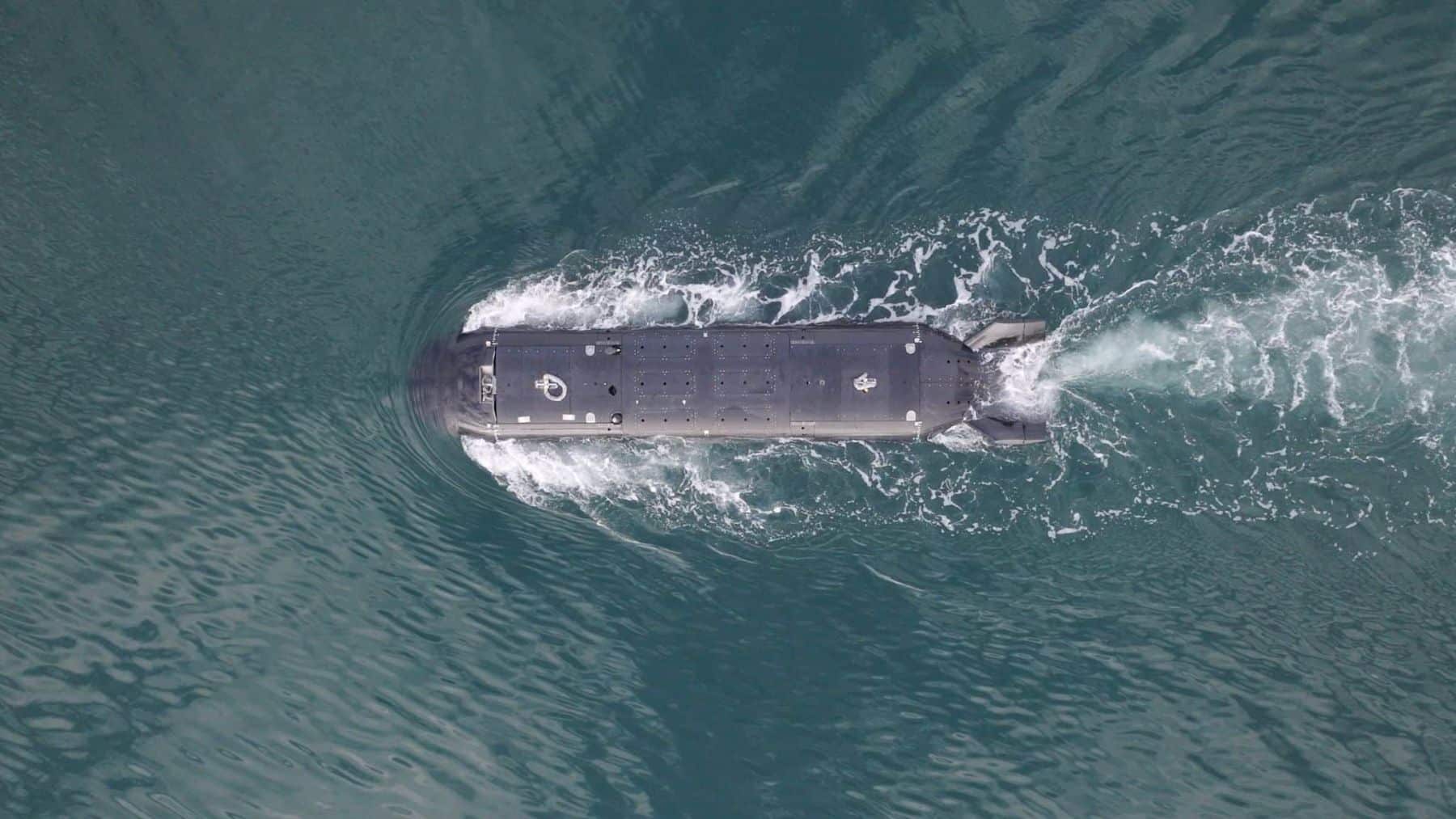
The vessel is XV Excalibur, a 19-metric-ton (roughly 21 US tons) machine that is the largest uncrewed submarine the Royal Navy has ever put in the water. The service formally took ownership on December 11, 2025, according to the UK government’s announcement, after the Submarine Delivery Agency wrapped up acceptance trials.
Aerial combat drones stopped being news years ago, and robot boats have been rewriting surface warfare since the Black Sea turned into a live-fire lab for them. A submarine this size with an empty crew compartment is a different animal, and Britain just moved it from the lab to a two-year exam.
Bus-sized, crew-free, and rated for 1,000 miles
The numbers first, because they are what separate Excalibur from the torpedo-sized autonomous vehicles navies have used for decades. It measures 12 meters (39 feet) long and 2.2 meters (7.2 feet) across, and it displaces 19 metric tons. Baird Maritime puts the figure at 25 metric tons at full load.
The design brief was ambitious from day one. When the build contract was awarded in November 2022, the stated requirements included a 1,000-mile mission range and a maximum operating depth exceeding the Royal Navy’s current crewed fleet, according to reporting at the time.
That second spec deserves a double take. Britain’s crewed boats include nuclear-powered Astute-class attack submarines, so a battery-powered robot designed to dive deeper than any of them is a serious claim, even if the Navy has never published the actual number.
Despite the size, the whole thing fits inside a standard 40-foot shipping container. Propulsion is a straightforward electric motor fed by battery packs mounted outside the hull, per Baird Maritime, with autonomy software from UK firm MarineAI handling routing and obstacle avoidance.
The payload bay is the whole point
Build a submarine this big without people and you get to spend the crew’s space on cargo. MSubs naval architect Callum McCullough called the vessel “a pick-up truck of the sea” at the Undersea Defence Technology conference in Oslo in March 2025, and the payload bay is where that framing earns its keep.
According to Naval Technology’s report from that briefing, the bay is built around a carbon fiber chassis that can take five metric tons of mass and about nine cubic meters (318 cubic feet) of volume. The vehicle itself is modular, split into ten sections so engineers can pull it apart quickly when something inevitably fails.
Nine cubic meters is a lot of room when you don’t have to wrap life support around it. Sonar arrays, seabed sensors, communications relays, decoys, or gear nobody is discussing publicly: the bay is designed to swallow whatever the mission needs and swap it out afterward.
For scale, Boeing’s Orca XLUUV, the American giant of the category, rates its own bay at eight tons dry. Excalibur is a smaller truck, but the concept is identical: the vehicle is a delivery system, and the payload is the product.
Both the Royal Navy and MSubs have their own payload ideas queued for testing over the coming months and years, per Naval Technology. Neither is showing its hand on what goes in the bay first.
Nobody else knows how to drive it
Now back to that June contract, because the fine print beats the headline figure. The Submarine Delivery Agency awarded MSubs the trials deal directly, without a competition, for £6,680,147 (roughly $9 million), and it runs from June 24, 2026 to May 1, 2028.
Skipping a competition requires a legal justification, and the official notice provides one. As the sole designer and manufacturer, MSubs holds all the technical and proprietary knowledge of how Excalibur works, making the Plymouth firm “uniquely positioned to safely operate the vessel” during trials.
Translated from procurement English: handing the keys to anyone else risks delays, extra cost, or a dented submarine. Hard to argue.
The setup is unusual too. Excalibur was originally meant to be Navy-operated, but the notice states it will now be commercially operated under a government-owned, contractor-operated model. The Royal Navy owns the submarine; MSubs drives it.
The opening work is deliberately unglamorous. Initial trials repeat the S201 test series that MSubs previously ran on a smaller vehicle under Project Manta, a predecessor program delivered through a competitive defense accelerator contract.
Re-running old homework on a bigger hull is exactly how you find out whether the physics and the software scale. The notice also says the government intends to open future operation of the vessel, and its payloads, to competition once everyone understands the system better.
They drove it from the other side of the planet
One trial already in the books belongs in the “we live in the future” file. During Exercise Talisman Sabre in August 2025, Royal Navy operators controlled Excalibur while it was submerged in UK waters, working from a remote operations center in Australia, more than 10,000 miles from its base in Plymouth.
The exercise fell under AUKUS Pillar 2, the advanced-capabilities side of the Australia-UK-US partnership, and marked the first time the UK and Australia had demonstrated XLUUV interoperability as a single fighting force, per the UK government.
The implication is bigger than the stunt. If London can hand control of a submarine to Canberra when convenient, an uncrewed boat in the North Atlantic doesn’t need an operations center anywhere near it.
Australia has skin in this game too. Its own Speartooth drone submarine program ran trials at the same Talisman Sabre exercise and has since delivered vehicles to the US Navy, so the AUKUS robot-submarine pipeline is flowing in both directions.
GPS dies at the waterline, so it carries a quantum clock
Excalibur also went to sea carrying a quantum optical atomic clock called Tiqker, built by UK quantum firm Infleqtion. The UK government says it was the first time such a device has ever operated at sea inside an underwater vessel, and the trial landed six months ahead of schedule.
The reason a submarine wants one is simple. GPS signals don’t penetrate water, so submerged boats navigate by dead reckoning, and dead reckoning is only as good as the clock timing it.
Traditional microwave-based clocks drift. A quantum clock that barely drifts means the vessel can stay submerged, silent, and confident about its own position for far longer. For a machine whose entire job is to disappear for days, that is not a gadget, it’s a core capability.
A demonstrator with a cursed name
One thing Excalibur is not: operational. Per the Royal Navy, the vessel is a demonstrator and will not perform operational duties. It joins the Fleet Experimentation Squadron under the Disruptive Capabilities and Technologies Office, alongside the surface trials ship XV Patrick Blackett.
The economics explain the patience. The build contract came in at £15.4 million (about $20.7 million) in November 2022, funded through the Navy’s anti-submarine warfare Spearhead program. A crewed attack submarine costs comfortably north of a billion pounds, call it $1.3 billion and up, so Excalibur is a rounding error that teaches the Navy how to operate an entire category.
The lessons feed Project CABOT, the Royal Navy effort to build persistent, wide-area submarine-hunting coverage, and the broader Atlantic Bastion surveillance push that Britain formally launched in December 2025.
Then there’s the name. The first HMS Excalibur was ordered in 1947 and launched in 1955, an experimental boat that tested high-test peroxide propulsion, a technology fast enough for submerged speed records and volatile enough that the program was abandoned.
Naval histories record that crews nicknamed her sister ship “Exploder” and Excalibur herself “Excruciater.” So the Royal Navy named its new robot submarine after a boat its own sailors treated as a hazard with a hull number. Make of that what you will.
The next 24 months off Devonport are mostly homework: re-running old trial cards on a bigger hull, bolting payloads in and out, and cataloguing what breaks. That is the unglamorous work that decides whether extra-large uncrewed submarines become a fleet or a footnote.
If the answer is “not much breaks,” Britain gets the blueprint and the trained hands for whatever armed successor comes next. If the answer is “plenty,” at least the lesson came at demonstrator prices.