
When you picture a nuclear plant, you probably picture the cooling towers: those fat concrete hourglasses with a plume of white vapor curling off the top. That plume is the whole idea behind a conventional reactor. Uranium makes heat, the heat boils water, and the steam pushes a turbine. The fuel has gotten better and the rulebooks have gotten thicker, but the water-and-steam heart of the machine has barely moved since the 1950s.
The plant Kairos Power broke ground on April 17 in Oak Ridge, Tennessee, doesn’t cool its reactor with water at all. It runs on molten salt. And this isn’t a lab curiosity bolted together to prove a point. It’s the first power-producing Generation IV reactor the U.S. Nuclear Regulatory Commission has ever cleared for construction, and Google has already lined up to buy the electricity it makes.
The plant is called Hermes 2, it’s built to push up to 50 megawatts onto the regional grid, and it is, in the most literal sense, a search engine’s answer to a power problem.
Why you’d cool a reactor with salt instead of water
A water-cooled reactor has a problem built into it: water boils. To keep it liquid and useful as a coolant inside a hot core, a conventional plant has to squeeze it under enormous pressure, on the order of 150 times atmospheric in a typical pressurized-water reactor. That pressure is why those plants need thick steel vessels and heavy containment domes. It isn’t mainly the radiation. It’s that you’re holding back superheated water that desperately wants to flash into steam.
Molten salt sidesteps that whole fight. The salt Kairos uses is called Flibe, a mix of lithium fluoride and beryllium fluoride first developed for reactor work decades ago. It melts at 858 degrees Fahrenheit and doesn’t boil until around 2,610, so inside the reactor it stays liquid with a massive margin to spare and no need to pressurize anything. The core runs near atmospheric pressure. Take away the pressure and you take away the single biggest reason a water reactor can fail violently.
The salt is also a very good way to move heat. Pound for pound it carries roughly the same thermal load as water, more than four times what liquid sodium can, and a couple hundred times what the helium gas in some other advanced reactors manages. It runs hot, around 1,200 degrees Fahrenheit leaving the core, which makes the power side of the plant more efficient than a light-water reactor that tops out far cooler.
There’s a catch, because there’s always a catch. Flibe is only helpful while it’s molten. Let it drop below 858 degrees and it sets into a solid block, somewhere between glass and a salt lick, which is not a state you want your coolant in. So the entire salt loop has to be kept hot whether the reactor is running or not. Beryllium is toxic on top of that, and the lithium has to be enriched to nearly pure lithium-7 to keep the reactor physics behaving. None of it is a dealbreaker, just the price of admission for skipping the pressure.
The fuel is a bed of pebbles that bob in the liquid
The salt does the cooling. The fuel does something stranger. Instead of the long metal rods packed with uranium pellets that sit in almost every reactor running today, Hermes 2 burns its uranium inside graphite spheres about the size of billiard balls. Each pebble holds thousands of poppy-seed-sized fuel kernels, every one wrapped in its own ceramic shell. The Department of Energy calls the design TRISO, and it’s the same basic fuel a Maryland company is loading into a very different pebble reactor headed for a chemical plant in Texas.
Here’s the part that’s specific to Kairos. The pebbles are buoyant. They’re lighter than the Flibe, so they float, and the reactor is fed from the bottom and drained from the top while it runs. Fresh pebbles drift up through the core, get pulled out, and either go back in or get retired, with no need to shut the whole thing down to refuel. It looks less like swapping fuel rods and more like a very slow, very radioactive lava lamp.
The ceramic shells are the safety story. TRISO particles are built to take temperatures far beyond anything the reactor should ever reach, and the Department of Energy has called them the most robust nuclear fuel on earth. Pair that with a coolant that can’t boil away and a core designed to shed heat without pumps, and Kairos’s pitch is that the reactor physically cannot melt down the way a rod-and-water plant can. That’s a claim every advanced-reactor company makes in some form, and one no first-of-a-kind plant has yet had to prove the hard way.
Oak Ridge already built one of these, sixty years ago
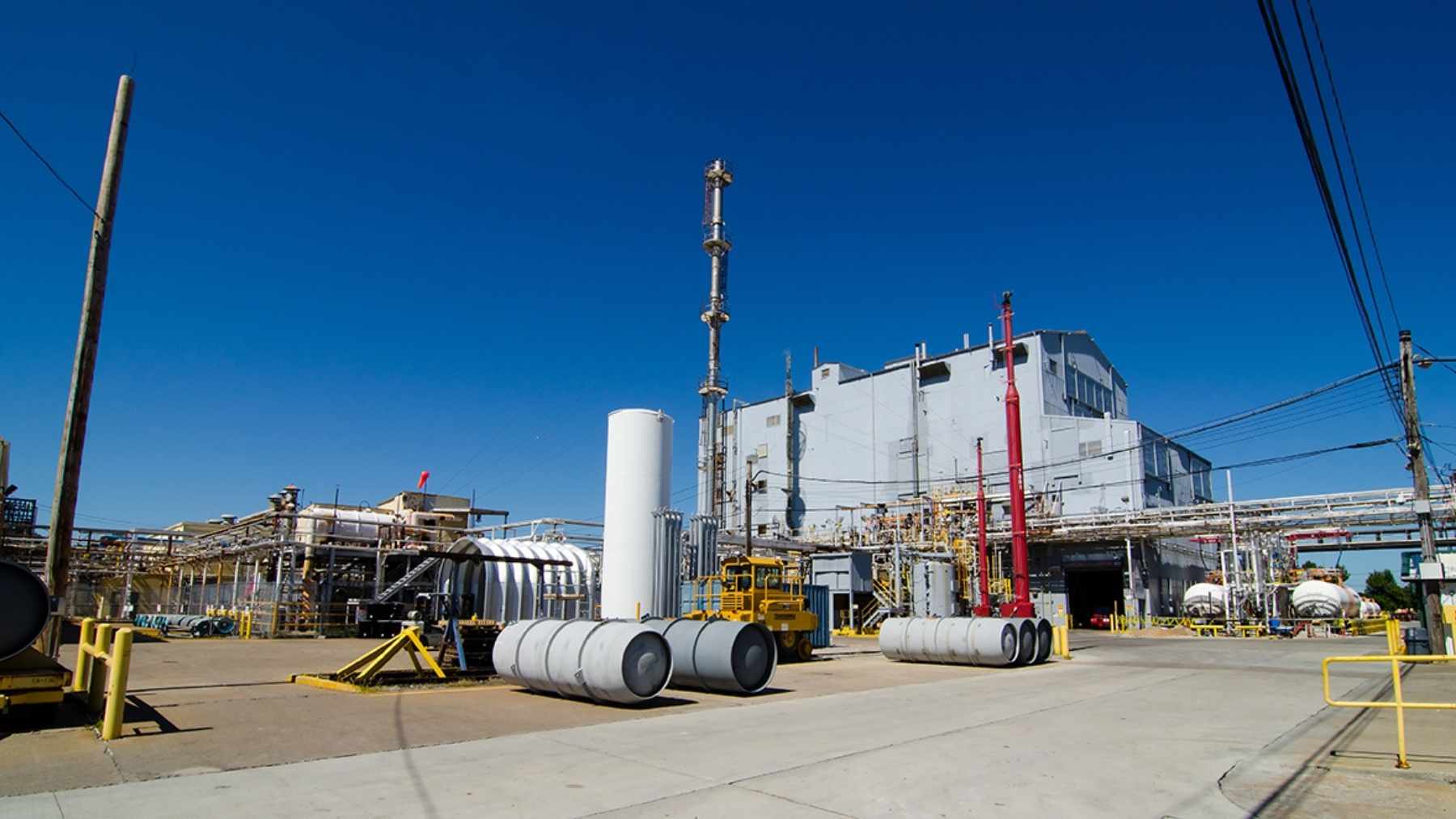
The strangest thing about a salt-cooled reactor going up in Oak Ridge is that Oak Ridge is where the idea was born and then quietly buried. The town exists because the Manhattan Project needed somewhere to enrich uranium, and the K-33 site where Hermes 2 now sits was part of a sprawling gaseous diffusion plant doing exactly that. The reactor is being built on ground the government spent years cleaning up and handing back to the community.
In the 1960s, Oak Ridge National Laboratory ran the Molten-Salt Reactor Experiment, which fired up in 1965 and operated until 1969. It used the same Flibe salt, ran at around the same temperatures, and worked. It also did something Kairos pointedly does not do: it dissolved the uranium fuel directly into the salt, so the coolant and the fuel were the same liquid sloshing through the core.
That approach is elegant on paper and a nightmare of corrosion and chemistry in practice, and after the experiment ended the country let the whole molten-salt line of research lapse for decades while it standardized on water.
Kairos’s bet is to take the half of that 1960s machine that aged well, the salt, and pair it with solid pebble fuel instead of liquid fuel, dodging the chemistry problems that helped shelve the original. Ed Blandford, the company’s chief technology officer and co-founder, has called Hermes 2 the company’s “first power-producing plant” and its first delivery under the Google deal.
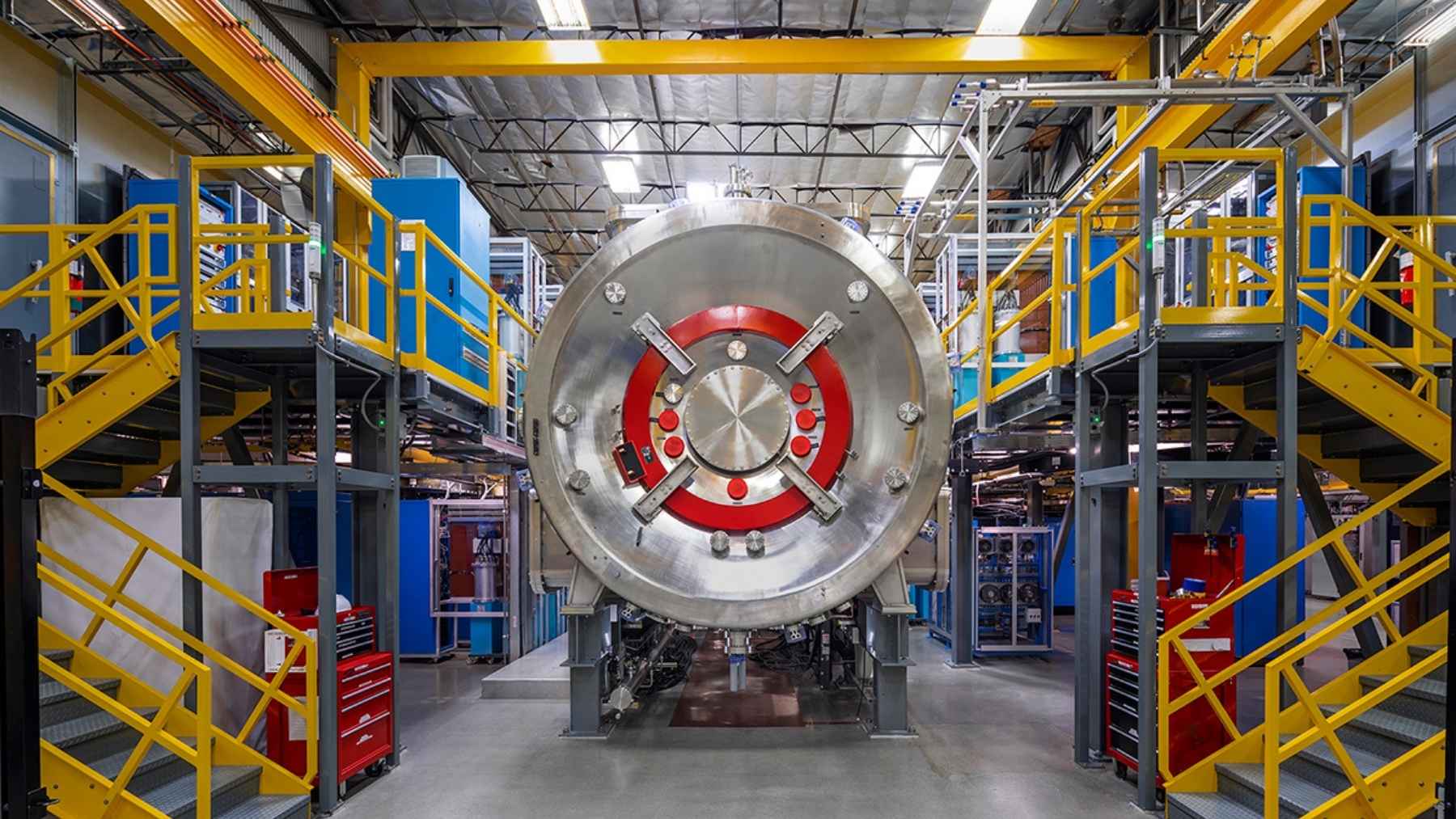
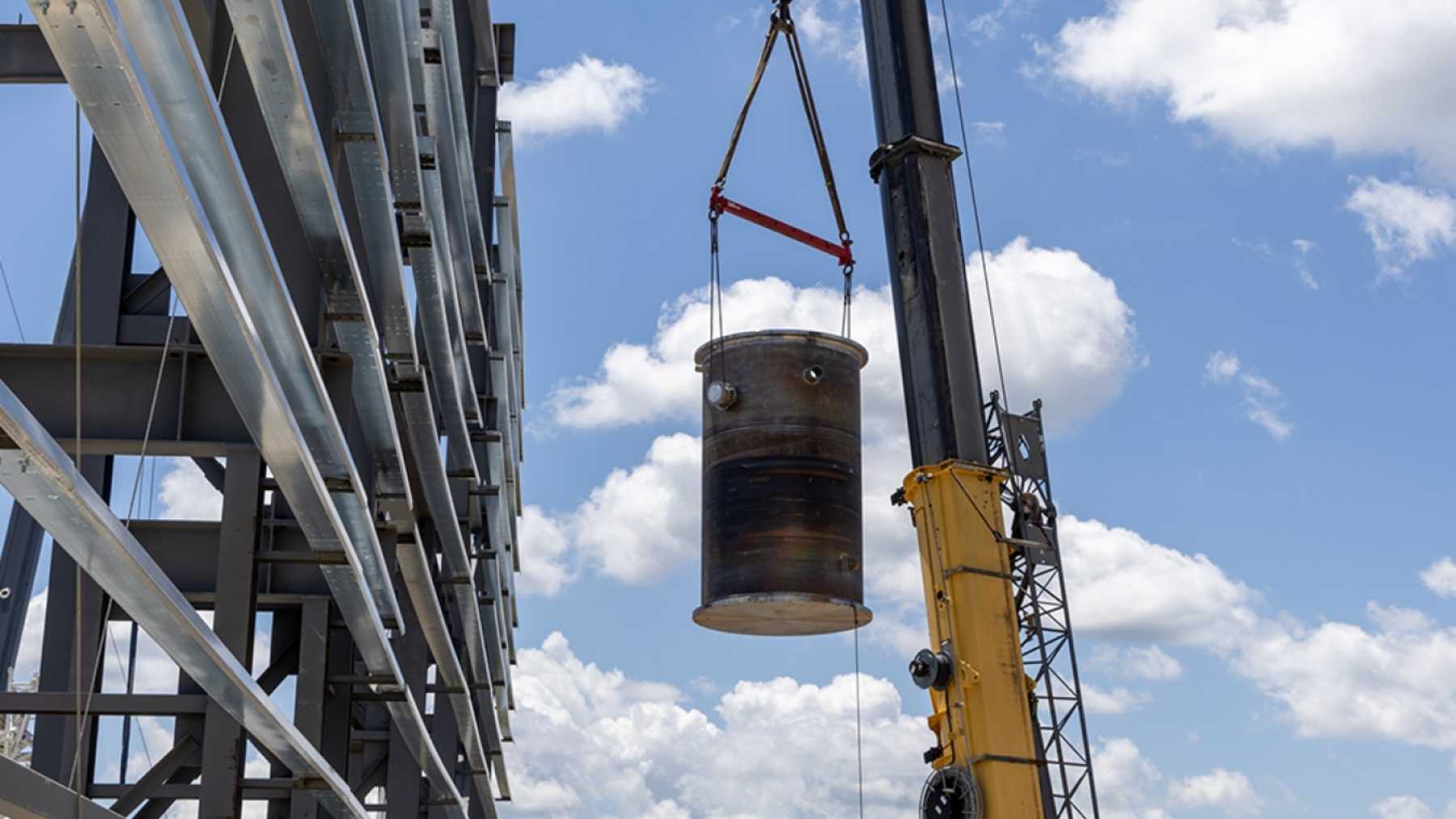
The reactor vessel itself was built at a Kairos test facility on the Oak Ridge campus, and the company has already run the largest Flibe salt system ever assembled, pumping a dozen tons of the stuff for a thousand hours straight before any nuclear fuel entered the picture.
It even has a smaller sibling under construction a short walk away: Hermes 1, a heat-only version that earned the first U.S. construction permit for a non-water reactor in more than 50 years, back in 2023. That one makes no electricity. Hermes 2 is the one that turns the heat into power.
Why Google is buying a 50-megawatt reactor
Fifty megawatts is not a lot of power. A single big gas turbine can beat it, and the reactor won’t deliver a watt to anyone until around 2030. So why does a company the size of Google care about a demonstration plant this small?
The answer is what comes after it. Google and Kairos signed a master agreement in October 2024 to build out a fleet of these reactors totaling up to 500 megawatts by 2035, aimed at feeding Google’s data centers around the clock with carbon-free power. Hermes 2 is the first plant under that deal, the one that has to prove the design, the supply chain, and the construction method before Kairos tries to repeat it at scale. Google isn’t really buying 50 megawatts. It’s buying a head start on an orderbook.
The money actually changes hands through the local utility. Under a first-of-its-kind arrangement announced last year, the Tennessee Valley Authority will buy Hermes 2’s output and put it on the grid that serves Google’s data centers in Tennessee and Alabama. That made TVA the first U.S. utility to sign a power-purchase agreement with a Generation IV reactor. None of this happens without the demand behind it.
The AI buildout has utilities and tech companies scrambling for steady, always-on electricity, and reactors run flat out day and night regardless of weather. Kairos consolidated Hermes 2 from an earlier two-unit design into a single 50-megawatt machine specifically, it told the trade press, to get power to Google faster.
Where Hermes 2 sits in a very crowded race
Hermes 2 is one of several very different bets breaking ground in America right now, all chasing the same prize: a reactor cheap and repeatable enough to actually build more than one of. Bill Gates-backed TerraPower is putting up a sodium-cooled reactor in Wyoming wired to a molten-salt tank that works like a battery, though that one uses salt for storage, not for cooling the core.
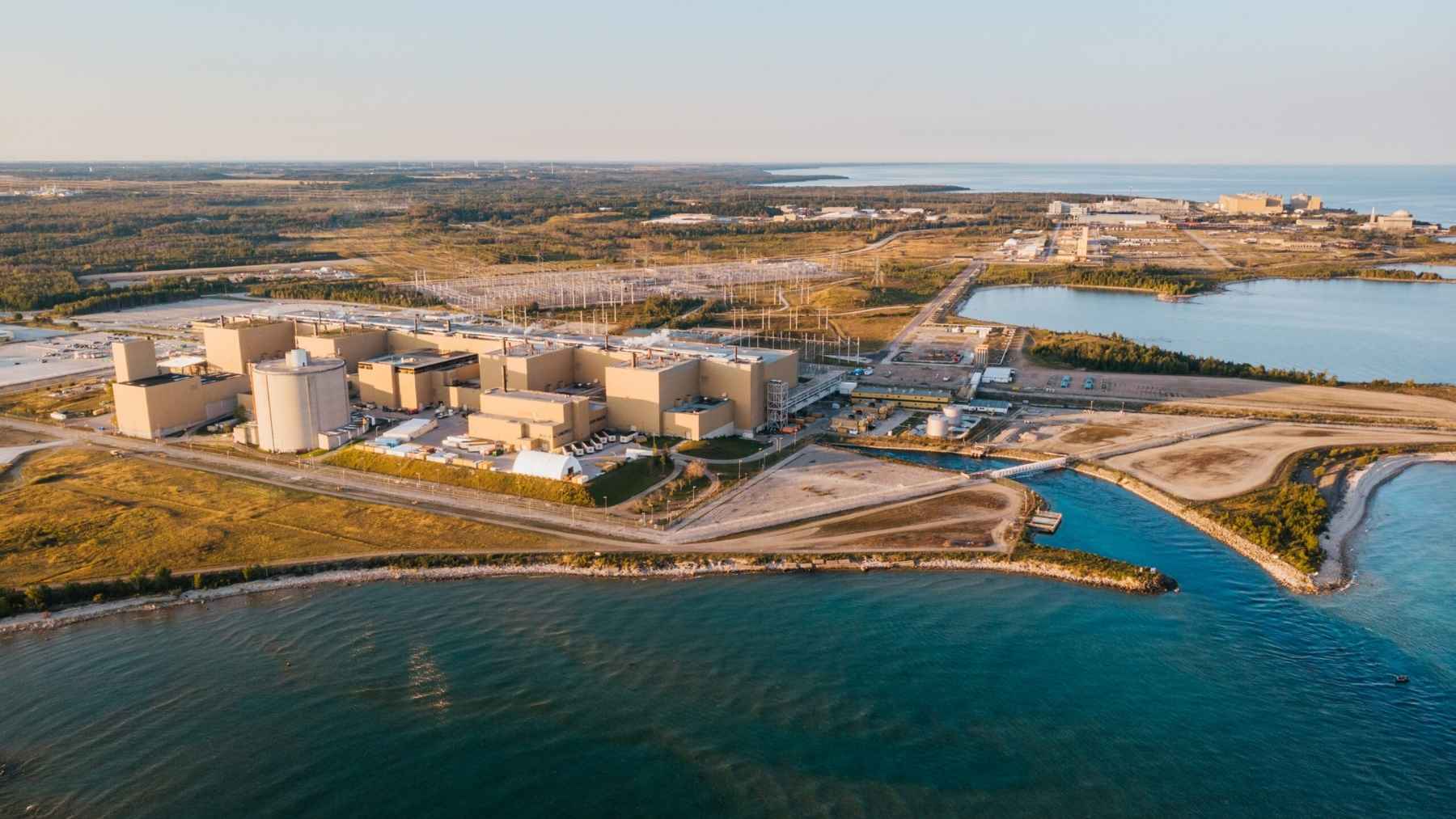
In Ontario, a utility just dropped the foundation for a deliberately conventional, water-cooled small reactor built on the opposite theory: don’t get clever, just shrink a proven design and stamp them out like car parts. Kairos sits at the clever end of that spectrum, betting salt and pebbles are worth the extra novelty.
What none of them can show yet is a finished plant sending power to a paying customer. Hermes 2 still has to be built, fueled, licensed to run, and switched on, and the 2030 target leaves plenty of room for the delays that have dogged nuclear construction for half a century.
That’s exactly why Kairos builds these as demonstrations, stamps the parts out in a New Mexico factory, and pours the same foundation twice before the commercial version shows up, all to find the expensive surprises now instead of later. The salt already proved it could carry the heat, in a lab a few miles up the road, sixty years ago. This time, the fuel just has to stay out of it.
 @dwaynegruber ROOKIE3 months ago