
A tunnel boring machine gets famous exactly twice in its life. Once when it goes into the ground with a naming ceremony and a fresh coat of paint, and once when it punches back out the other end covered in mud. Three times, if it leaves town dramatically enough.
Melbourne just used up its last one. On July 24, Victoria’s Big Build announced that TBM Gillian had broken through in Bulleen, finishing the southbound tube of the North East Link and, with it, the tunnel boring phase of the biggest road project the state has ever attempted.
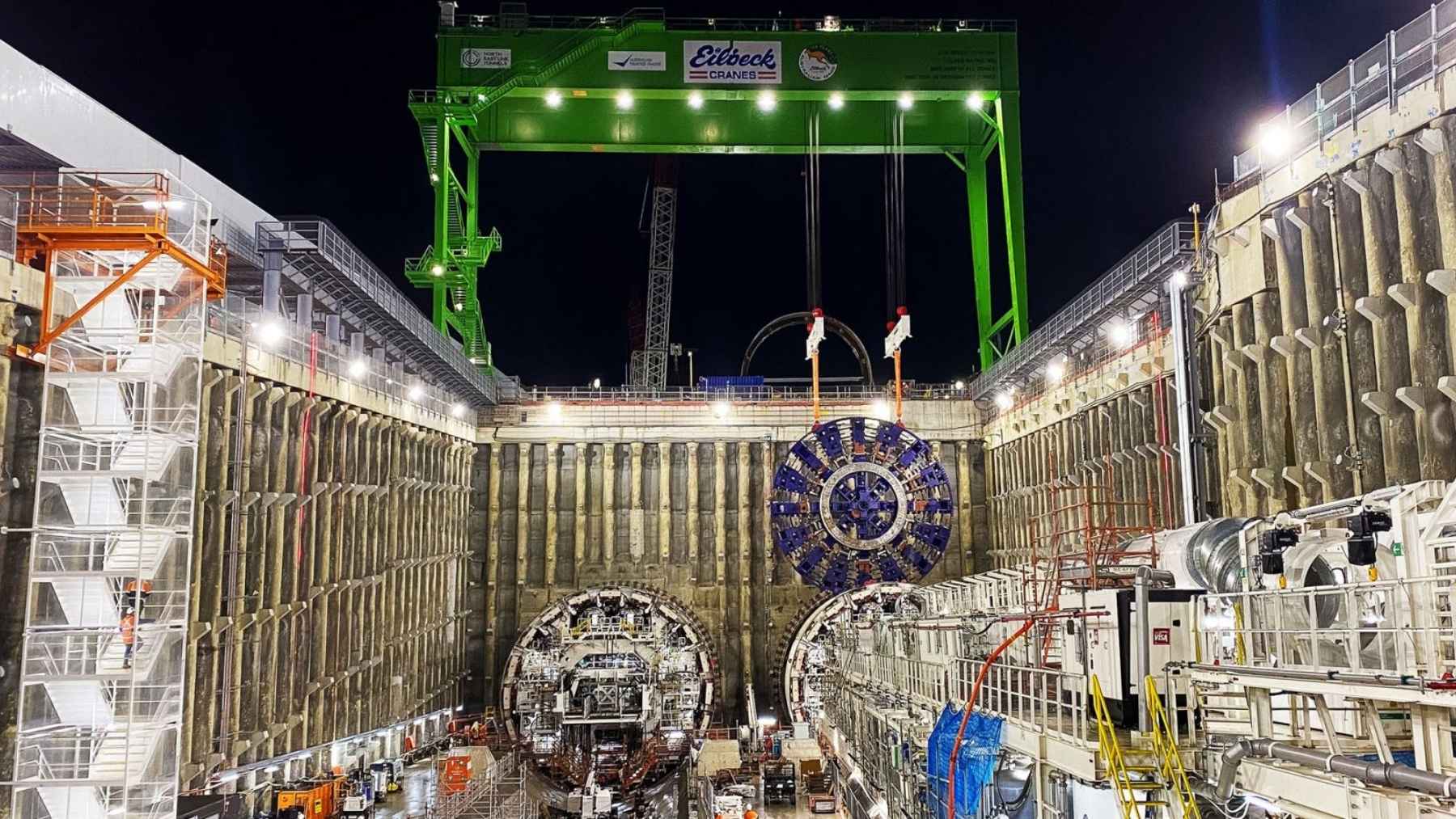
Her sister Zelda did the same thing back in May, then started leaving the city in pieces on overnight convoys. So after almost two years of continuous digging under Melbourne’s northeastern suburbs, the two enormous holes are now open at both ends, and neither of the machines that made them will ever cut rock again.
Two years underground, 3.3 miles of tunnel, 22,000 concrete rings
When Zelda surfaced on May 24, the project’s own announcement opened with five words: “One down, one to go.” Less a press release than a scoreboard. As of late July, the scoreboard is settled.
Gillian covered more than 5.3 kilometers, about 3.3 miles, between her launch pit at Watsonia and the breakthrough wall at Bulleen. Webuild, the Italian contractor in the Spark joint venture building the tunnels, puts her tally at close to 22,000 concrete segments installed behind her as she went.
Her sister finished the northbound side in May with 5.2 kilometers and a little over 21,000 segments, per Webuild’s figures at the time. Same spec, same corridor, opposite direction.
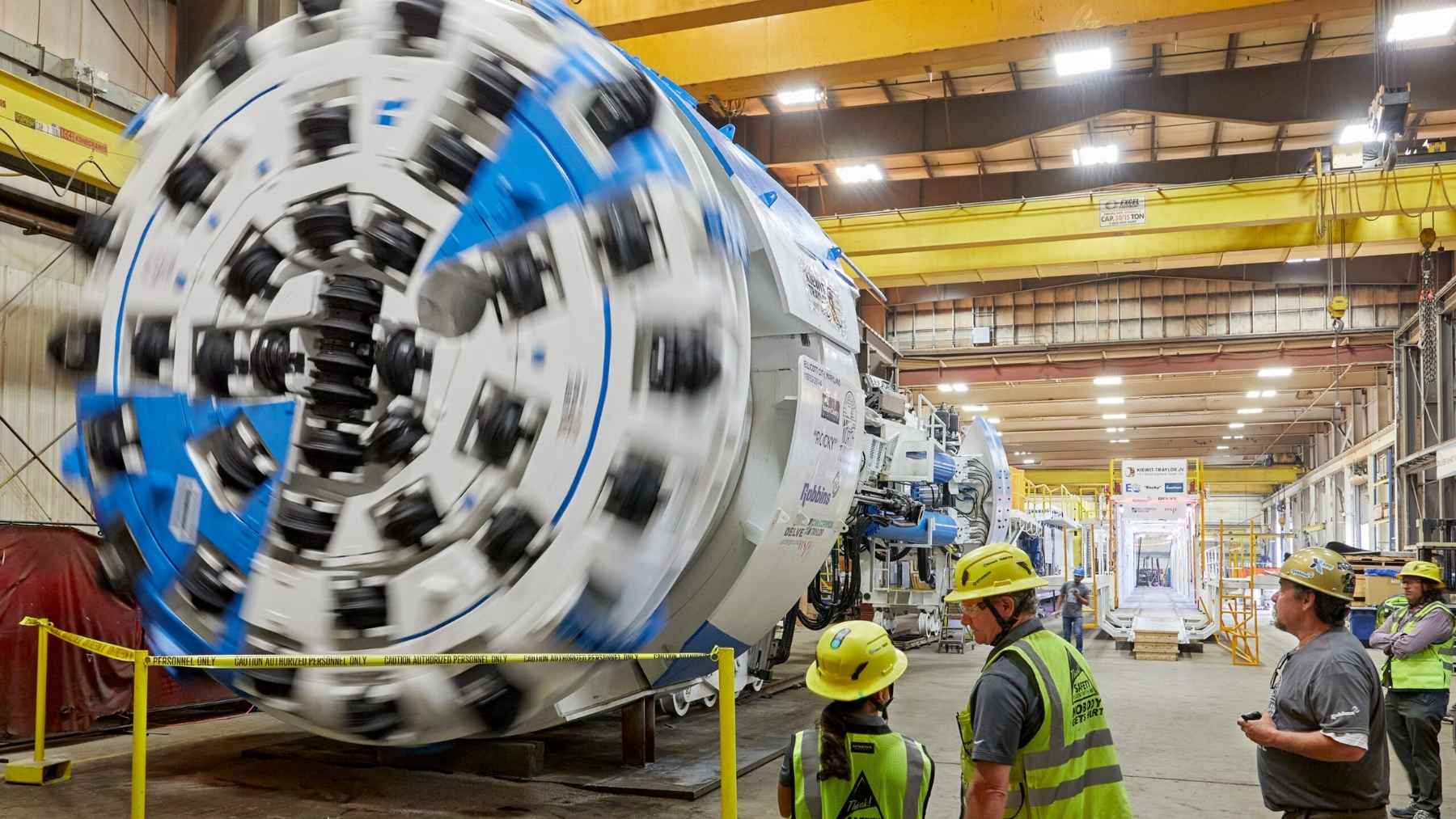
Both machines came from German manufacturer Herrenknecht, with a cutting face 15.6 meters across. That is a shade over 51 feet, taller than a five-story building, spinning as one giant disc. Each one runs more than 90 meters (295 feet) with its trailing gantries and weighs over 4,000 metric tons, call it 4,400 US tons, according to Webuild. And each of them dug around the clock with a crew of up to 20 aboard.
The route wasn’t shallow, either. Webuild says the machines spent most of the drive around 25 meters below the surface, dipping to roughly 45 meters, about 148 feet, to slip under the Yarra River, having threaded beneath roads and houses and past an army barracks on the way.
Nobody’s paperwork agreed on when this would happen
There is a small, very human detail buried in the official record here. On the day Zelda broke through, Victoria’s Big Build had Gillian penciled in to finish beyond the end of the year. The federal infrastructure minister’s office, announcing the same event on the same day, said the coming months. Webuild split the difference and put her at 86 percent done.
She was out in exactly two months. Whether the state’s version was caution or a typo, big infrastructure rarely beats its own guidance, so enjoy this one while it lasts.
It also means the digging phase wrapped inside the window the builders promised. Excavation was slated to finish in 2026, and it finished in July 2026, with the road still pointed at a 2028 opening.
The ledger: 2.8 million tons out, 43,000 rings in
Add the two drives together and the totals get a little absurd. Big Build says the pair removed 2.5 million metric tons of rock and dirt since late 2024, which is about 2.8 million US tons, and left more than 43,000 precast segments lining the tubes. Every one of those rings was cast in the Victorian town of Benalla.
Now for the honest fine print, which the project publishes itself. The boring machines dug 5.3 of the famous 6.5 kilometers. The tunnels are 4 miles long. The borers’ share was 3.3.
Roadheaders, tracked machines with a spinning cutter drum on an arm, handled a 430-meter stretch (about 1,400 feet) between Trinity Grammar and Manningham Road, where the tunnel spreads out to four lanes in each direction. The interchange sections, where the on-ramps and off-ramps tie in, account for the rest of the remaining 1.2 kilometers.
None of that takes anything away from the machines. It just means the next time a headline hands an entire 4-mile tunnel to one photogenic borer, you know how the arithmetic actually works.
Gillian now leaves the same way her sister did
There is no victory lap for a tunnel boring machine. Gillian gets cut apart at the Bulleen end and trucked away, exactly like Zelda before her. Big Build says the parts get recycled or go back to the manufacturer for reuse, which can mean bits of a Melbourne borer eventually working under some other city. Brisbane, for reference, bored its river crossings with two machines that had already dug the Sydney Metro and got rebuilt for a second career.
The project’s work notices spell out what removal looks like from the sidewalk. Zelda’s first oversize load left Bulleen for Port Melbourne on July 1, running between 10pm and 5am with pilot vehicles ahead of it, stopping over and over so crews could pull traffic lights down and lift overhead cables out of the way.
More oversize loads are scheduled through August, September and October, and the same notices flagged the Bulleen Road citybound exit ramp as closed for up to a month across July and August. So if you live along Manningham or Rosanna Road, the slowest parade in Australia is still coming past your window a few more times, and now there are two machines in the queue.
The hole is done. The road is the next two years
Breakthrough is the photogenic part. It is nowhere near the finish line.
What is left, per Big Build, is building an actual freeway down there: three lanes in each direction, sitting on roughly 700,000 metric tons of reinforced concrete, around 770,000 US tons of road deck poured underground.
Then the systems. About 3,300 kilometers of cabling, which is more than 2,000 miles of wire threaded through 4 miles of tunnel. Fifty-one emergency cross passages connecting the two tubes. A service tunnel assembled from more than 4,000 concrete culverts made in Echuca, so maintenance crews can move around without touching traffic.
Above ground there are interchange ramps to finish at Manningham and Yallambie, the new Greensborough Road boulevard, a motorway control center in Bulleen, the Yarra Link green bridge and fresh parkland at Borlase Reserve.
The money side is public too. The project is jointly funded, 5 billion Australian dollars from Canberra and 21.21 billion from Victoria. The promise attached to all of it hasn’t changed in years: up to 15,000 trucks a day off local streets, up to 35 minutes saved between Melbourne’s north and east, traffic flowing in 2028.
And Melbourne isn’t finished with borers, just with these two. Across town, eight machines are still chewing on the Suburban Rail Loop, one of them due to be run by an all-women crew from 2027.
Zelda broke her wall in May, named after a local equal pay campaigner, and is halfway to being spare parts. Gillian, named after a local doctor, did hers in July and now follows the same route out: cut into pieces, loaded after dark, traffic lights coming down ahead of her. The tunnels get the traffic. The machines get the recycling yard.