
Almost every reactor announcement of the past two years has arrived with the same thing bolted on: megawatts of electricity, usually promised to a grid operator or a data center campus. The machine exists so a turbine can spin.
A Finnish design called the LDR-50 has no turbine in it. No generator either, and nothing that hooks up to a power line. It heats water to around 150 °C (302 °F) and pushes it into the pipes running under a city, and that is the entire product.
On June 26, Finland’s nuclear regulator published the closing report on an international review of that design, carried out with regulators from Sweden, Poland, the Czech Republic and Ukraine. None of the four found what the report calls a fundamental obstacle.
That is not a license, and the regulators say so roughly six different ways in 21 pages. What they actually wrote is more interesting than the headline version.
Taking the turbine out takes most of the hard parts with it
A conventional plant needs steam hot enough and hard enough to turn a turbine, which is why light-water reactors run their primary circuits at brutal pressure. Roughly a third of all that heat becomes electricity. The rest goes into a river, a lake or a cooling tower.
The LDR-50 skips the conversion. Steady Energy, the VTT spin-off commercializing it, rates the unit at 50 megawatts thermal, running at about 150 °C and below 10 bar, which works out to 145 psi. That’s roughly four times the pressure in your tires.
With nothing to spin, the company says nearly all of the heat produced goes straight into the district heating network. No commercial unit has ever run, so that’s a design claim, not a measurement.
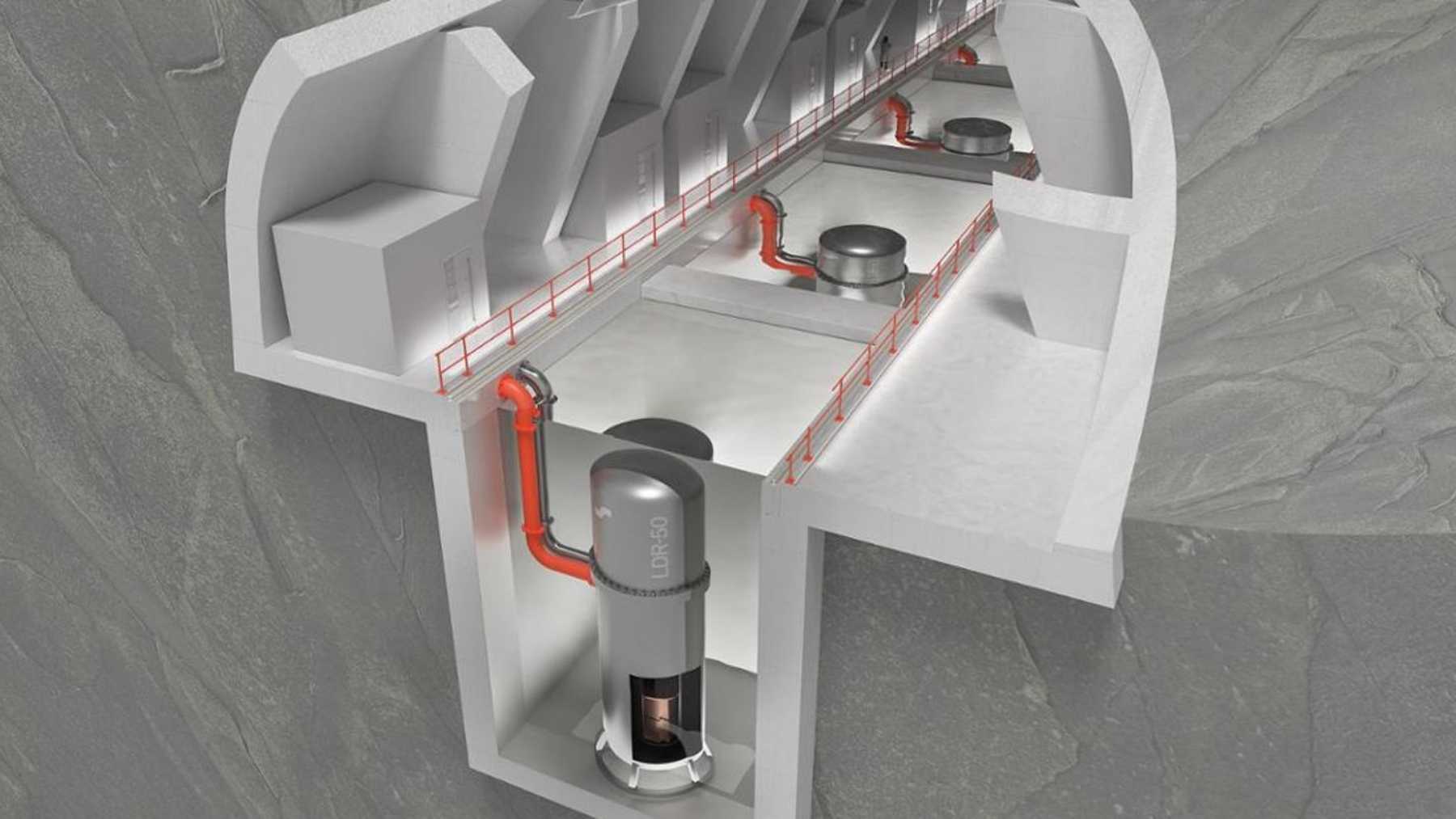
The reactor module is roughly the size of a shipping container and is meant to sit underground beneath a city, plugged into a heat network that already exists. The core, according to Steady Energy, is about as big as a large washing machine and holds 37 standard pressurized-water-reactor fuel assemblies.
The passive cooling trick is a pair of nested pressure vessels with water in the gap between them. If the primary heat exchangers stop pulling heat out, that water boils and carries the heat into the reactor pool by itself. The company patented the arrangement in 2021 and says it needs no electricity and no moving parts.
Four foreign regulators read the design, and none of them was signing anything
The exercise is called a Joint Early Review. STUK, the Finnish authority, coordinated it after Steady Energy asked for it, and the terms were locked in at a kick-off meeting on October 15, 2025.
The four reviewing authorities were Sweden’s SSM, Poland’s PAA, the Czech SÚJB and Ukraine’s SNRIU, with Czech and Ukrainian technical support organizations pitching in. Each assessed the concept against its own national rulebook.
They were not trying to reach a common position, and the whole thing sits outside the licensing process in all five countries. The three documents under review were Steady Energy’s General Plant Description, Safety Concept and Operation Concept, all issued in early 2025.
They also didn’t all read the same amount. Ukraine and Czechia covered every topic on the list. Sweden picked selected issues, mostly to learn how collaborative reviews work in practice. Poland skipped design provisions for operation and for emergency preparedness entirely.
The shared verdict: appropriate for an early conceptual design, nowhere near enough for licensing-grade conclusions.
The findings that didn’t make the press release
The closure report itself is where the money is, and almost none of it made it into the coverage.
Czech regulators noted that their established practice expects safety systems to keep doing their job with two divisions unavailable. The LDR-50 leans primarily on N+1 for certain safety functions. Not ruled out, they wrote, but it would need a comprehensive justification.
SÚJB also flagged that the design has no independent system for depressurizing the primary circuit in a severe accident, which does not align with Czech legislation, and that using a check valve as a containment isolation device isn’t considered fully adequate under Czech rules.
Poland’s PAA had an issue with valve placement. Polish law wants containment isolation valves as close to the wall penetration as possible, and an expected legislative update will probably require them on both sides of the containment.
Ukraine’s SNRIU ran into something stranger: a definitions clash. Steady Energy’s safety concept treats the reactor hall as the fifth physical barrier against a radioactive release. Ukrainian regulations define the fifth barrier as the biological shielding. Same reactor, two regulators, two different answers about what the last line of defense even is.
Then there’s the hall itself. The design puts several reactors in one shared space that’s assumed to be hermetically sealed. Reviewers pointed out that penetrations which can’t be tested may compromise that, and that opening the hall to service one reactor weakens confinement for the ones still running.
Poland raised one more worth understanding. Steady Energy applies its core damage frequency and large release frequency limits at plant level, covering every unit on the site at once. The PAA wants to see that the risk per individual unit still holds up under Polish requirements.
On emergency planning, the Czech assessment observed that the proposed planning zones are smaller than those around existing plants, which is more or less the selling point of a small low-pressure reactor, and said the sizing would have to be justified during licensing. Sweden added that arguing a scenario is too rare to bother planning for isn’t sufficient on its own.
None of that was labeled a fundamental obstacle, and reviewers repeatedly noted the deviations may be possible to justify. It’s still a long list of homework due before anyone hands over a construction permit.
Teemu Soukki, the STUK inspector responsible for the project, was candid about the second half of the experiment, which was whether one regulator’s work can be reused by another. Doing it, he said, “is not straightforward but requires significant preparations” and clear approaches.
A full-size copy is already going up inside a dead coal plant
Helen, Helsinki’s city utility, shut the Salmisaari coal plant in 2025, cutting the city’s carbon emissions by roughly 30% in one move. Steady Energy is building its LDR-50 pilot inside the old turbine hall, in the middle of the capital.
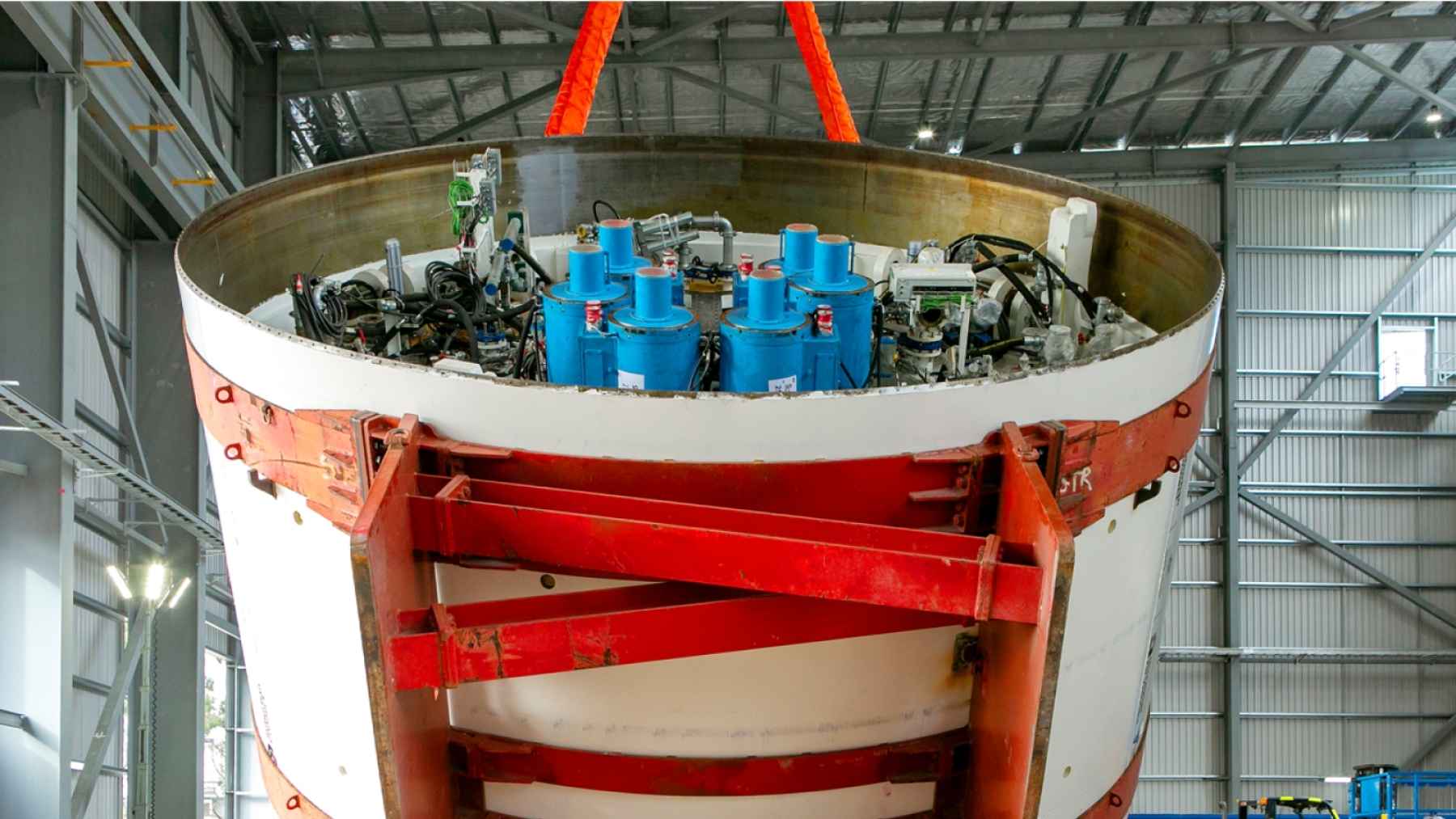
First concrete went down on February 12, with Finland’s Minister of Climate and the Environment, Sari Multala, on hand for the ceremony. The pilot is a 1:1 copy of the reactor module, about 10 meters (33 feet) tall, with one substitution: no fuel. An electric heating element stands in for the core at roughly a tenth of the real output.
It’s the same play Italy is running with a 155-ton lead-cooled test reactor using electric heaters instead of uranium, and the logic is identical: find the expensive problems before there’s anything radioactive on site.
The heat doesn’t go to waste. It gets fed into Helen’s Helsinki district heating network while the safety systems are being wrung out. Operations are scheduled to begin in spring 2027.
In June, state agency Business Finland lent the company €10.5 million ($12.1 million) toward a pilot budgeted at €15 to €20 million. “Our plant is small and probably the simplest in the world,” chief technology officer Hannes Haapalahti told Nuclear Engineering International, which is the reason a full-scale safety rig is affordable at all.
Fortum, which has run Finnish nuclear plants for nearly 50 years, signed a framework agreement in January giving it exclusive rights to operate and maintain these reactors in Finland and Sweden, plus a €2.1 million stake in the company. Steady Energy has preliminary agreements for 15 reactors across Finnish municipalities and a cooperation deal with Korea District Heating Corporation.
In America, “nuclear heat” means a chemical plant, not a radiator
The reason this design shows up in Finland and not Ohio is plumbing. Finnish cities are heated through district networks. Most of the US heats one building at a time, with a furnace in the basement and no pipe to plug a reactor into.
There is one enormous exception, and it runs under Manhattan. Con Edison operates about 105 miles of steam mains from six generating stations, serving more than 1,200 large buildings, and it has been doing it since 1882. That steam is made primarily with natural gas.
American advanced-nuclear projects aimed at heat are pointed somewhere else entirely. Dow’s Long Mott Generating Station in Calhoun County, Texas, would put four X-energy Xe-100 modules next to a petrochemical site to supply industrial steam and power. The NRC issued a finding of no significant impact in May and is working through the construction permit review, with a final safety evaluation targeted for November.
Long Mott is rated at 800 megawatts thermal and 320 megawatts electric. It’s a heat project that still builds the turbines. The Finnish design is what the idea looks like when you delete them, and the customer at the end of the pipe is somebody’s apartment radiator.
What still has to happen
There are two hard limits on all of this. The report STUK published is based on documents handed over in early 2025, and STUK states plainly that the design has progressed since and that the closure report doesn’t reflect it. And the pilot in Salmisaari has an electric heater where the fuel should be, which is deliberate, but it also means nothing nuclear has been demonstrated yet.
Steady Energy’s own calendar puts safety demonstrations through 2027, a decision on the first commercial plant in 2028, and construction starting around 2029. Helsinki, Kuopio, Kerava and Jyväskylä are all looking at it, and in Kuopio an environmental impact assessment and zoning work are already under way.
Finland has a habit of finishing nuclear projects other countries talk about, including the deep repository it built to bury spent fuel for 100,000 years, and it has a competing answer to the same heating problem in the form of a silo full of hot sand. Five regulators reading a concept and finding no showstopper is a genuine result for the reactor version. It’s also the easiest test this machine will ever have to sit.