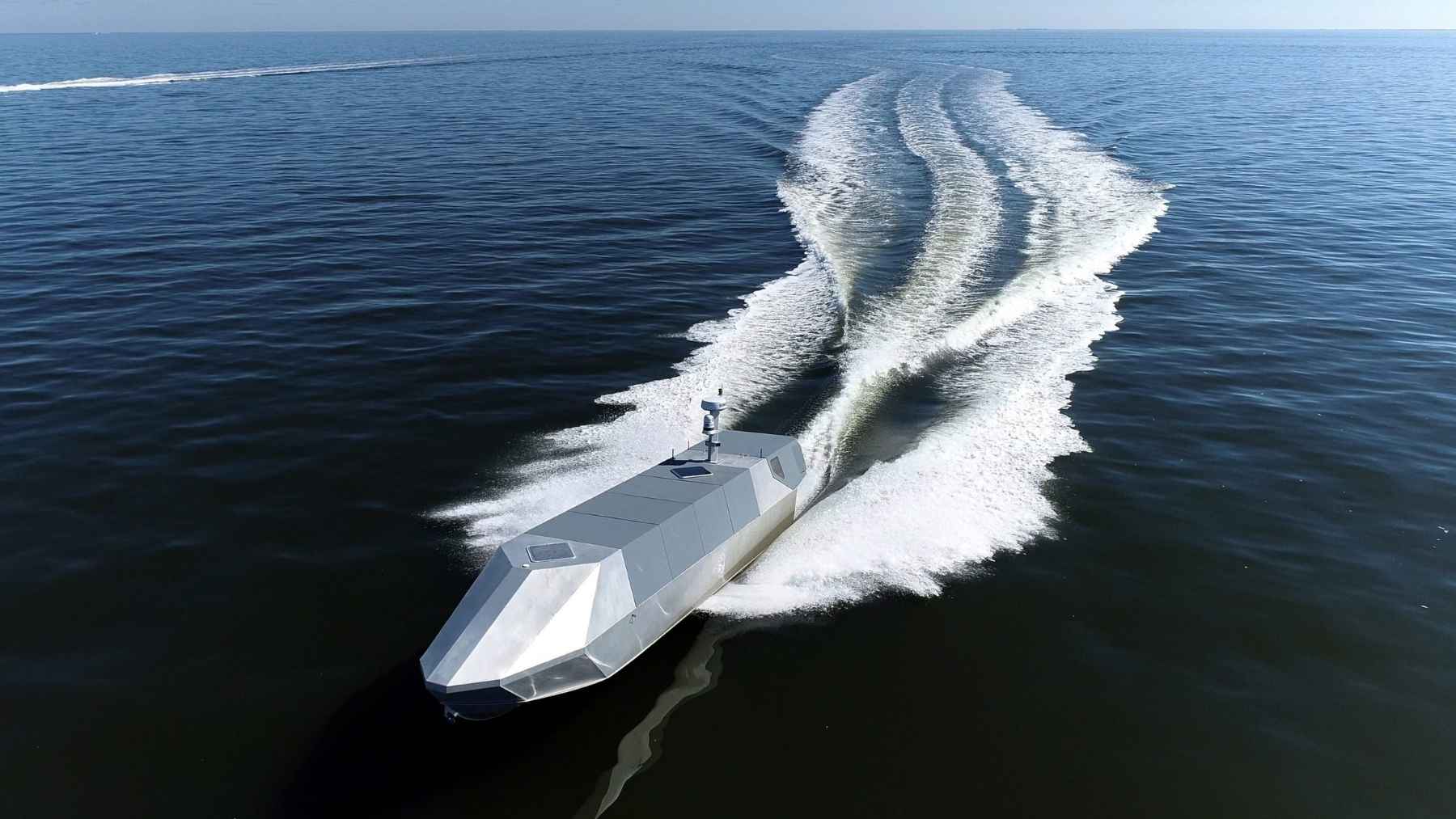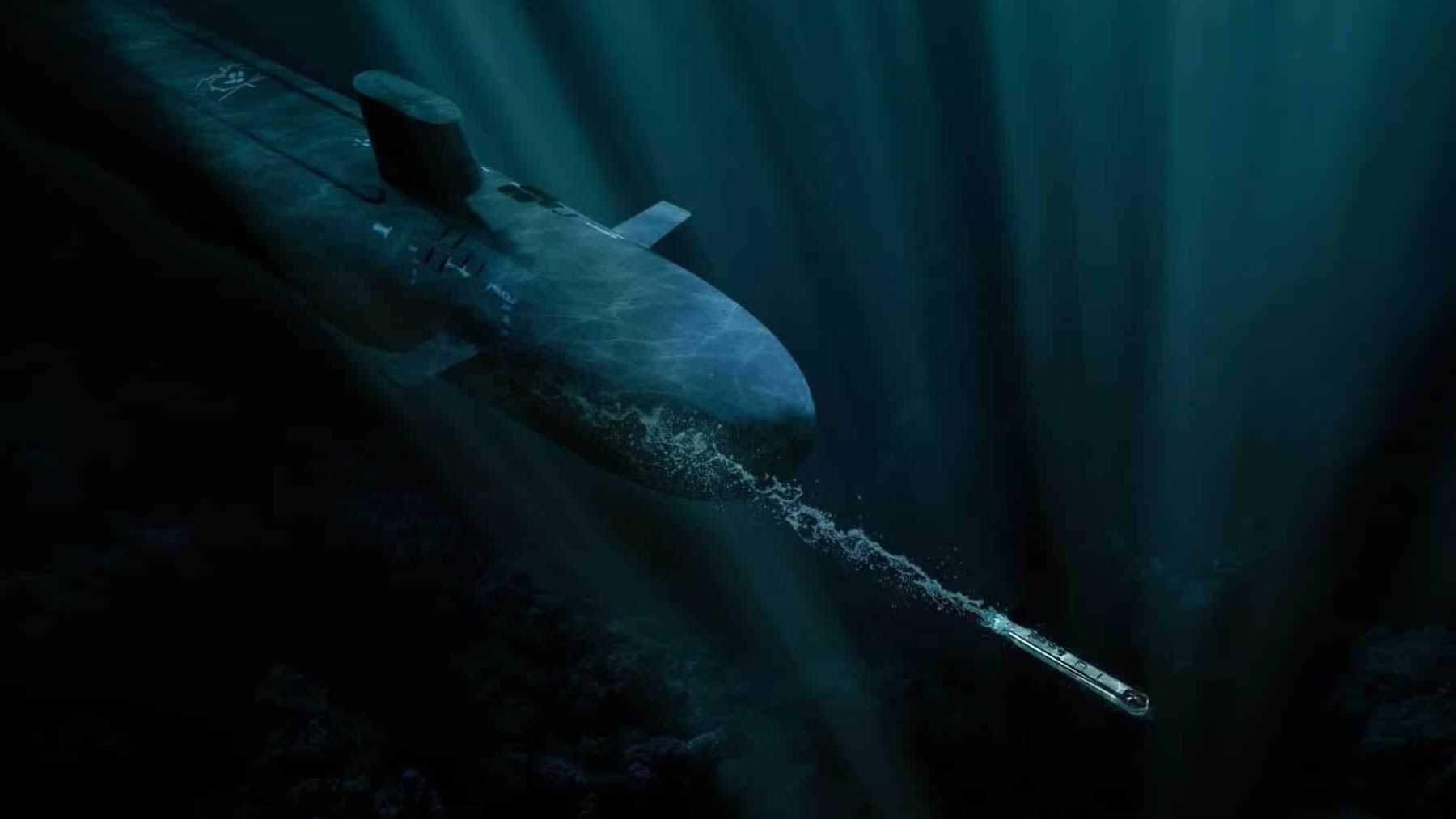

Everything a submarine fires out of a torpedo tube shares the same career path: it leaves, and it never comes back. Torpedoes are famously bad at returning home. Tomahawk missiles don’t even pretend to try.
Even the newest robot the Navy has pushed through a tube, the disposable mine-laying drone we looked at recently, is built to swim away, plant a minefield and spend the rest of eternity parked on the seabed. One-way traffic, all of it, for over a century.
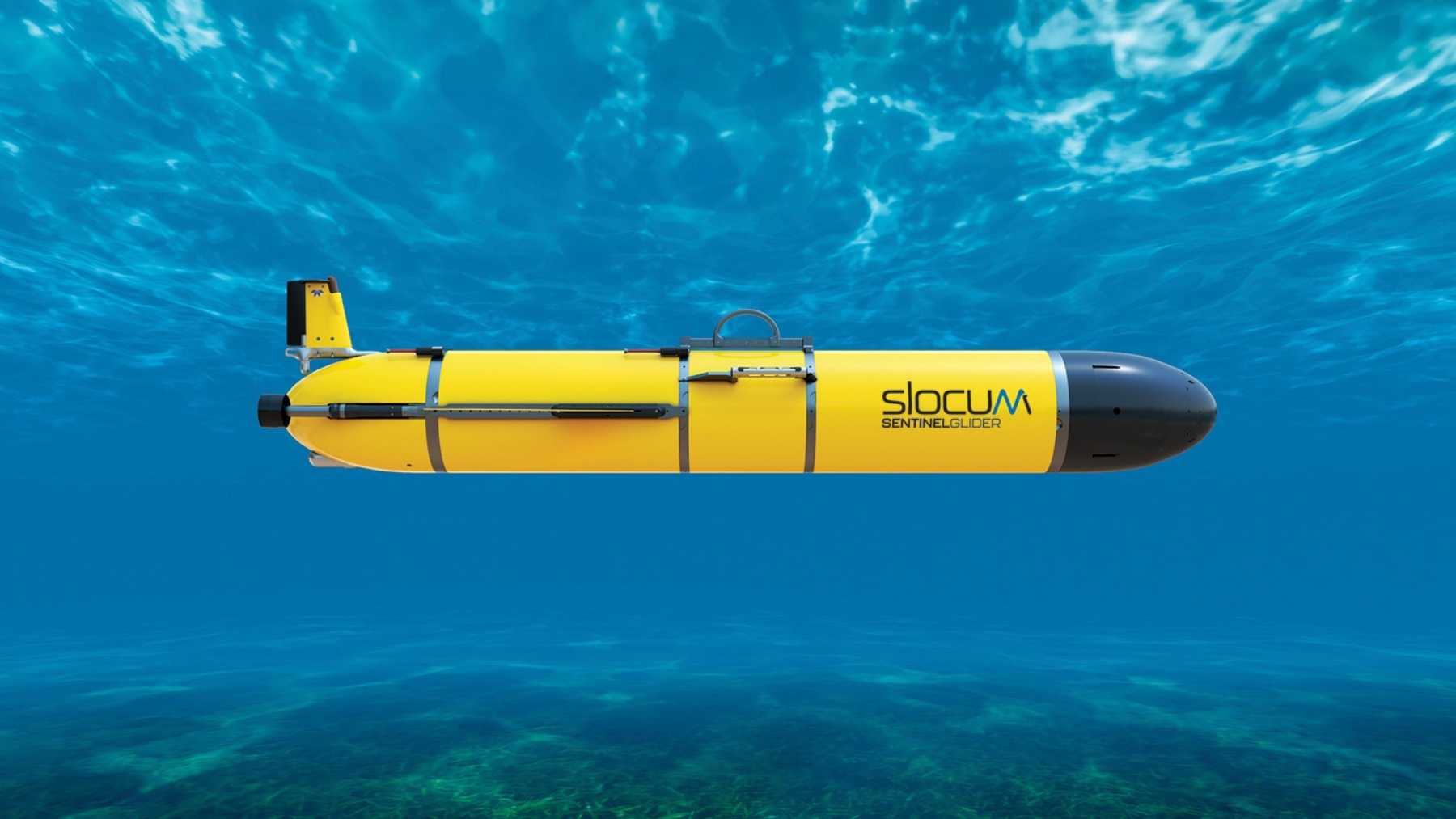
L3Harris just delivered the exception. The Iver4 900 is an autonomous underwater vehicle, AUV in Navy shorthand, that slips out of an attack submarine’s torpedo tube, works alone for up to 40 hours, then swims back and re-enters through the same tube it left from. On purpose. Repeatedly.
The company landed the contract in March through the Defense Innovation Unit, the Pentagon’s fast-track buying office. And in late May, at the Sea Air Space symposium in National Harbor, Maryland, an L3Harris executive told Naval News that the drone is already being run at sea with Virginia-class attack submarines, under a DIU effort that hadn’t been publicly disclosed before.
A 9-inch drone riding a 21-inch tube
The vehicle itself is surprisingly small. According to L3Harris’ own spec sheet, the Iver4 900 measures 2.5 meters long (a little over 8 feet), runs a 9-inch diameter hull made of titanium and carbon fiber, weighs under 230 pounds, and is rated to 300 meters of depth, roughly 984 feet.
A standard U.S. Navy torpedo tube is 21 inches across, so the drone rides encapsulated inside launch-and-recovery hardware that fills the gap. That hardware is the actual product here. It’s called TTLR, short for Torpedo Tube Launch and Recovery, and its party trick isn’t shooting the drone out. It’s guiding the thing back in while the submarine stays deep, quiet and exactly where nobody can see it.
Nino DiCosmo, who runs L3Harris’ Maritime, Space & Mission Systems division, was blunt when the deal was announced: the system is “not a future capability, it’s answering combatant commander needs today,” per the company’s March 25 release. U.S. and allied navies have already validated it for intelligence, surveillance, reconnaissance, mine detection and seabed warfare, all without the boat surfacing or a single sailor getting wet.
Up to 40 hours of the dull, dirty and dangerous work
So what is a returning drone actually for? JR Gear, the L3Harris VP who briefed Naval News at the show, framed it with a question: divers take a dive buddy into the water for safety, so “what’s the dive buddy that a submarine has?”
The answer is a robot that swims ahead and handles the jobs the Navy files under dull, dirty and dangerous. Seabed mapping. Mine hunting. Forward intelligence gathering in water the crewed boat would rather not enter, including the classified errands attack submarines quietly run on routine deployments.
Gear’s framing is that the sailor should concentrate on the mission and the threat, not on steering a robot, which is why launch and recovery are automated end to end. The drone is fully untethered, so it can push out dozens of miles in any direction the mission needs while the submarine holds back.
The Navy is currently proving all of this out in exercises, iterating the design and the concept of operations through at-sea availabilities with Virginia-class boats. The plan is to field the drone across multiple classes of attack submarines, not just one hull type.
Swappable noses, tails and everything in between
The payload story is where the word “modular” earns its keep for once. Sensors mount along the sides of the vehicle, in the nose and in the tail, and every station is removable and swappable, per the Naval News report. Sonar arrays for one sortie, seabed-mapping gear for the next, minesweeping kit after that.
The architecture also accepts third-party payloads L3Harris didn’t build, which the company says it is actively encouraging. Powerplants and antennas swap out too, so the same hull can be reconfigured for contested waters where broadcasting certain signals is a bad idea.
There’s a housekeeping bonus as well. Because the drone lives in the tube system rather than on a weapons rack, it doesn’t eat storage space in the torpedo room. Submarines being the one vehicle class where no owner has ever complained about having too much storage.
Getting the robot back inside is the genuinely hard part
Firing things out of torpedo tubes is a solved problem, over a century old. Getting them back in is not, and the Navy’s recent scorecard proves it.
The Mk 20 submersible was supposed to launch and come home through a standard tube, which would have let nearly any attack boat play mothership for special operators. The Navy killed it in February 2025 over schedule slips and missed requirements, a saga we touched on in our look at the plan to pair underwater drones with the mini-subs that carry SEALs.
A separate tube-launched drone program called Yellow Moray, built on HII’s REMUS 600, has gone better and deployed operationally from the attack submarine USS Delaware, though its first at-sea attempt ended with a lost vehicle. Recovery, in short, is the boss level of undersea robotics.
L3Harris has scar tissue of its own here, which is partly why the March award matters. The company told Navy Leaders it launched and autonomously recovered an AUV from a U.S. Navy submarine underway back in January 2023, a milestone it claims as an industry first, followed by years of continued testing. DiCosmo’s version of the boast is that TTLR was the first system to pull off the full launch-and-recovery cycle from a submarine, period.
The battery is a bigger deal than it sounds
Buried in the announcement is a first that reads like a footnote and isn’t: the TTLR package delivers what L3Harris calls the first AUV lithium-ion battery technology approved for U.S. Navy submarine and aviation use. Navies treat lithium-ion chemistry inside a submarine roughly the way librarians treat campfires, and for the same reason.
That approval landed in November 2024, per the company, and it’s what unlocks the 40-hour endurance figure. The packs are hot-swappable on top, so a recovered drone can be turned around for the next sortie without waiting on a recharge. Persistent operations, in the brochure language. A robot that clocks back in, in practice.
The Royal Navy has already done this too
This isn’t a U.S.-only party. L3Harris says it became the first company to launch and autonomously recover an AUV with the U.K.’s Royal Navy in 2025, and pitches TTLR’s interoperability across submarine classes and allied platforms as a working example of AUKUS Pillar 2, the technology-sharing leg of the U.S.-U.K.-Australia pact.
That matters because interoperability is the difference between a bespoke gadget and a fleet capability. If the same encapsulated system rides in American and allied tubes, every compatible boat in the alliance becomes a potential drone mothership without a shipyard visit, which is exactly the force-multiplication math L3Harris is selling the Pentagon.
The fine print, naturally, stays classified. Neither the contract’s value nor the exact number of drones has been disclosed beyond several units heading to the fleet for evaluation and early operational use. Gear wouldn’t discuss how a submarine communicates with a drone operating dozens of miles away either, and referred that question to the Navy.
Which is about what you’d expect. The entire selling point of this machine is that a submarine can send it somewhere sensitive and nobody ever finds out it was there. A clandestine drone with a detailed press kit would be doing it wrong.