
Allied navies borrow each other’s gear all the time. Pilots cross-train on partner jets, destroyers plug into one another’s refueling rigs, and NATO publishes a common standard for almost everything, right down to the ammunition. Submarines are where the borrowing has always stopped. A nuclear attack boat is the family silver of any navy lucky enough to own one, and nobody hands out keys.
Which is why a quiet set of trials off Toulon in March deserves more attention than it got. Between March 16 and 20, a French Suffren-class nuclear attack submarine launched and recovered a US Navy Razorback underwater drone while staying submerged the whole time, according to the French navy. It was the first time an American unmanned system has gone to sea from an ally’s submarine, as Naval News reported, and the US Navy is calling the launch a “critical milestone” between the two fleets. France didn’t just exercise alongside an American robot. It carried one on its back, put it in the water, and brought it home again.
Five days off Toulon, one borrowed robot
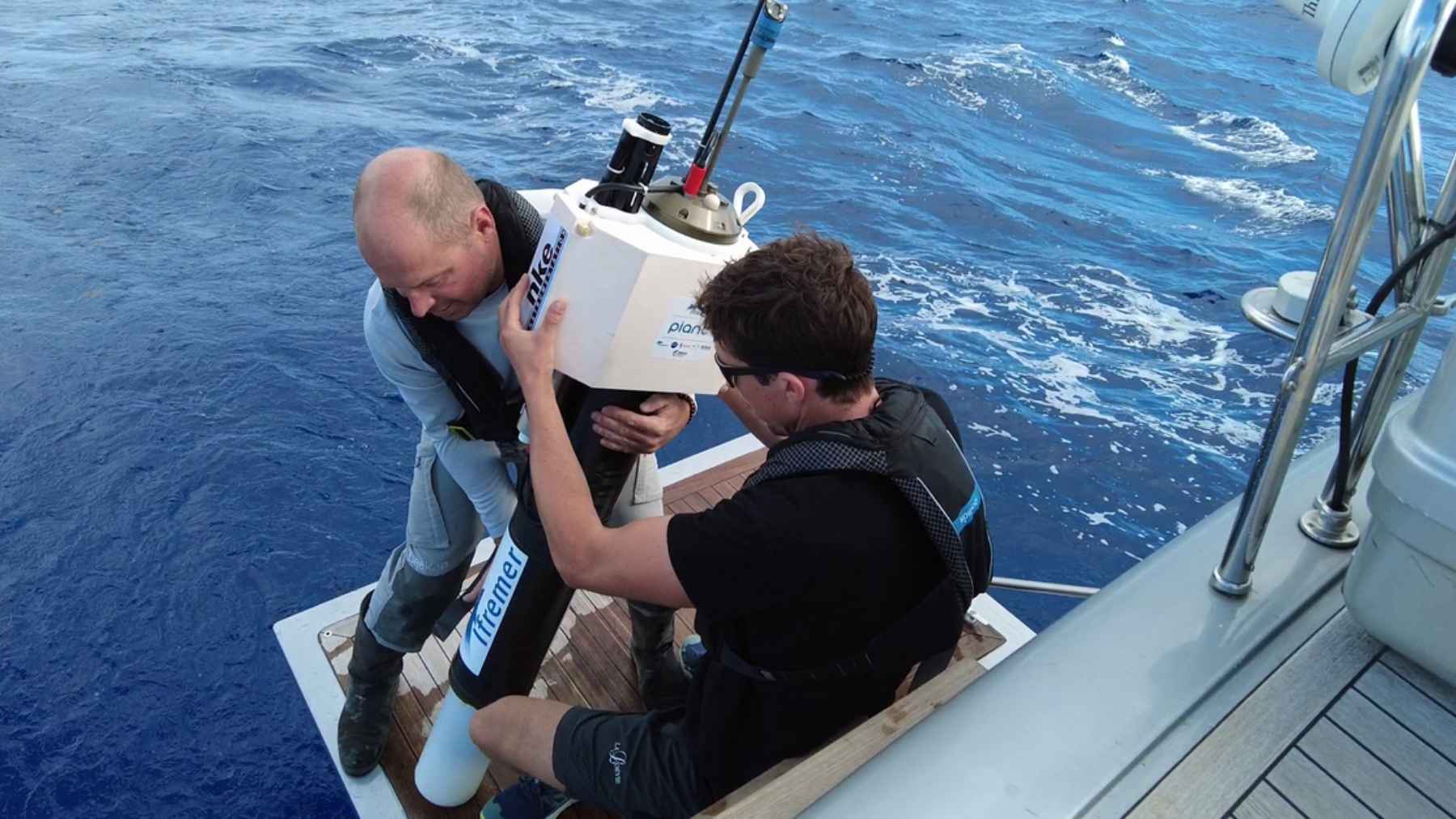
The mechanics are almost charmingly simple. Suffren-class boats can carry a dry deck shelter, a detachable hangar bolted to the deck behind the sail that normally hauls minisubs and gear for combat divers. For these trials, the hangar became a robot garage. With specialist divers supervising, the submarine ran several full launch-and-recovery cycles, and the Razorback flew autonomous mission legs and logged oceanographic measurements between pickups, per the French navy’s account.
This was not a France-only show with an American prop. The US Navy’s submarine force opened up the vehicle’s technical data and the playbook for getting it back aboard, French submarine forces designed the trial, and the DGA, France’s defense procurement agency, supplied the engineering expertise. A Loire-class support vessel, the Seine, worked the surface, and the French navy told Naval News that no private contractors were involved at all. Two navies, one robot, zero vendors. (The American write-up datelined the event in the Atlantic, which would be news to Toulon, a Mediterranean port. The navy that owns both the submarine and the harbor puts the water off Toulon, so that’s the version we’re going with.)
On the American side, the launch belonged to Unmanned Undersea Vehicle Group 1, the Navy’s underwater-drone command in Keyport, Washington. UUVGRU-1 started life in 2017 as a squadron of 13 people and was elevated to a full group in June 2024, by which point it had grown past 100 sailors. In the command’s statement, a group representative said the launch extends American operational reach and strengthens the two navies’ combined undersea warfare capability. Running an American drone off a partner’s boat goes a step past the joint exercises both navies already do routinely, the Navy told Stars and Stripes. Translated from press-release: our robots no longer need our hulls.
The Razorback already commutes through torpedo tubes back home
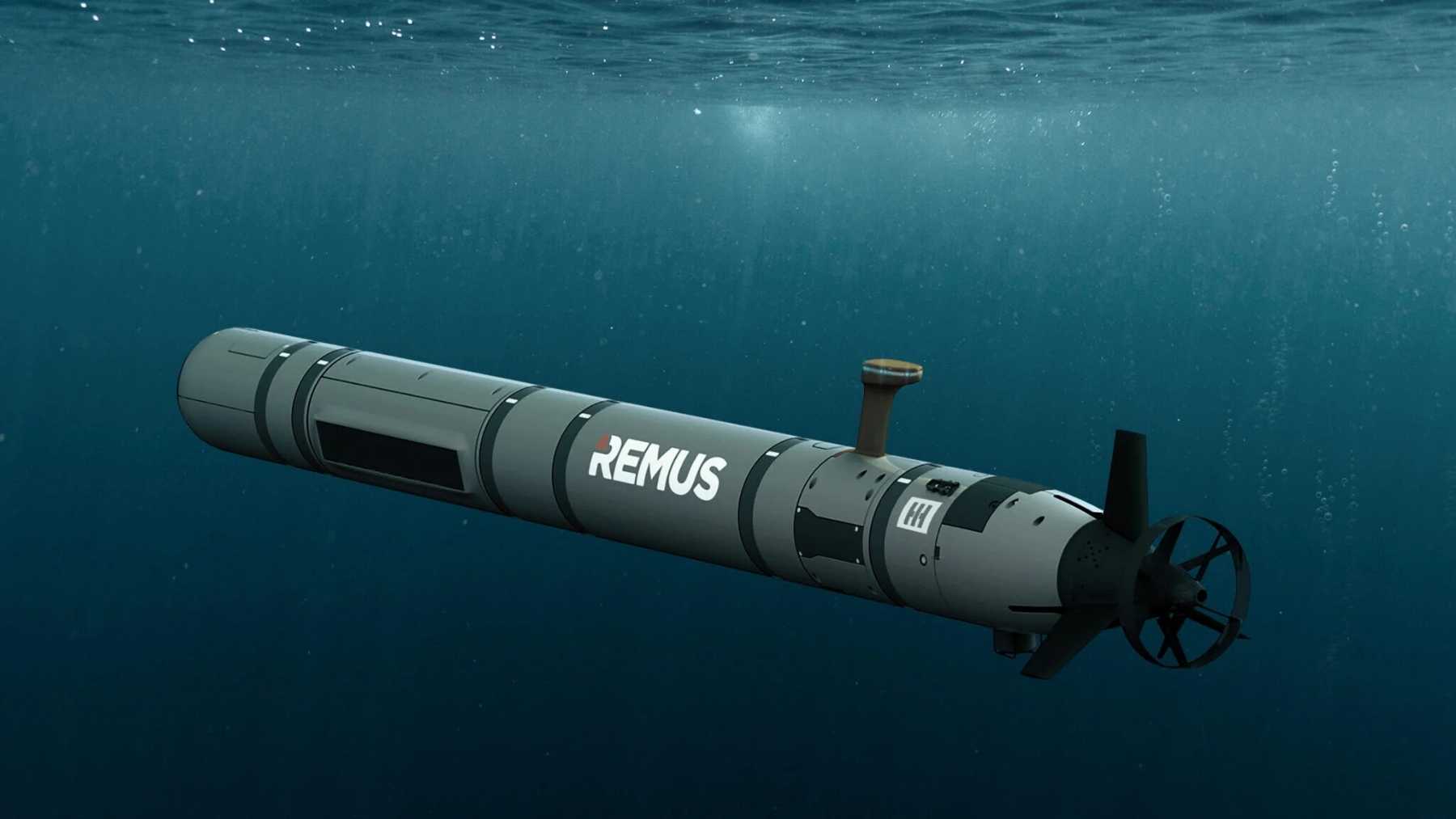
The drone itself was the least experimental thing in the water. The Razorback is a militarized member of HII’s REMUS family of survey drones, a torpedo-shaped vehicle the Navy classes as medium-sized and uses for jobs like mapping the undersea battlespace and scouting an operating area before any shooting hardware shows up. It works the same beat we covered when a hydrogen-powered drone parked itself on the seabed to watch a pipeline for 16 days straight. And it is anything but rare: by HII’s own count, more than 750 REMUS units are out there across 30-plus countries, and 14 of those buyers sit inside NATO, so the supply of potential garages is not small.
Back home, the Navy puts Razorbacks to sea through the torpedo tubes of its Virginia-class attack submarines under a program called Yellow Moray. Getting there was not graceful. The first vehicle USS Delaware launched, in 2024, was lost and never recovered. In early 2025 a replacement refused to come back into the tube during attempts in a Norwegian fjord, so divers fished it out, technicians found a damaged part, and the drone was shipped back across the Atlantic for repairs. By late May 2025 the Navy could finally announce the payoff: three sorties of roughly 6 to 10 hours each on a real deployment, same vehicle, no divers required, logged by the Navy as the “first-ever forward deployed submarine torpedo tube launch and recovery of a UUV” on a tasked mission.
The Pentagon liked it enough to write a check. On April 27, the Defense Innovation Unit awarded HII a contract for a Torpedo Tube Launch and Recovery system that automates the docking, alignment, and release so a REMUS-class drone can leave and return without anyone getting wet. So when France borrowed a Razorback, it wasn’t borrowing a science project. It was borrowing a tool with a day job, and a growing one.
Bolting your robot to someone else’s reactor boat is the hard part
None of the individual pieces here are new. Dry deck shelters are decades-old technology, the Razorback had already proven itself, and even tube-based drone recovery has prior art, since Sweden has been pulling its own torpedo-shaped drones back inside its submarines with a Saab-built system since 2019, per Naval News. What had never happened is the specific combination: one nation’s drone, another nation’s submarine. And that part is not an engineering problem. It’s a trust problem.
Handing an ally your drone means handing over its specifications, its behavior in the water, its recovery procedures, the stuff that normally lives in a safe. The paperwork that made it possible is the Strategic Interoperability Framework, an agreement the two navies signed in December 2021 specifically to push high-end combat integration past the photo-op stage. Asked what comes next, a French navy spokesperson told Naval News the goal is to operationalize the pairing, summing it up as “French SSN + American drone = shared data.” A similar setup built around a French-designed drone is being studied, a phrase that in procurement language covers everything from a funded program to a tidy PowerPoint.
The traffic has started flowing in other directions too. Australia just delivered the US Navy a containerized drone submarine of its own for fleet trials, and allied fleets keep adding undersea endurance plays, like Spain’s S-80 boats, which brew their own hydrogen from bioethanol while they sail. The picture forming is less “every navy builds everything” and more a lending library with reactors.
China is building the opposite answer
The timing matters because the other team is sprinting. At its September 3, 2025 military parade, Beijing rolled out two extra-large underwater drones: the AJX002, a torpedo-shaped vehicle roughly 60 to 65 feet long that Chinese state commentary described as a mine-layer, and the larger HSU100, fitted with retractable sensors for surveillance work, according to Naval News analysis, which assesses that China is investing in extra-large undersea drones faster than any other navy. Those are big, expensive, standalone machines, each one effectively a small crewless submarine.
The bet on display off Toulon is the opposite one. Instead of building a bigger robot, you make a proven mid-size robot platform-agnostic, able to ride any allied hull with a hangar on its back or, eventually, a compatible tube. China can only build so many submarines. An alliance that cross-loads its drones multiplies launch platforms without laying a single new keel, which is the kind of math that never shows up in a parade. The drone unit in question isn’t sitting still either: this very week, UUVGRU-1 sailors were running underwater drones out of Liepaja, Latvia, for NATO’s BALTOPS 2026 exercise, per US Navy imagery from the Baltic.
The next step is the boring one
One clean week of trials is not an operational capability, and the French navy isn’t pretending it is. Its own spokesperson framed the goal as operationalizing the pairing, and a French-built drone for the same job is still in the studying phase. There are limits baked into the hardware too, since the dry deck shelter route only works for boats that carry one, and the torpedo-tube route the Americans prefer is still being industrialized under that April contract. The hard part, though, was always going to be the trust: handing an ally the specs and recovery procedures for your robot and letting their nuclear submarine swim away with it. That part is done. The rest is reps.
 @basilioreyes ROOKIE3 months ago