
If you’ve ever cooked on an induction stove, you already know the basic trick behind this one. Those cooktops use a magnetic field to make the pan heat itself up, which is why the surface doesn’t glow red like the coil on an old electric stove.
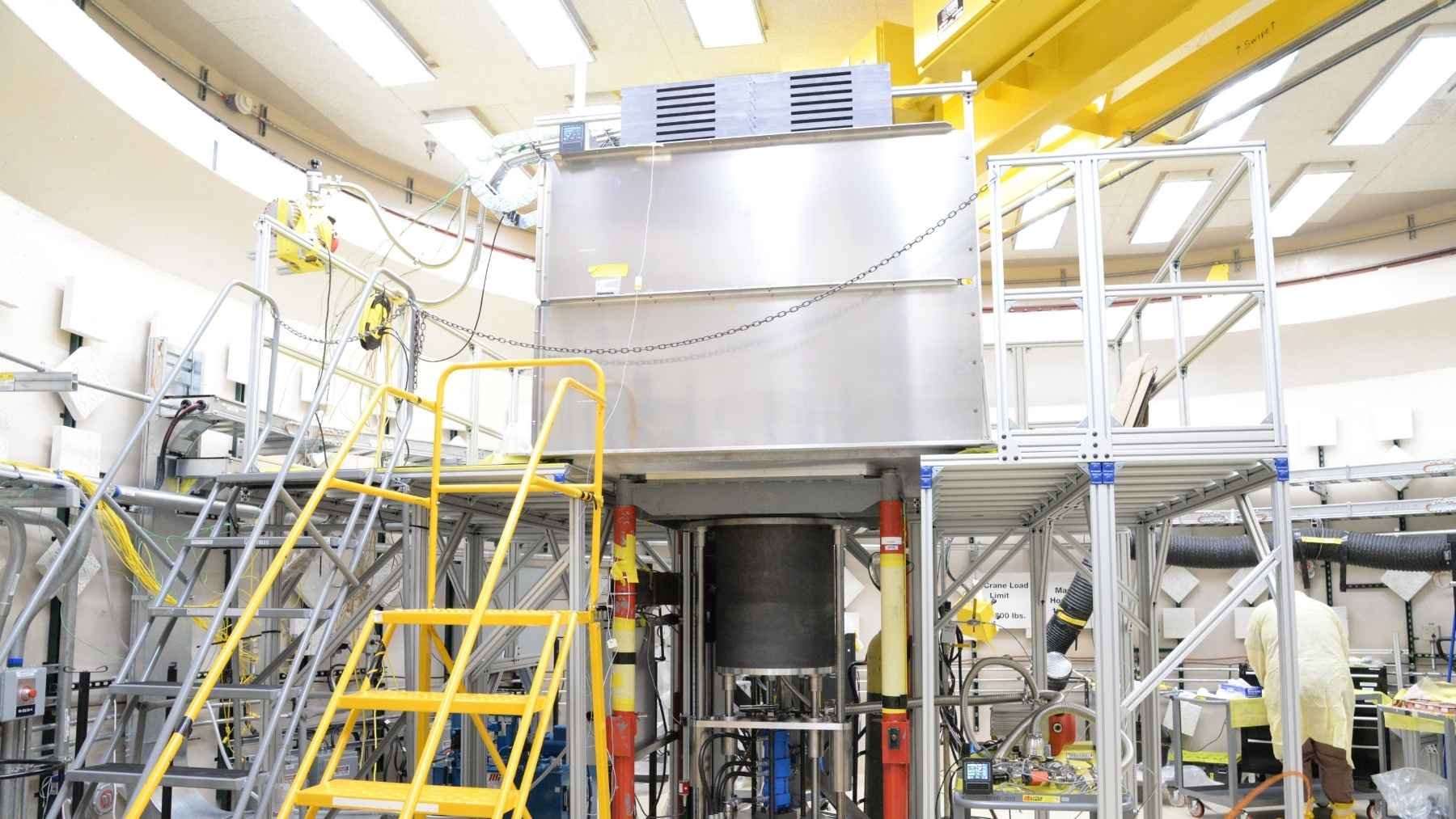
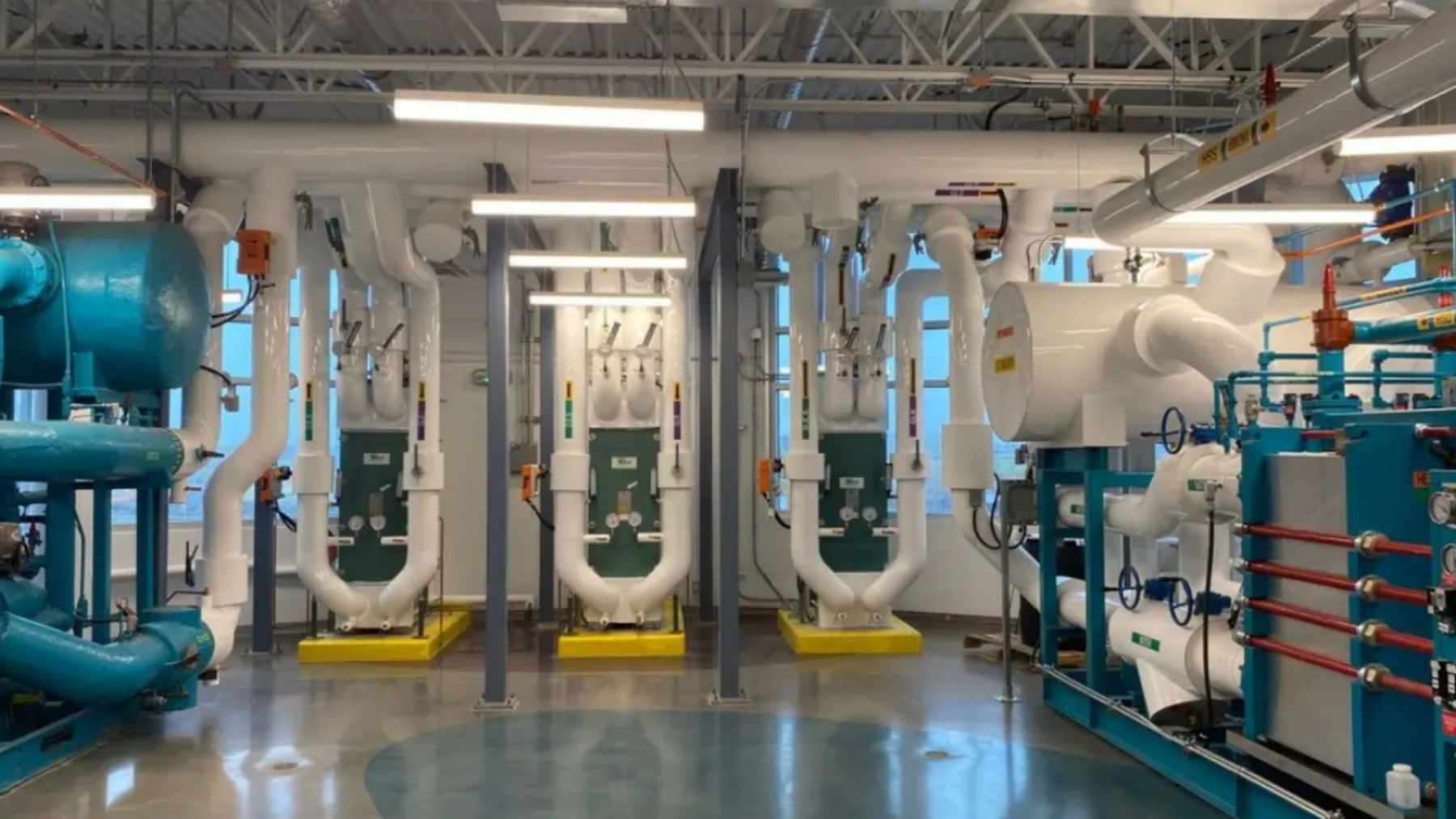
The Utah San Rafael Energy Lab (USREL), a state-run research site in Emery County, has a much bigger version of that trick: a 250-kilowatt induction furnace. And it’s lined up for a pretty strange new job, pretending to be the inside of a nuclear reactor.
NuCube Energy, a microreactor startup based in Idaho Falls, said on October 6 that it’s moving on to its next round of USREL testing, with researchers from Brigham Young University along for the ride. The company says the furnace will get heat pipes, sensors and some purpose-built parts. Engineers will then be able to dial the furnace’s heat up and down to resemble what NuSun, the startup’s reactor design, is meant to put out.
There’s no start date in the announcement, so don’t expect results next week.
So why fake a reactor at all?
Because real nuclear fuel comes with a lot of strings attached. You need federal sign-off to load it, security to guard it and a supplier willing to sell it to you, and none of that happens quickly. Once a core has actually run, it’s radioactive too, so if a sensor dies or a weld cracks, you can’t exactly pop the lid off and take a look. Electric heat lets engineers break things, fix them and break them again for the price of a power bill. Frankly, it’s the sensible order to do things in.
It isn’t a new idea, either. Over in Italy, a full-size, lead-cooled reactor stand-in is built around banks of electric heaters sitting where its fuel would go.
So what’s a heat pipe?
There’s a decent chance you’re reading this on something that has a few. A lot of laptops use thin copper heat pipes to pull heat off the processor.
A heat pipe is basically a closed metal tube with a splash of liquid trapped inside. Warm up one end and the liquid boils, the vapor rushes to the far end, dumps its heat and turns back into liquid, and a wick along the inner wall soaks it back to the hot end to start over.
Nothing gets pumped, and that’s a big reason microreactor designers like them. The company describes NuSun as a solid-state, heat-pipe-cooled reactor, which means those pipes are the cooling system. Westinghouse built its eVinci microreactor around heat pipes too, and a scaled-down eVinci core went critical in Nevada this summer.
If the pipes can’t carry heat the way the computer models say they will, the whole design has a problem. So they’re arguably the most important thing to test before anyone loads fuel.
We don’t know how hot this furnace will run yet. NuCube has said in the past that its reactor design can put out heat above 1,800 degrees Fahrenheit, but its October 6 announcement doesn’t give a temperature for these tests.
The furnace puts out a fraction of NuSun’s power
USREL’s furnace is rated at 250 kilowatts. A Tesla V3 Supercharger peaks at 250 kilowatts too, if you want something to picture. The startup’s website lists NuSun at up to 15 megawatts, or 60 times the furnace’s 250 kilowatts.
So as far as I can tell, the furnace is standing in for a slice of a NuSun core, and the company hasn’t said how many heat pipes will go in.
I couldn’t find the furnace’s size, weight or maker in anything published so far. The startup’s website doesn’t list NuSun’s dimensions either, beyond saying it’s compact enough to travel by road or rail.
The heat will feed hydrogen and power-generation tests
The upgraded furnace will also double as a test bed for industrial processes, according to the release, which names hydrogen production, chemical manufacturing and electricity from a supercritical carbon dioxide Brayton cycle.
That last one’s a mouthful, but it’s basically the same cycle a jet engine runs (squeeze a gas, heat it, let it spin a turbine), with the gas going around a sealed loop instead of out the back. Here the gas is carbon dioxide pushed past about 1,070 psi and 88 degrees Fahrenheit, where it starts acting like something between a gas and a liquid and can spin a turbine that’s a lot smaller than a steam turbine doing that job.
USREL already has a pilot-scale supercritical CO2 loop on site, according to the lab’s website, so it isn’t starting from scratch on that front.
NuCube CEO Cristian Rabiti said in the release that the new setup will allow “meaningful validation of energy-conversion and industrial-heat applications.” Translated out of press-release English, the company wants to know whether the heat gets where it’s supposed to go, and whether it does anything useful once it’s there.
A federal earmark is covering the upgrade
Utah’s Office of Energy Development, which owns and runs USREL, is putting a $1.35 million Department of Energy award toward the furnace work and two other projects. The money is congressionally directed spending, which is the Senate’s polite name for an earmark, and the state thanks Utah Sen. John Curtis for his support.
OxEon Energy, the Utah company whose electrolysis hardware rode to Mars on NASA’s Perseverance rover, gets $620,000 of it for those two projects. The rest goes to BYU and NuCube for the furnace upgrades.
That’s furnaces, plural. The upgrade money also covers the lab’s L-1500 coal furnace, which the state lists at 1 megawatt, or four times the induction furnace’s 250 kilowatts.
The lab’s street address is on Coal Haul Road, in the middle of Utah’s coal country. There’s something a little poetic about one federal check paying to fix up a coal furnace and a fake nuclear core at one lab.
USREL has already had a real reactor go critical
If the lab’s name rings a bell, it’s probably because Valar Atomics took its Ward 250 reactor critical there on June 18, under a federal program meant to get new test reactors running fast. We covered that one when it went critical inside a tent in the Utah desert.
Going critical just means the chain reaction is keeping itself going. The Ward 250 run was a zero-power test, according to the Department of Energy, so it showed the core could sustain a chain reaction without making useful heat.
NuCube wants a real reactor at USREL eventually, too. It has a memorandum of understanding with the state’s energy office to work toward putting one of its microreactors at the lab, and minutes from Utah’s Energy Research Board describe the end goal as a fueled test reactor on site.
An MOU is basically a written promise to try. Most of this one isn’t legally binding. It runs for 24 months, through May 2027, unless the two sides replace it with a definitive agreement before then.
The company is also partway through going public. In June, it agreed to merge with Launch Two Acquisition Corp., a SPAC (basically a shell company that’s already on the stock market and exists to buy a private one), and the two filed their registration statement with the SEC in September. The deal hasn’t closed yet.
Utah’s energy office announced the federal award on October 5, a day before the startup’s release, and it says the upgraded furnaces will be there to test “a range of energy technologies.” So NuCube’s heat pipes probably won’t be the only thing cooking in Orangeville.