
The whole sales pitch of a tunnel boring machine is that no one up top ever notices it. It chews along a hundred-odd feet down, lines the tunnel behind itself as it goes, and the first most people hear about it is when a new subway station opens. Barcelona’s didn’t go like that.
Domingo Fínez opened up his pizzeria, the Verona, in the Putxet neighborhood on July 7 and found that the bathroom was gone. The entire room had dropped into a hole roughly 26 feet across and 13 feet deep that had opened in the courtyard behind the restaurant, according to Ara, the Catalan daily that has covered this closest. Firefighters cleared eight buildings on Teodora Lamadrid and Rubinstein streets that day. Around 300 people walked out with whatever they could carry, and Ara’s reporters found one resident who’d left with the washing machine half done.
The cause was sitting about 131 feet under their feet, and it’s still there.
Last Friday, October 16, the Catalan government’s Territory department told residents of Teodora Lamadrid 5, which holds 15 homes and one business, that they can go back from October 26. That makes 69 of the 87 evacuated homes cleared to return. The other 18 homes and seven businesses, at Rubinstein 2 and 4 and Teodora Lamadrid 3, right over the hole itself, have been told early next year. So some good news this week, with a pretty large asterisk on it.
So what’s actually down there?
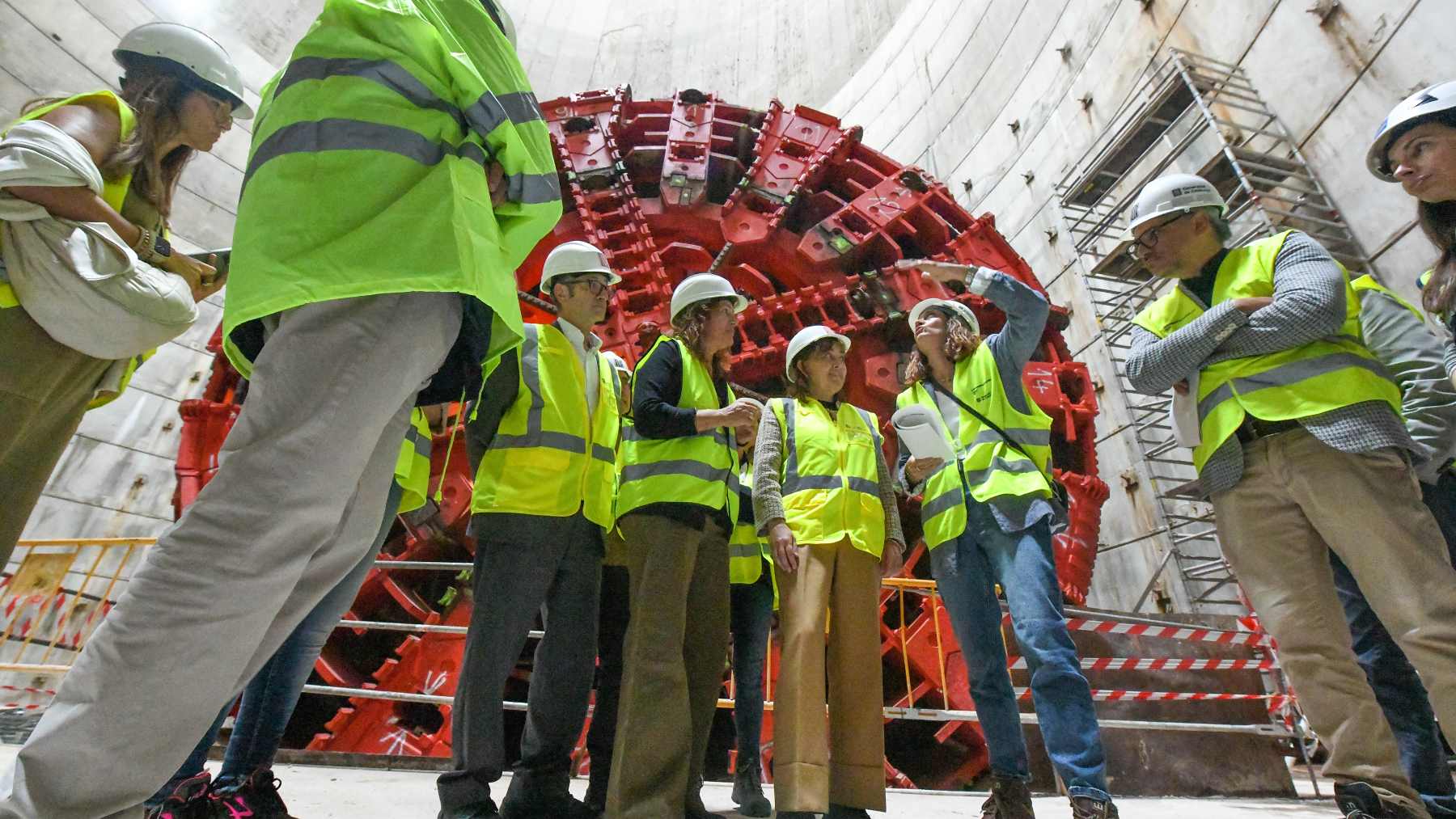
The machine digging the middle of Barcelona’s Line 9 is, by any measure, enormous. Infraestructures.cat, the public company that runs the job, puts it at about 328 feet long, 39 feet across at the cutting wheel, and more than 2,500 tons. The agency’s own comparison is four Airbus A380s, which I’d normally roll my eyes at, except it happens to be about right.
It runs around the clock in three shifts of about 25 people, with up to 250 working in and around it, and on a decent day it makes somewhere around 49 feet. The tunnel it leaves behind is a single 39-foot tube with the two tracks stacked one over the other, which is an unusual way to build a subway and one of the reasons the wheel is so big.
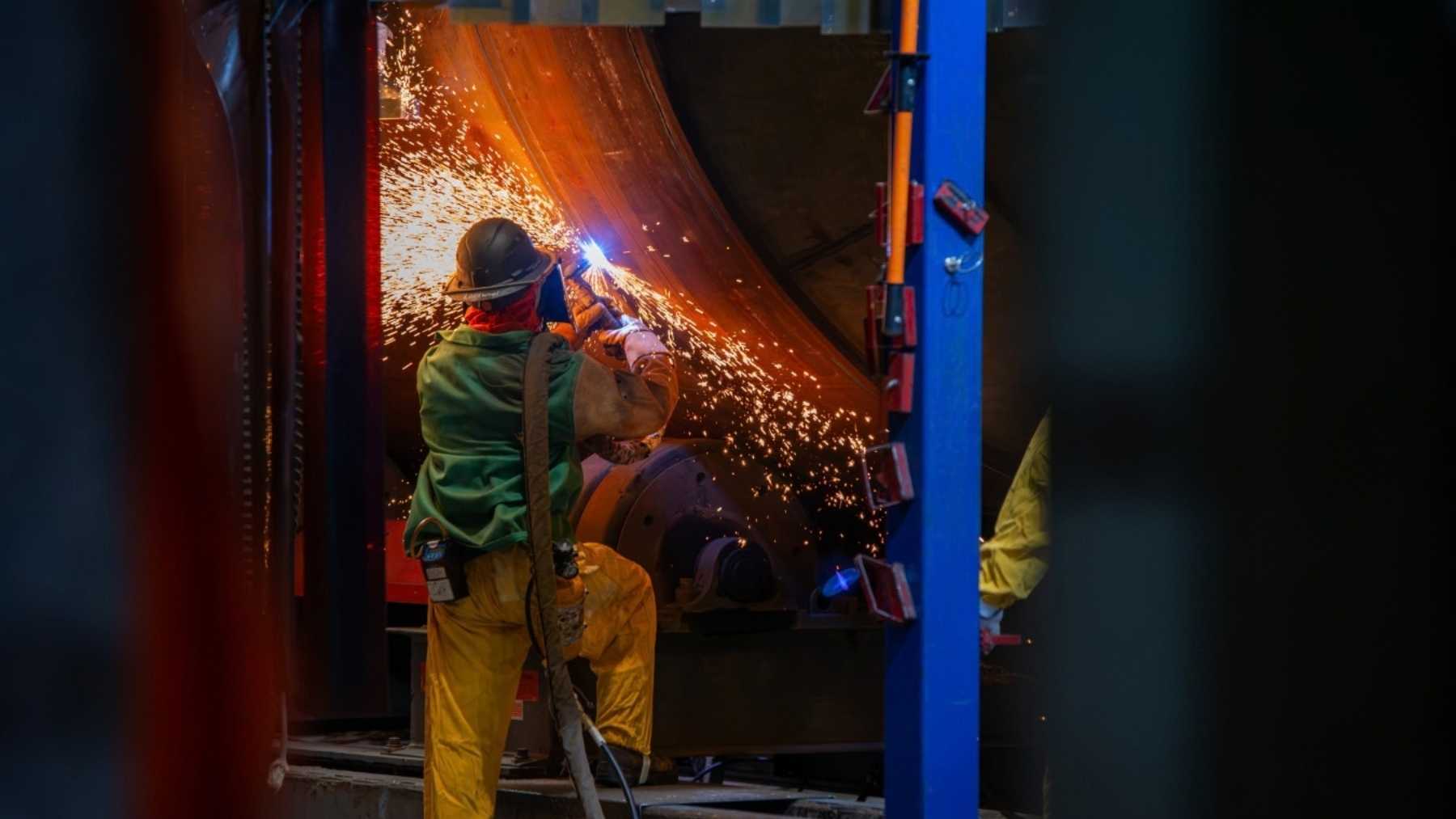
If you’ve read about Mayrit, the 1,653-ton machine grinding under Madrid right now, this one works on the same principle, just a size up. It keeps the freshly cut rock and dirt packed in a chamber behind the wheel, pressed back against the face at roughly the pressure the ground is pushing in with. A steel shield about 39 feet wide covers the open ground right behind the wheel, and inside that shield the crew bolts together a ring of seven curved concrete segments, each about 16 inches thick. Then the machine shoves off that ring and takes the next bite.
Which means the tunnel is already built and lined by the time the machine has moved on. That’s why Laura Carrasco, who heads geotechnical and underground works for the Catalan government, could say on day one that the hole couldn’t get any deeper. The lined tunnel is a hard floor. Everything that went wrong went wrong above it.
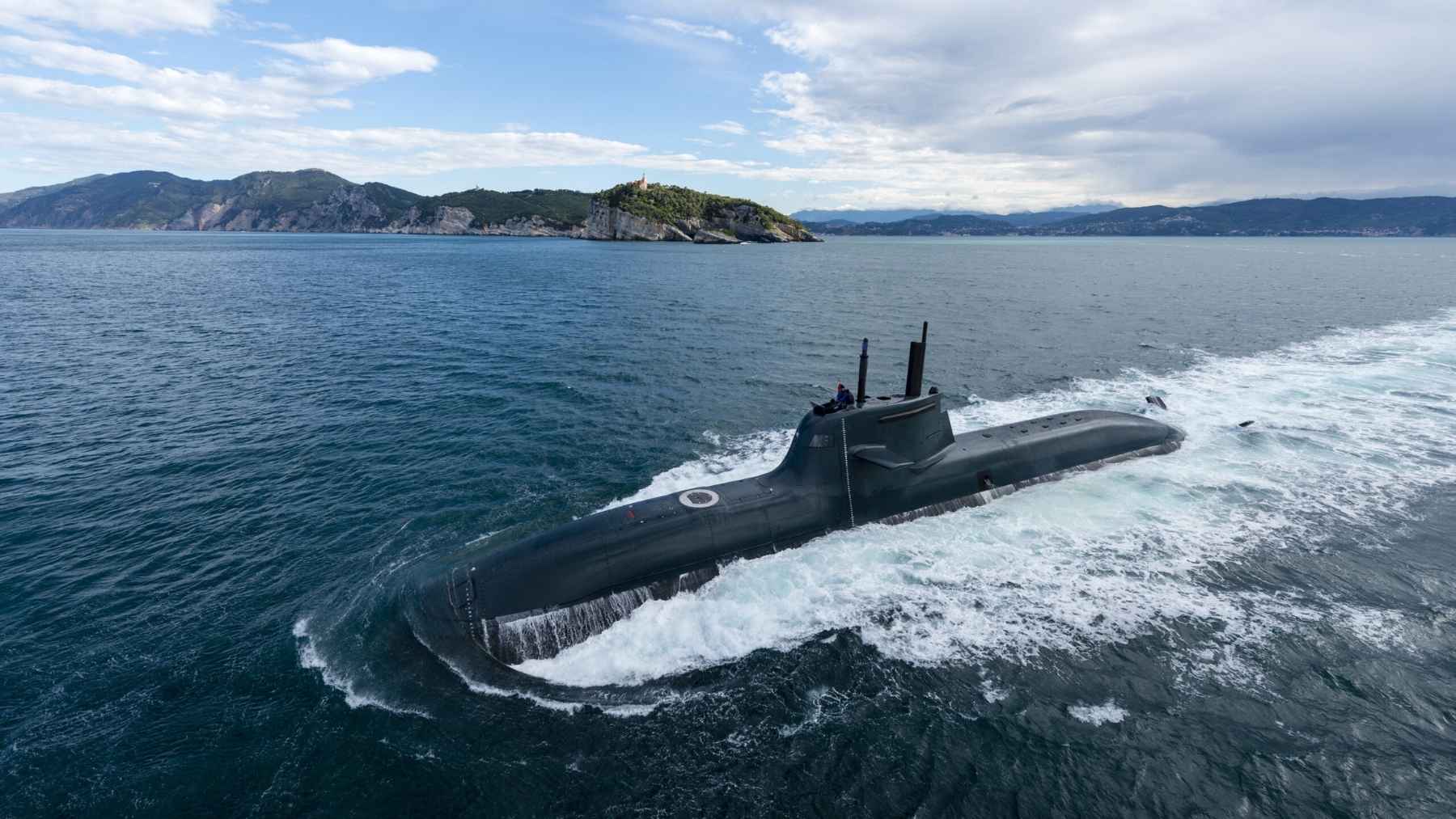
And the machine had only just gotten going again. It spent a bit more than a year parked at the Mandri shaft waiting on a new cutting wheel, 39 feet across and about 231 tons, that came by ship from Italy and was lowered 230 feet down the shaft in pieces. It started cutting again in early October of last year with about a mile of tunnel left to reach Lesseps. Nine months later it was under the Putxet.
How does the ground end up in a pizzeria bathroom?
The geologists Ara talked to the week it happened called it a chimney. Josep Anton Muñoz, who teaches structural geology at the University of Barcelona, explained it about as plainly as you could want: “A cavity forms just above where the tunnel boring machine passes,” he said, and it grows straight up. If it reaches the surface, you get a sinkhole.
The basic idea is that for some reason the machine swallowed more ground than it should have. Pull extra material out of the face and you leave a void over the top of the shield. The rock above that void then drops into it, which just moves the void up a notch, and so on. Think of an hourglass running in reverse, with the pizzeria at the top.
The government’s version, a week later, wasn’t all that different. Sílvia Paneque, the minister in charge of territory and housing, said the main hypothesis was that a cavity created during the drilling didn’t get an adequate injection of concrete at the time. Machines like this one pump grout into the gap between the concrete rings and the rock as they go, specifically so no such gap exists. Miss a spot, or misjudge how much the ground has run, and you’ve got a hole that only grows.
Both of those are still hypotheses, and from the looks of things the cause hasn’t been formally nailed down. The study of it hasn’t properly started, for a reason we’ll get to.
So how much ground are we talking about? The tunnel runs about 131 feet down and the hole at the top was 13 feet deep, which leaves something like 120 feet of rock and dirt in between that no one could vouch for. Muñoz pointed out that the machine had been chewing through hard granite from Mandri and was crossing into shale, and that transition had been flagged as the delicate stretch in reports written twenty years earlier. Another government engineer told Ara the actual change in material sits a few yards behind where the hole opened, which is the sort of detail that makes me think the investigation is going to be interesting.
It wasn’t quite over, either. At the end of July, monitoring teams noticed cracks getting worse in the building at Rubinstein 2, and that led them to a second, smaller cavity. The government says it was filled right away, cracks were sealed, the structure was reinforced, and the grout injections under that building were stepped up.
If you know Barcelona at all, you may be thinking of the Carmel collapse two decades ago, a cave-in during work on another metro line that brought buildings down and emptied a chunk of that neighborhood. Carrasco was quick to say this isn’t that. The method there was entirely different, she said, while this machine advances inside a steel shield and leaves a lined tunnel behind it. I’d buy the distinction, for what it’s worth. It just isn’t much comfort if the hole is under your restaurant.
Why can’t they just drive it out?
This surprised me, frankly. In the first days after the hole opened, the machine kept creeping forward at minimum speed, and officials said it had gotten 33 to 39 feet past the point where the ground gave way. Then it stopped. By late August it was parked, and the government was explaining that the whole timetable for getting people home depended on it.
Ramon Ramírez, the government’s director general of mobility infrastructure, laid it out on August 28. Once the ground is consolidated, the first step is to move the machine about 66 feet, enough to get it out from under the footprint of the buildings. Only then do the engineers get to analyze what went wrong and what has to change before the dig continues. Ara reported that restarting was expected to take “a few months,” and Ramírez admitted that the delay to Lesseps would stretch out without putting a date on it. “There are people who have a reasonable fear of returning,” he said.
I can’t find any announcement that it has moved since. Ara’s last mention, at the end of September, had it still parked under the Putxet, and the October 16 update on the returning residents doesn’t mention the machine at all. So as far as I can tell, a 2,500-ton machine has been sitting 131 feet under one of Barcelona’s pricier neighborhoods since at least late August, with roughly 0.6 miles of tunnel left to dig.
Why wait? Because moving it is itself a risk. Every foot of advance is more ground that has to behave, directly under buildings that have already had a bad summer. Consolidating first means pumping grout into whatever voids the summer’s injections haven’t reached and watching the sensors until the ground under the three worst buildings stops moving. The government has said that work under those buildings runs through the next few months, which is what the early-2027 date is built on.
If it helps, this isn’t even the first stuck borer we’ve covered this year. A 281-ton machine spent the whole summer waiting in a pit for the plant that feeds it to be built. That one, at least, didn’t have anyone’s bathroom on top of it.
The bill is still being argued over
Residents and shop owners have said they’ll sue. Their lawyer, Carmen Pérez-Pozo, who represents about two-thirds of the people affected, said in September, according to Ara and elDiario.es, that they would file a collective claim against the Catalan government and, separately, Barcelona city hall, over material, financial and moral damages. No court has ruled on anything, and the government, for its part, set up a contingency fund in July to pay advances against whatever compensation gets agreed. Pérez-Pozo told the Catalan news agency ACN that she wants those advances to count toward the final settlement rather than having to be itemized as expenses.
And the line itself was already a sore point before any of this. Lines 9 and 10 together are supposed to run nearly 30 miles with 50 stations, and the middle section, which is what this machine is for, has been under construction for 24 years at an overrun Ara puts at around 6 billion euros. Lesseps was supposed to see trains by 2030. No one at the Generalitat has said that date is dead, but I’d be frankly surprised if a machine that still has to be dug out from under three apartment blocks, inspected, and then explained, delivers a tunnel on the old schedule.
For the people at Teodora Lamadrid 5, the date that matters is October 26. For the 18 households and seven businesses at Rubinstein 2 and 4 and Teodora Lamadrid 3, the Territory department’s word is still “early 2027,” once the checks, the grouting and whatever repairs the buildings need are done.
Image Credit: govern.cat