
Wind turbines have a scaling problem you can picture without an engineering degree. The higher you put the hub, the stronger and steadier the wind gets, so everybody’s chasing taller towers. But every extra foot of height calls for a bigger crane, and past a certain point you’re booking one of a handful of giant crawler cranes, trucking it to the middle of nowhere in pieces, and hoping the wind that attracted you to the site doesn’t keep shutting down your lifts. Offshore, the industry solves this with floating monsters like the crane ship that set 100 turbine foundations in the Baltic. Out in remote country on land, there’s no monster to call.
So a crew in the Western Australian desert is about to try it the other way around. They’re standing up a turbine with a hub height of 617 feet (188 meters), which Fortescue, the mining company behind the project, calls “a new global benchmark for onshore wind”. And the tallest crane on the job is a standard one.
The tower does the heavy lifting itself.
The site is the Nullagine wind project in the Pilbara, an iron ore region that’s pretty much as remote as industrial Australia gets. Fortescue plans 17 turbines there for a combined 133 megawatts, its first wind farm anywhere. The tower technology comes from Nabrawind, a Spanish engineering firm the miner now owns outright, and Nabrawind announced on July 31 that the first tower components had reached the port of Port Hedland, with the self-lifting rig already delivered to the site. RenewEconomy reported on September 24 that the first turbine is about to go up.
So how does a tower lift an entire wind turbine?
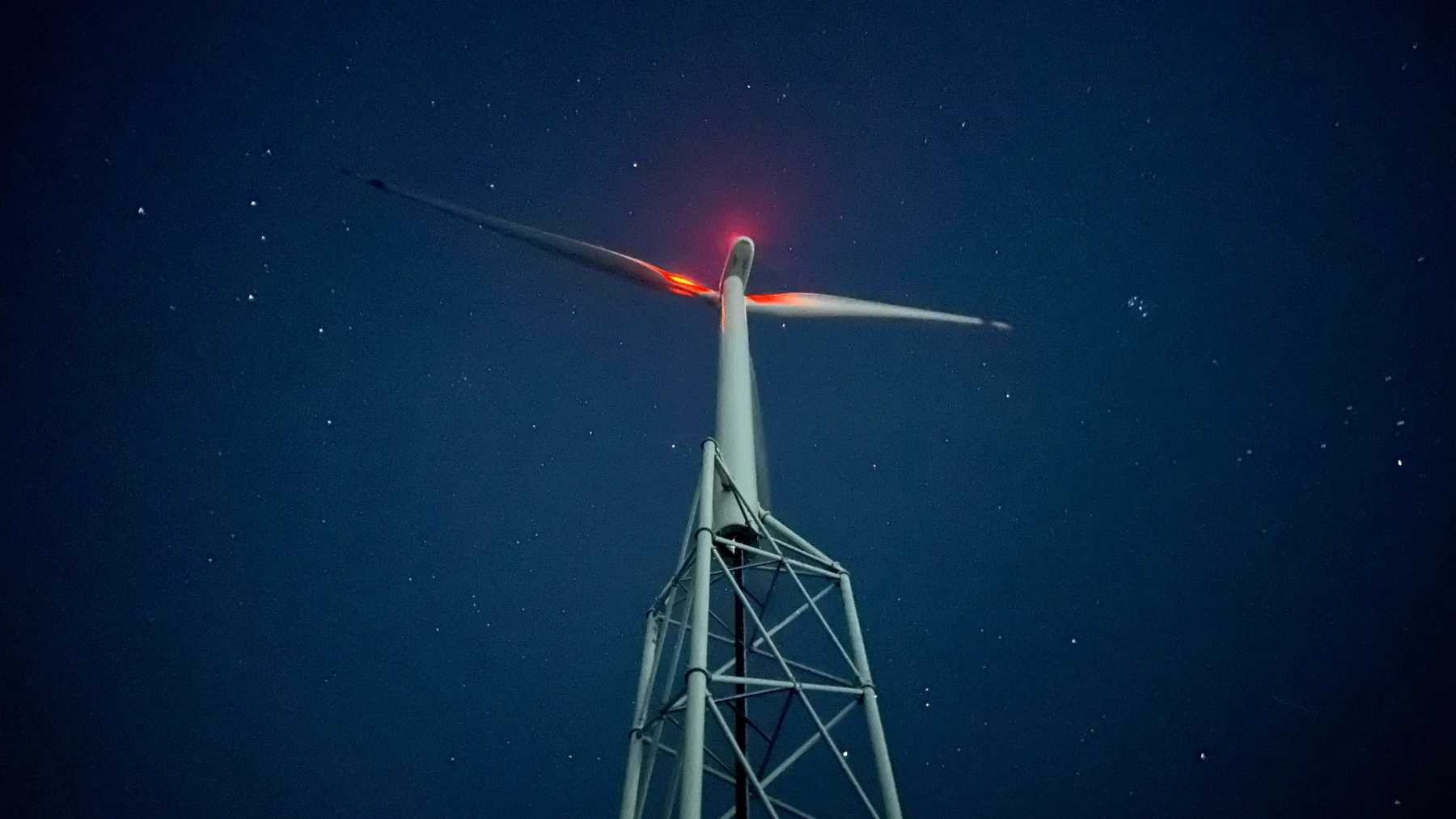
The Nabralift HH188 is really two structures in one. The top section is a normal-looking steel tube, sized so the blades never sweep close to anything below it. Under that tube sits a three-column steel frame with X-bracing, and built into it is Nabrawind’s Self-Erection System, which raises the whole assembly, tube, nacelle and rotor included, in stages.
Basically, the turbine gets built close to the ground and then jacked upward one bite at a time. The system lifts everything by a section’s worth of height, crews bolt a fresh module of columns and bracing in underneath at ground level, and the cycle repeats until the hub sits 617 feet up. As construction tricks go, assembling a skyscraper-height machine from somewhere near head height is a pretty good one.
Do they still need cranes at all?
They do, just ordinary ones, since nothing’s ever lifted higher than the structure happens to stand at that moment. Nabrawind also claims the turbine can be installed in winds of up to about 34 mph, and frankly that’s the number I’d care about most in a region with a cyclone season on the calendar, because big crane lifts are exactly the kind of work that stops when the wind picks up.
It isn’t even the only climbing tower out there right now. We covered a German lattice tower that shoves its 827-ton top upward with hydraulic jacks at 30 feet an hour. Different hardware, same idea: if a crane can’t reach the hub, let the tower do the climbing.
These are the biggest turbines Australia has ever put on land
Each machine is an Envision unit rated at 7.8 megawatts, swinging a rotor 597 feet across from that 617-foot hub. Nabrawind says it’s the first onshore project anywhere to combine the tallest hub, the biggest rotor and the highest power rating in one machine.
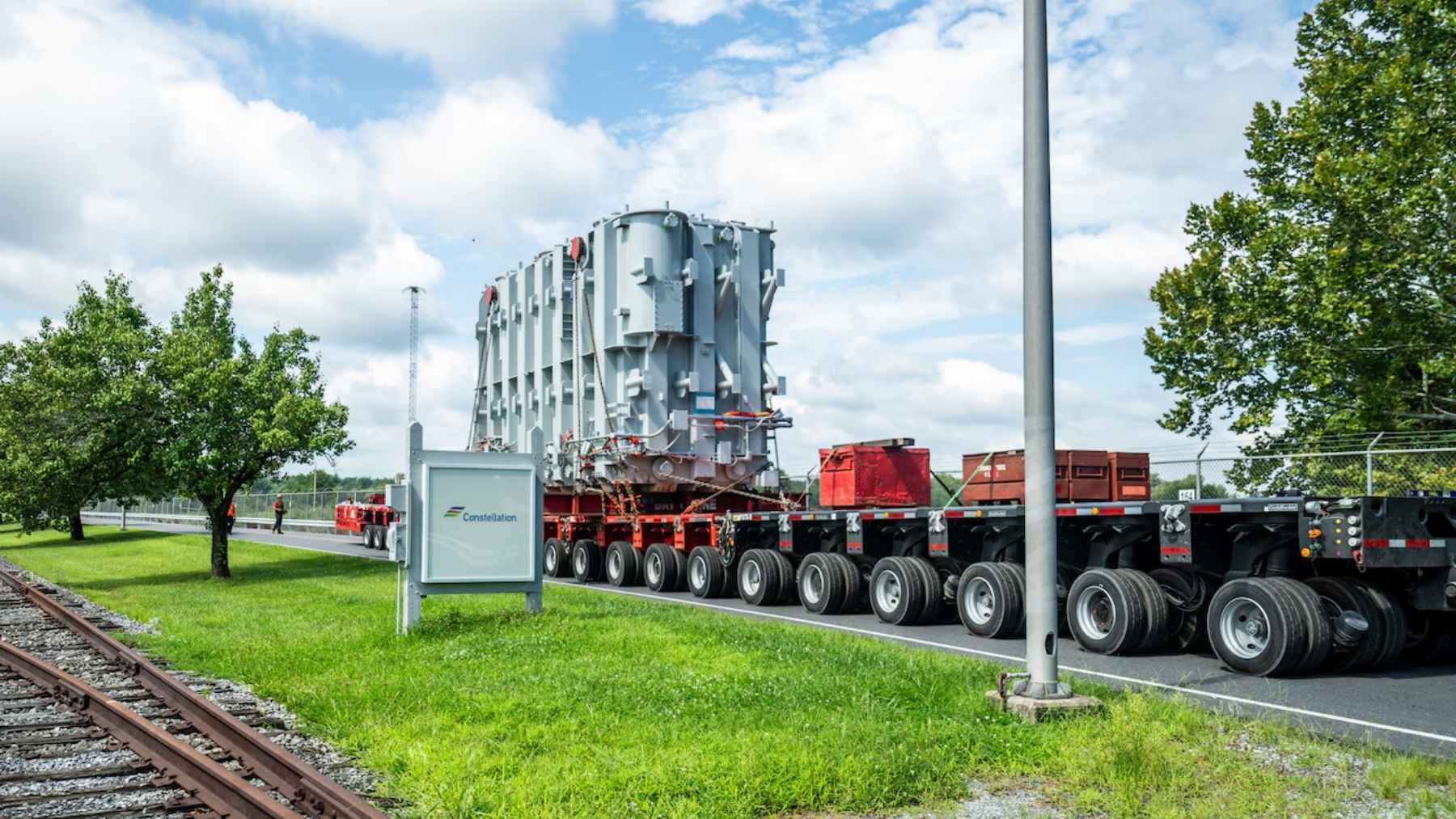
The blades measure 292 feet, and Fortescue says each one’s twice the length of a Boeing 737. Fifty-one of them are being hauled roughly 186 miles from Port Hedland to the site in daytime-only oversize convoys, partly over Fortescue’s own private roads, on a road trip RenewEconomy has been tracking since July. The same outlet puts the blade tip height at 909 feet once everything is up.
None of the tower tubes measures more than about 15 feet across, and that’s the width that fits standard road transport. Which means you can move a record-setting tower to a mining district with no rail link for turbine parts, one truckload at a time.
Why stack all of that in the middle of nowhere?
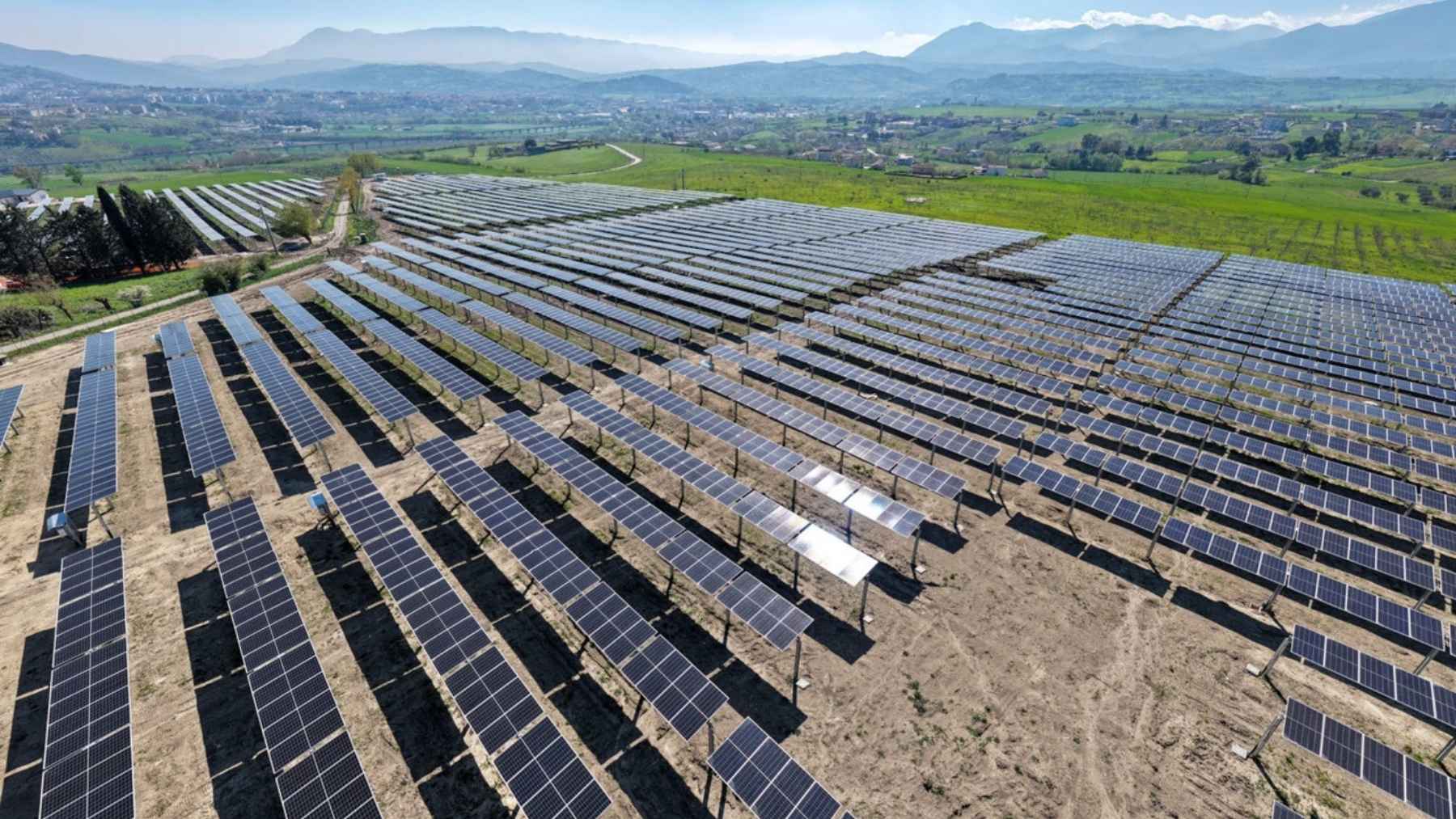
Because the customers are iron ore mines that mostly run on gas and diesel today, and because height’s how you make wind pay in a low-wind region. The Envision units are designed for exactly that kind of site, and at 617 feet the rotor reaches air that blows harder and steadier than anything close to the ground. Fortescue wants the wind covering nights and seasonal lulls while its Cloudbreak solar farm, where more than 300,000 panels are already installed, covers the days. We’ve looked at that wider Pilbara power network before.
Now, the honest status check. A complete prototype of this exact tower-and-turbine combination was built at an Envision test facility in Jiangsu, China, and Envision said in April it was up and running. The plan was to relocate that machine to the Pilbara in June. I can’t find anything published since that confirms the move actually happened, so I’ll file it under planned. What’s confirmed is the hardware in Australia: tower components at the port, foundations under construction, and the lifting rig waiting on its final commissioning at the site as of Nabrawind’s July 31 update.
Nabrawind has been working up to this for a while, too. Its first Nabralift prototype went up in Spain back in 2018 at 525 feet, and commercial versions followed in Morocco and France. At Nullagine the towers sit on piled foundations rather than the usual gravity slab, which the company says cuts the concrete and steel that has to be trucked in.
If the jacking sequence scales the way it did on the prototype, watching the first Australian tower ratchet itself up to 617 feet should be pretty good viewing. Fortescue’s Nullagine hardware has been rolling inland from Port Hedland since late July, and as of RenewEconomy’s September 24 report, turbine number one is about to go up.