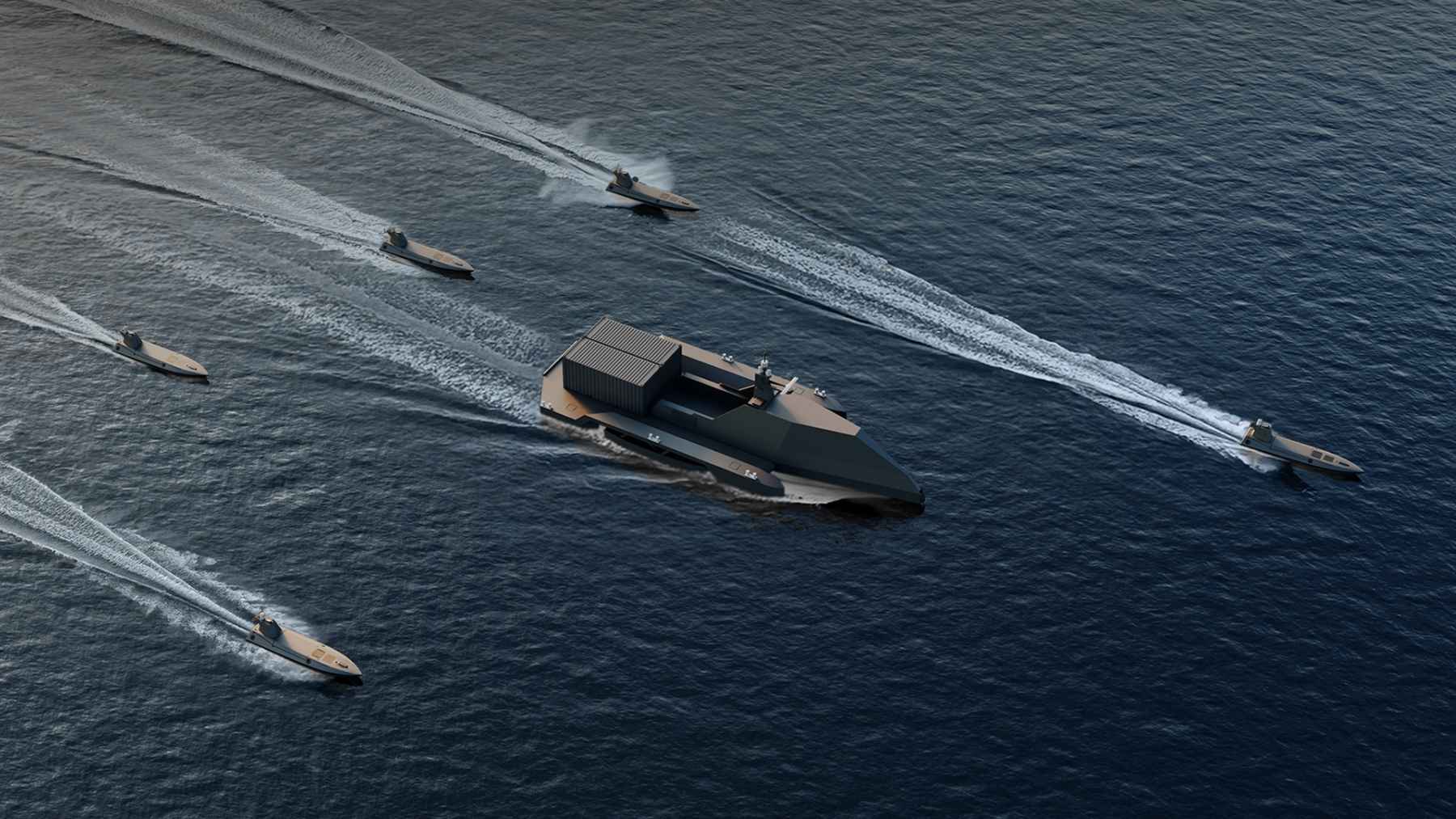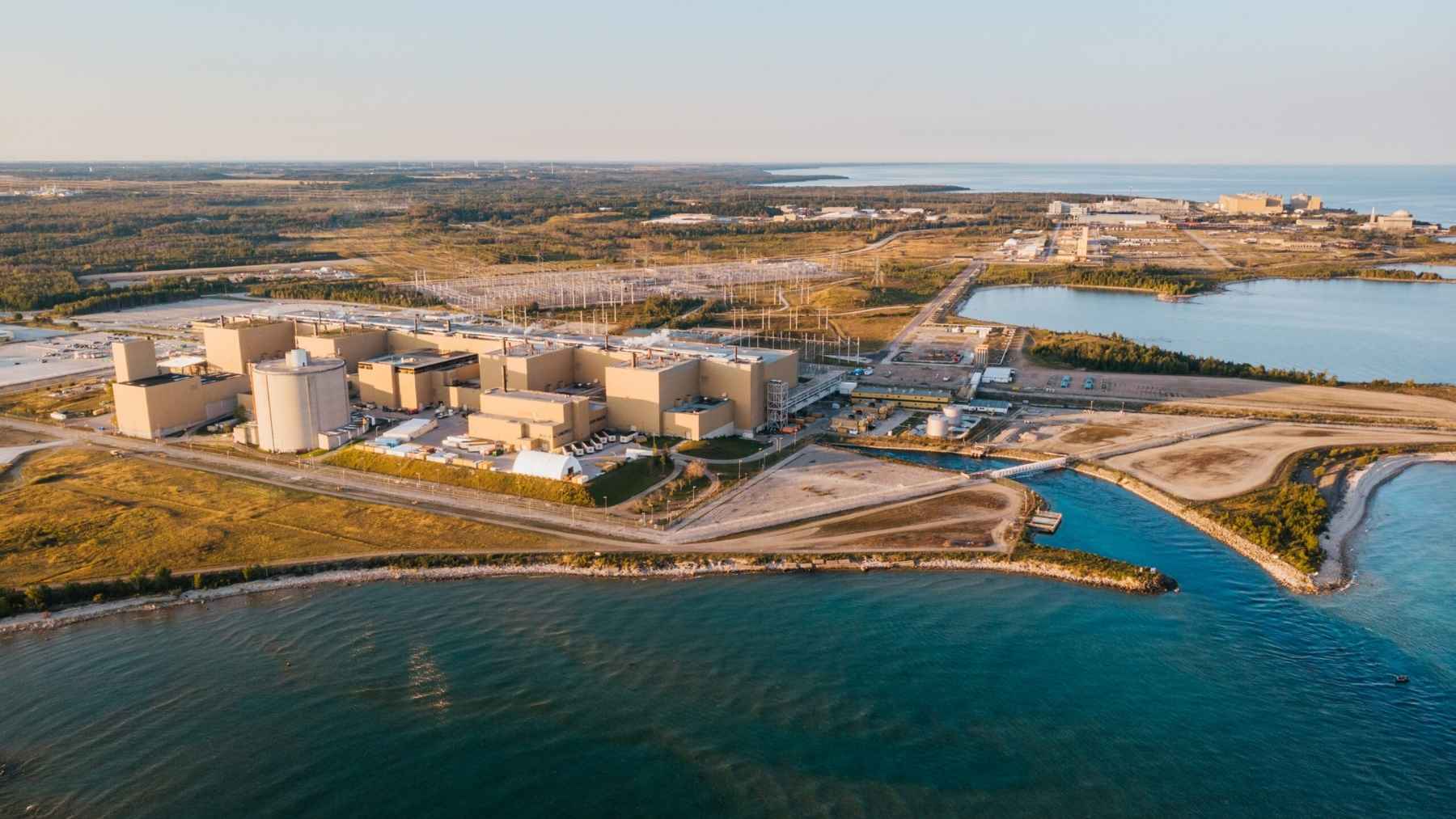

Hunting sea mines is one of those jobs everybody agrees somebody should do and nobody’s lining up to do in person. The traditional method involves a specialized minehunter ship, a sonar suite, and eventually a human diver swimming toward an object that might explode. Navies have spent the past few years handing as much of that work as they can to robots, from a 110-inch drone boat the Marines ran against mock minefields off a California beach to a German drone with a manta-ray wingspan that finds munitions buried in Baltic mud. The Spanish Navy’s entry in this club weighs 115 pounds and is shorter than the sailors who carry it.
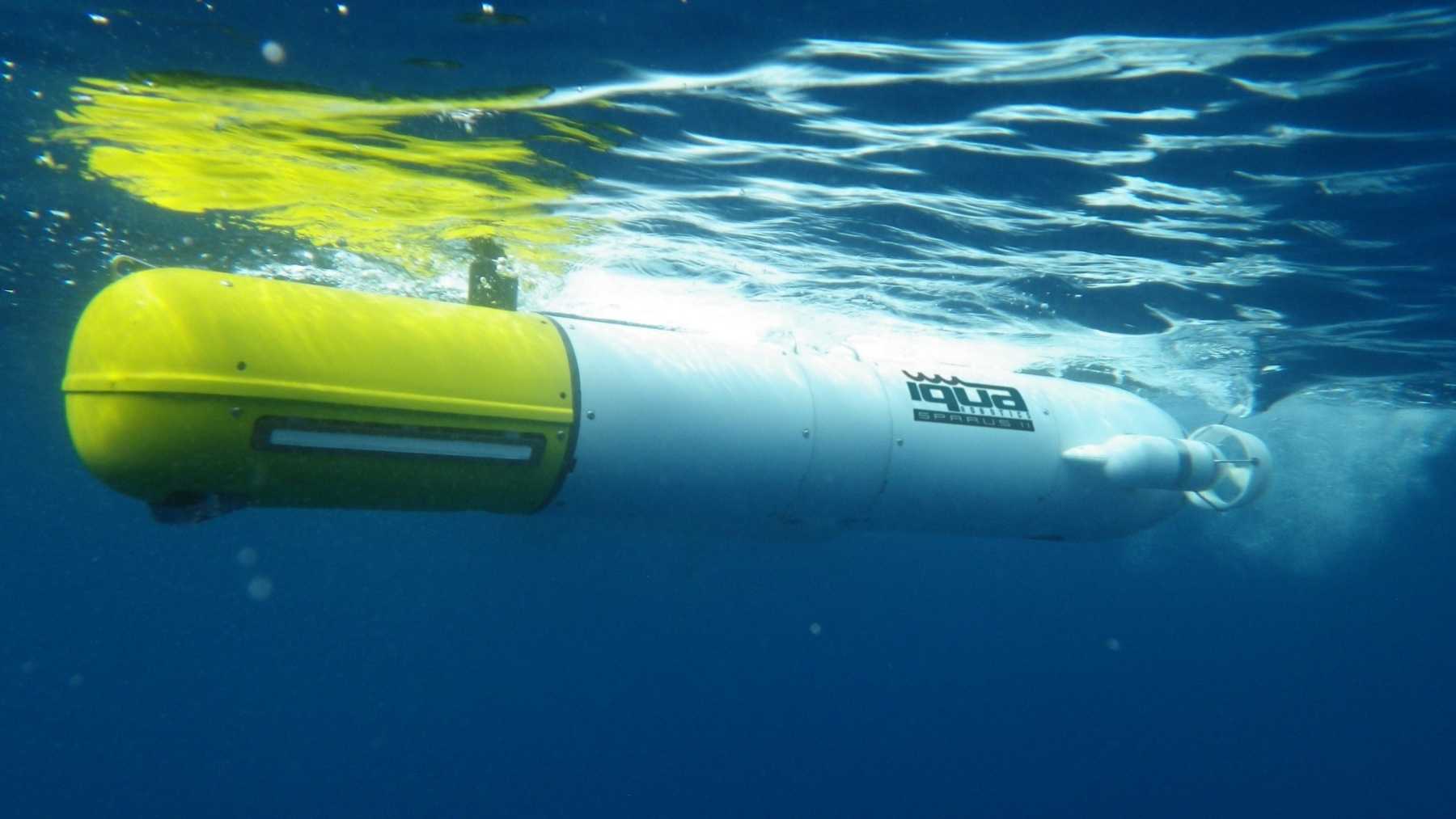
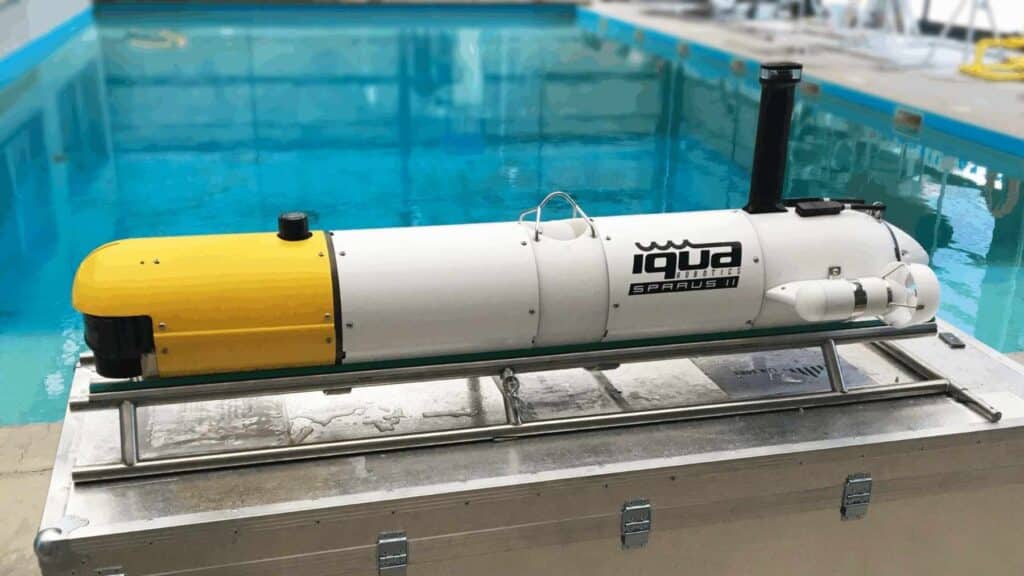
It’s called the Sparus II, and it comes from IQUA Robotics, a small company in Girona, Spain, that grew out of a university robotics lab. The Navy bought two of them back in 2023 and has been throwing them at exercises ever since. At first glance you’re looking at a torpedo in friendly colors: a white cylinder 5.2 feet long and 9 inches across, with a bright yellow nose. But this machine earns its keep by what it does when it finds something, because unlike most torpedo-shaped machines, it can pull over.
Why would a torpedo need to hover?
Most survey drones steer a bit like airplanes. They use fins, and fins only grip when water’s flowing over them, so the vehicle has to keep moving or it won’t answer the helm. That’s fine for mowing the lawn across a wide search box. It’s useless the moment your sonar pings something mine-shaped and you want a longer look.
The Sparus II skips fins entirely and runs three thrusters. Two sit at the tail and handle forward speed and steering; run them evenly and the drone goes straight, run one harder and it turns. The third points straight down through a tunnel in the hull, and that’s the one that lets the machine stop over a target, hold its position against the water, and climb or sink vertically. IQUA calls it partial hovering, and the company has shown the drone breaking off a survey line mid-mission to swing back and reinspect a contact its software flagged, then picking the search pattern back up. Spain’s Ministry of Defense frames the appeal more bluntly: the whole point is cutting the risk to human divers.
And that hovering trick matters because mine hunting is a two-step problem. Sonar hands you a list of contacts that could be mines and could just as easily be a shopping cart, an old tire or a rock with ambitions. Somebody still has to get eyes on each one. A drone that can park itself over a suspicious lump and stare at it with a camera takes over a job that, frankly, no human should be doing for a living.
About that yellow nose. It’s a 2.1-gallon compartment that floods with seawater on purpose, and it holds up to 15.4 pounds of sensors. That sounds like a design flaw until you remember sonar heads and camera ports have to touch the water anyway, so IQUA doesn’t bother sealing them in; everything allergic to salt water lives in the white hull section behind it. Swapping the gear in that wet bay is also how one hull covers different jobs, from mine searches to pipeline inspections.
So what’s the catch?
Speed, mostly. Top speed’s about 3.5 mph. Nobody’s chasing anything with it. It’s a patient sniffer: a 1.9-kWh lithium-ion pack (call it a couple of large e-bike batteries) gives it 8 to 10 hours in the water by IQUA’s numbers, up to 12 at slow survey speeds with a standard payload, and a recharge takes 6 hours. I’d argue patience beats horsepower for this particular job anyway.
The hull carries a depth rating of 656 feet, which IQUA certifies in a pressure chamber. What I can’t tell you is how deep the Navy’s two drones have actually worked; the missions Defensa describes are coastal, and that 656 feet is a ceiling on the spec sheet, not a logbook entry.
Two people, a hand trolley and a very small boat
IQUA also designed the whole operation around two people. They can put the drone in the water from pretty much any boat, either lifting it by hand with its own trolley or hooking a small crane to a fitting on its back. Compare that with the minehunter ships this kind of work normally rides on, which need a full crew, a pier and a budget line of their own, and you can see why the format appeals to a navy that wants more seabed coverage without more hulls.
The Spanish Navy’s been feeding the pair a steady diet of exercises since it took delivery. Its Mine Countermeasures Force has flown one against practice minefields in the annual ESP MINEX drills off the Balearic Islands, where the drone gets graded on finding dummy mines in spots too awkward or too expensive for a minehunter ship to work. This past April, during the Armada’s MARSEC-26 maritime security exercise, a Sparus II worked the seabed in the Gulf of Almeria in a scenario built around protecting underwater cables and pipelines, sharing the water with the minehunter Tajo, the salvage ship Neptuno, Navy divers and two remotely operated vehicles. The drones have also played a supporting role in a submarine rescue exercise called Cartago, and Spain tried the type out at the Repmus and Dynamic Messenger unmanned-systems exercises NATO runs in Portuguese waters before committing to a purchase.
Defensa also said, back in July 2025, that the two drones would plug into NATO’s command-and-control network for autonomous vehicles that September. I haven’t found any public follow-up confirming how that integration went, so it’s best treated as announced rather than demonstrated.
The Navy’s drones aren’t the only Sparus in the water
Here’s a detail I enjoy: the University of the Balearic Islands runs its own Sparus II, a newer unit named Orat, which is Mallorcan for sea bream. Orat carries a mapping payload (a multibeam echosounder, a sidescan sonar and a stereo camera system IQUA built for it) and swam in this year’s mine warfare exercise alongside the military hardware, pointing all three sensors at the same targets to test how much sharper identification gets when the maps overlap. That sensor stack belongs to the university’s drone, though; the Navy hasn’t detailed what its own two carry in the nose. Small underwater drones hunting mines and each other is turning into a genuine category, by the way, and the US is playing too: the American Navy recently spent two days watching pods of 6.5-pound drones hunt other underwater drones in a harbor.
For a 115-pound machine launched off a rubber boat, the sonar and camera maps the Sparus II helps produce hold up pretty well, and you don’t have to take my word for it: IQUA Robotics published its multimodal mapping results from ESP MINEX-26, the mine warfare exercise that opened on April 27 in the Balearics, on June 8, 2026.