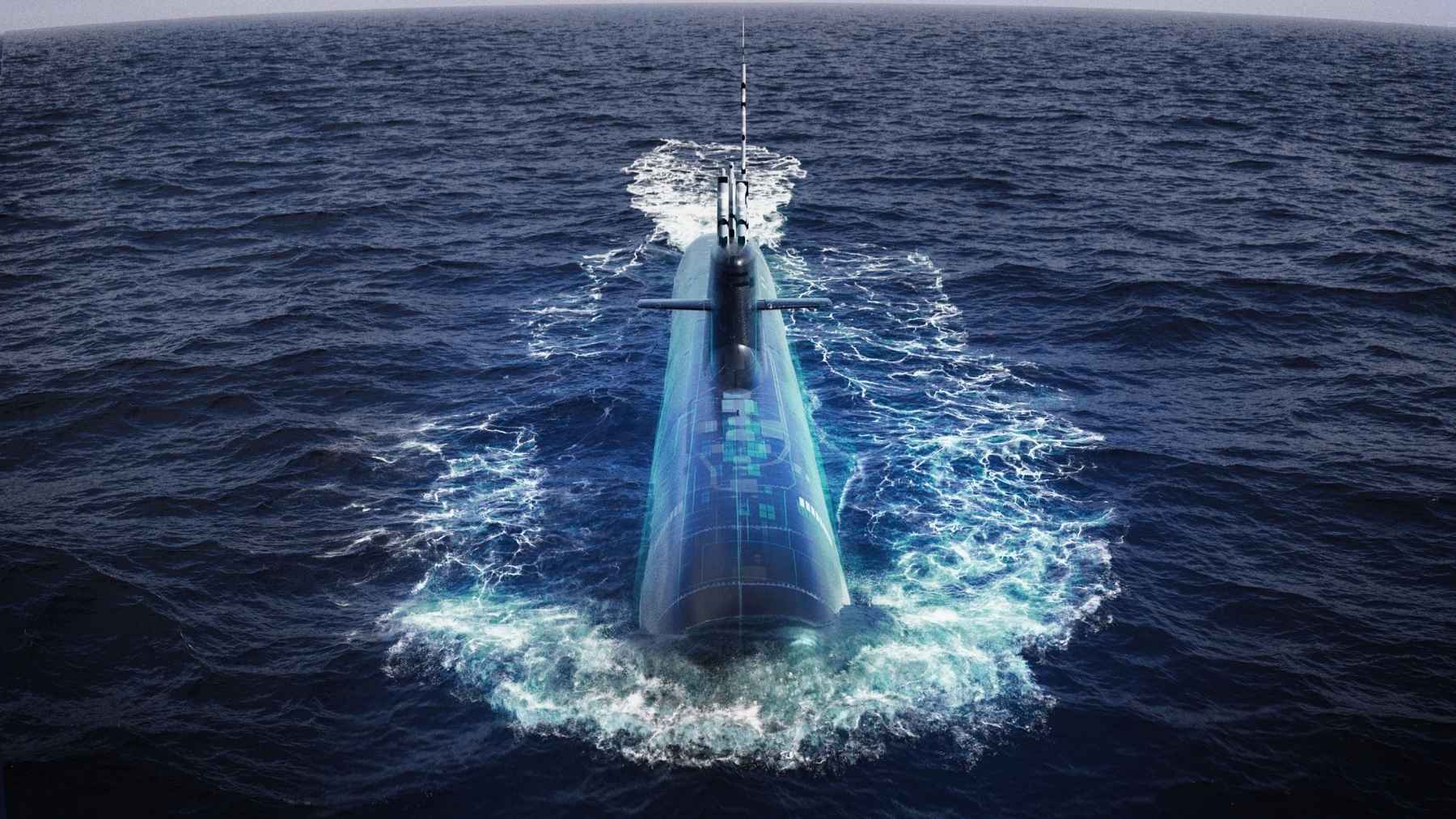

Diesel-electric submarines have one obvious weakness: they have to come up for air. Not the crew — the engines. To recharge their batteries, conventional boats need to snorkel near the surface, which is exactly when satellites, patrol planes and rival sonar tend to spot them. That’s the whole reason nuclear submarines exist, and for decades it’s been the trade most navies just had to live with.
Spain decided it didn’t want to live with it, and on June 16 the workaround stopped being a slide in a presentation. At Navantia’s Cartagena shipyard, engineers loaded the first batch of bioethanol and liquid oxygen into the propulsion section of the S-83 Cosme García and started making hydrogen, feeding a fuel cell that’s meant to keep one of Spain’s new S-80 Plus submarines underwater for weeks without ever surfacing. The bioethanol engine, in other words, finally ran.
There’s a catch, and it’s a good one: the boat that’s actually been out on NATO patrol, the S-81 Isaac Peral, isn’t the one getting it first. That honor goes to the S-83. So the system everyone’s been selling as Spain’s three-weeks-underwater superpower just came alive on a test bench, inside a submarine that hasn’t gone to sea yet, while the famous one waits until the end of the decade.
What Navantia just switched on at Cartagena
Here’s what actually happened in mid-June. The S-83’s air-independent propulsion (AIP) module, a 12-meter, roughly 400-ton chunk of submarine, is sitting in a purpose-built test hall at Cartagena that Navantia calls IPS3. According to Navantia, testing kicked off with the first loading of liquid oxygen and bioethanol, from which the system produces hydrogen to feed its fuel cell and drive the boat while submerged.
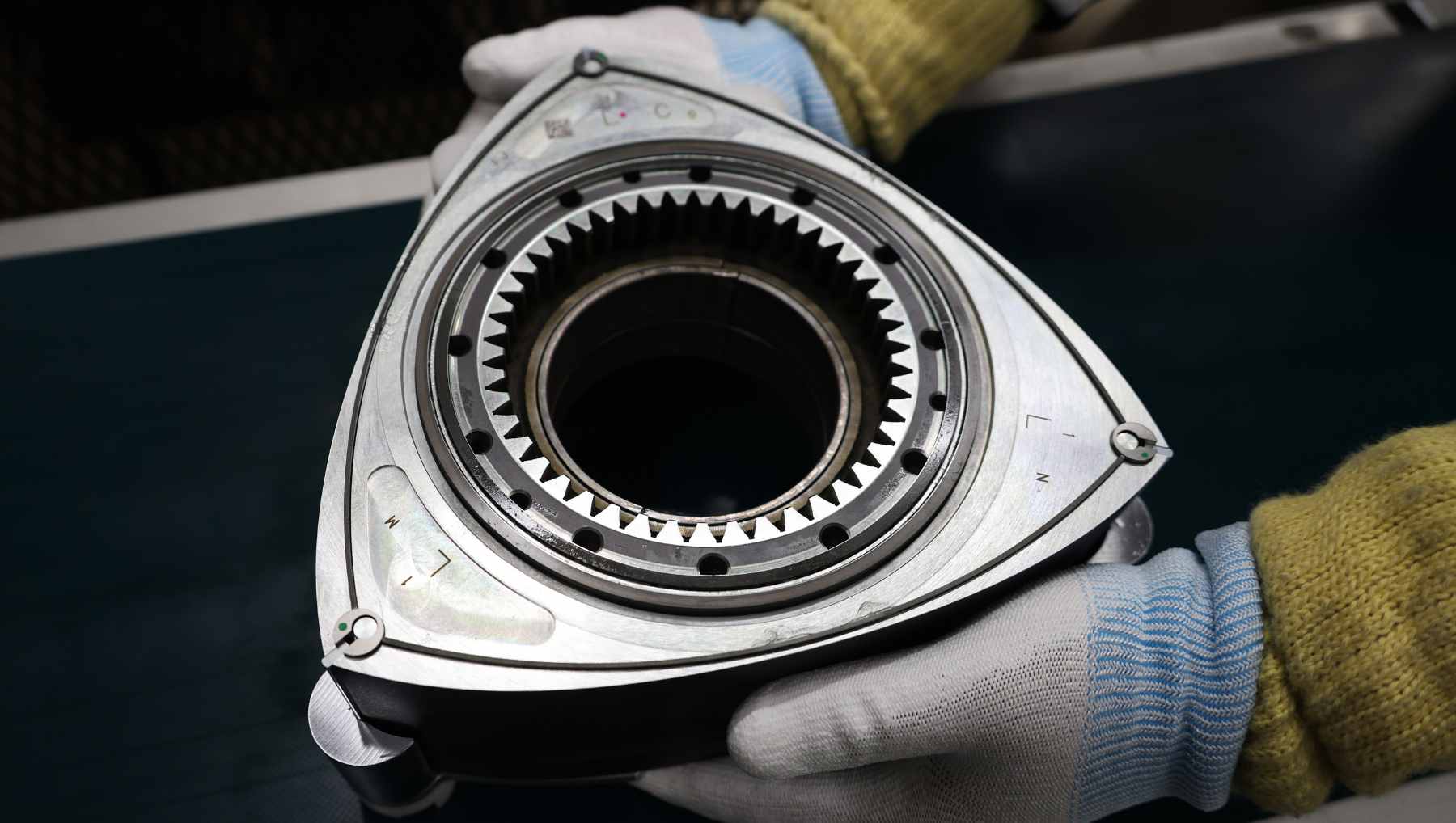
The test rig is the unusual part. It’s a one-off bench that can simulate the bow and the stern of the submarine at once, plus real operating conditions like diving depth and forward speed. The point is to wring out the whole propulsion section, including live power-generation runs, before it gets welded to the rest of the S-83’s pressure hull. The AIP hardware was physically installed in that section back in the third quarter of 2024, so this is the moment it goes from bolted in to switched on.
It matters because up to now BEST has been a spec sheet and a land-based demonstration. Watching it crack bioethanol into hydrogen inside a real hull section, under simulated depth, is the first time the headline capability has run on the actual boat it’s built to power. Navantia, never shy, calls it the most advanced AIP on the market, and points out the S-80s will be the only roughly 3,000-ton submarines in the world carrying the system.
BEST: the bioethanol trick that replaces a snorkel
The system Navantia calls BEST, short for Bio-Ethanol Stealth Technology, is the headline piece of engineering. It’s a fuel cell, but with an unusual front end. Instead of carrying compressed hydrogen on board like older German and Swedish AIP designs, the S-80 Plus makes its own hydrogen, on demand, from bioethanol.
The way Navantia describes it, the boat carries a bioethanol reformer that cracks the ethanol into hydrogen, which then reacts with oxygen in a fuel cell to generate electricity. The advantage over the competition is logistics, and safety. Other air-independent boats need tanks of compressed hydrogen, which are heavy, finicky and, depending on who you ask, slightly terrifying. Carrying ethanol in ordinary tanks and reforming it for hydrogen as you go is a much friendlier piece of plumbing.
What you get for all that chemistry is silent endurance. Navantia says BEST extends submerged endurance to up to three weeks, which sharply cuts how often the boat has to betray its position by snorkeling. Three weeks of crawling along at a few knots without ever raising a mast is, in practice, invisible to anyone who isn’t already sitting on top of you. It’s the same logic now driving a whole wave of air-independent fuel-cell machines, like the hydrogen-powered submarine drones coming out of Germany, except wrapped around a 3,000-ton crewed warship.
The boat it’s going into
The S-80 Plus is big for a non-nuclear submarine. The class runs about 80 meters (roughly 265 feet) long, around 7 meters across, with a submerged displacement close to 3,000 metric tons. That’s about as wide as a two-lane road and heavy enough to sit near the top of the non-nuclear class worldwide.
Propulsion is conventional diesel-electric, which is normally where the comparison to nuclear boats falls apart. The class runs three 1,200-kilowatt diesel generators, good for more than 19 knots submerged or about 12 knots on the surface, and can dive past 300 meters (more than 985 feet). Those generators charge the batteries that drive the motors when the boat is under. Once the batteries run low, you snorkel, and that’s the noisy, visible moment a hunter wants you to have. It’s the same tradeoff shaping even uncrewed designs: China’s submarine-sized underwater drones are believed to split their range right along that line, running diesels at snorkel depth for most of it and saving the battery for the silent stretch. BEST is what lets the S-80 skip most of that.
Weapons-wise, the boat is built around six 533mm torpedo tubes feeding heavyweight DM2A4 torpedoes, Sub-Harpoon anti-ship missiles and naval mines. Navantia also makes a point that’s genuinely unusual for a conventional boat: it says the class is the only one of its kind in NATO and the EU designed to fire tactical land-attack missiles, a capability built in from the start. The combat system was developed by Navantia Sistemas with the US company Lockheed Martin, which standardizes sonar, fire control and data fusion with allied units, so when the boat talks to a US Virginia-class submarine or a Norwegian frigate, everyone is looking at compatible data. That interoperability is the whole reason a diesel boat from Cartagena slots cleanly into a NATO task group hunting alongside the crewless submarine-hunting drones navies are now fielding. It runs with a core crew of 32 plus 8 berths for embarked special-operations personnel, though the Navy put 55 aboard for its latest NATO run.
The catch: the famous boat doesn’t have it yet
Here’s where the marketing collides with the schedule. The S-81 Isaac Peral, the boat that’s been making headlines and patrolling with NATO, is currently a straight diesel-electric submarine. Its bioethanol fuel cell isn’t installed.
The AIP went into the S-83 first, on purpose. It’s the third of the four hulls, and the first built to carry BEST from the factory. The lead boat and the second, the Narciso Monturiol (S-82), are slated to get the system later, during scheduled overhauls. For the Isaac Peral, that retrofit is reported for 2029. Until then, the boat that’s the public face of Spain’s three-weeks-underwater pitch does it the old way, surfacing or snorkeling to charge its batteries like any other diesel submarine.
That doesn’t make the program a bust. It means the headline capability is real and now running, just not yet on the boat that earned the headlines.
From near-disaster to NATO patrol
It’s worth remembering the S-80 program nearly didn’t survive its own design phase. Construction of four submarines was authorized in 2003, with deliveries expected around 2015. The Isaac Peral was laid down in 2007 at Cartagena, and after more than five years of work, the design turned out to be badly overweight. The fix involved bringing in US submarine builder General Dynamics Electric Boat in 2013 for technical help, and stretching the hull, which is a big part of why it ended up so long for a conventional boat. The blunt version of the story is that the original design was so overweight it would have sunk and not come back up.
Whatever the exact margin, the redesign worked. The boat was launched in May 2021 and handed over to the Spanish Navy on November 30, 2023, with Defense Minister Margarita Robles presiding. Its first NATO deployment came under Operation Sea Guardian in the autumn of 2025, and its second, Operation Noble Shield, ran from February into March 2026 before it returned to Cartagena. The Spanish Navy called Noble Shield the boat’s second period of integration into a NATO force.
So what does Spain actually have here?
Right now, a very large, very capable diesel-electric submarine wired into NATO’s combat-data ecosystem, with a home-grown combat system, US sonar lineage, and a fuel cell that, as of mid-June, is finally running on the test bench inside its sister ship. The three-weeks-submerged pitch is no longer purely theoretical, but on this specific hull it’s still a 2029 capability, not a 2026 one.
The bigger thing Spain bought with the S-80 program isn’t really any single boat. It’s the ability to design, build and now fuel one without buying a license from France, Germany or anyone else, a club with maybe half a dozen members worldwide. Navantia is already shopping the design abroad, to navies including the Philippines, Poland and Canada. That capability is the part that won’t be obsolete when the next class arrives.