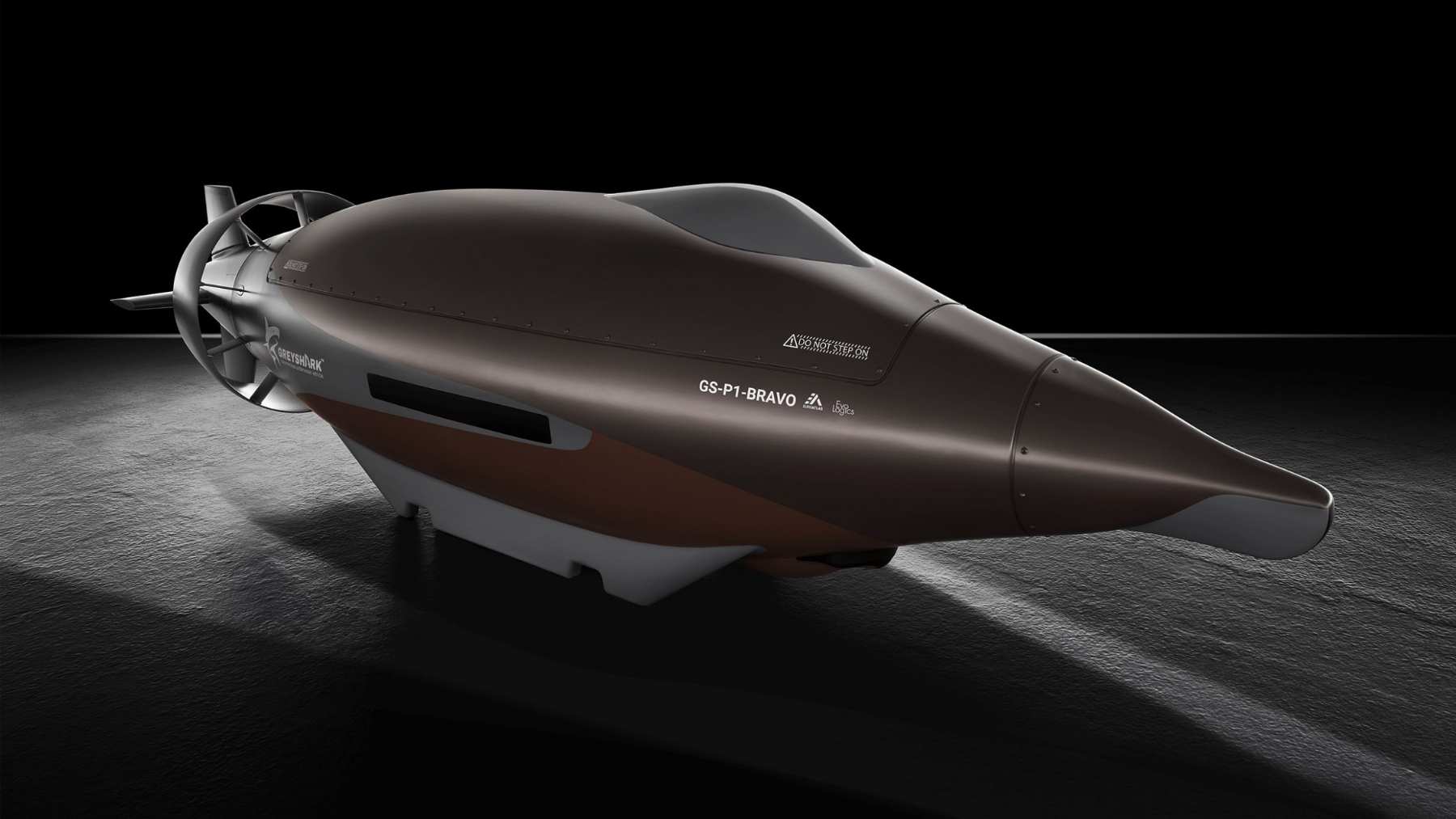

The U.S. Navy figures it’ll take six months to clear the mines Iran laid in the Strait of Hormuz back in March. A German defense consortium just unveiled a hydrogen-powered submarine drone that, by its own engineers’ math, could do the entire job in 24 hours, with one person running it from a desk.
It’s called the Greyshark, and the long-endurance Foxtrot variant just had its specs detailed by Interesting Engineering on May 13. Sea trials are set for August. The hydrogen fuel cell version is rated for 16 weeks underwater at four knots, 10,700 nautical miles without ever surfacing, with 17 sensors that shoot the seabed at 1.6 inches per pixel. Run six of them as a swarm under a single operator and you can map the entire Strait of Hormuz in less than a day.
“Even the Iranian authorities don’t know where the mines are, so clearing the Strait with manned assets would be extremely difficult, expensive, and dangerous,” Verineia Codrean, Euroatlas’s head of strategy and special projects, told the publication. “No manned asset would be able to do it that fast, and autonomy also makes the mission much safer.”
The Greyshark is the work of four German companies. Euroatlas in Bremen handles the power system, the propulsion, and the structural design. EvoLogics in Berlin builds the AI stack and the dolphin-inspired acoustic communication network that lets the drones talk to each other underwater. Fassmer, a 175-year-old German shipbuilder, makes the carbon-composite hull and will handle final assembly. Rheinmetall, the Düsseldorf-headquartered defence giant, came on board last year for system integration and to push the platform in Southeast Asia, where it already has a sales footprint. Production is targeted at 150 units per year by the end of 2026, scalable to 500.
Three months on, the strait is still waiting
This is not a story that aged out. As of early June, more than three months into the crisis, the mines are still in the water and the strait still hasn’t returned to normal traffic. A handful of LNG and crude tankers have slipped through during fragile ceasefire talks, but insurers won’t underwrite routine transit until someone can prove the mine, drone, and missile risk has actually dropped. On June 2, Secretary of State Marco Rubio told the Senate that Iran had mined “large segments” of the waterway, and no one will say with confidence how many devices are down there.
The economics are why everyone is watching. Hormuz normally carries around a fifth of the world’s oil and liquefied natural gas, and at the height of the standoff something like 2,000 ships were stranded in the Gulf. Greek owners have started repositioning tankers to within a few days’ sail of the Persian Gulf, betting on a reopening and the sky-high rates that would follow. The bottleneck on all of it is the same six-month, ship-by-ship demining job the U.S. Navy described back in April. That is the exact problem a swarm of Greysharks is built to compress into a day, which is why its August sea trials suddenly carry a lot more weight than a typical defense-contractor milestone.
None of this would matter much to an American auto journalist if hydrogen as a passenger-car fuel hadn’t already been written off two or three times.
This is what hydrogen actually does well
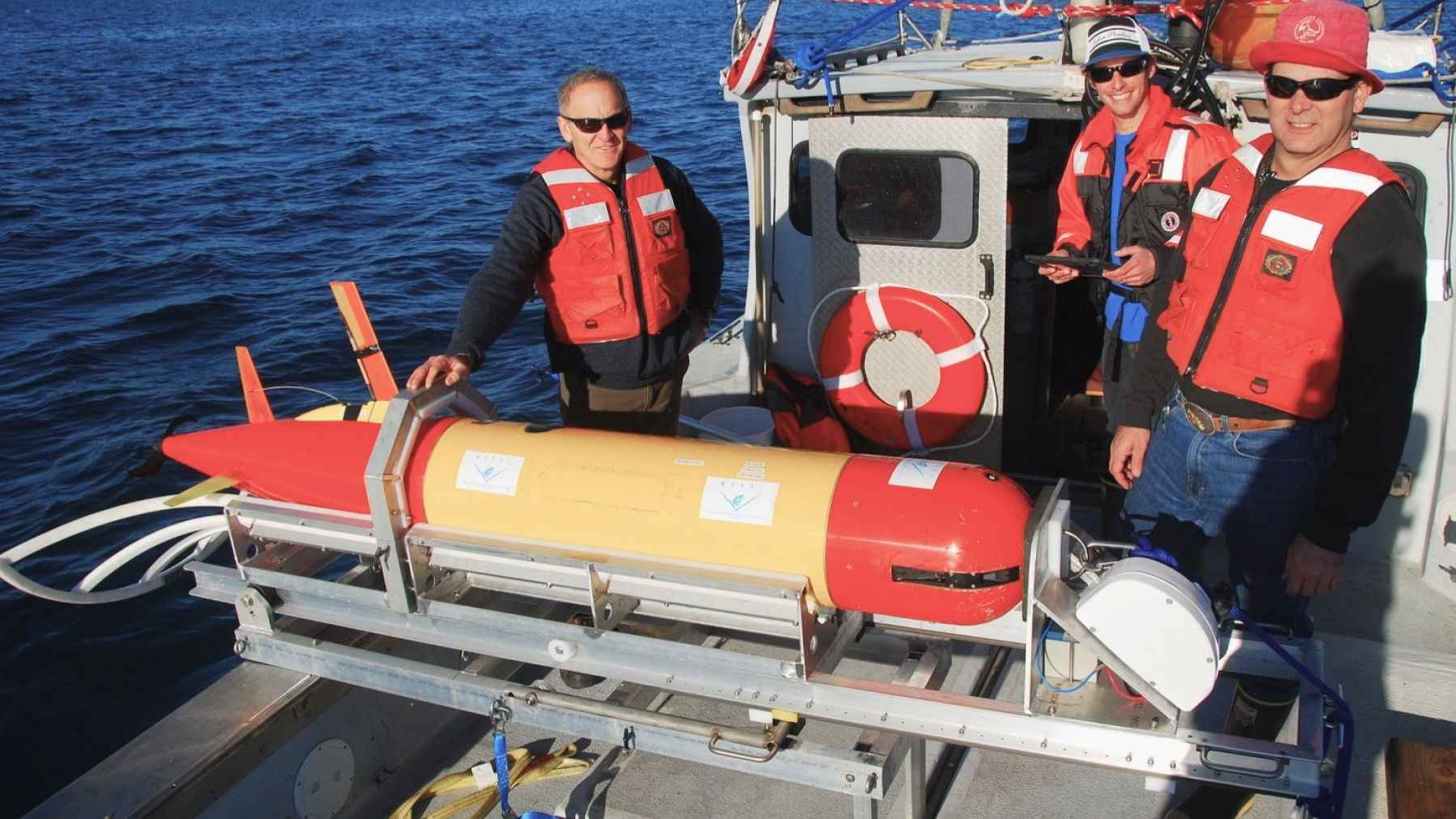
Three weeks before the Greyshark specs were published, on April 21, a Canadian company called Cellula Robotics announced that its own hydrogen-powered submarine drone, the Envoy, had finished a fully submerged mission of 2,023 kilometers. That’s 1,257 miles to anyone north of the Rio Grande. The mission lasted 385 hours and included more than 4,000 turns and course changes, which matters because fuel cells get efficient on the straightaway and burn through the spec sheet when you’re constantly maneuvering. The 1,257 miles is the realistic working number, not the marketing number.
The fuel cells in question are built by Infinity Fuel Cell and Hydrogen, Inc., in Windsor, Connecticut. They’ve been quietly building proton exchange membrane fuel cells for NASA and U.S. defense contractors for years. The Envoy is running their Mystic 2000 unit. The same family of fuel cell technology has been keeping satellites and military equipment alive in extreme environments for the better part of a decade.
This is the part I keep coming back to. Toyota sold 210 Mirais in America in 2025, down 57.8 percent from 499 the year before. The company is currently a defendant in a $5.7 billion California class-action over the fact that hydrogen filling stations do not exist in any quantity a normal person would call useful. Shell pulled out of the U.S. hydrogen retail business in 2024. Filling a Mirai in California now costs about $36 per kilogram, which works out to roughly fifty cents per mile of driving. A Dodge Viper with the 8.0-liter V10, at California premium gas prices, is cheaper to fuel. I am not making this up.
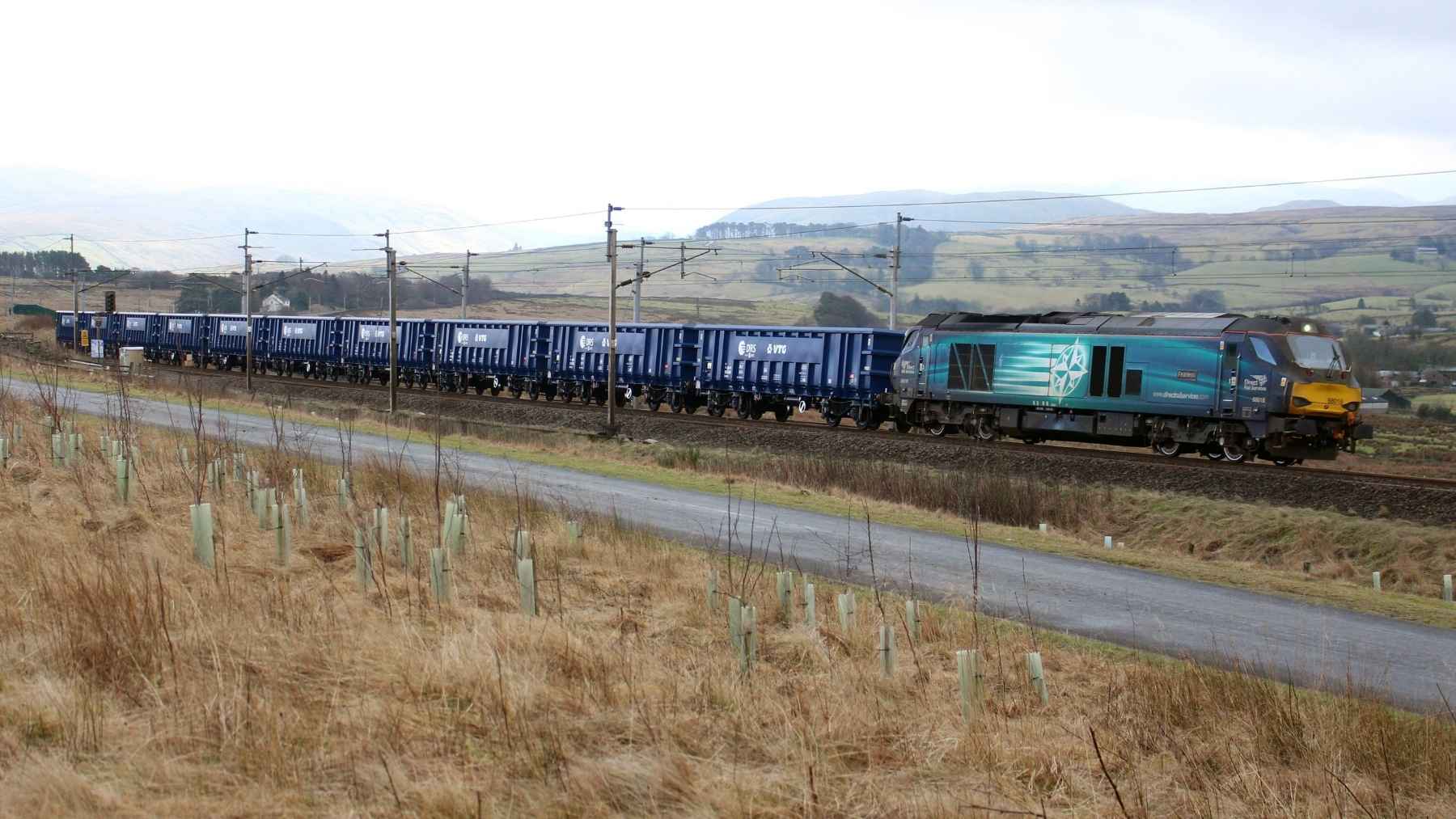
Read that sequence carefully and you get a fairly clear story. Hydrogen as a passenger-car fuel in the United States is currently a punchline. Hydrogen as a fuel for autonomous undersea drones, for industrial generators, for the locomotive the British just retrofitted with a Toyota fuel cell, and now for a German production line aiming at 500 drones a year, is a working product. The molecule is the same. The fuel cell chemistry is the same. The difference is everything around the tank.
A submarine drone owner does not need a hydrogen station every fifty miles on the interstate. It needs one tank, filled once, before the mission starts. The Greyshark goes out for four months, does its job, and comes home. A Mirai driver in California needs the nearest station to be open today, every day, for the next ten years, on a route they can actually drive. The fuel cell can do 10,700 nautical miles in saltwater. It cannot solve “the nearest pump is forty-seven miles away and may or may not be working when I get there.”
The honest version of the hydrogen story right now goes like this. The molecule works. The fuel cell works. The cars don’t sell because the infrastructure was never built and the companies that could have built it walked away. Honda discontinued the Clarity in 2021. Hyundai has quietly throttled the Nexo. Toyota has the Mirai stranded in California with a $15,000 fuel card thrown in to soften the blow. The passenger-car hydrogen bet, in the U.S., is essentially lost.
What has not been lost — and what the Greyshark and the Envoy and the Mystic 2000 are quietly demonstrating to anyone paying attention — is everything else. Long-haul trucking. Heavy industrial power. Maritime propulsion. Locomotives. And, apparently, autonomous mine clearance under disputed water that the U.S. Navy says will take six months to handle the old way.
If you own a Mirai today, none of this fixes the station nearest to your house. If you’re thinking about a hydrogen-powered Class 8 truck for long-haul freight, or a fuel cell for a remote industrial site, or a drone that needs to stay underwater for four months without coming up for air, the news from Bremen and Burnaby and Windsor, Connecticut, is genuinely useful. The technology has just been tested in the most uncompromising environment it will ever see. It worked.
The Mirai is still on sale, by the way. Toyota will give you $15,000 in hydrogen credits if you buy a 2026, and rent you a regular car for twenty-one days a year so you can leave California with it. That’s also true.
 @michaelgough ROOKIE5 months ago