
You’ve probably been blinded by a windshield at some point. Low sun, a parked car angled just wrong, and for a second or two you can’t see the road in front of you. Now put that glass on the ground, multiply it by 230,000, and lay it out directly under the final approach to one of the busiest runways in Europe.
That’s roughly what happened next to Amsterdam’s Schiphol Airport, and it took a court case, three government bodies and well over a year to sort out. The fix, in the end, wasn’t a film or a fence. It was pulling out every single panel and starting over with different glass.
So what exactly were the pilots seeing?
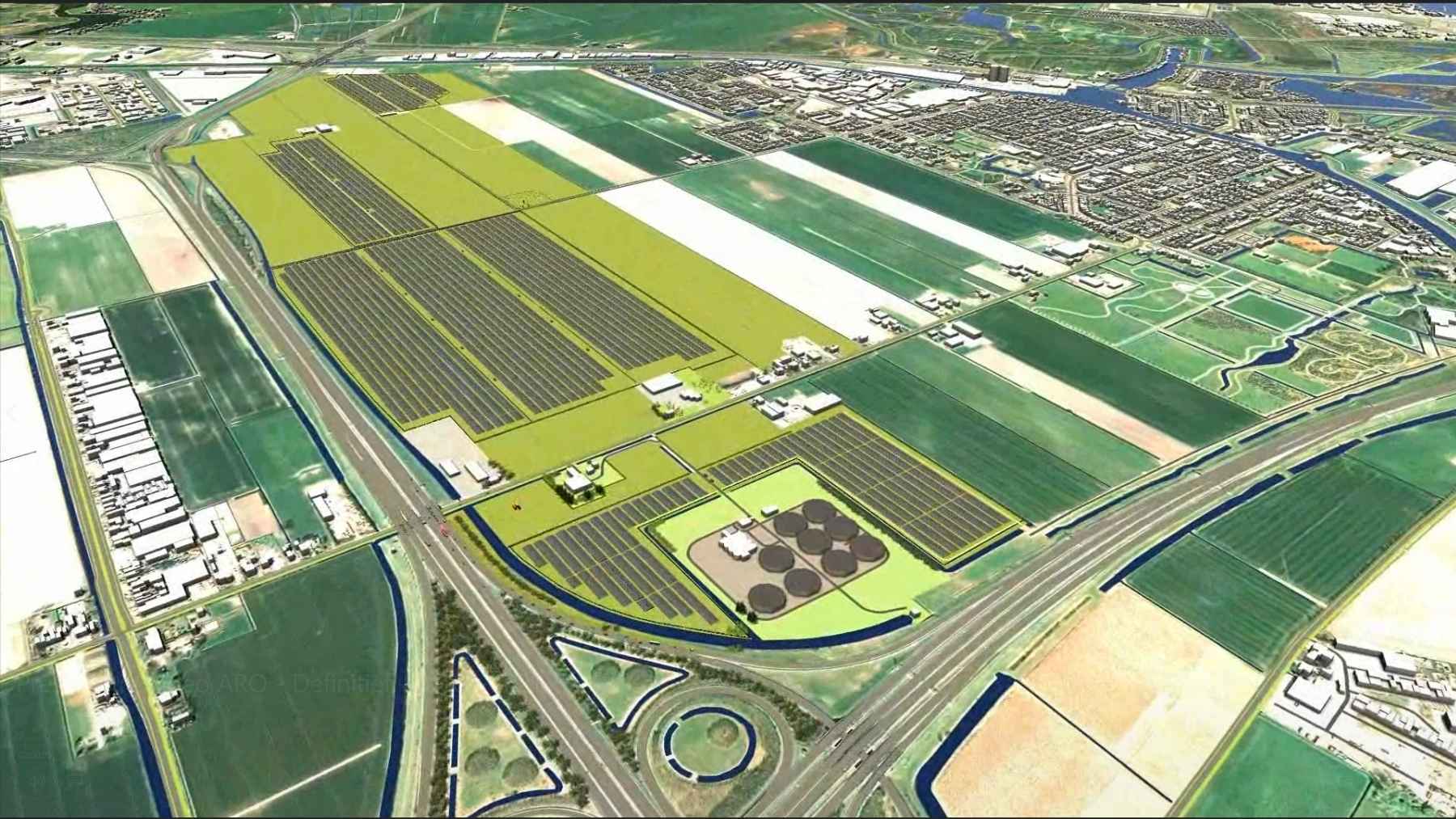
The farm’s called De Groene Energie Corridor, and it runs along the A9 highway near the village of Zwanenburg on about 247 acres (100 hectares) of former farmland. It sits under the approach paths to two runways, the Polderbaan and the Zwanenburgbaan. Pilots started filing reports almost as soon as the panels went in, and in early 2025 Schiphol, Dutch air traffic control, KLM and easyJet made a joint call: no landings on the Polderbaan between 10 a.m. and noon whenever the weather was sunny, starting March 4, 2025.
Two hours doesn’t sound like much. But the Polderbaan is Schiphol’s preferred runway for noise reasons, so every landing it couldn’t take got pushed onto runways that fly over more houses. According to a spokesperson quoted by Dutch news site Nu.nl at the time, somewhere between 55 and 65 aircraft normally land there in that two-hour window.
The problem’s a fairly simple one once you think about it. A standard solar panel has a smooth glass front, and smooth glass reflects light the way a mirror does, in one tight beam at one specific angle. For most of the year the sun never lines up with the panels and the cockpit at the same time. For a few weeks in late winter and again from late August into the fall, it does, and a pilot a couple of miles out on final suddenly has a very bright field in exactly the spot they need to be looking.
The measure was lifted after a few weeks because the sun moved on. Everybody involved knew it’d be back.
Schiphol went to court, and won about a third
Talks between the airport, the farm’s owner, the municipality of Haarlemmermeer and the Dutch infrastructure ministry went nowhere fast, so Schiphol sued. On July 16, 2025, a judge in the Noord-Holland district court ordered the owner to remove just over 78,000 panels from the two fields closest to the runway, half by September 1 and the other half by October 15.
Stick with the court’s reasoning for a second, because it should make any developer near an airport a little nervous. The farm had a valid permit. It’d been studied by the Dutch aerospace center, NLR, against the FAA’s glare guidance, because the Netherlands didn’t have a glare standard of its own. And the judge ruled that having a permit didn’t let the owner off the hook: by creating a serious hazard to flight safety and then not fixing it, the company was acting unlawfully toward Schiphol regardless of what the paperwork said.
Schiphol wanted all 230,000 gone. The judge said the other two fields weren’t proven to be the main source of the glare and left them standing.
Did that settle it? Not really. By late August the sun was heading back toward the bad angle, and the airport had to restrict afternoon landings on the Zwanenburgbaan from August 28 through September 29, 2025, this time diverting traffic to the Schiphol-Oostbaan, the airport’s shortest runway. That’s when the four parties finally cut a deal: take everything down, make it non-reflective, put it back, with the whole job due by September 2026.
Why not just put a film on them?
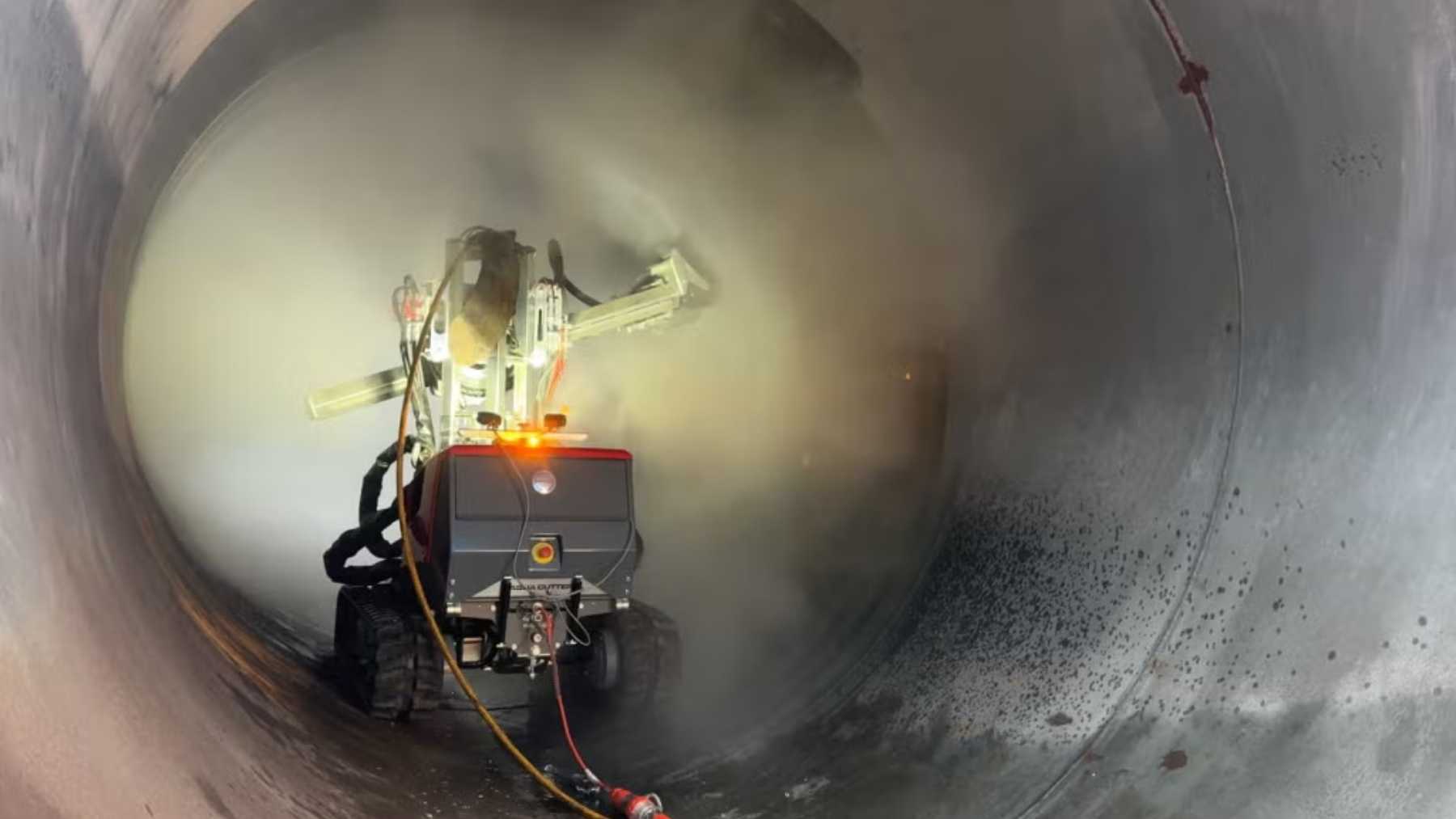
That was the original plan, apparently. Anti-reflective film exists, and a German company had been pitching one for exactly this situation. But by the time the panels were off the racks at the end of 2025, the owner says it’d done the math and decided new panels were both cheaper and more practical than peeling, coating and re-racking 230,000 old ones.
Here’s the detail I’d want to know if I’d been paying taxes in Haarlemmermeer. Dutch broadcaster NH reported that the original permit specified panels with “deep textured” glass, and that’s the stuff that scatters light instead of beaming it. The developer told NH those panels weren’t available when it came time to build, so it chose an alternative type. That alternative’s what ended up blinding people. The municipality has said it followed the rules in granting the permit, and the parties agreed to treat the whole thing as an unforeseen situation rather than anyone’s fault, which is frankly a pretty generous way to describe it.
The replacements come from Longi, the Chinese manufacturer, and the owner says they were developed specifically for solar farms near airports. Longi’s anti-glare line pairs a chemically etched, textured glass surface with matte black back-contact cells, so there’s no shiny metal busbar on the front and no smooth surface to make a clean reflection. The company’s own figures claim total reflection under 1 percent on the earlier version of that module. Several independent test labs signed off on the Schiphol batch, according to the owner’s March 9, 2026 announcement, which also said the farm expected to be fully back online by the end of June.
As far as I can tell, nobody’s publicly confirmed that it hit that date. The owner’s news page hasn’t been updated since March, and the government’s own deadline was always end of September. I’d assume the panels are in, but I can’t show you a source that says the farm is producing again.
Who paid for all this
The bill for the fix came to a little over €14 million (that’s roughly $16 million), and everybody chipped in. The national government sent €6.84 million to the municipality, the municipality put in close to €7 million of its own, Schiphol paid a share, and the owner covered the biggest piece. The owner had reportedly put about €90 million into building the farm in the first place.
And the old panels? They were sold. NH reports they ended up in Africa and Eastern Europe, which I’ll admit I find slightly funny, because they were brand new and there wasn’t a thing wrong with them. The catch, according to the owner’s spokesperson, is that unbolting a panel voids its warranty, so 230,000 nearly new modules with no warranty went to whoever would take them. The spokesperson said he didn’t know what they sold for.
If you’ve been following the German wind turbine that got taken apart because a village couldn’t sleep, this is the solar version of the same story: a machine that was legal, permitted and working, and still had to come down because of something nobody measured properly beforehand. The difference is that the solar farm gets to go back up.
You might wonder whether the whole mess could have been avoided with better rules. The Dutch government apparently thinks so. In July 2026 the infrastructure ministry announced a national glare standard for solar farms near runways, built on a “prudence criterion” that NLR came up with during the Schiphol fight and that’s stricter than the FAA guidance the farm was originally checked against. The ministry’s temporary framework is dated April 20, 2026, covers 2026 through 2028, and was due to be published by the end of September, with EASA expected to follow with Europe-wide glare rules after 2029.