
When people say solar power, they mean electricity. Panels on a roof, an inverter in the garage, a meter running backwards. Sunlight becomes electrons, and the electrons do the work.
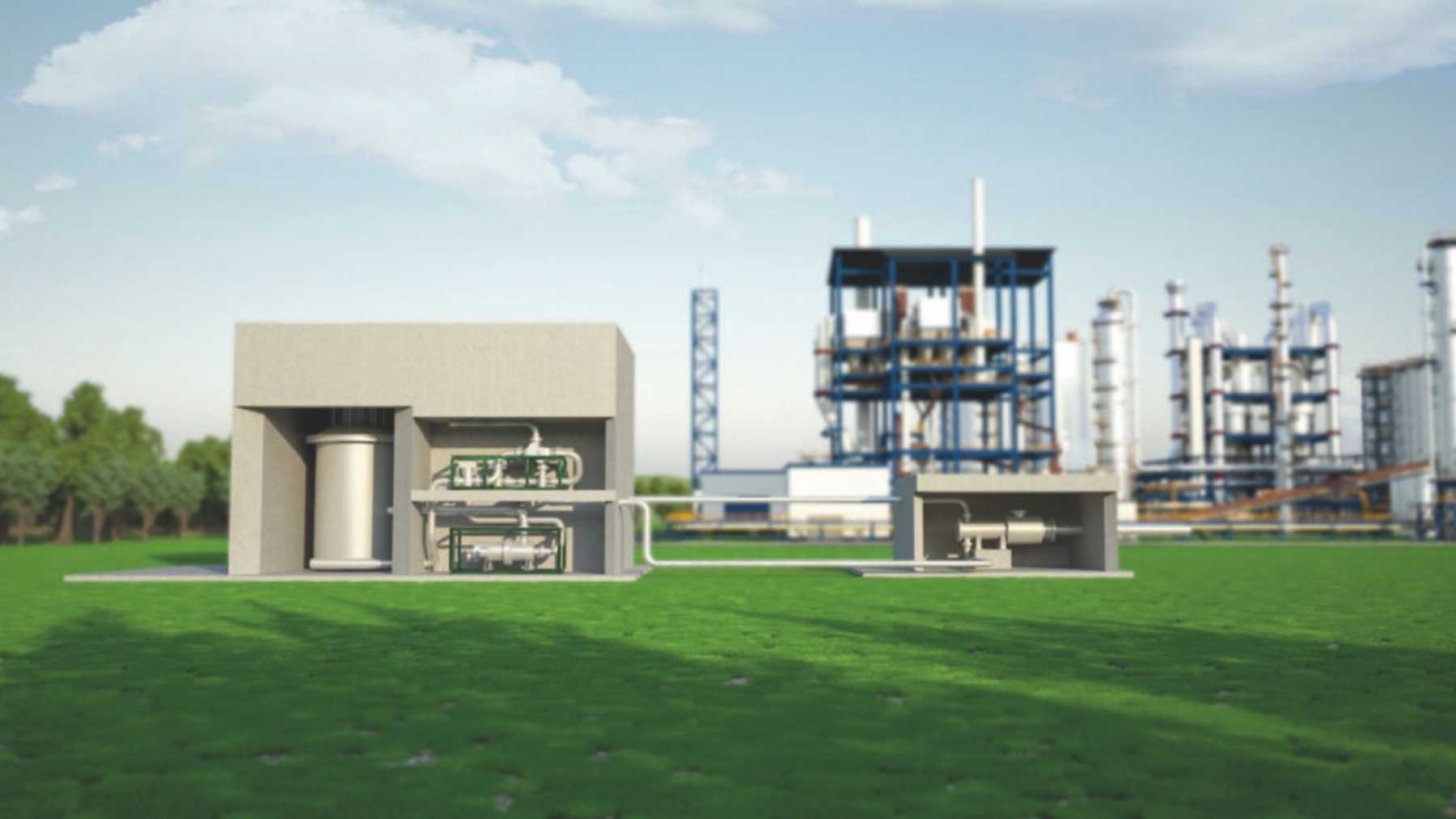
A Swiss company called Synhelion built its entire business on skipping that step. At its plant in Jülich, Germany, a field of mirrors throws concentrated sunlight at a receiver on top of a 20-meter tower. What comes out is heat, beyond 1,200°C or about 2,200°F, and that heat drives a chemical reactor that rearranges biogas and water into syngas, then into liquid fuel. No electrolyzer, no battery, no wire.
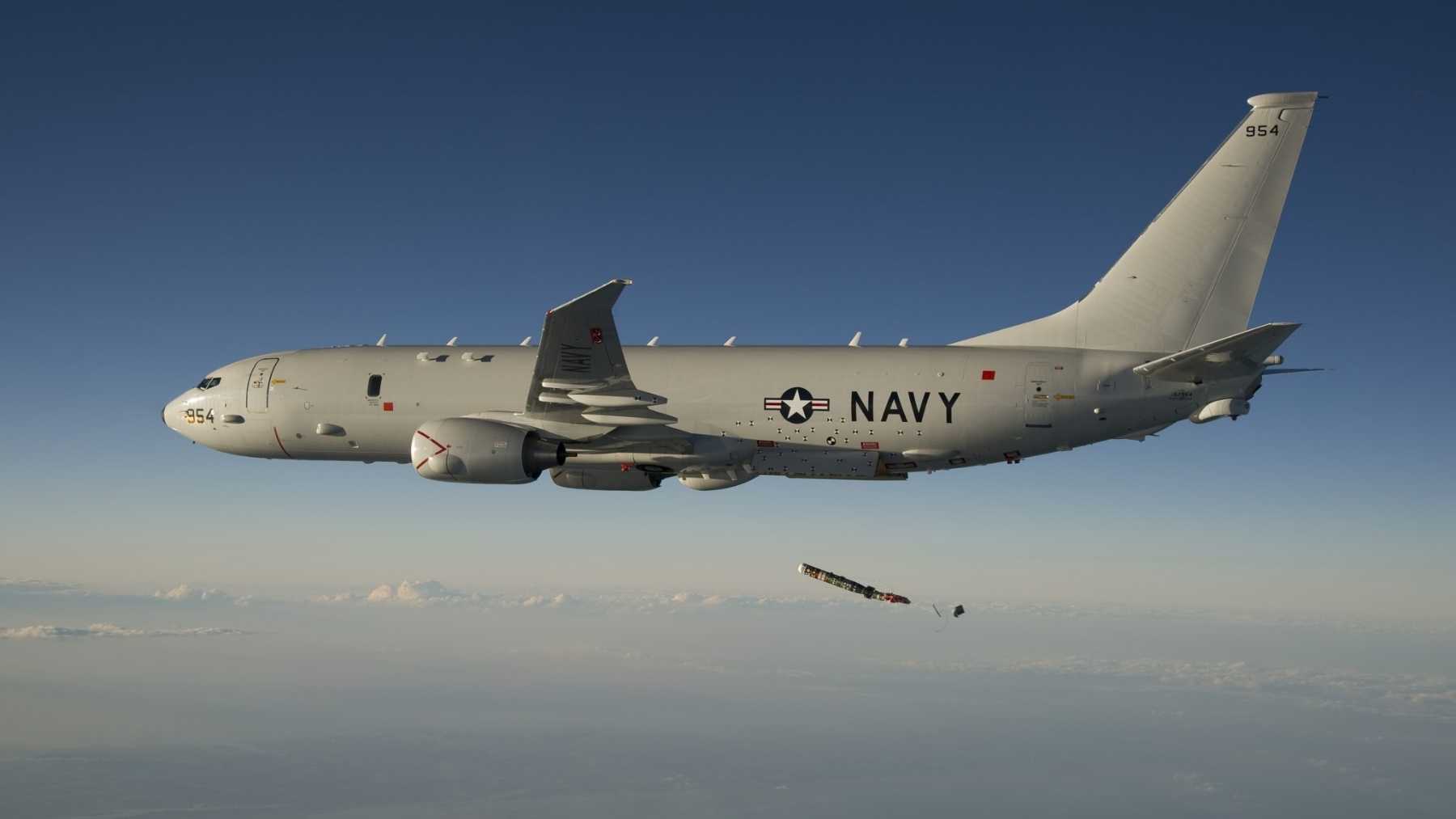
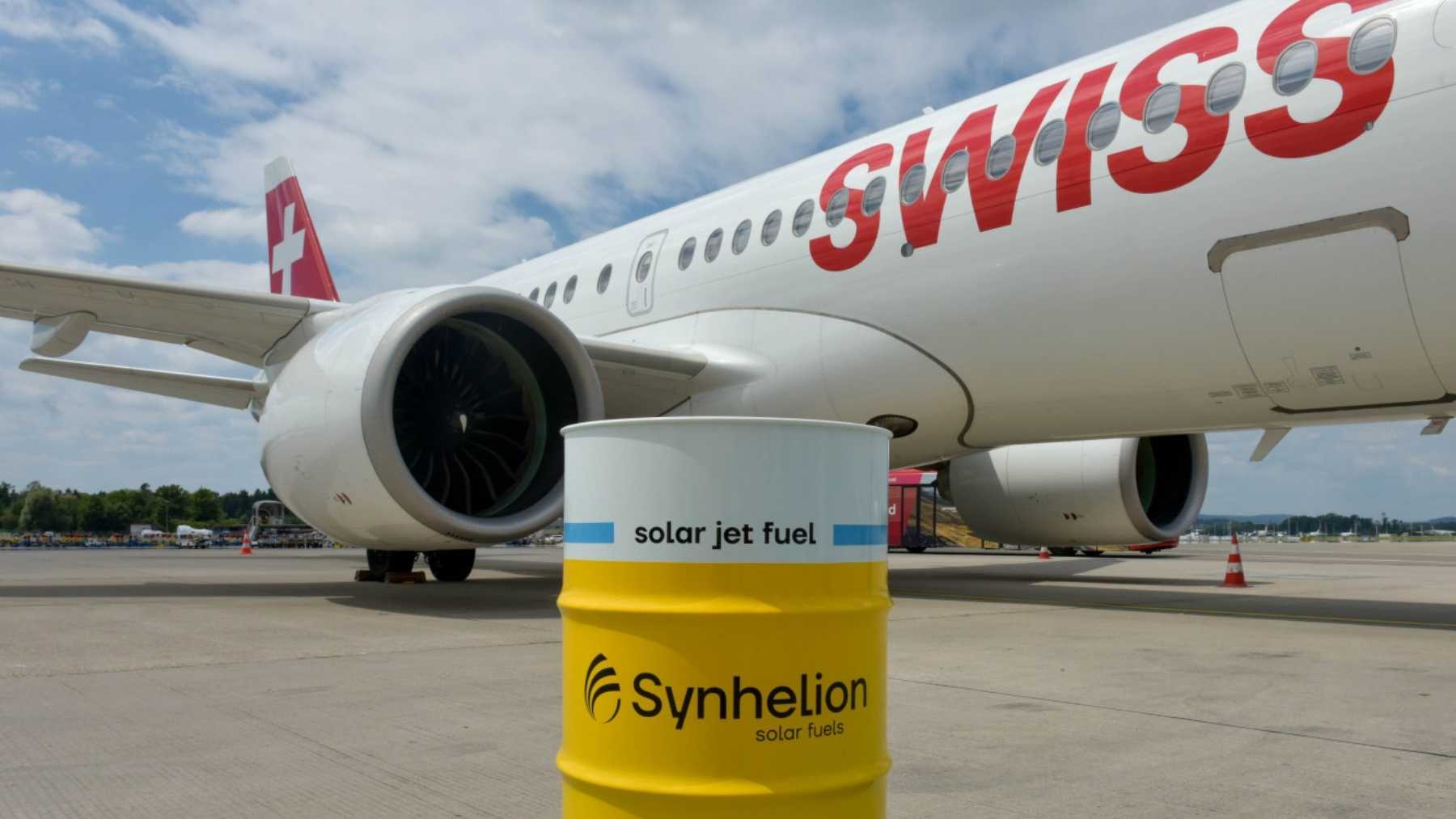
A year ago yesterday, on July 24, 2025, that fuel went into an airliner. Synhelion shipped one 190-liter barrel of synthetic crude from Jülich to a refinery in northern Germany, had it processed into certified Jet A-1, and fed it into the supply system at Hamburg Airport. SWISS became the first airline anywhere to put kerosene made from sunlight into scheduled operations.
Twelve months on, the barrel isn’t the interesting part. Synhelion’s own technology page now says the mirrors are optional.
One barrel, one flight, and a number the company didn’t bury
The honest figure was right there in the announcement. Those 190 liters covered roughly seven percent of the fuel needed for a single Hamburg–Zurich flight. Companies in this business do not usually volunteer that kind of arithmetic about themselves.
“This is the first time that solar fuel has been used in civil aviation,” said Jens Fehlinger, CEO of SWISS.
What actually mattered was the plumbing. The barrel wasn’t jet fuel when it left Jülich, it was syncrude, and it went into a working refinery alongside fossil crude and came out certified Jet A-1. No bespoke facility, no dedicated pipeline, no modified engine anywhere in the chain.
That is the entire pitch for drop-in fuels, and nobody had run it end to end with sunlight as the energy input before. SWISS has been a strategic partner since 2020 and an investor since 2022, so there was never much mystery about who would get the first barrel.
The excavator matters more than the airliner did
On May 13 of this year, Synhelion put its diesel into an excavator working the Brüttener Tunnel site near Bassersdorf, outside Zurich. The machine belongs to Eberhard Bau AG, a Swiss construction firm that signed a long-term supply deal back in February.
The list of things Synhelion has now fueled reads like a scavenger hunt. A Harley-Davidson belonging to Aldo Steinfeld, the ETH Zurich professor behind the technology. A steamboat more than 110 years old on Lake Lucerne. A 1985 Audi Sport quattro out of AMAG’s classic collection. A passenger bus at Zurich Airport. An airliner. Now a tracked excavator in a tunnel.
Every one of those is a press photo, and every one of them proves the same narrow point: the molecule is the molecule. Drop-in means drop-in.
Philipp Furler, Co-CEO and Co-Founder of Synhelion, said roughly that when the excavator ran, arguing that construction machinery will need liquid fuel for a long time yet, and that the priority now is scaling up to bring production costs down.
Which puts cost, not chemistry, at the center of everything the company has done since.
Skipping hydrogen is the entire cost argument
In April, Synhelion published a cost analysis validated by DNV, the Norwegian assurance and certification group. The claim: at scale, it can make synthetic jet fuel, diesel and gasoline for under €1,000 per ton, which works out to below €0.80 per liter.
That is a projection about plants that don’t exist yet, and it deserves to be read as one. But the reasoning behind it is specific enough to argue with, which is more than most fuel-cost claims manage.
Most synthetic fuel routes run on green hydrogen. Split water with renewable electricity, then bolt the hydrogen onto CO2. Synhelion’s position is that hydrogen has stayed stubbornly expensive at €5 to €10 per kilogram, and that every conversion step in that chain leaks energy.
Its own route never makes hydrogen. It takes raw biogas from certified biogenic waste, which shows up as methane and CO2 already mixed together, and rearranges it with heat. The company puts the electricity saving at roughly a factor of three against conventional e-fuel pathways.
Feedstock is the other half of the sum. E-fuel producers have to buy their carbon separately, and biogenic CO2 runs €150 to €250 a ton by Synhelion’s accounting. Raw biogas hands you the carbon and the hydrogen source in the same pipe.
Then there’s the heat battery. Synhelion’s thermal energy storage costs about a tenth of what battery storage does, according to the company, and it’s what lets a plant run around 8,000 hours a year instead of powering down every evening.
Some context for why the cost fight is the only fight that counts. IATA reckons sustainable aviation fuel reached 1.9 million tons in 2025, which is 0.6 percent of global jet fuel use, and airlines paid a $2.9 billion premium for that sliver. SAF runs about double the price of conventional kerosene, and up to five times as much in markets with mandates. Europe’s ReFuelEU rules require 2 percent SAF at EU airports this year, rising to 70 percent by 2050, with a separate quota for synthetic fuels kicking in from 2030.
The American version of the same problem is running right now in Washington State, where Twelve’s AirPlant One turns captured CO2, water and Columbia River hydropower into jet fuel Alaska Airlines is already flying. Same destination, different chemistry, and the electricity bill is precisely what’s under dispute. German researchers have been attacking it from the other end, wiring concentrator solar cells straight into an electrolyzer to cut out the losses in between.
The mirrors are optional now, and Synhelion says so itself
Synhelion’s technology page describes two ways of generating the process heat. One is renewable electricity driving a proprietary electric gas heater. The other is the concentrated solar system, heliostats and a receiver. Either one works.
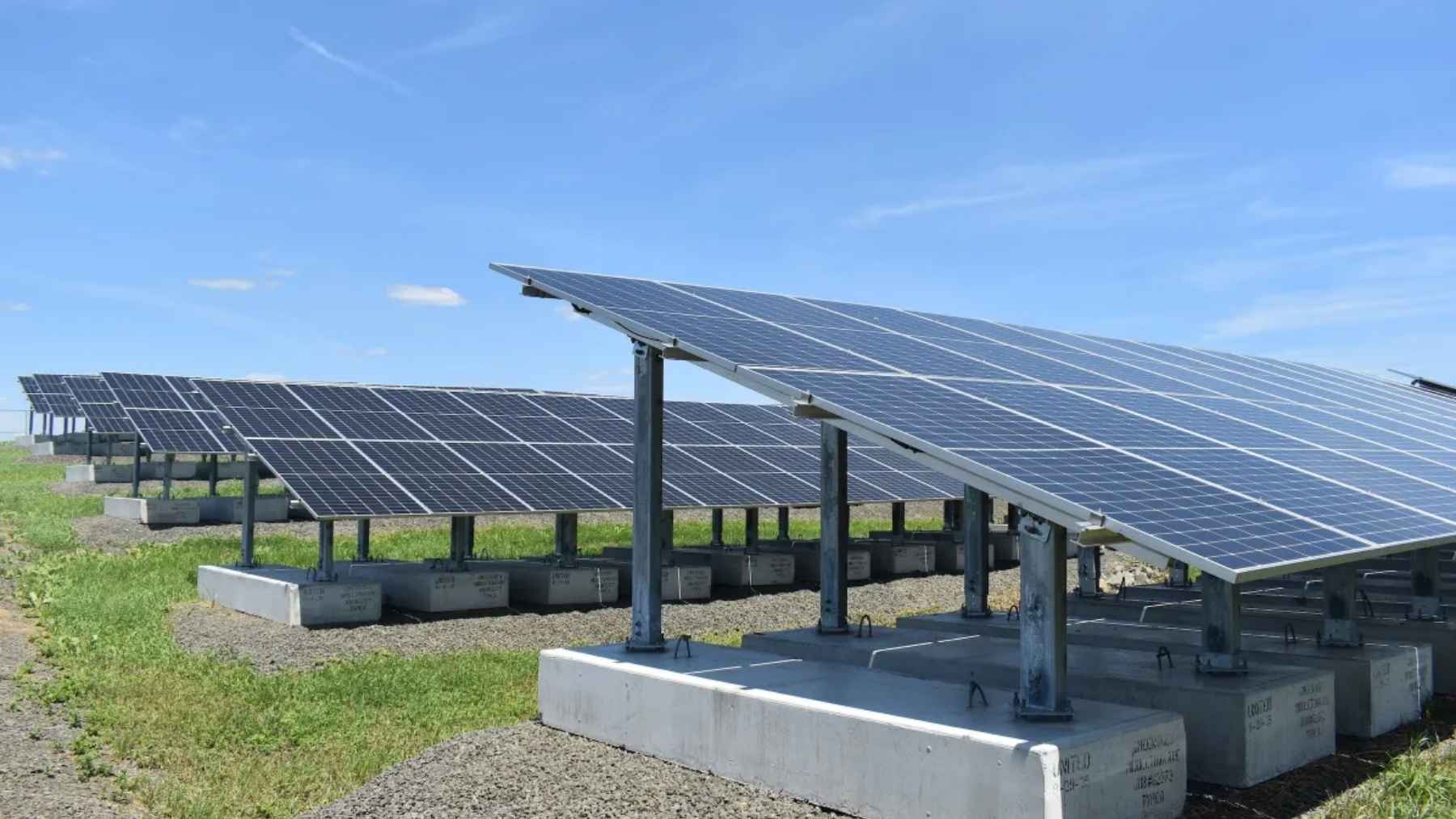
DAWN has both installed. The plant’s own page says the heat there comes either from a PV field through an electric heater, or from the heliostats hitting the receiver at the top of the tower.
And the DNV-validated cost case describes only one of them. In that analysis the heat comes from cheap renewable electricity through the electric gas heater, with part of it banked in the thermal store. The mirror field doesn’t appear in it at all.
The FAQ has quietly grown a question about the naming, too: why does the company sometimes call these solar fuels? The answer given is that DAWN uses solar energy, so its products get that name.
None of this is a retreat, and the reason matters. Synhelion’s actual invention was never the mirrors — France has been concentrating sunlight into industrial heat at Odeillo since 1969. It was the receiver, the thermochemical reactor, and the storage that keeps the reactor working at 3am. Heat is heat. If grid renewables deliver it cheaper than a heliostat field at a given site, the reactor cannot tell the difference.
The mirror field is still standing in Jülich. It just isn’t load-bearing for the business plan anymore.
Spain is out, Germany is in
When Synhelion inaugurated DAWN in June 2024, the next step was firm and repeated everywhere. The first commercial plant would be called RISE, it would be built in Spain, construction would begin in 2025, and it would make around 1,000 tons of fuel a year from 2027. Offtake announcements through early 2025 named RISE and named Spain.
The company’s FAQ now says something different. The upcoming commercial plant will be built in Germany, right next to the existing demonstration plant, at the same 1,000 tons a year, with further specifications to be announced later.
There is no press release about the move on Synhelion’s news page. The December announcement of the SWISS contract refers only to “its first commercial plant” and names no country whatsoever.
The logic isn’t hard to follow once you’ve read the cost analysis. A plant taking its heat from an electric heater has no particular need for Spanish sun. It needs cheap renewable power, a biogas supply, refinery logistics and a site. Jülich already has the team, the German Aerospace Center and Aachen’s solar institute next door, and a plant that demonstrably works.
Synhelion also signed a memorandum of understanding with INERATEC in June 2025 to work toward a joint solar fuel project in Europe. INERATEC, based in Karlsruhe, built the Fischer-Tropsch module that turns DAWN’s syngas into syncrude. An MoU is an intention rather than a contract, but the center of gravity in that one is German as well.
The order book all lands in 2027
SWISS has committed to at least 200 tons of jet fuel a year on a binding five-year deal, and part of that gets resold to Kuehne+Nagel for Swiss WorldCargo freight. Lake Lucerne’s steamboat operator has signed for close to 100 tons. Zurich Airport wants 30,000 liters of diesel a year, AMAG wants 50,000 liters of gasoline, Eberhard wants larger volumes for its machinery, and a ski area at Arosa Lenzerheide wants enough to run its snow groomers from the 2027/2028 season.
Against a plant rated at 1,000 tons a year, SWISS alone books a fifth of the output before anyone else joins the queue.
Every one of those contracts starts in 2027, and every one of them runs through a commercial plant that has changed countries on the company’s own website and has yet to hold a groundbreaking. Synhelion spent the past year proving its fuel works in a Harley, a steamboat, an airliner and an excavator. The next year is about pouring concrete.