
Lithium has an image problem, and it earned most of it. The metal inside your EV battery usually reaches the surface one of two rough ways: a strip mine cut into a hillside, or a grid of turquoise evaporation ponds spread across a high desert, pulling up scarce water while the sun boils it off over a year or two.
Two projects are betting they can skip both. One sits on the border between Germany and France, the other on the edge of California’s Salton Sea, and neither one plans to mine lithium at all. They pull it out of the same scalding underground water they already use to spin a power turbine.
The idea is almost annoyingly simple. Hot brine comes up the well, runs through a plant that makes electricity, gives up its lithium on the way out, and gets pumped straight back down where it came from. One well, two products, no pit and no ponds.
The German project, called Lionheart, picked up another €250 million from the European Investment Bank on July 10. The California one, Hell’s Kitchen, is going public in a $4.7 billion deal to fund construction. Volkswagen, Stellantis, Renault and General Motors have all put their names on the output. After years of this living on a slide in an investor deck, 2026 is the year the money and the steel actually turned up.
The same well does two jobs
Both sites already run geothermal power plants, and have for years. The clever part is what they do with the brine after it has finished its first job.
Deep underground, the water at both fields sits at a few hundred degrees and comes up under pressure. That heat flashes to steam, the steam spins a turbine, and you get baseload electricity that runs day and night, unlike solar or wind. It is the quiet, unglamorous corner of clean energy, the kind of deep-earth heat Iceland is now chasing by drilling toward magma.
Salton Sea brine also happens to be loaded with dissolved lithium, close to 400 milligrams per liter by the California Energy Commission’s measurements, along with manganese, zinc and potassium. It is a chemical soup, and a valuable one.
The extraction step works a bit like a household water softener. An adsorbent or ion-exchange material grabs the lithium ions out of the hot brine and lets the rest of it pass, so there is no waiting on the sun and no giant pond. Whatever is left gets reinjected into the reservoir in a closed loop.
The recovery numbers are the pitch. Direct lithium extraction, or DLE, typically pulls out around 90% of the lithium in a brine, against 40% to 60% for the old evaporation-pond method, according to a 2025 review from the think tank Resources for the Future. Vulcan, the company behind Lionheart, says its own units in Germany have hit up to 95%.
Germany’s plant already has the buyers lined up
Vulcan proved the concept small before spending big. In April 2024 it filtered its first lithium chloride out of Upper Rhine brine at a pilot plant in Landau, and by November it had processed that into battery-grade lithium hydroxide at a second plant near Frankfurt. Both are built at 1:50 scale of the commercial plants to come.
Then the real money arrived. Vulcan took a final investment decision in December 2025 and closed a €2.2 billion ($3.9 billion) financing package in May 2026, with the EIB’s €250 million tranche landing this month. Construction on the upstream extraction plant at Landau began in February, and major work on the central chemicals plant near Frankfurt started in April.
Phase One is designed to make about 24,000 tons of lithium hydroxide a year, which Vulcan figures is enough for roughly 500,000 electric cars. First commercial output is targeted for 2028, not this year, and the plant sits deliberately close to Europe’s battery gigafactories to cut down on shipping.
The buyers are already committed. Vulcan holds binding supply deals with Volkswagen, Stellantis, Renault, cathode maker Umicore and battery producer LG Energy Solution, covering most of its planned output. Stellantis went further than a contract, stretching its deal to ten years and taking an equity stake in the company. When your biggest customer buys shares, that is a fairly loud vote of confidence.
California’s version is going public to get built
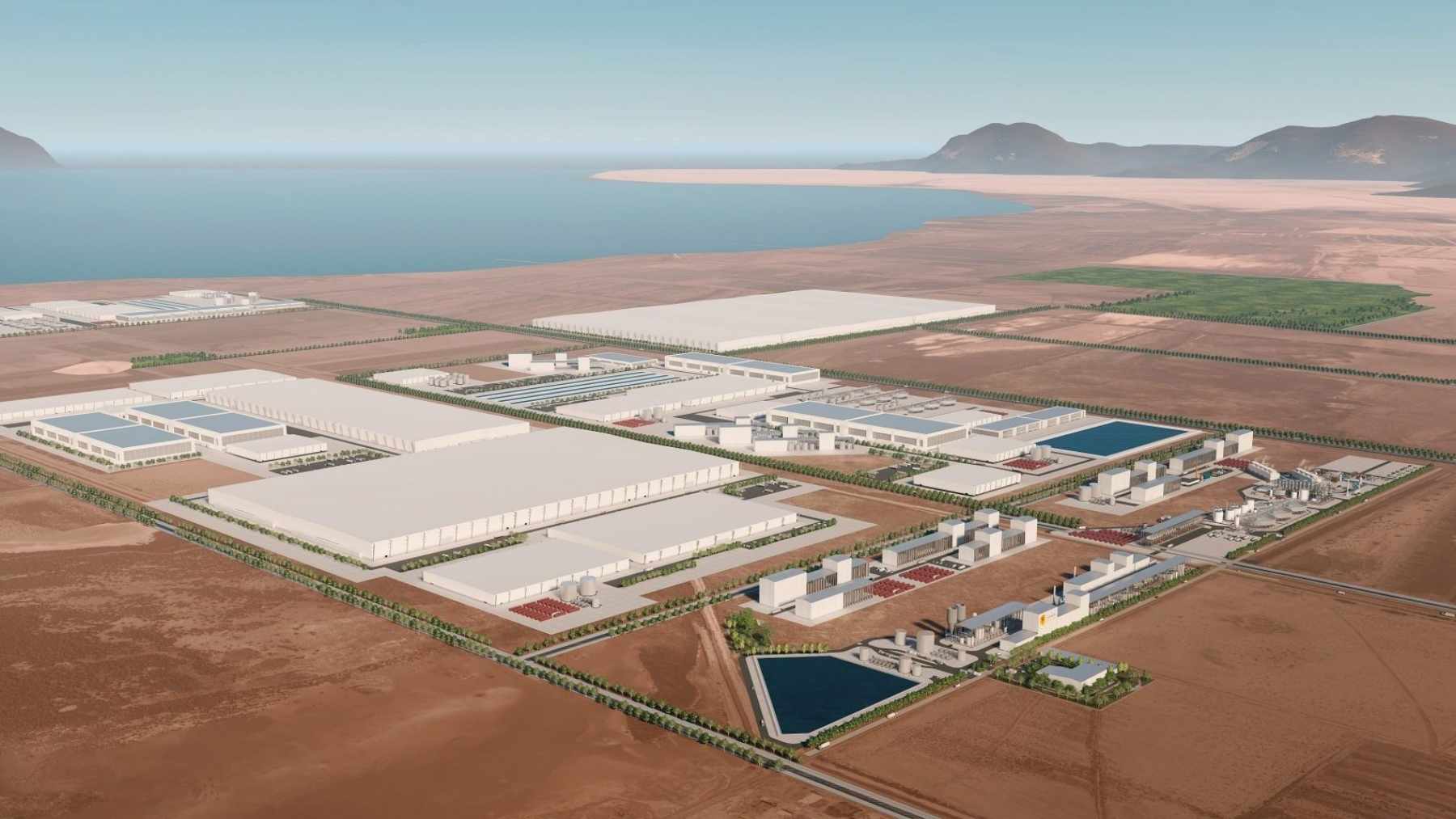
The Salton Sea has the bigger resource and the messier path. Controlled Thermal Resources, or CTR, is building Hell’s Kitchen on the geothermal field in Imperial Valley, the first new geothermal plant developed there in about a decade. General Motors was its first backer in 2021, and Stellantis later put in more than $100 million.
In March, CTR agreed to go public through a $4.7 billion merger with a blank-check company, Plum Acquisition Corp. IV, with the combined business set to trade on Nasdaq as CTRH. The deal, expected to close in the second half of 2026, is meant to fund the first stage of construction. CTR calls itself “shovel-ready,” pointing to a federal fast-track permitting designation, a use permit in hand and $185 million of long-lead equipment already built and waiting.
Stage 1 is modest on paper: about 50 megawatts of power and up to 25,000 tons of lithium carbonate a year. The full plan is not. CTR is aiming at 650 megawatts and roughly 100,000 tons of lithium annually, and it now pitches much of that electricity at the AI data centers scrambling for round-the-clock clean power. The lithium that made the project famous is starting to share the stage with server farms.
GM is not betting on brine alone, either. It also holds a 20-year deal tied to a hard-rock lithium mine in Nevada, which tells you how nervous automakers are about ever running short of the stuff.
The resource itself is enormous. A Department of Energy study estimated the Salton Sea brine holds around 3,400 kilotons of lithium, enough for more than 375 million EV batteries, which is more than the number of cars on U.S. roads today.
The water math is messier than the brochures say
The environmental case for this approach is real, but it gets oversold. Because the brine is already being pumped for power and then reinjected, there is no open pit scarring a hillside and no evaporation pond drinking an aquifer. Industry figures put DLE at up to 90% less water and 98% less land than conventional methods.
The catch is that “less water” is not a law of nature. Some DLE processes actually need more fresh water than evaporation ponds do, depending on the brine chemistry and how much of the spent fluid gets reinjected, as a 2023 review in the journal Nature Reviews Earth & Environment and later studies have pointed out. The closed-loop, reinject-everything design is what makes the geothermal version look clean, and it only holds if operators actually run it that way.
Neighbors near the Salton Sea have their own doubts. Two community and environmental groups sued over Hell’s Kitchen’s environmental review, worried about air quality, dust and water in a region that already has plenty of both problems. A judge dismissed the case in January 2025 and cleared construction to continue, but the concerns did not vanish with the lawsuit.
None of it is lithium in the ground yet
For all the momentum, neither plant is selling commercial lithium today. Vulcan is aiming at 2028. Hell’s Kitchen’s first stage comes after its merger closes. The hard part is the same for both: taking a process that works at pilot and demonstration scale and running it reliably at a hundred times the size, on brine that is corrosive and fights back.
It is a cleaner-sounding relative of the oilfield-brine lithium plant two U.S. startups are building in Texas, minus the free electricity, and it faces the same nagging question every DLE project does: does it hold up outside the pilot skid.
Money is the other variable. Lithium prices spiked above $80,000 a ton in late 2022, crashed below $13,500 in the 2024 trough, and have only partly recovered since. A project that pencils out at one price can look shaky at another, which is exactly why locking in automakers on long contracts mattered so much to both companies.
Still, the appeal is hard to argue with: a battery metal that arrives with its own power plant attached and leaves no hole in the desert. Whether Lionheart and Hell’s Kitchen hit their numbers is a 2027-and-2028 question. But if you buy an EV with a Stellantis or GM badge later this decade, there is a real chance a piece of it came up a well first, as hot saltwater.