
Hydrogen fuel cells were supposed to end up under the hood. Carmakers spent two decades and a great deal of money developing them, and in passenger cars the technology never got past a few niche models sold mostly in California. Batteries won that argument.
The stacks kept getting built anyway. And on July 14, a Swedish company that spun out of the Volvo Group announced a firm order for a batch of them, headed to an AI data center campus in Santa Clara, California.
The buyer is ECL, a Mountain View outfit founded in 2020 that already runs the strangest small data center in the country. Its MV-1 site has no utility connection at all. It makes its own electricity from hydrogen, drinks the water that comes out of the fuel cells, and has been doing it for more than two years.
What ECL is building next is the interesting part, and it is not another one of those.
The order itself is small
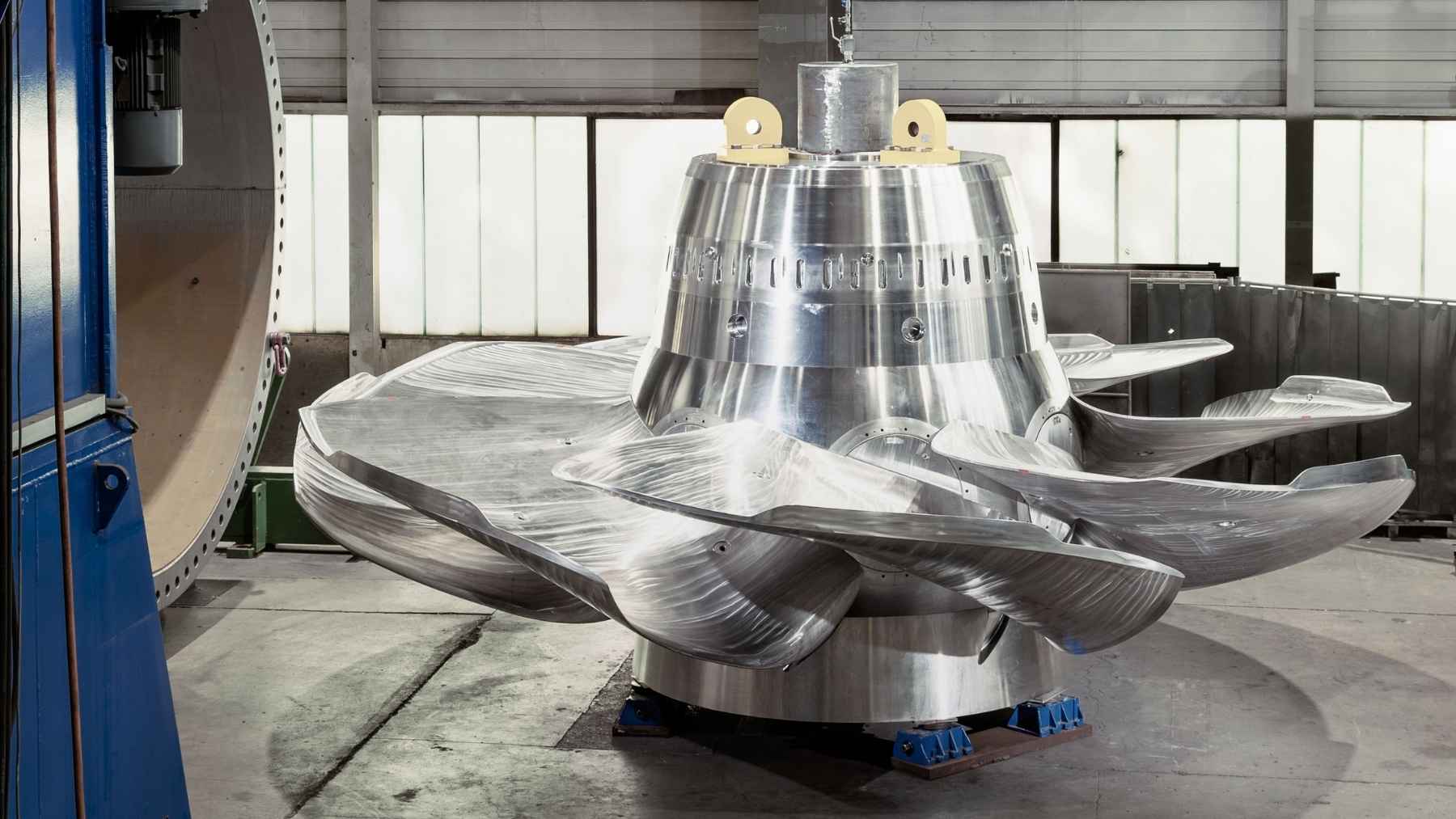
PowerCell Group, based in Gothenburg and listed on Nasdaq Stockholm, put the contract at approximately SEK 30 million, or roughly $3 million. It covers PS190 fuel cell systems in the 5 MW class plus software licenses, with deliveries due by the end of 2026.
That is a rounding error next to the numbers the AI industry throws around. The attached ambition is what got the headlines: a separate memorandum of understanding covering around 300 MW of additional fuel cell capacity as ECL expands.
Both companies were unusually blunt about what that second document is worth. The announcement states plainly that the MOU is non-binding, does not represent committed volume or revenue, and that anything beyond the firm order would need separate agreements.
A non-binding MOU is a company saying it would like to buy something. It is not the same as buying it.
The automotive lineage here is not decoration. PowerCell came out of Volvo, claims over a million hours of field data across automotive, marine and stationary applications, and its largest shareholder is Bosch, which is also its manufacturing partner and handles North American servicing. The supply chain that was built for hydrogen trucks is being pointed at server racks instead.
Mountain View has been running like this since 2024
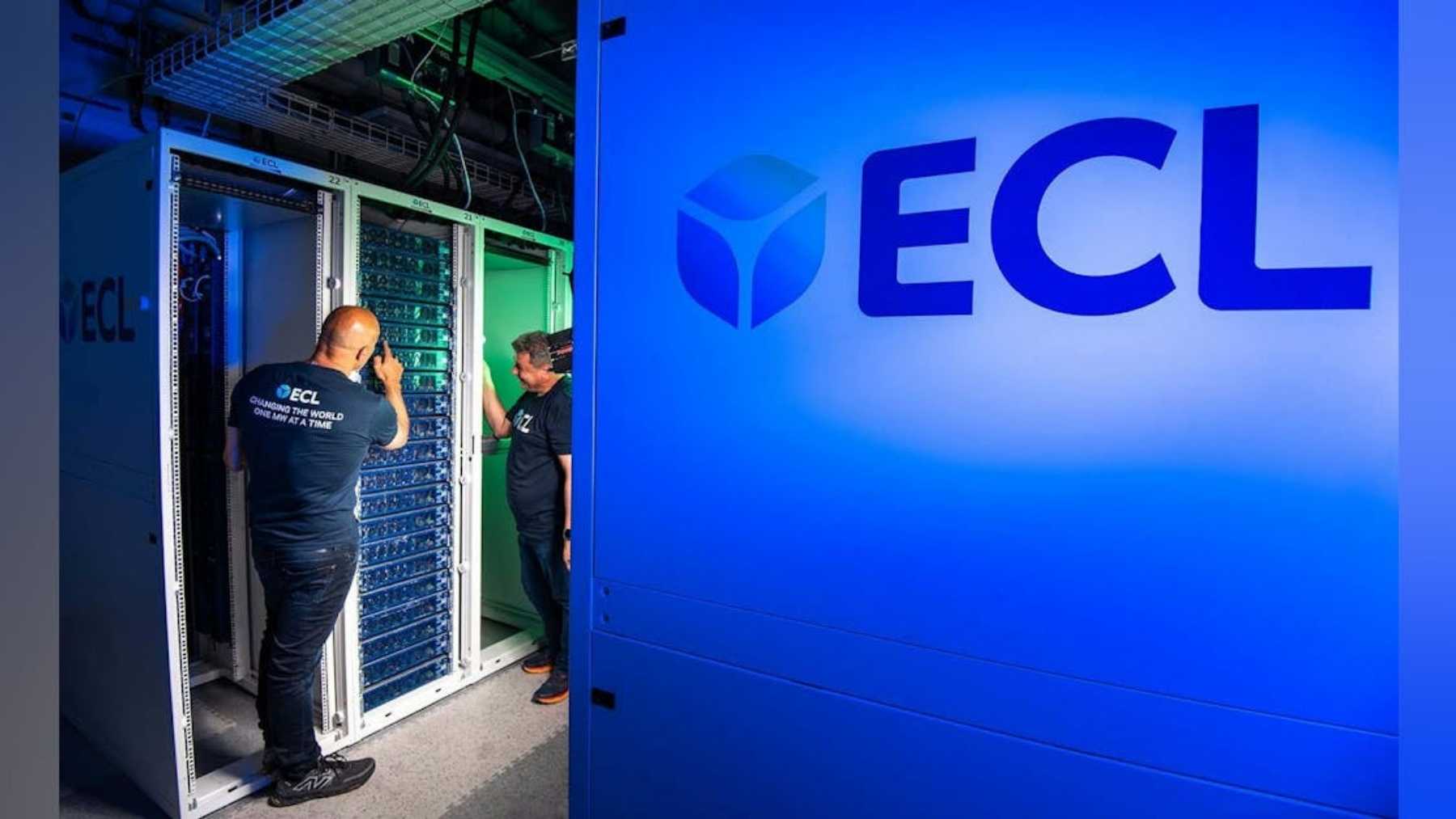
MV-1 is one megawatt in about 1,000 square feet, according to Data Center Frontier, which visited the site. Twenty-two racks, 1,800 GPUs, all of it leased to AI hosting firm Cato Digital, cooled by rear-door heat exchangers at up to 75 kW per cabinet.
The clever bit is the plumbing. A hydrogen fuel cell produces electricity and water, so ECL runs that water into the cooling loop instead of pulling from the municipal supply. In drought-prone California that is not a marketing line, it is a permitting advantage.
ECL calls MV-1 the world’s first data center using hydrogen as its primary power source. Whatever you make of the superlative, the site is genuinely off-grid, and two years of continuous operation is a real answer to the obvious question about reliability.
It is also one megawatt. Roughly what a single modern AI rack row asks for.
The grid queue is now over five years long
Here is why a company would go to this much trouble to avoid a power line. Berkeley Lab publishes an annual count of everything waiting to connect to the American transmission grid, and the 2026 edition is grim reading for anyone in a hurry.
More than 2,060 gigawatts of generation and storage were sitting in interconnection queues at the end of 2025. The median wait from request to commercial operation passed five years for projects that came online last year. Getting a power plant onto the grid now takes longer than getting through medical school.
And most of them never make it. Of the capacity that filed requests between 2000 and 2020, only 13% was operating by the end of 2025. Three quarters of it was withdrawn.
One number in that report explains the whole behind-the-meter boom: active natural gas capacity in the queues jumped 86% during 2025, while solar, wind and storage all shrank by roughly a fifth. Everyone has worked out that the fastest power is the power you generate yourself, and gas is the cheapest way to do it. We have covered a 9-gigawatt campus in Utah and a New Mexico site building its own power plant doing exactly that.
Santa Clara plugs into the grid, and ECL is not hiding it
Which brings us to CSC-1, the campus taking the PowerCell order. ECL announced it on April 21 under a headline containing the phrase “builds atop on-grid power,” which is not language you use if you are still selling grid independence.
CSC-1 is 35 MW at full build, starting from a 2.5 MW first phase, with rack densities from 75 kW up to 270 kW. It runs on ECL’s FlexGrid architecture, which the company describes as combining utility electricity, natural gas, batteries and hydrogen fuel cells into one system, targeting a PUE under 1.15.
So the company that built a data center with no grid connection has designed its next one around four power sources, one of which is the grid and another of which is natural gas.
ECL’s own explanation is about speed rather than purity. “A 35MW facility delivered in Santa Clara in under a year would have been unthinkable through traditional grid-connected development,” said founder and CEO Yuval Bachar in the April announcement, pointing at the years-long interconnection queues facing every AI operator in the Bay Area.
Against the Berkeley Lab numbers, that is a defensible engineering call. Hydrogen stops being the identity of the building and becomes one dispatchable block among several, which is a less romantic story and a considerably more buildable one.
The gigawatt in Texas is still a rendering
None of this is the project ECL was famous for. In September 2024 the company announced TerraSite-TX1, a 1-gigawatt off-grid campus on more than 600 acres east of Houston, costing around $8 billion, fed by three converging hydrogen pipelines, with GPU cloud provider Lambda signed as first tenant.
Phase one was 50 MW for about $450 million, due in the summer of 2025. That summer came and went. ECL has not announced a construction milestone for the site since, and its press releases through 2025 and 2026 have been about other things: a new company president in December, the FlexGrid platform in February, Santa Clara in April, PowerCell in July.
Announced projects sit dormant for all sorts of ordinary reasons, and an $8 billion campus was always going to move slowly. The arithmetic is still the arithmetic. One megawatt is demonstrated, a gigawatt is a thousand times that, and the gap between them is currently a rendering with a press release attached.
There is a second asterisk on the Houston plan that has never really been resolved. ECL marketed TerraSite-TX1 as zero emissions, but the hydrogen was to come from natural gas via steam methane reformation, which emits carbon. The company told Data Center Dynamics it was referring to data center operations rather than the end-to-end process, and that the initial mix was expected to be half blue hydrogen with carbon capture and half gray without, moving toward 80% blue and 20% green a year later.
Where the hydrogen actually comes from
That asterisk is the thing worth watching, because it is the one nobody has answered at scale. A fuel cell is clean at the point of use. It produces electricity and water, and if you plumb it properly you can drink the water. What it does not tell you is how the hydrogen got made.
Hydrogen made by steam methane reformation is a fossil fuel product wearing a lab coat. Hydrogen made by electrolysis needs a large amount of electricity, which puts you back in a conversation about where that electricity came from. America is building the supply chain for both, from factory-built electrolyzer plants trucked into West Texas to field generators the size of two porta-potties, and none of it is close to the volume 300 MW of continuous fuel cells would want.
ECL has not disclosed the source of the liquid hydrogen it burns at MV-1, and neither has PowerCell. Until somebody does, the fairest thing to say about the cleanest data center in California is that its exhaust is water and its fuel is a question mark.
The Santa Clara order is still the most concrete thing that has happened to hydrogen in American data centers this year. It is 5 megawatts of it.
 @nealtwain ROOKIE2 months ago