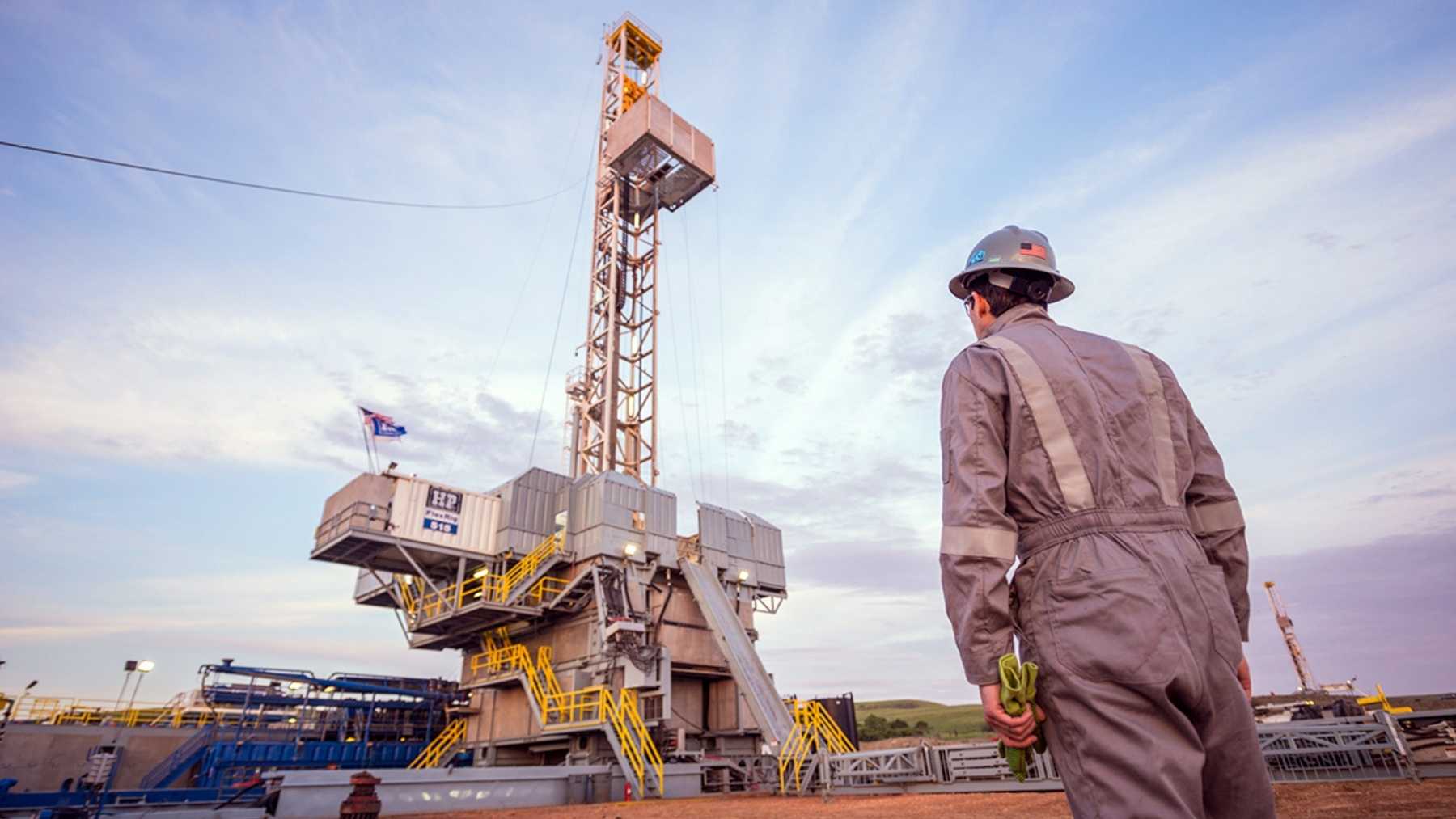

American oil work has a mascot, and it is the roughneck. Hard hat, heavy gloves, mud on everything, both hands on a length of steel pipe while the derrick groans overhead. Baker Hughes counted 267 rigs drilling the Permian Basin in the week to August 21, the most since June 2025, and on nearly all of them that picture still holds.
On two of them it does not.
ExxonMobil operates more than 30 drilling rigs across the Permian, and two of those now move pipe with robotic arms while a contractor works a touchscreen from a cabin built onto the rig. Reuters visited one of the rigs outside Midland, Texas and published the account on August 24. Bart Cahir, Exxon’s senior vice president of unconventionals, told the agency the company wants roughly a quarter of that Permian fleet automated next year and half of it by 2028.
Two rigs out of more than 30 is a pilot with a deadline attached to it.
What the robot arms actually do up there
A drill string goes into the ground in sections. Every time the bit chews through the length of the last one, somebody has to hand it another, and crews call that making a connection. The pipe stands in columns more than two stories tall. Each joint weighs roughly 2,000 pounds.
On the two automated Exxon rigs, robotic arms position those joints and thread them onto the string. The contractor watches from the cabin. Houston calls the moves. Exxon’s central operations team there tells the rig how the arms should travel next, so the man on location and the engineers across the state run one well from two rooms.
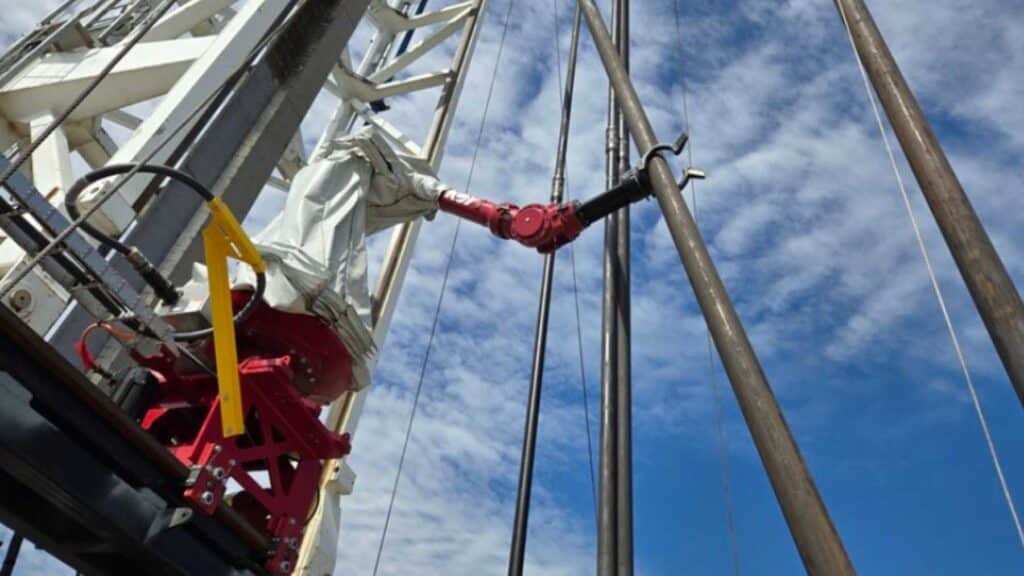
Cahir framed the payoff to Reuters in productivity terms rather than headcount terms. Crews pulled off the floor can look ahead to the next operation instead of standing in the middle of the current one, he said, and steadier work means more feet drilled per day. “This is the productivity play,” he told the agency.
The rig floor is the part of the rig that hurts people
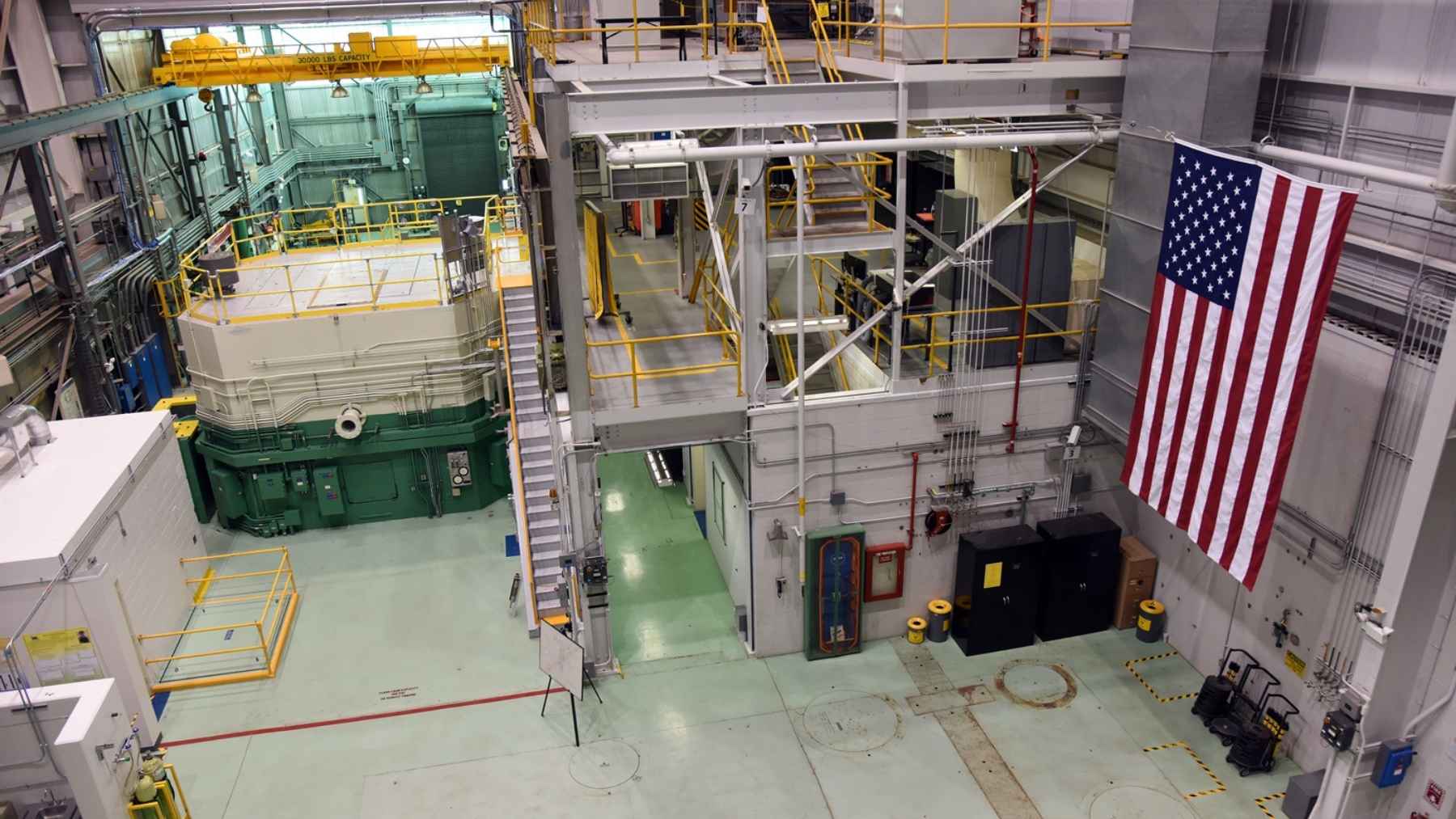
A gate rings the drilling floor on Exxon’s automated rig in Midland. Its sign reads “Red Zone: Restricted Area,” and the Grim Reaper is drawn beside that wording. Heavy steel swings through the space under pressure, and nobody on that pad has tried to soften the message.
Cahir told Reuters that across the history of well drilling, about a third of significant injuries have happened on the rig floor.
The Bureau of Labor Statistics counted 65 fatal injuries in US oil and gas extraction industries in 2024, down from 78 in 2023 and 83 in 2022. Those three categories cover extraction itself, the drilling of wells, and the support crews who build and break down the rigs.
Contractors have pitched rig-floor robotics on that safety record for five years running, and Exxon repeated the pitch on the rig in Midland.
Andrew Kelley works 12-hour shifts doing what the arms now do
The BLS ran an interview in March 2026 with a floorhand in the Permian Basin named Andrew Kelley, conducted by agency economist Ryan Farrell. Kelley described the job without decoration. He assists with tasks on the drilling rig floor, moves and replaces pipe, and maintains the equipment. He staged sections of long pipe and connected them, which is the task the arms have taken over on Exxon’s two rigs.
Kelley works 12-hour shifts, seven days a week, two weeks on and two weeks off. His crew opens each day with a meeting on tasks and closes it with a debrief. Between the connections come the greasing, the inspecting, and an amount of pressure washing he summed up in four words: “The cleaning never ends.”
He came in from six years in food service, where he had worked his way up to managing a restaurant. His training ran two days in a classroom, one day in the shop yard, then five months on the job proving he could do every task in the description. Of the 45 to 50 people in his training group, he said 3 or 4 were still working. He wants the motorhand job next, which means minding the generators and acting as the rig’s mechanic.
The trade pays accordingly. BLS put 8,320 derrick operators in support activities for mining in May 2024 at an annual mean wage of $59,100, alongside 9,860 rotary drill operators at $68,880 and 35,070 roustabouts at $48,990. Support activities for mining employed 276,540 people that month, and construction and extraction occupations made up 47.4 percent of them.
Exxon has been testing this since 2021
Nabors Industries announced on October 7, 2021 that its PACE-R801, billed as the world’s first fully automated land drilling rig, had reached total depth on its first well. XTO Energy, the ExxonMobil subsidiary, had contracted it for three horizontal wells on a test pad in Midland County, Texas. Nabors drilled the first one to a measured depth of 19,917 feet and said crew size on the R801 matched its other rigs, with the duties changed.
The rig now doing the work in Midland comes from a different contractor. Exxon installed its first automated rig last year from Helmerich & Payne. That rig needed just over six days to drill two miles of horizontal hole, which Reuters reported as the third quickest well Exxon has ever drilled.
H&P sells the system as FlexRobotics, a retrofit package built around three off-the-shelf robotic arms so it can be bolted onto rigs already working rather than requiring a newbuild. The company told investors it began testing the system in 2024 on a research rig in Tulsa, deployed the first package commercially in the Permian for an unnamed super major, and confirmed on its fiscal third-quarter earnings call this month that a second package is now running on a Permian rig for the same customer.
Five years separate the Nabors test pad from Exxon’s 2028 target. Australia got to the same place from a different direction, running blasthole drill rigs with nobody in the cab from control rooms hundreds of miles away, and its mines have been doing it for a decade.
Fewer rigs in the Permian are already producing more oil
Baker Hughes had 242 rigs in the Permian on January 30 this year, down from 303 a year earlier, before the count climbed back to 267 last week. The EIA reported that the Permian rig count fell 29 percent from December 2022 while the basin’s oil production rose 18 percent, or 1.0 million barrels per day, over the same stretch.
Exxon sits at the front of that trend. The company reported record Permian production of more than 1.8 million oil-equivalent barrels per day in the second quarter of 2026, inside quarterly earnings of $14.5 billion. Its corporate plan published on December 9, 2025 targets approximately 2.5 million oil-equivalent barrels per day from the Permian by 2030, double its 2024 output there and about 40 percent above what it pumped last quarter.
Chevron is going the other way in the same rock, holding Permian production at roughly 1 million barrels of oil equivalent per day and steering the difference into free cash flow.
Shale gives up around 10 percent of the oil sitting in the ground, because the rock is tight and compacted and does not surrender much. Exxon is working on more than 40 technologies aimed at doubling what it recovers from the Permian by the early 2030s, Reuters reported. Its lightweight proppant, the one piece of that portfolio the company has put a number on, is showing about 20 percent recovery improvement. Robotic pipe handling sits low on that list of 40. It ranks higher on the list of things that change a shift.
The job moves before it disappears
Mining ran this experiment first. Nevada Gold Mines and Komatsu now run 320-ton haul trucks with nobody in the cab, and the mines that adopted them hired control-room operators and data analysts instead of drivers.
Drilling looks headed somewhere similar. Somebody still greases the equipment, walks the rig to the next pad, replaces the worn parts, and pressure washes all of it. Kelley’s ladder still has a motorhand rung on it.
A floorhand still does all of it. He just does it somewhere other than under the pipe.
Cahir gave Reuters a checkable marker on August 24: about a quarter of Exxon’s Permian rigs automated during 2027, half of them by 2028. Baker Hughes counted 267 rigs in the basin in its August 28 report, and two of them belong to that plan today.