
Ask anyone to picture fusion power and they describe a reactor. The giant metal doughnut, the plasma glowing at a hundred million degrees, the race to be the first company to light one up and pull more energy out than it took to start it. That is the part that makes headlines, and it is the part almost every fusion startup is chasing.
But a reactor that makes a plasma still cannot do the two things a power plant has to do: turn that heat into electricity, and make its own fuel. For those jobs you need a different set of hardware, and it is the unglamorous stuff nobody puts on a magazine cover.
While the field spent a decade racing to build the reactor, one Japanese company spent it building the parts all of those reactors will eventually have to buy. Kyoto Fusioneering has no reactor of its own. It has the microwave guns that heat everyone else’s plasma, the blankets that catch the heat and breed the fuel, and, as of this year, test plants for that hardware running or going up on three continents.
The reactor gets the headlines. The plumbing decides the outcome
There is an old line about gold rushes: the people who got rich were not the ones panning for gold, they were the ones selling picks and shovels. Fusion has its own version of that bet, and Kyoto Fusioneering placed it early.
Here is the split. The reactor’s job is to hold a plasma and keep a fusion reaction going, and that takes enormous magnets. It is why a 582-ton superconducting coil out of China gets written up as a landmark, and why Japan already runs the largest tokamak in operation anywhere.
None of that produces power on its own. The heat coming off the reaction has to be captured and converted, and the reaction burns tritium, a form of hydrogen so rare there is barely any of it on Earth. A working plant has to breed its own.
Both jobs land on one component: the blanket, a lithium-lined layer wrapped around the reactor core. High-energy neutrons slam into it, their energy turns into usable heat, and the lithium gets bombarded into fresh tritium. On top of that you need a way to heat the plasma to fusion temperatures in the first place, and a fuel loop to pull the tritium back out and feed it in again. Those three systems are what Kyoto Fusioneering builds.
It builds the microwave gun that heats the plasma
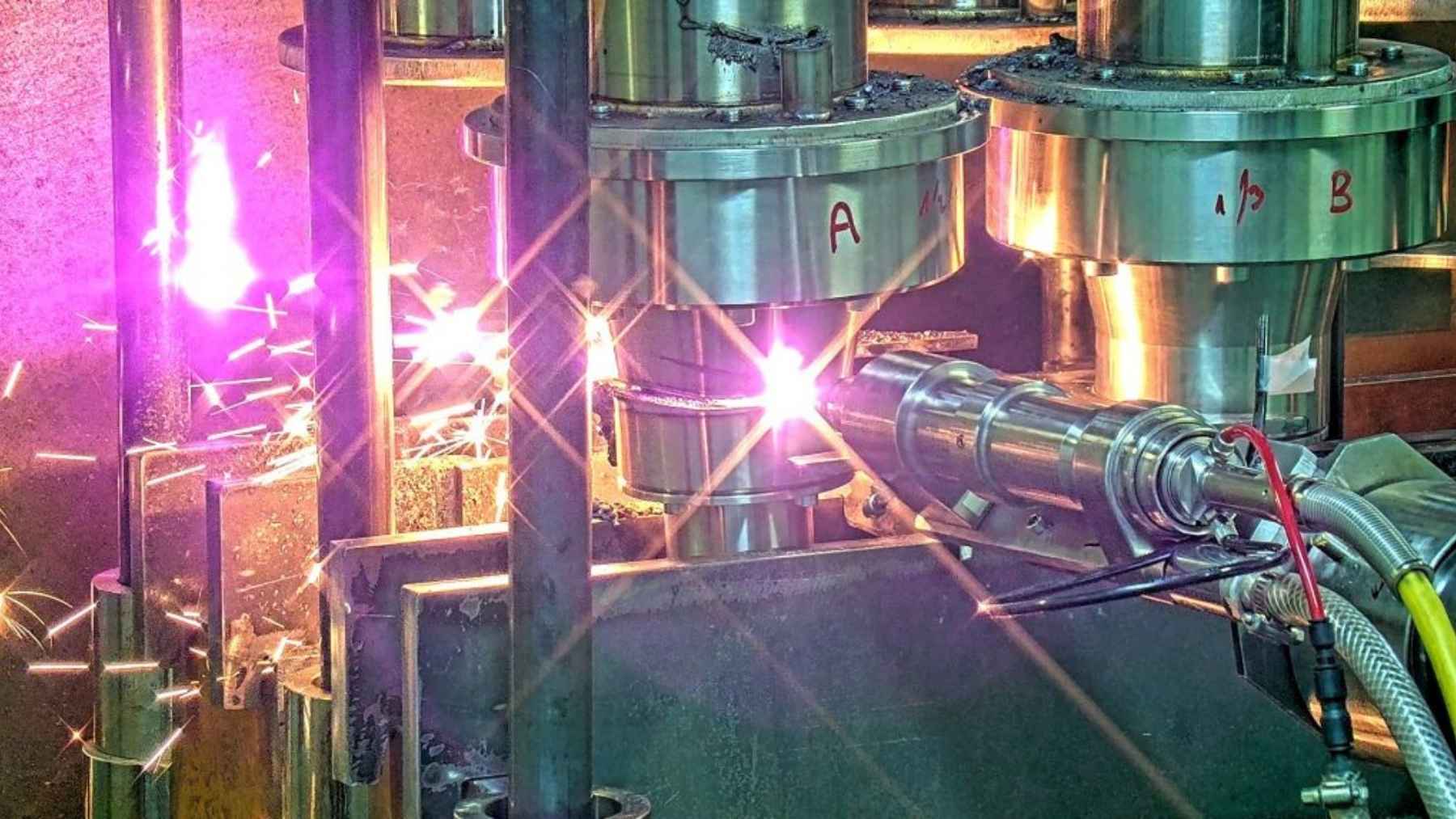
Start with the gyrotron. It is a microwave gun, roughly: a vacuum tube that throws out a high-power beam tuned to dump energy straight into a plasma and drive it toward the hundred-million-degree range fusion needs.
Kyoto Fusioneering builds them, and its systems are already installed in other people’s machines. Units have gone to Tokamak Energy in the UK and to the DIII-D National Fusion Facility in the US, the largest magnetic-fusion research reactor in the country, which General Atomics runs for the Department of Energy. Others heat the compact spherical tokamaks that keep coming up whenever anyone sketches a cheaper plant, the same geometry Princeton is chasing on NSTX-U, a DOE machine that spent most of a decade in pieces waiting on a magnet.
The company’s calling card is a gyrotron its engineers coaxed into producing five separate frequencies from a single tube, at 104, 137, 170, 203 and 236 gigahertz, roughly a megawatt at each, fired through a diamond window. Kyoto Fusioneering says it is the first time anyone has pulled five frequencies out of one gyrotron. The highest one exists because next-generation reactors will run stronger magnetic fields than today’s, and the beam has to match.
Three test plants on three continents
Hardware like this is useless until you can prove it survives fusion conditions, so Kyoto Fusioneering built facilities to test it. There are three, spread across Japan, Canada and the United States, and they map neatly onto the three problems above.
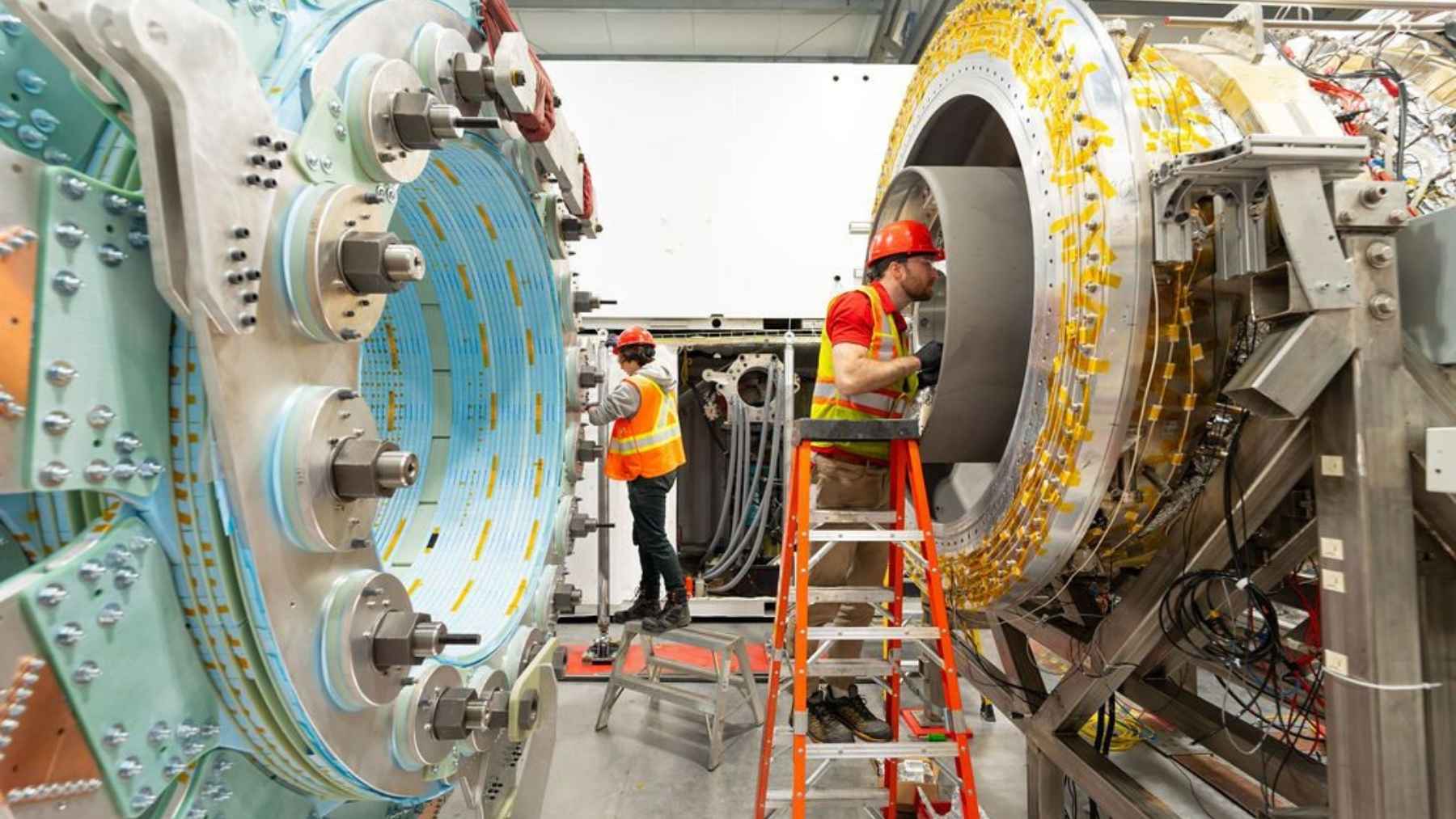
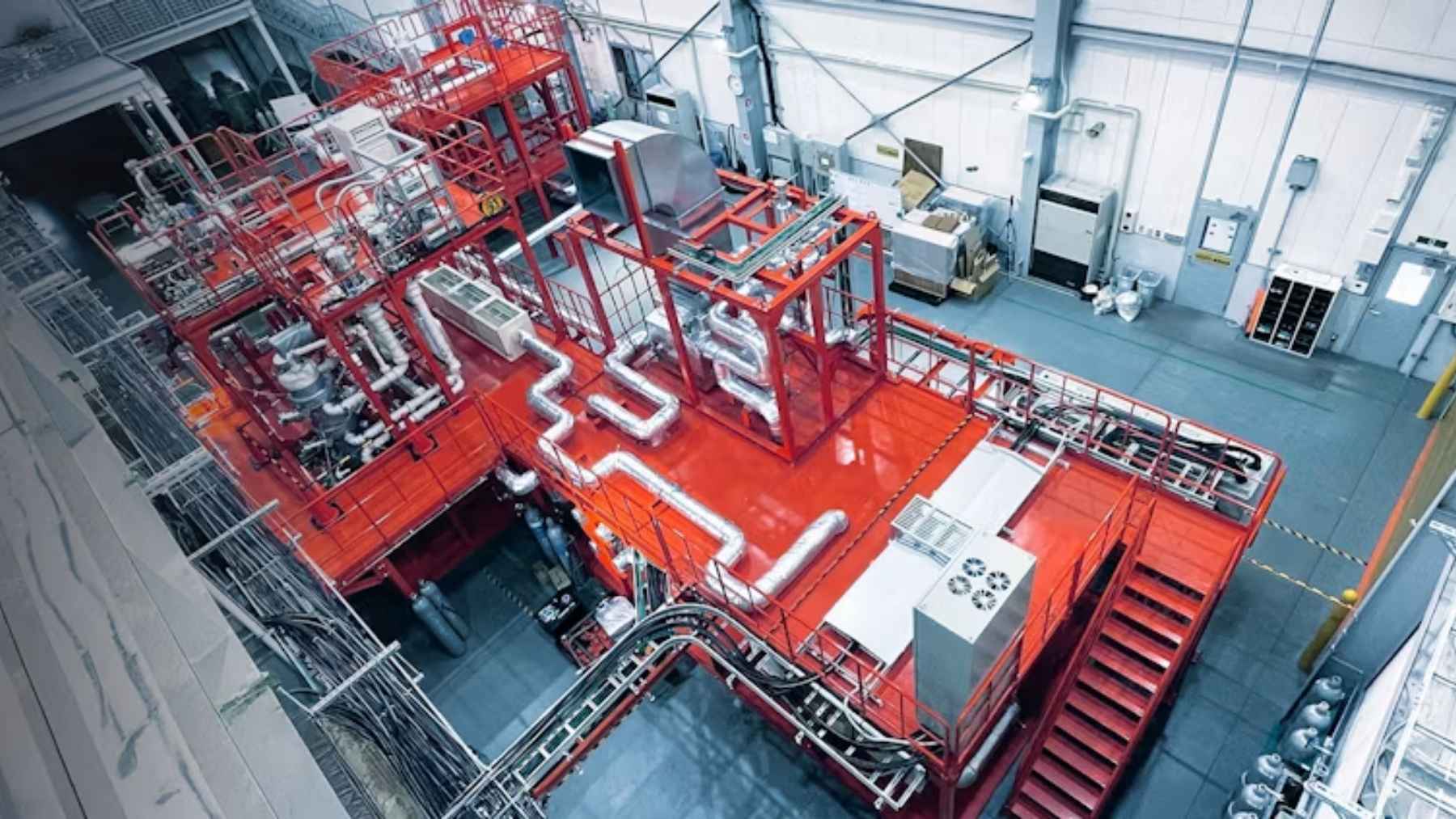
The first, UNITY-1, sits at the company’s Kyoto Research Centre and is up and running. It circulates 450 liters of liquid lithium-lead through a mock blanket at around 500°C, inside a magnetic field of up to 4 tesla, standing in for the punishing environment inside a real plant.
The piece Kyoto Fusioneering still has to show is the payoff: running that captured heat through a turbine to actually generate electricity. The company has said that demonstration is coming. It has not shown it yet.
UNITY-2 is under construction at Chalk River in Ontario, built by Fusion Fuel Cycles, a joint venture between Kyoto Fusioneering and Canadian Nuclear Laboratories. Its job is the fuel loop, extracting, purifying and recycling tritium and deuterium. Kyoto Fusioneering calls it the only integrated fuel-cycle demonstration of its kind, with commissioning targeted for later this year.
The third, UNITY-3, is the one that pulled in Washington.
Why the US Department of Energy signed on
In January, the DOE and Kyoto Fusioneering announced a partnership to build UNITY-3 at Oak Ridge National Laboratory in Tennessee. It aims straight at the blanket problem: firing prototypic neutrons at candidate designs to see which ones actually breed enough tritium and shed enough heat to run a plant.
The lab described it as a world-leading breeding-blanket test facility, and according to World Nuclear News, the agreement drew backing from ten partners, seven of them US fusion programs. “Fusion energy represents a transformational opportunity for our energy future,” Darío Gil, the DOE’s Under Secretary for Science, said when the deal was announced.
That is a striking amount of access to the American fusion program for a Japanese startup. And UNITY-3 is not the only place the company turns up. When General Atomics announced in June that it was designing its own full-scale blanket test facility with the DOE in San Diego, Kyoto Fusioneering was listed among the collaborators, alongside Idaho National Laboratory and UC San Diego.
So the same company selling gyrotrons into DIII-D is also helping shape the US government’s blanket-testing plans and building a competing rig of its own at Oak Ridge. General Atomics is not shy about the stakes. “No one has tested a fusion blanket at this scale,” said Anantha Krishnan, a senior vice president at the firm. The point of both efforts is identical. Nobody has done it, and everybody who wants a plant will need it done. Tennessee, where UNITY-3 will sit, became the first US state to write its own rulebook for fusion machines back in June, which tells you how fast this corner of the industry is moving.
This month, it locked up the coolant
The latest piece landed on July 16, when Kyoto Fusioneering and NGK Corporation signed a partnership to develop and commercialize FLiBe, along with the systems to circulate it.
FLiBe is a molten salt, a mix of lithium fluoride and beryllium fluoride, and it is one of the leading candidates for the fluid that carries heat out of a fusion blanket. It runs hot, it runs at low pressure, and its lithium content can help breed tritium, which is exactly the combination a blanket wants.
The catch is the beryllium, which is toxic and hard to handle safely at scale. NGK, a Nagoya ceramics maker that has worked with beryllium for years, brings that end. Between them, the two say they are building toward a commercial-scale supply of fusion-grade FLiBe. Takeshi Otsu, who runs NGK’s new-business unit, framed it as a step toward “the practical realization of fusion energy.”
Pulled together, the pattern is hard to miss. Gyrotrons, blankets, fuel loops, coolant supply. Kyoto Fusioneering keeps buying up positions in the parts of a fusion plant that are not the reactor, on the theory that whoever wins the reactor race will still have to come shopping.
None of it has made a watt of fusion power yet
It is worth being clear-eyed about where this actually stands. No fusion plant exists. No one on Earth has generated electricity from fusion at the scale of a working power station, and several of the reactor companies Kyoto Fusioneering supplies are years, in some cases more than a decade, from trying.
UNITY-1 itself has not closed the loop; the electricity demonstration is still on the to-do list. The DOE’s own roadmap talks about commercial fusion in the 2030s, and fusion has a long, well-earned history of letting deadlines slide.
What Kyoto Fusioneering has built is not a power plant. It is the supply chain a power plant would run on, tested piece by piece, plus a stack of contracts that put its hardware inside machines in the US, the UK, Canada and Japan. If fusion does arrive, the reactor will get the photo. Somebody still has to sell everyone the guts, and this is the company that spent the decade making sure it was them.