
Fiji shows up in American life as a honeymoon spot and a square bottle of water. It also sits on one of the routes traffickers use to move drugs from the Americas toward Australia and New Zealand, which is a problem for a country with a lot more ocean than patrol boats.
So when the Fijian government asked New Zealand for help watching that water in August, what landed at Nadi airport wasn’t a ship. It was a Royal New Zealand Air Force C-130J Hercules with two 24-foot drone boats in the back.
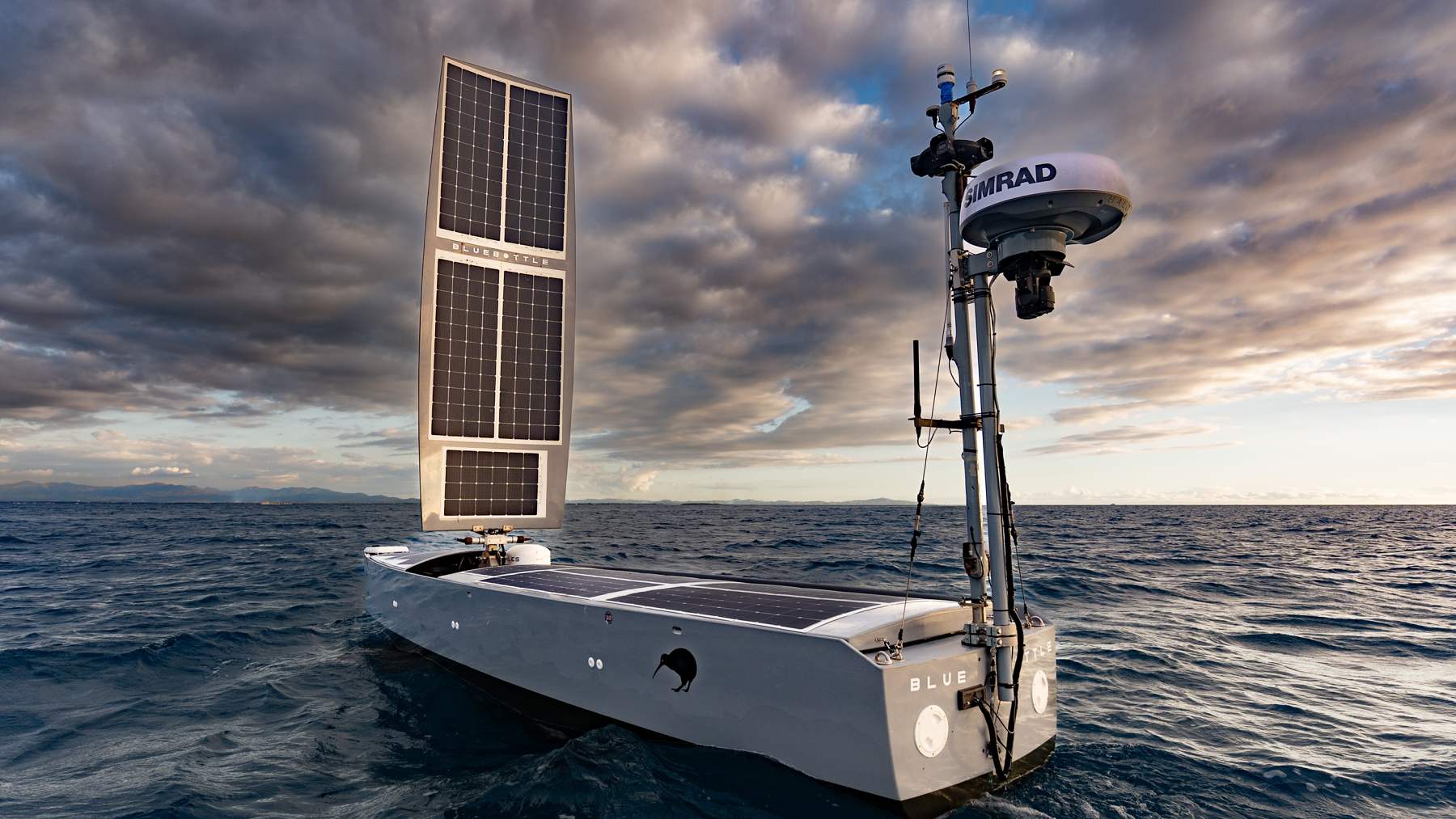
The boats are called Tahi and Rua, which is Māori for one and two, and they’re the only two New Zealand owns. The Royal New Zealand Navy and New Zealand Customs bought them together, which isn’t a setup you see often. Crews trucked them from the airport to Vuda Marina, backed them down the ramp and let them go.
Four weeks later they came out of the water with 137 vessels on the list.
So what were they actually doing out there?
Not chasing anybody. The New Zealand Defence Force, which published the numbers on October 19, calls the job “pattern of life,” and the idea is pretty simple once you hear it. You park the boats on the routes everyone already uses, you log who comes through and when, and after a few weeks Fiji’s military has a picture of what normal traffic looks like. Once you know normal, the boat that doesn’t fit stands out. The 137 were vessels that, per the NZDF, needed a second look.
Each boat carried cameras, positioning gear and surveillance electronics, and both reported their location and whatever they saw back to a monitoring center around the clock. The data now sits with Fiji’s Maritime Essential Services Centre in Suva, an operations room that puts the navy, customs, fisheries and police under one roof. Its director, Lemeki Lenoa, told the NZDF the boats solve two problems at once. His center doesn’t have to find crews for them, and, in his words, “it allows us to address the fuel crisis, because they are completely green-powered.”
That second part is the whole trick.
How does a boat run on waves?
The Bluebottle is built by Ocius Technology in Sydney, and the standard version has no fuel tank. As far as I can tell from Ocius’s own spec sheet and what the company has said over the years, three things move it. A sail covered in solar panels feeds the batteries and catches a little wind, and it folds flat when the weather turns ugly. A flipper under the hull turns the up-and-down of the waves into forward motion. And an electric motor takes over when the operators want the boat somewhere in a hurry. The hull is 24 feet long, it launches off a boat ramp behind an ordinary 4×4, and Ocius rates it for Beaufort force 8, which is a full gale with winds around 40 mph.
Ocius says a Bluebottle has stayed out for more than six months on one deployment, and the NZDF puts it more carefully at “weeks at a time.” Either way, nobody needs to bring it in to gas up, and that’s why a navy with two of them can put a four-week watch on another country’s water for roughly the cost of a Hercules flight and a trailer. What Ocius doesn’t publish is a weight, which bugs me a little for something that rode to Fiji in a cargo plane. I went through the product page and the company’s recent releases and came up empty.
New Zealand’s two boats have been busy
Fiji wasn’t a first run. New Zealand bought the pair about 18 months ago after a seven-month trial, according to Defence Connect, and 1News reported on October 19 that in the 24 months since, Tahi and Rua have flagged 150 suspicious vessels and handed them to Customs. The Fiji job added 137 vessels of interest in a single month. The NZDF’s wording there is a notch softer than “suspicious,” though, so I wouldn’t stack the two numbers on top of each other.
Commodore Shane Arndell, the NZDF’s maritime component commander, framed the trip as self-interest as much as neighborliness. Cutting the drug supply into Pacific island nations, he said, has been shown to cut the supply reaching New Zealand. The country’s chief of navy, Rear Admiral Garin Golding, told 1News the navy wants to run a trial pairing the Bluebottles with an interceptor craft from SYOS Aerospace. That would add what this operation didn’t have: something that goes out and stops a boat.
Fiji’s defense minister, Pio Tikoduadua, said on October 21 that the New Zealand trials found vessels running with their transponders switched off and others fishing without a license, and that some were boarded. He didn’t say how many of the 137 that covers, and I couldn’t find anyone who has.
Australia is buying the big fleet
Australia already runs 15 Bluebottles and signed for 40 more in March, a contract worth A$176 million. Ocius opened a new production hub and a 24/7 operations center in Sydney on October 16 to build them, with a staff that has grown past 130, and its CEO, Robert Dane, told 1News that at 55 boats Australia will own the biggest fleet of uncrewed surface vessels anywhere. That’s the company keeping score in a category it helped invent, so read it as a sales line, but frankly I can’t think of anyone else with 55.
Those 40 will tow sonar arrays and listen for submarines, which is a different job from counting fishing boats off Fiji. Same hull, though, and the no-fuel math carries over. Dane had the best line of the week on that, telling 1News the Bluebottle is “like a fire alarm and it cues the first responders.” That’s a pretty honest description. The boat doesn’t board anybody. It sits there, it watches, and it tells someone with a real engine where to go. Texas is running its own version this fall, with a smaller solar drone boat parked in the Gulf to watch for drug runners.
Ocius also opened a maintenance shop in Auckland the same week, so Tahi and Rua can get fixed at home instead of shipped back to Australia. And it sells a Hybrid version with a diesel generator for dark winters and power-hungry sensors. So the fuel-free part belongs to the standard boat, not the whole family. Keep that in mind. I’d want to know which version Fiji ends up with before anyone repeats the “green-powered” line too loudly.
Because Fiji is getting its own. On October 21, Australia’s high commissioner to Fiji, Peter Roberts, announced in Lami that Canberra will give the country Bluebottles as permanent Fijian assets, coming off the Sydney line and run by the Fijian navy through the operations center in Suva that’s now sorting Tahi and Rua’s 137. Roberts wouldn’t say how many, what they cost or when they arrive. “We want to keep that element of surprise,” he said, which is a strange thing to say about a surveillance boat. But there you go.
Tahi and Rua, meanwhile, are back in New Zealand. The NZDF said on October 19 that they’re sitting ready for whatever comes next.
Image Credit: nzdf.mil.nz